 Lynden Siding
 Blaine's Exterior Climate: A Different Kind of Test
Blaine sits right where Whatcom County meets Semiahmoo Bay and the Strait of Georgia, with the Canadian border just up the road. That location gives homes there a few things most inland Whatcom County properties don't have to deal with in the same combination: near-constant marine air, salt spray carried in on onshore wind, and long stretches of wet, overcast weather that barely lets a roofline or wall surface dry out between storms. Add in the moss and algae growth that thrives in that kind of damp shade, and you've got an exterior environment that ages siding, trim, roofing, and decking faster than a lot of homeowners expect.
We're based in Lynden, and Blaine is one of the coastal-adjacent communities we regularly work in. The building science doesn't change much between Lynden and Blaine, but the exposure does — homes closer to the water take a harder, more constant beating from wind-driven rain and salt-laden air, and that changes what "good enough" siding actually needs to hold up.
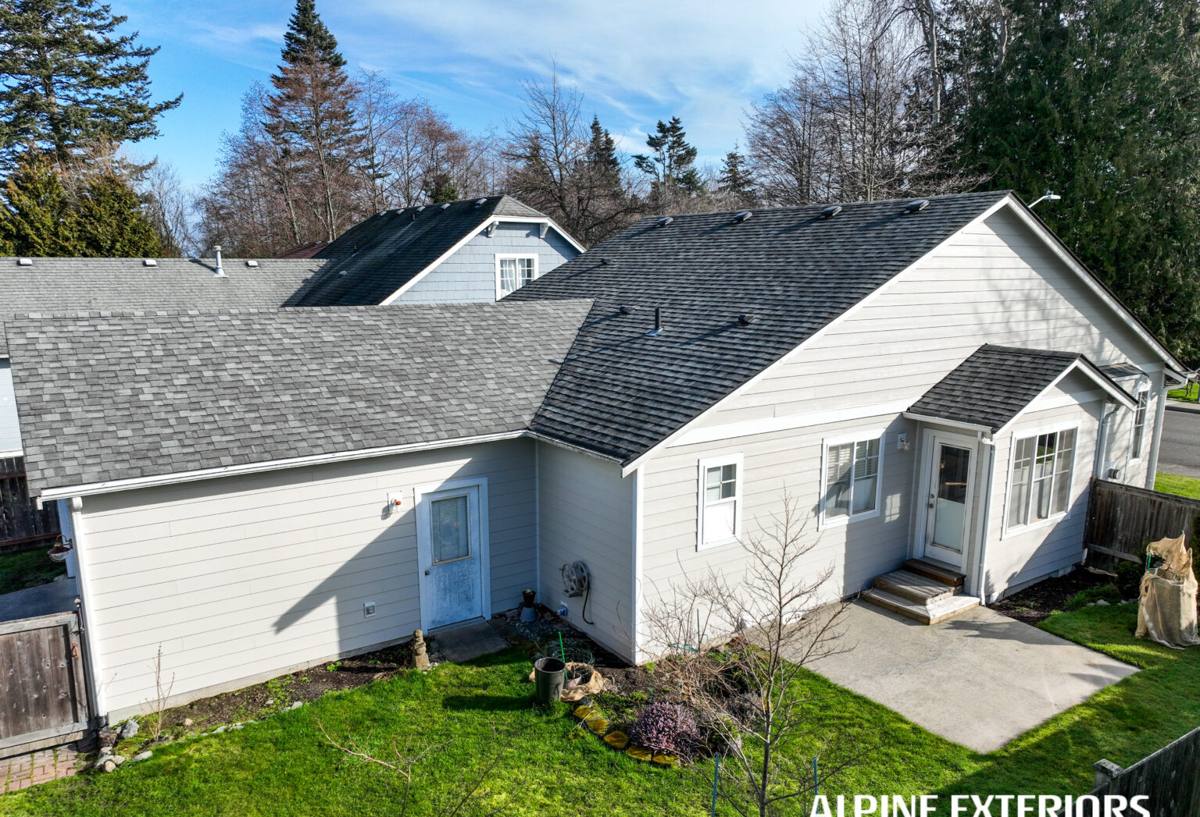
What Salt Air and Moisture Actually Do to a Home's Exterior
Salt air and corrosion
Airborne salt doesn't just sit on a surface — it's hygroscopic, meaning it pulls moisture out of the air and holds it against whatever it lands on. On fasteners, flashing, and any exposed metal trim, that accelerates corrosion. On siding itself, repeated wet-dry cycling driven by salt exposure can degrade paint films and accelerate fading, especially on lower-quality or unfinished materials.
Driving rain
Storms coming off the water in Blaine tend to arrive with wind behind them, which pushes rain sideways into walls instead of letting it run straight down. That means seams, laps, and butt joints get tested harder than they would on a home in a more sheltered inland location. Poor installation — gaps at joints, insufficient overlap, missing or improper flashing — shows up as moisture intrusion much sooner in this kind of exposure.
Moss and algae
Shaded, north-facing walls and roof sections that stay damp for days at a time are exactly where moss and algae take hold. Left unaddressed, that growth holds moisture against the surface underneath it, which is a slow but real threat to siding, trim, and roofing material — cosmetic at first, structural over time if ignored.
Why We Only Install James Hardie Fiber Cement
We made a decision a while back to standardize on James Hardie fiber cement siding for every home we side — full stop. We don't install vinyl, LP SmartSide, Cemplank, Allura, primed spruce, or cedar. That's not a marketing line; it's a professional standard we hold ourselves to because we've seen how each of those alternatives performs over time, and in a climate like Blaine's, the trade-offs matter more, not less.
Where the alternatives fall short here
- Vinyl siding can warp or become brittle with temperature swings, and its seams and J-channels give wind-driven rain more opportunities to find a way behind the cladding over time.
- Wood-based products (primed spruce, cedar, OSB-core siding like LP SmartSide) are organic materials — they can absorb moisture at cut edges and fastener penetrations, and in a persistently damp marine climate that raises the long-term maintenance burden considerably.
- Other fiber cement brands (Cemplank, Allura) are engineered products too, but we standardized on Hardie specifically for its factory-applied ColorPlus finish, its climate-specific HZ product engineering, and the depth of its installer network and warranty support in this region.
None of this means those products are junk — vinyl and wood siding have been used on homes for decades and can perform fine under the right conditions and maintenance. But we install one product because we believe it's the right long-term call for homes in this climate, and we'd rather stand behind one system we know well than offer several we have reservations about.
James Hardie, Built for This Coastline
James Hardie fiber cement is a cement, sand, and cellulose fiber composite — non-combustible, dimensionally stable, and engineered specifically to resist the freeze-thaw, moisture, and UV exposure that coastal Pacific Northwest homes face. For homes in Blaine's exposure zone, that translates into a few concrete advantages:
- Non-combustible core — fiber cement doesn't burn, which matters given the wildfire smoke and dry-season risk that reaches even the wet corners of the Northwest in recent summers.
- HZ5 engineering — Hardie's HZ5 product line is engineered for regions with significant moisture and temperature swing exposure, which fits the marine climate along this stretch of coastline.
- ColorPlus factory finish — a baked-on finish applied under controlled factory conditions, formulated to resist fading and hold up against UV and salt-air exposure better than field-applied paint typically does.
- Dimensional stability — fiber cement doesn't swell, warp, or rot the way wood-based siding can when it takes on repeated moisture exposure.
Installation Is Where Coastal Performance Is Actually Won or Lost
Even the best siding material fails early if it's installed wrong, and that's especially true in a high-exposure area like Blaine. Correct installation for this climate means:
- Proper water-resistive barrier and flashing details at every window, door, and penetration — not just at obvious spots.
- Correct fastener type, spacing, and embedment per Hardie's published installation instructions, which affects both wind performance and long-term corrosion resistance.
- Adequate clearance between siding and grade, decks, and roof lines to keep splash-back and ponding water away from the bottom courses.
- Caulking and sealant only where Hardie's specifications call for it — over-caulking traps moisture as often as it keeps it out.
This is the part of the job that doesn't show up in a photo but determines whether a home holds up through fifteen years of Whatcom County winters or starts showing problems in five.
Comparing Common Siding Choices for a Marine Exposure
| Factor | Vinyl | Wood-Based (Cedar / LP) | James Hardie Fiber Cement |
|---|---|---|---|
| Moisture resistance | Moderate — seams vulnerable | Lower — organic material | High — engineered for moisture exposure |
| Salt air / UV fade resistance | Fades over time | Depends on paint upkeep | ColorPlus finish resists fading |
| Combustibility | Combustible | Combustible | Non-combustible |
| Maintenance burden | Low but limited lifespan | Higher — repainting, sealing | Low when installed to spec |
| Typical warranty structure | Varies by manufacturer | Varies, often shorter | Long-term, transferable |
Roofing, Windows, and Decks — the Whole Envelope Matters
Siding doesn't work in isolation. A home's roof, windows, and decking all share the job of keeping wind-driven rain and moisture out, and in a climate like Blaine's, gaps in any one of them undercut the others. We handle all four — siding, roofing, windows, and decks — because a home's exterior needs to be treated as one connected system, not four separate projects. Flashing at a roof-to-wall transition, window head-flashing details, and deck ledger connections are all places where water intrusion problems tend to start, and they all need to be addressed with the same standard of care as the siding itself.
Maintenance Checklist for Blaine Homeowners
- Rinse siding and trim periodically to clear salt residue, especially on wind-exposed elevations.
- Inspect caulking around windows, doors, and trim annually — coastal exposure ages sealants faster than inland conditions.
- Keep gutters clear so overflow doesn't run down and pool against siding at the bottom courses.
- Address moss or algae growth on shaded walls and roof sections before it spreads or holds moisture long-term.
- Trim back vegetation that keeps a wall surface shaded and damp longer than it needs to be.
- Have flashing and joints inspected after major windstorms, which are common along this stretch of coast.
Why a Local Crew Matters for Blaine Specifically
We're based in Lynden, and we know the difference in exposure between an inland Whatcom County property and a home sitting close to Semiahmoo Bay or Drayton Harbor. That matters when we're scoping a job — the flashing details, fastener choices, and even the siding profile recommendations can shift based on how directly a home faces prevailing wind and water. A crew that works this region regularly isn't guessing at how a house in Blaine will hold up; we've seen how homes in comparable exposure perform over years, not just on install day.
Working locally also means straightforward scheduling, a crew that's easy to reach for a follow-up question after the job is done, and a warranty relationship with a company that isn't going anywhere.
What to Expect When You Work With Us
Every project starts with an on-site look at the specific exposure your home faces — which walls take the brunt of the weather, what condition the existing siding, trim, and flashing are in, and what that tells us about how the rest of the house is holding up. From there we walk through material options (though for siding, that conversation centers on Hardie's product lines and colors, since it's the only system we install), realistic cost ranges, and a timeline that accounts for Whatcom County's weather windows.
If you're weighing a full siding replacement against a repair, or trying to figure out whether roofing, window, or deck issues are feeding into your siding problems, that's exactly the kind of question worth walking through in person rather than guessing at from a listing of symptoms.
Get a Free, No-Pressure Estimate
If you own a home in Blaine and you're noticing fading, moisture staining, moss buildup, or you're just planning ahead for a replacement, we're happy to come take a look. There's no pressure and no obligation — just an honest read on what your home's exterior needs and what it would take to fix it right. Use the form below to request your free estimate.