 Lynden Siding
 Siding at Wiser Lake: A Different Kind of Wear
Wiser Lake sits just outside Lynden in a part of Whatcom County where the land is flat, the tree cover is heavy, and the air holds onto moisture longer than it does in town. Homes here deal with a mix of conditions that don't always show up on a standard siding sales pitch: shade from mature trees that keeps siding damp well after a storm has passed, humidity coming off the lake itself, and the same driving rain and long moss season that the rest of Lynden and the broader Puget Sound region deal with every winter. None of that is dramatic on its own. It's the accumulation, year after year, that separates siding that looks the same at year fifteen from siding that's chalking, swelling, or growing a green film by year seven.
We've worked on enough homes around Lynden's outlying areas to know that a lake-adjacent property isn't the same job as a place out in open farmland or a tight in-town lot. The shade patterns are different, the drying time after rain is longer, and the landscaping is often mature enough that a crew needs to work carefully around it. This page is about what that means for your siding, and how we approach it.
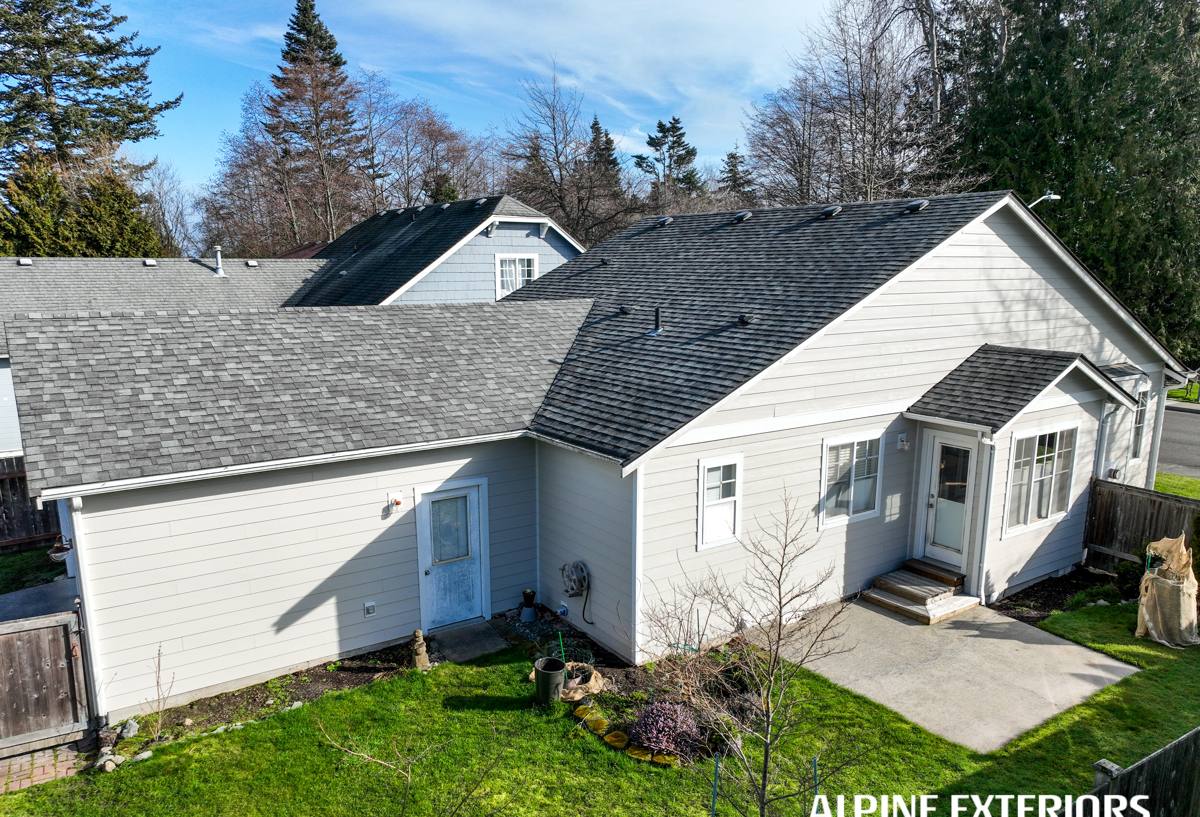
What the Local Climate Actually Does to Siding
Moisture That Doesn't Leave
A lake nearby raises ambient humidity, and mature tree canopy blocks the sun and wind that would otherwise dry a wall face after a rain event. That combination means siding on shaded, lake-facing walls can stay damp for days at a stretch during the wetter months. Materials that absorb water or that rely on a factory coating to keep water out are the ones that show it first — swelling at seams, soft spots at the bottom courses, or paint that starts failing well ahead of schedule.
Moss and Organic Growth
Whatcom County's moss season is long, and shaded, moisture-retentive walls near Wiser Lake are prime real estate for it. Moss and algae don't just look bad — they hold water against the siding surface and can accelerate breakdown of a coating or substrate that isn't built to handle constant dampness.
Driving Rain and Wind-Driven Exposure
Storms coming through this part of Washington often bring rain sideways, not straight down. Gable ends, upper stories, and walls facing open exposure take the brunt of it. Lap siding, trim, and butt joints are where wind-driven rain finds its way in if the install wasn't done with the right flashing and gapping details.
Our Process for a Wiser Lake Property
We treat every property near the lake as its own case rather than a copy-paste job. That starts with an honest look at the house before we ever talk product or price.
- On-site assessment — we walk the exterior, check which walls get the least sun and airflow, look at existing moisture damage, and note tree cover and drainage patterns specific to the lot.
- Envelope check, not just a siding quote — trim, flashing, window transitions, and roofline details get evaluated alongside the siding itself, since a new wall covering installed over bad flashing just hides the problem for a while.
- Tear-off and inspection of the sheathing — once old siding comes off, we can see what's actually happening underneath: rot, past water intrusion, or areas that need repair before new siding goes on.
- Installation to manufacturer spec — correct fastening, clearances, and joint treatment, done the same way regardless of which wall of the house we're on or how visible it is.
- Final walkthrough — we go over the finished work with the homeowner before we consider the job done.
Why We Install Only James Hardie Fiber Cement
We get asked fairly often why we don't offer vinyl, LP SmartSide, or other fiber cement brands like Allura or Cemplank. It's a fair question, and the honest answer is that we made a standardization decision based on what holds up in this climate over decades, not just what's cheapest to install.
Vinyl is inexpensive and low-maintenance in the sense that it doesn't need painting, but it's a poor match for a shaded, moisture-heavy lot: it can warp with heat and cold cycling, it doesn't hold up well to strong wind-driven rain at the seams, and it's not a fire-resistant material. LP SmartSide and other engineered wood products perform reasonably well when installation and maintenance are followed exactly, but they're wood-based, meaning moisture management at every cut edge and seam is non-negotiable — exactly the kind of ongoing exposure a lake-adjacent, shaded property creates more of. Other fiber cement brands aren't inherently bad products, but we don't have the same install training, warranty backing, or long-term track record with them that we do with Hardie, and we're not willing to install something we can't stand behind fully.
James Hardie fiber cement is non-combustible, engineered specifically for Pacific Northwest moisture exposure through its HZ5 product line, and finished with a factory-applied ColorPlus coating that resists fading and doesn't require the homeowner to repaint on the same schedule a wood-based product would. It carries a strong, transferable manufacturer warranty when installed to spec. That's the product we put our name behind at Wiser Lake and everywhere else we work.
Comparing the Common Options
| Material | How it handles lake-area moisture & shade | Maintenance over 15+ years | Fire resistance |
|---|---|---|---|
| Vinyl | Prone to warping in shade/heat cycles; seams vulnerable to driving rain | Low upkeep but limited repair options if damaged | Combustible |
| LP SmartSide / engineered wood | Performs well if sealed and maintained; sensitive to prolonged dampness at cut edges | Periodic caulking, paint touch-up, and edge sealing required | Combustible |
| Other fiber cement brands | Generally moisture-resistant; performance varies by brand and installer familiarity | Moderate; coating quality varies | Non-combustible |
| James Hardie fiber cement | Engineered (HZ5) for Pacific Northwest moisture and humidity exposure | Minimal; factory ColorPlus finish holds color long-term | Non-combustible |
It's Not Just Siding — The Whole Exterior Matters
A house at Wiser Lake is a system: roof, siding, windows, and decks all working together to keep water out and moisture moving in the right direction. A few ways these connect:
- Roofing — roof edges, valleys, and flashing details feed directly into how much water your siding has to deal with at the top of the wall.
- Windows — window flashing and integration with the siding plane is one of the most common places we find hidden moisture damage during a tear-off.
- Decks — a deck attached to the house, especially one shaded by trees near the lake, needs ledger flashing done right so water doesn't track back into the wall assembly.
- Siding — ties it all together as the visible, weather-facing skin of the house.
Because we handle all four, we can look at a Wiser Lake property as one project instead of four separate vendors each assuming someone else is handling the transitions between systems.
What to Look for When Hiring an Exterior Contractor Here
Whatcom County has plenty of contractors who'll take on a siding job, but not all of them are set up to deal with the specific moisture and shade conditions a lake property presents. A short checklist worth going through before you sign anything:
- Do they inspect the sheathing after tear-off, or just install over whatever's there?
- Can they explain how they'll handle flashing at windows, decks, and roof transitions — not just the field of the wall?
- Do they have direct experience with the product they're recommending, or are they simply offering whatever their supplier stocks?
- Is the warranty backed by the manufacturer and transferable if you sell the house?
- Are they local enough to respond quickly if a problem shows up after the job is done?
Why a Local Crew Matters Out at the Lake
Being based in Lynden means we're not driving in from Seattle or Bellingham for a service call, and we already know the kind of exposure a shaded, lake-adjacent lot deals with because we've seen it on other homes in the same area. That local familiarity shapes decisions on-site — where extra flashing attention matters, which walls need a closer look for moss or trapped moisture, and how to sequence work around mature landscaping without causing more disruption than necessary.
If you're planning siding, roofing, window, or deck work on a property near Wiser Lake, we're glad to come take a look and give you a straightforward, no-pressure estimate — no scare tactics, just an honest read on your home's exterior and what it actually needs.