 Lynden Siding
 Siding Built for Everson's Climate
Everson sits in the Nooksack Valley in Whatcom County, close enough to the water and the foothills that homes here take a particular kind of beating year-round. It's not one big storm that wears out a house in this part of Washington — it's the accumulation. Driving rain off the Sound and the Strait, salt-laden air working its way inland, and a moss season that can stretch from October well into spring. Siding that looks fine in year one can be hiding real trouble by year five if it wasn't built or installed for this environment.
We're a Lynden-based crew that works Everson regularly, along with the rest of Whatcom County. We install James Hardie fiber cement siding exclusively — no vinyl, no LP SmartSide, no primed wood products. That's not a marketing angle; it's a standard we hold to because we've seen what the alternatives do in this climate over ten and fifteen years, and we'd rather put something on your house that we're confident will still look good a decade from now.
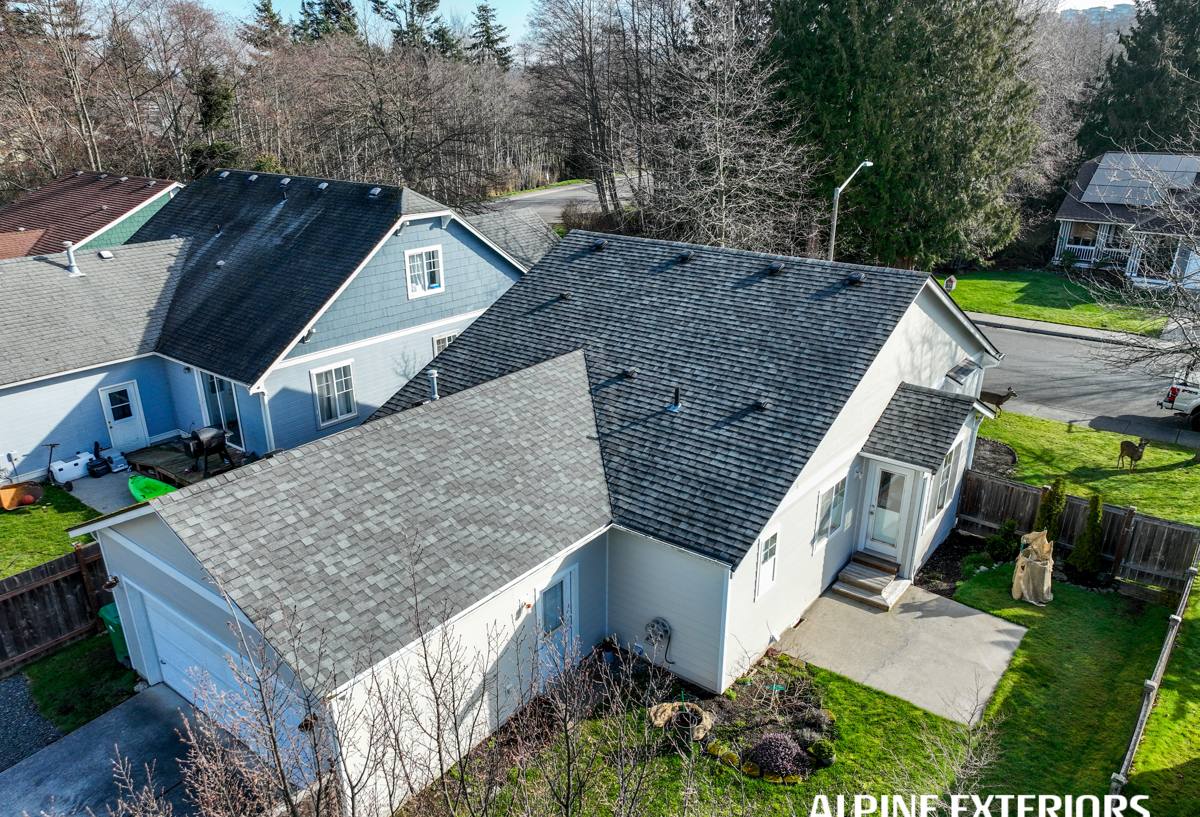
What Local Homes Are Actually Up Against
Driving Rain and Wind-Driven Moisture
Whatcom County doesn't get hurricanes, but it gets sustained, wind-pushed rain off the Pacific systems that roll through fall and winter. That kind of weather doesn't just fall straight down — it drives sideways into wall assemblies, working into seams, laps, and fastener points that aren't detailed correctly. Siding material matters here, but installation detailing matters just as much. A product with good moisture resistance installed with poor flashing and gapping will still fail.
Salt Air and Corrosion
Everson isn't right on the coast, but Whatcom County's proximity to the Salish Sea means salt-laden air reaches well inland, especially on windier days. Over years, that air accelerates corrosion on fasteners, trim, and any exposed metal, and it can degrade certain coatings and finishes faster than manufacturers' generic warranty language assumes. Factory-applied, baked-on finishes hold up better against this than field-applied paint, which is one of the practical reasons we lean on a factory-finished product.
Moss, Algae, and a Long Damp Season
The moss season around here is real and it's long. Shaded north-facing walls, areas under trees, and anywhere airflow is restricted stay damp for months at a time. Materials that absorb moisture or swell when wet give moss and algae something to grip onto and feed off of. Siding that sheds water and dries out quickly, with minimal expansion and contraction, simply hosts less growth and needs less pressure-washing and scrubbing over its life.
Why We Only Install James Hardie
We used to get asked more often why we don't offer vinyl or engineered wood siding as a lower-cost option. The honest answer is that we stopped installing them because we didn't want to keep coming back to redo work that failed early, or explain to homeowners why a product that looked great going up didn't hold up in this climate.
The Trade-Offs We Weighed
| Material | What It Gets Right | Where It Struggles Here |
|---|---|---|
| Vinyl siding | Low upfront cost, easy to source | Can warp or crack in temperature swings; seams and moisture intrusion are common failure points; limited fire resistance |
| LP SmartSide (engineered wood) | Lighter weight, easier installation | Wood-based core is vulnerable to moisture if any seal is compromised; requires diligent caulking and maintenance to avoid swelling |
| Primed spruce / cedar | Natural appearance, traditional look | Needs repainting on a regular cycle; combustible; higher long-term maintenance burden in a wet climate |
| James Hardie fiber cement | Non-combustible, factory ColorPlus finish, engineered for Pacific Northwest moisture (HZ5 line) | Higher upfront material and labor cost than vinyl |
James Hardie's HZ5 product line is specifically engineered for climates like ours — freeze-thaw cycles, sustained moisture, and high humidity. It's non-combustible, which matters more each year as wildfire smoke and ember exposure become a bigger part of Pacific Northwest summers. And the ColorPlus finish is baked on at the factory under controlled conditions, so it holds color and resists fading, chalking, and moisture intrusion far better than a coat of field-applied paint on wood or the molded-in color of vinyl.
We're not saying every other product is unusable everywhere — we're saying that after years of installation work in this specific climate, Hardie is the one we're willing to stand behind with our own crew's workmanship.
What Correct Installation Looks Like
Fiber cement siding is only as good as the installation behind it. A rushed or under-detailed install can undercut even the best material. On every Hardie job, the details we hold to include:
- Proper water-resistive barrier and flashing at every window, door, and penetration
- Correct fastener type, spacing, and depth per Hardie's installation specifications
- Adequate clearance between siding and grade, roofing, and decking to prevent wicking
- Properly sized gaps at butt joints and trim to allow for expansion without trapping water
- Rainscreen or drainage detailing where the wall assembly calls for it
- Caulking only where specified — not as a substitute for correct flashing
Hardie backs correctly installed siding with a strong transferable warranty, but that warranty depends on installation meeting their specifications. It's a big part of why we don't subcontract this work out to whoever's available — our own crew installs to the standard the warranty requires.
Siding, Roofing, Windows, and Decks — One Crew
Siding doesn't work in isolation. Water management on a home is a system: roof, siding, windows, flashing, and even decking all interact. We handle all four so that when we're on your Everson property, we're looking at the whole exterior envelope, not just the wall cladding. A window that's not flashed correctly can undermine new siding around it. A roof edge that dumps water onto a wall section accelerates wear no matter how good the siding is. Having one crew responsible for the full exterior means fewer gaps between trades and fewer excuses when something doesn't line up.
Signs It's Time to Look at Your Siding
- Visible warping, buckling, or gaps at seams and corners
- Persistent moss or algae staining that returns quickly after cleaning
- Soft or spongy spots, especially near the bottom of walls or below windows
- Peeling or bubbling paint that keeps coming back despite repainting
- Rising energy bills that may point to a compromised wall assembly
- Visible fastener corrosion or staining running down from nail heads
Any one of these on its own isn't necessarily an emergency, but they're worth a look before winter's driving rain finds the gap.
What to Expect From an Estimate
When we come out to a property in Everson, we're looking at more than just square footage. We check existing wall condition, look for moisture damage or rot that needs addressing before new siding goes up, evaluate flashing at windows and rooflines, and talk through color and profile options within the Hardie lineup — lap siding, shingle-style panels, or board-and-batten, depending on the look you're after. We'll give you a straightforward assessment of what your home actually needs, not an upsell.
Cost Factors Worth Understanding
| Factor | Why It Matters |
|---|---|
| Existing wall condition | Rot or moisture damage found during tear-off adds repair scope before new siding can go on |
| Home size and complexity | More corners, gables, and trim detail increase labor time |
| Siding profile chosen | Lap, shingle, and board-and-batten styles have different material and labor requirements |
| Access and site conditions | Tight lots, slopes, or landscaping can affect staging and labor |
| Trim and accent work | Full trim replacement alongside siding adds cost but improves long-term consistency |
A Local Crew You Can Actually Reach
We're based in Lynden, a short drive from Everson, and this is the county we work in every week — not a territory we fly a crew into once and never see again. That matters for warranty follow-up, for scheduling, and for knowing which parts of Whatcom County tend to get hit hardest by wind-driven rain or sit in shade long enough to grow moss. When you call us six years from now with a question about your siding, we'll still be a local business, not a name you have to track down.
If your Everson home is due for new siding, or you're just not sure whether what's on the walls now is holding up the way it should, we're happy to take a look. Reach out for a free, no-pressure estimate — we'll walk the property with you, answer your questions honestly, and let you decide from there.