 Lynden Siding
 What Board and Batten Actually Is
Board and batten is one of the oldest siding patterns in the Pacific Northwest, going back to the barns and farmhouses that still dot Whatcom County. The look is simple: wide vertical panels (the "boards") installed with narrow strips (the "battens") covering the seams between them. It reads as clean, vertical, and a little more modern or a little more rustic depending on color and trim choices, which is why it shows up on everything from downtown Lynden storefronts to new farmhouse-style builds out toward Everson and Nooksack.
What most homeowners don't realize is that the pattern is only half the equation. The material behind that pattern determines whether it still looks sharp in fifteen years or whether you're calling a contractor about cupped boards and peeling paint. We install James Hardie fiber cement exclusively, and board and batten is one of the styles where the material choice matters more than people expect.
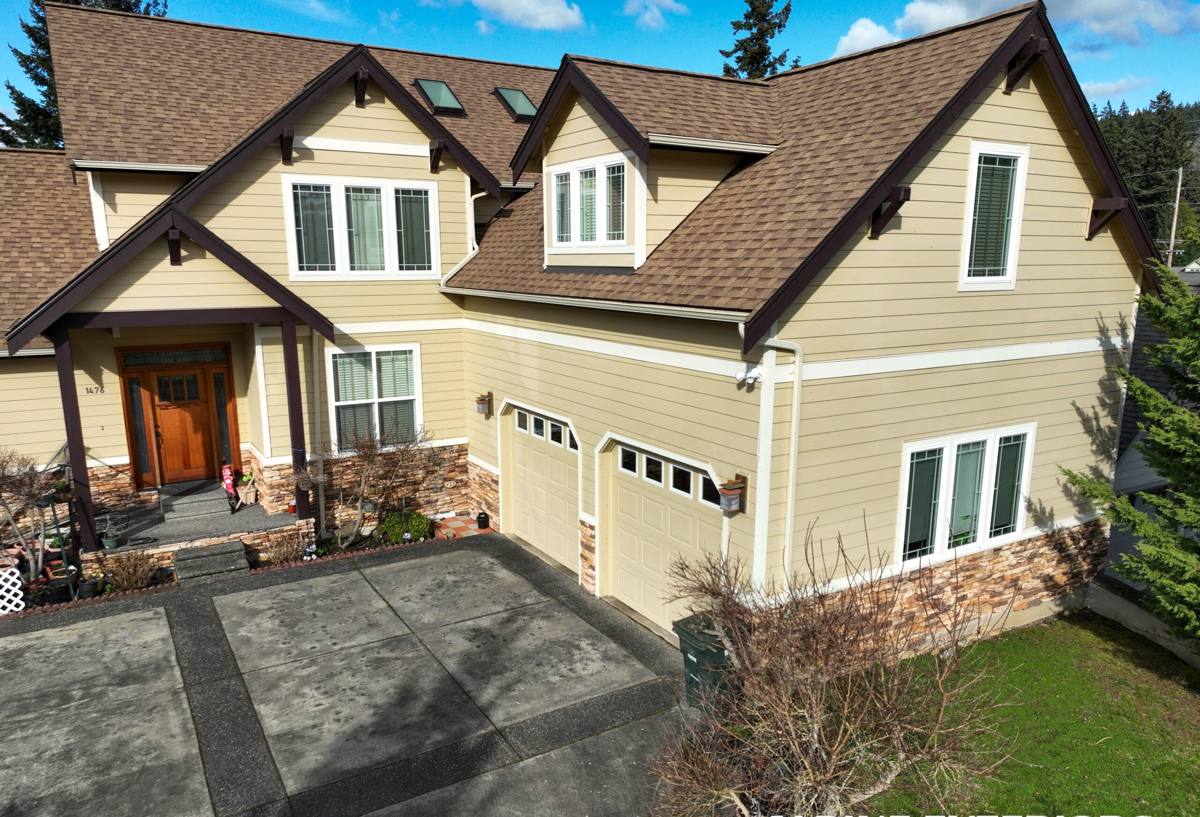
Why Vertical Siding Gets Tested Hard in This Climate
Whatcom County sits close enough to the Salish Sea that salt air is a real factor on homes anywhere near Lynden, Blaine, or Birch Bay, and even inland it's a season of driving rain followed by a long stretch of damp, low-sun months where moss and algae get a foothold on anything that stays wet. Vertical board and batten has more seams and more exposed edge grain per square foot than horizontal lap siding, and every one of those seams is a place where water can find its way in if the material or the installation isn't right.
That's not a knock on the style — it's just physics. A batten seam that's caulked and installed correctly on a stable, moisture-resistant board stays tight for decades. The same seam on a board that swells, shrinks, or absorbs water at the cut edges will eventually telegraph that movement as cracked caulk, streaking, or soft spots. In a climate with this much sustained moisture exposure, board and batten is a style that rewards using the right material and punishes cutting corners.
James Hardie's Board and Batten Product Lines
Hardie makes vertical siding in a few different formats, and picking the right one depends on the look you're after and the scale of the home.
HardiePanel Vertical Siding
This is the classic approach: large fiber cement panels installed vertically with separate wood-look battens fastened over the seams. It's the most flexible option for custom batten spacing and reveal width, and it's what most of our board and batten projects are built on.
Hardie Artisan and Select Cedarmill / Smooth Finishes
Panels come in a smooth finish for a cleaner, more contemporary batten look, or a cedarmill texture that reads like traditional wood board and batten from the street. Artisan panels are Hardie's premium tier, engineered for a more authentic wood grain and tighter tolerances, and they're worth considering on higher-visibility elevations.
HZ10 Formulation
Hardie engineers its siding by climate zone, and our region falls under the HZ10 formulation built for the Pacific Northwest's wet, moderate-temperature conditions. It's a meaningful difference from a one-size-fits-all fiber cement product — it's specifically formulated to hold up to the freeze-thaw cycles and sustained moisture we actually get here.
ColorPlus Factory Finish: Where Board and Batten Lives or Dies
Board and batten has more painted trim edge exposed to weather than almost any other siding pattern, which makes the finish the single biggest factor in how it ages. Hardie's ColorPlus technology bakes a multi-coat finish onto the panel at the factory, cured under controlled conditions, rather than relying on field-applied paint that goes on outdoors in whatever weather shows up that week.
On a batten-heavy elevation, that matters twice over: once for the field of the panel, and again for every cut edge and seam where a field-painted board would be most likely to show its first signs of failure. ColorPlus comes backed by its own finish warranty separate from the substrate warranty, covering fading and peeling in a way that a can of exterior paint from the hardware store simply doesn't.
Board and Batten Materials, Compared
We only install James Hardie, but homeowners deserve an honest look at what else is on the market before they commit to a look that's this exposed to the weather.
| Material | Dimensional stability | Moisture behavior | Typical finish | Combustibility |
|---|---|---|---|---|
| James Hardie fiber cement | High — minimal swell/shrink | Resists moisture absorption at cut edges when sealed per spec | Factory ColorPlus or field paint | Non-combustible |
| LP SmartSide (engineered wood) | Moderate — more prone to edge swell | Wood-based core absorbs moisture at unsealed cuts | Factory or field paint | Combustible |
| Vinyl board and batten | High expansion/contraction with temperature | Sheds water but seams can trap moisture behind panel | Color molded through, cannot be repainted easily | Combustible, can deform near heat |
| Real cedar board and batten | Low — wood moves seasonally | Absorbs moisture, prone to cupping and checking | Stain or paint, needs recoating | Combustible |
Every one of these products has a place in the market. Our reason for standardizing on Hardie isn't that the alternatives are junk — it's that fiber cement's dimensional stability and moisture resistance line up best with a pattern that has this many seams, this much edge exposure, and a climate that stays wet for months at a stretch.
Design Decisions That Shape the Final Look
Batten Spacing and Reveal
Batten spacing is the single biggest style decision on a board and batten project. Tight spacing (roughly 12 to 16 inches on center) reads more traditional and busier; wider spacing (24 inches or more) reads cleaner and more modern. We lay this out on the actual elevation, not off a generic chart, because window and door placement changes what spacing actually looks balanced.
Mixing Board and Batten With Lap Siding
A lot of the homes we work on around Lynden use board and batten selectively — a gable end, a second story, a porch accent — paired with horizontal lap siding on the rest of the house. This is one of the strongest moves in exterior design when the transition line is planned deliberately rather than added as an afterthought, and it's a normal part of how we scope a project.
Color and Trim
Board and batten tends to look best with a slightly bolder color than a full-house lap application, since the vertical lines and shadow lines from the battens already add visual texture. Dark battens against a lighter board (or the reverse) is a common way to make the pattern pop without repainting the whole palette.
Installation Details That Actually Matter
Board and batten fails or succeeds at the install, not the showroom. A few things we hold as non-negotiable:
- Every cut edge gets sealed per Hardie's published instructions — an unsealed factory or field cut is the single most common source of early moisture intrusion.
- Panels are fastened with the correct clearance from grade, decks, and roof lines so water has somewhere to go instead of wicking up from below.
- A proper weather-resistive barrier and rainscreen or drainage plane goes behind the panel — board and batten's seams need somewhere for incidental moisture to drain, not a sealed pocket against the sheathing.
- Battens are fastened independently per manufacturer spec, not just decoratively glued or face-nailed through the board beneath in a way that restricts movement.
- Fastener spacing and placement follow Hardie's HZ10 installation instructions exactly — this is also what keeps the manufacturer's warranty valid.
This is also where a lot of the "board and batten problems" homeowners hear about actually originate. The material gets blamed for what was really a shortcut at installation — missed sealing, wrong fastener pattern, no drainage plane. It's a pattern-specific risk we plan for on every job, not an afterthought.
Maintenance and Warranty
Properly installed Hardie board and batten is a low-maintenance siding, but "low" isn't "zero." An annual rinse-down helps in a region where moss and algae have a long damp season to work with, and it's worth a visual check of caulked joints and trim after the first few winters. James Hardie backs the substrate with a 30-year non-prorated limited warranty, and ColorPlus finishes carry their own separate finish warranty — both of which are transferable, which matters if you sell the home before you'd otherwise plan to reside it.
What Board and Batten Actually Costs
Board and batten typically runs a bit more than a straightforward lap siding install on the same home, mostly due to batten material and the added labor of a second fastening pass. The real cost swing, though, comes from these factors:
| Cost factor | Why it moves the price |
|---|---|
| Full-house vs. accent application | Accent gable ends or single elevations cost far less than wrapping the whole home |
| Batten spacing chosen | Tighter spacing means more batten material and more fastening labor |
| ColorPlus vs. field paint | Factory finish costs more up front but avoids a repaint cycle later |
| Substrate and drainage plane condition | Older homes may need sheathing repair or a new weather barrier before siding goes on |
| Panel line selected | Standard HardiePanel vs. Artisan premium tier changes material cost |
If you're weighing board and batten for a full re-side or as an accent feature on a home anywhere in Whatcom County, we're glad to walk the exterior with you and put together a straightforward, no-pressure estimate.