 Lynden Siding
 Two Different Materials, One Decision
If you're replacing siding in Lynden, you've probably run into two names over and over: James Hardie and LP SmartSide. Both are marketed as upgrades over vinyl and both show up in contractor bids across Whatcom County. But they are not the same category of product, and the difference matters more here than it does in a dry climate.
James Hardie siding is fiber cement — a mix of cement, sand, and cellulose fiber pressed into boards and panels, then baked and factory-finished. LP SmartSide is engineered wood — strand-based wood substrate treated with resins and zinc borate, then coated with a primer or factory finish. One is essentially a masonry product. The other is, at its core, still wood. That single fact drives almost every other difference on this page.
Why the Local Climate Changes the Answer
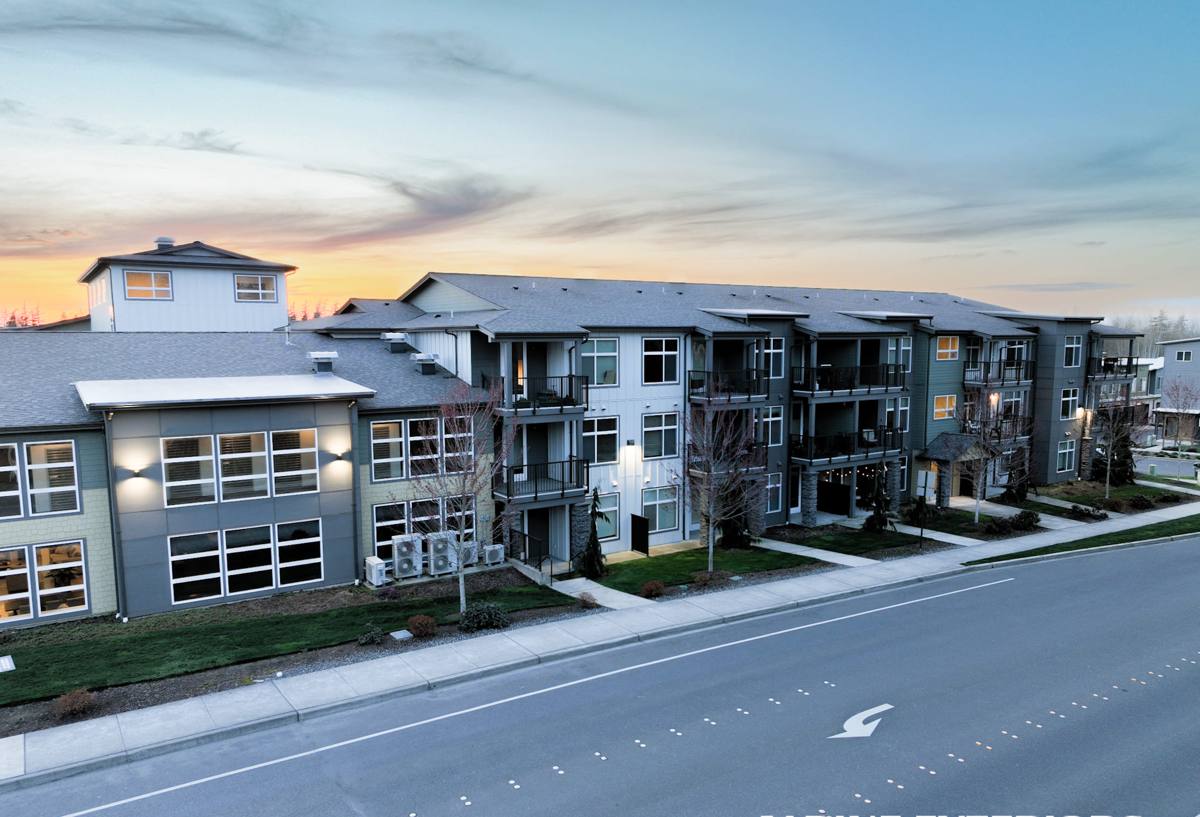
Lynden sits close enough to the Salish Sea and the Nooksack River valley that homes here deal with a specific combination: salt-laden air moving in off the water, long stretches of driving rain through fall and winter, and short winter days that keep north-facing walls damp and shaded for months. That combination is exactly the environment where moss, algae, and slow moisture intrusion do their worst work.
None of that is unique to Lynden — most of Whatcom County deals with it. But it's worth saying plainly because it's the reason this comparison isn't just theoretical. A siding product's moisture tolerance is a bigger factor in a decision here than it would be in Spokane or Yakima.
Moisture Behavior: The Core Difference
This is where fiber cement and engineered wood diverge the most.
LP SmartSide has genuinely improved wood-based siding over old-school hardboard products from the 1990s. The strand technology and resin saturation resist swelling and the zinc borate treatment deters insects and fungal decay. But it is still an organic, cellulose-based material. Any wood product depends entirely on an intact factory finish and correctly sealed cut edges and joints to keep water out. Once moisture finds a way past that finish — a caulk joint that fails, a butt seam that opens, a fastener that backs out — the substrate underneath can begin to swell, and swelling doesn't reverse itself.
James Hardie fiber cement doesn't have that vulnerability. Cement and sand don't rot, swell, or feed fungus. It can get wet and dry out without structural damage to the board itself. That doesn't mean installation quality stops mattering — flashing, house wrap, and proper gapping are still essential on every siding job — but the material itself isn't the weak link in a wet climate the way an organic substrate can be.
Side-by-Side on the Factors That Matter Most Locally
| Factor | James Hardie Fiber Cement | LP SmartSide |
|---|---|---|
| Core material | Cement, sand, cellulose fiber | Engineered strand wood |
| Moisture tolerance of substrate | Will not swell or rot | Can swell/decay if finish is breached |
| Combustibility | Non-combustible | Combustible (treated wood product) |
| Insect resistance | Naturally immune (not organic) | Treated with zinc borate deterrent |
| Factory finish | ColorPlus baked-on finish, 30-yr finish warranty on most lines | Factory primer or finish, shorter finish warranty terms |
| Repainting cycle (typical) | Often 15+ years with ColorPlus | Typically 8-12 years |
| Moss/algae resistance | Good with proper install and cleaning | Requires more diligent maintenance |
Fire and Pest Considerations
Fiber cement's non-combustible rating is a real, measurable difference — not marketing language. Insurance carriers in Washington increasingly recognize this in underwriting for wildfire-adjacent risk, and while Lynden isn't a high wildfire-risk area the way parts of eastern Washington are, the classification still matters for some homeowners' insurance conversations.
On pests, LP SmartSide's zinc borate treatment is a legitimate deterrent against carpenter ants and other wood-boring insects, and it's a meaningful improvement over untreated wood. But "treated to deter" and "immune to" are different claims. Fiber cement isn't a food source or nesting material for insects at all, because it isn't organic.
Finish, Color, and Long-Term Appearance
This is where a lot of homeowners actually make their decision, because it's the part they'll look at every day.
James Hardie's ColorPlus technology bakes the color into the board in a factory setting under controlled conditions — multiple coats, cured, before the board ever reaches a jobsite. That process produces more consistent color and a finish that resists fading and chipping far longer than field-applied paint. LP SmartSide is available primed or with factory-applied finish options too, and quality has improved significantly over the years, but the finish durability and warranty terms generally don't match Hardie's ColorPlus lines.
In a place like Lynden, where UV exposure combines with driving rain to stress exterior finishes, the gap between a factory-cured finish and a field-painted or lighter factory coat shows up faster than it would in a milder climate.
Installation Sensitivity
Both products are installer-dependent, but they're sensitive in different ways.
- James Hardie requires correct fastener spacing, proper gapping at butt joints, and use of Hardie-approved caulking and flashing details. Get this wrong and you lose some of the product's long-term performance, though the substrate itself still won't rot.
- LP SmartSide requires all of the same care, plus extra diligence around sealing every cut edge, joint, and fastener penetration — because those are the points where moisture can reach the wood substrate and cause lasting damage, not just a cosmetic issue.
- Both products need qualified installers familiar with manufacturer specifications; neither is a good candidate for a crew that treats siding installation as interchangeable across brands.
- Warranty coverage on both products is frequently tied to proper installation — an improperly installed job can void manufacturer warranty protection regardless of which siding you chose.
Warranty Structure
James Hardie backs its products with a limited transferable warranty — typically non-prorated for a long initial term on the substrate, with ColorPlus finishes carrying their own separate, extended finish warranty. The transferability matters for resale, since a new owner in Lynden's housing market can inherit meaningful coverage rather than starting from zero.
LP SmartSide also offers warranty coverage on its products, including finish protection, but the terms and lengths vary by product line and are generally shorter than Hardie's flagship coverage, particularly on the finish side. When you're comparing bids, always ask a contractor to show you the actual warranty document for the specific product line quoted — not just a general brand claim.
Cost Factors to Weigh
| Cost Factor | James Hardie | LP SmartSide |
|---|---|---|
| Material cost | Higher upfront | Generally lower upfront |
| Installation cost | Comparable, requires trained crew | Comparable, requires trained crew |
| Maintenance/repainting over 20 years | Lower — longer finish life | Higher — shorter finish life, more frequent sealant checks |
| Repair cost if moisture damage occurs | Low risk — substrate unaffected by moisture | Can require substrate replacement, not just paint |
| Resale/appraisal perception | Frequently recognized as a premium upgrade | Solid mid-tier upgrade over vinyl |
The sticker price on LP SmartSide is often lower at the time of installation. Whether that holds up as the better value over 20-30 years depends heavily on how well the finish and joints are maintained — and how the house is oriented relative to weather exposure.
What We Recommend for Lynden Homes
We made the decision years ago to install James Hardie fiber cement exclusively — not LP SmartSide, not vinyl, not primed spruce or cedar. That's a deliberate standard, not a lack of familiarity with the alternatives. In a climate that combines salt air, sustained rain, and heavy moss pressure, we'd rather stand behind a product whose core material isn't vulnerable to moisture in the first place, backed by a factory finish and warranty structure that holds up over decades rather than years.
LP SmartSide isn't a bad product — it's a legitimate step up from older wood siding and vinyl, and plenty of homes around Washington wear it well when it's properly installed and maintained. But given the choice, and given what we've seen hold up on homes in this climate, fiber cement is what we're willing to put our name behind.
Quick Checklist If You're Comparing Bids
- Ask which specific product line is quoted, not just the brand name (HardiePlank vs. HardiePanel, or which LP SmartSide profile)
- Request the actual manufacturer warranty document, not a verbal summary
- Confirm whether the finish is factory-applied (like ColorPlus) or will be field-painted
- Ask how joints, corners, and fastener penetrations will be sealed and flashed
- Get the crew's experience specifically with the product being installed, not siding in general
- Ask what maintenance schedule the manufacturer recommends and factor that into your real cost
If you're weighing James Hardie against LP SmartSide for a home in Lynden or anywhere else in Whatcom County, we're happy to walk your property, look at your exposure and orientation, and give you a straight answer — including what we'd actually recommend for your specific house. Reach out for a free, no-pressure estimate using the form below.