 Lynden Siding
 Why Siding Cost Questions Rarely Get a Straight Answer
Ask five contractors what siding replacement costs in Lynden and you'll get five different numbers, usually with no explanation attached. That's not because anyone's hiding something — it's because siding pricing depends on so many variables that a single "per square foot" number is almost meaningless without context. A 1,600 square foot rambler in a quiet Lynden neighborhood and a 1,600 square foot two-story with dormers, a wraparound porch, and tight side-yard access can cost very differently to re-side, even though the square footage is identical.
This page breaks down what actually moves the number up or down, gives honest cost ranges by material, and explains where Whatcom County's climate factors into the equation. The goal isn't to sell you on a number — it's to help you understand your own quote when you get one.
What Actually Drives the Price of a Siding Job
Size and Shape of the House
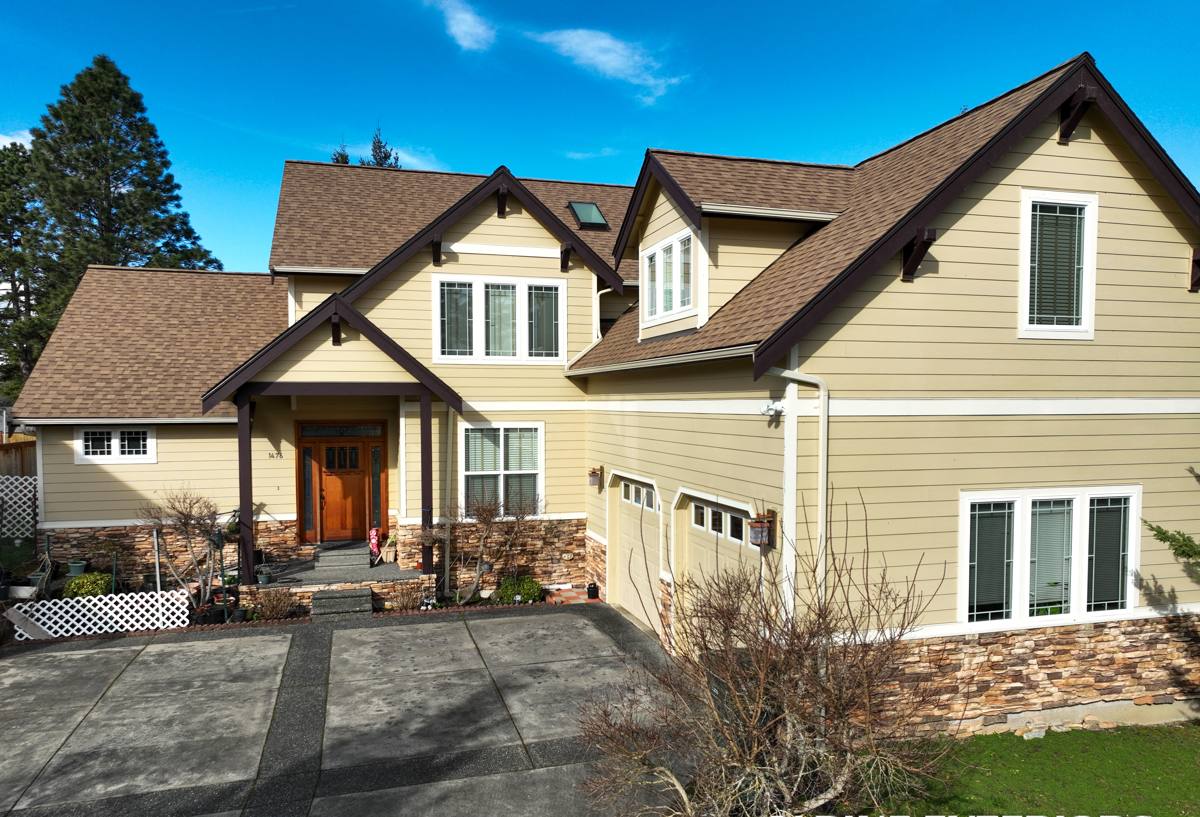
Square footage matters, but shape matters more than most homeowners expect. A simple rectangular home with few corners and openings sides much faster than a home with multiple gables, bump-outs, dormers, and varied roof lines. Every inside corner, outside corner, window trim detail, and transition between wall planes adds labor time — and labor, not material, is usually the larger share of the total bid.
Condition of What's Underneath
What a contractor finds once the old siding comes off can change the price mid-project. Rotted sheathing, water-damaged framing, or missing house wrap are common discoveries on homes over 20-25 years old, especially anywhere moisture has been getting behind the siding for years without being noticed. A reputable contractor will price a contingency allowance for this rather than pretending it won't happen.
Tear-Off and Disposal
Removing old siding, hauling it away, and disposing of it legally is real cost — not an afterthought. This is one reason a bid that seems dramatically lower than others is worth asking about directly: is tear-off and disposal actually included, or is it an add-on that shows up later?
Material Choice
This is the single biggest lever on total cost, and it's covered in detail below.
Access and Site Conditions
Steep lots, mature landscaping close to the house, narrow side yards, and multi-story sections all slow down installation and increase scaffolding or lift needs. Rural Whatcom County properties with long driveways or septic systems in the way of staging can also add setup time that in-town lots don't require.
Typical Cost Ranges by Material
These are broad, honest ranges for installed cost (material plus labor) on a typical single-family home in this region. Treat them as a starting point for conversation, not a quote — your specific house will move the number within or beyond these bands.
| Material | General Cost Range | Typical Lifespan | Maintenance Burden |
|---|---|---|---|
| Vinyl siding | Lower end | 15-25 years | Low upfront, but fades and can warp or crack over time |
| LP SmartSide (engineered wood) | Low-to-mid | 15-30 years with diligent maintenance | Moderate — edge sealing and caulking are critical |
| Primed spruce / cedar | Mid-to-high | Highly variable | High — regular refinishing required |
| James Hardie fiber cement | Mid-to-upper | 30-50 years when installed to spec | Low — factory finish, no repainting cycle in the near term |
Notice that the cheapest material up front isn't necessarily the cheapest material over the life of the house. A lower installed cost that comes with a shorter lifespan and a repainting or recaulking cycle every few years can end up costing more by year 20 than a higher upfront investment that doesn't need that attention.
The Lynden Climate Factor
Whatcom County sits close enough to the Salish Sea that salt-laden air is a real factor on homes throughout Lynden and the surrounding valley, not just on waterfront properties. Combine that with the region's long stretch of driving rain from fall through spring, and siding here works harder than it does in drier parts of the state. Add the moss and algae growth that thrives in our shaded, damp months, and you've got three separate stressors — salt, water, and organic growth — all acting on the exterior of a home for a good chunk of the year.
This matters for cost because materials that handle these conditions poorly don't just look worse sooner — they can fail structurally sooner, which means a homeowner who chose the cheaper option may be paying for a second replacement or major repair well before a more climate-appropriate material would need one. Any honest cost conversation for a Lynden home has to include how a product performs wet, not just how it performs on the showroom sample.
Why We Standardized on James Hardie Fiber Cement
We install only James Hardie fiber cement siding, and it's worth explaining why, since it directly affects the estimate you'll get from us versus a contractor offering multiple product lines.
Hardie's fiber cement is non-combustible, engineered in HZ product lines specifically for different moisture and temperature zones, and comes with a factory-applied ColorPlus finish that's backed by its own dedicated warranty — meaning the color and the substrate aren't relying on a field-applied paint job to hold up against our rain and humidity. It also carries a strong transferable warranty, which matters to homeowners who may sell within the product's lifespan.
We didn't arrive at this by accident. Vinyl can look and perform fine for a while but eventually shows its age through fading and brittleness, particularly with UV and temperature cycling. LP SmartSide, cedar, and primed spruce all depend heavily on caulking, edge-sealing, and refinishing discipline — both at installation and for the life of the product — to avoid moisture intrusion at seams and cut edges. In a climate like ours, that maintenance margin for error is thin. Fiber cement's moisture resistance and factory finish remove a lot of that ongoing risk, which is why it's what we put on homes rather than offering it as one option among several.
Hidden Costs Homeowners Often Miss
- Trim and fascia: Often priced separately from field siding, but usually necessary to replace or match at the same time.
- House wrap and moisture barrier replacement: Code-driven in most tear-off projects and easy to overlook when comparing bids.
- Permit fees: Vary by jurisdiction and project scope; make sure they're actually included in the number you're comparing.
- Window and door flashing details: Proper flashing at every penetration is what keeps water out for the next 30 years — skipping it to save money is a false economy.
- Paint or caulk touch-up cycles: Not a one-time cost for some materials, but a recurring one that should be factored into a true lifetime cost comparison.
- Disposal fees: Especially relevant if the old siding contains lead paint or other materials requiring special handling.
How to Budget Without Getting Surprised
Get an Apples-to-Apples Comparison
When comparing bids, confirm each one includes the same scope: tear-off, disposal, house wrap, trim, and flashing. A bid that's missing one of these isn't actually cheaper — it's incomplete.
Ask About Contingencies
Find out how the contractor handles sheathing or framing repairs discovered after tear-off. A vague answer here is a red flag; a clear per-unit rate or documented process is a good sign.
Think in Decades, Not Just Dollars
A cost-per-square-foot number only tells part of the story. Divide the total cost by the expected lifespan of the material and you get a rough annualized cost — a more honest way to compare a 20-year product against a 40-year one.
A Practical Checklist Before You Sign Anything
- Confirm the bid includes tear-off, haul-away, and disposal
- Confirm house wrap/moisture barrier replacement is included
- Ask how sheathing or framing repairs, if discovered, would be priced
- Get the manufacturer and specific product line named in writing, not just "fiber cement" or "engineered wood"
- Ask what the warranty actually covers — material only, or labor too
- Ask how long the crew has been installing this specific product
- Get a written timeline, including what happens if weather delays the work
Getting an Accurate Number for Your Home
General ranges are useful for planning, but the only way to know what your specific Lynden home will actually cost is to have someone look at it — the shape of the roofline, the condition of the current siding, the access around the property, and what's likely underneath. That's the difference between a rough budget and a real number.
If you'd like an honest, no-pressure estimate on your home, we're happy to take a look and walk you through exactly what we find and why we'd recommend what we recommend. There's no obligation, and no pressure — just straight answers, using the form below.