 Lynden Siding
 Siding Built for Nooksack's Weather, Not Just Its Curb Appeal
Nooksack sits in the agricultural flats of Whatcom County, tucked between the Nooksack River and the foothills that run up toward the Canadian border. It's a quieter part of our service area than Lynden's core, but the exterior of a home out here takes the same beating as anywhere else in this corner of the state — sometimes worse, because open farmland and river-bottom lots mean less windbreak and more standing moisture in the shoulder seasons. If you own a home near Nooksack, you already know the drill: long stretches of gray, drizzly weeks, humidity that doesn't burn off until midday, and siding that stays damp far longer than it would in a drier climate.
We're a Lynden-based crew, and Nooksack is inside our regular service radius — not a stretch job we take once a year. That matters more than most homeowners realize when it comes to exterior work, and we'll explain why below.
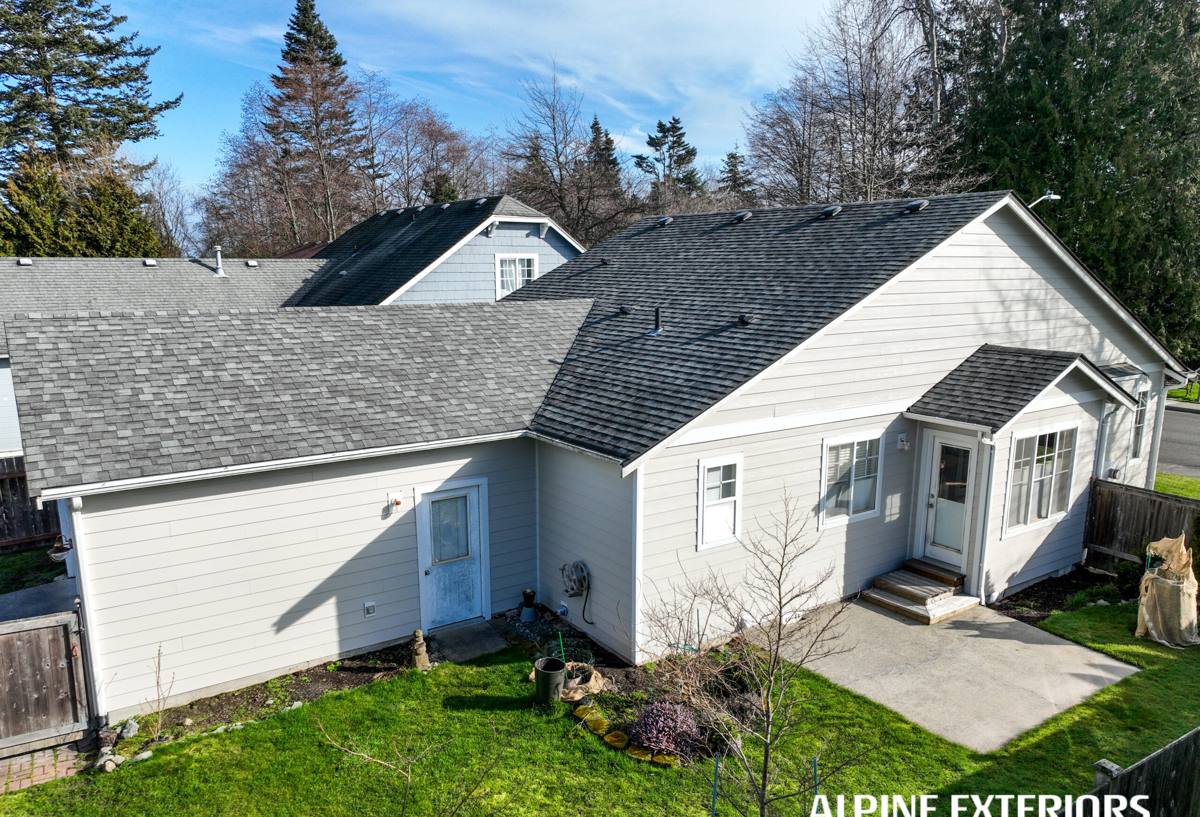
What Whatcom County Weather Does to Exterior Siding
Three things define this climate for siding purposes, and all three show up on Nooksack homes we look at:
Driving Rain and Wind-Driven Moisture
Storms coming off the Pacific and funneling through the Fraser Valley and Strait of Georgia don't just drop rain straight down — they push it sideways into wall assemblies, lap joints, and trim. Siding that isn't dimensionally stable, or that wasn't installed with correct flashing and clearances, lets that moisture find its way behind the cladding over time.
A Long Moss and Mildew Season
Between the moisture and the shade many rural Nooksack properties get from tree lines and outbuildings, north- and west-facing walls stay damp for extended stretches. That's exactly the environment moss, algae, and mildew need to take hold. On absorbent or poorly sealed siding materials, that growth isn't just cosmetic — it holds moisture against the surface and accelerates whatever decay process is already underway underneath.
Marine-Influenced Air
Whatcom County sits close enough to Puget Sound and the Strait of Georgia that salt-laden marine air moves through the region on prevailing weather systems, even at inland locations like Nooksack. Combined with constant humidity, that air accelerates corrosion on fasteners, flashing, and any exterior material that isn't rated for a wet, salt-influenced climate.
None of this is unique to Nooksack — it's Whatcom County weather generally — but it's worth spelling out because it's the entire reason we install what we install, and refuse to install some of what other contractors will sell you.
Why We Only Install James Hardie Fiber Cement Siding
We don't offer vinyl, LP SmartSide, primed spruce, cedar, or off-brand fiber cement. That's a deliberate business decision, not a limitation of what we know how to install. Here's the honest reasoning:
- Vinyl flexes and gaps with temperature swings, and in a climate this wet, moisture that gets behind it has few places to go. It also doesn't stand up well to the kind of prolonged UV and weather cycling we get here over decades.
- Wood-based products (cedar, primed spruce, OSB-based composites) are only as good as their maintenance schedule. In a region where a wall can stay damp for days at a time, any gap in the paint film or caulking becomes an entry point for rot — and re-caulking and repainting every few years is a real, recurring cost most homeowners underestimate.
- Off-brand fiber cement can be a reasonable product, but we've standardized on one manufacturer so our crews install one system, know its details cold, and can stand behind the warranty without guesswork.
James Hardie's HZ5 product line is engineered specifically for climate zones like ours — freeze-thaw cycling, high humidity, and prolonged wet exposure. It's non-combustible, doesn't absorb moisture the way wood-based siding does, and holds its factory-applied ColorPlus finish for years longer than field-applied paint typically lasts in this climate. It won't stop moss from landing on a shaded wall, but it doesn't feed rot the way organic materials can once moisture gets behind them.
Common Problems We Find on Nooksack-Area Homes
When we inspect siding on rural and semi-rural Whatcom County properties, a handful of issues come up repeatedly:
- Soft or delaminating siding at the bottom courses, where splashback and standing snow or rain sit longest
- Moss and algae buildup on north- and west-facing walls shaded by trees or outbuildings
- Failed caulking around windows and trim, letting wind-driven rain track behind the siding
- Rusting or corroding fasteners and flashing, especially on older installations
- Paint failure on wood siding well before the manufacturer's stated repaint interval
Most of these aren't dramatic — they're slow, and that's what makes them costly. By the time siding visibly fails, the sheathing or framing behind it has often been wet for a season or more.
What a Siding Replacement Project Involves
A proper replacement isn't just swapping old boards for new ones. Our process on a Nooksack-area home typically includes:
- Inspection and tear-off — removing existing siding and checking the sheathing underneath for rot, soft spots, or prior water damage before anything new goes up.
- Weather-resistive barrier and flashing — installing or correcting the water and air barrier, plus flashing at every window, door, and penetration, since this is what actually keeps wind-driven rain out of the wall assembly.
- Hardie installation to manufacturer spec — correct fastener spacing, clearances at grade and roofline, and joint treatment. Installation quality is what determines whether a fiber cement product performs for decades or develops problems in five years.
- Trim, caulking, and final finish — detailing the parts of the job that are easy to rush and hardest to inspect later.
What Affects the Cost of a Siding Job Out Here
| Factor | Why It Matters in This Area |
|---|---|
| Home size and wall complexity | More corners, gables, and dormers mean more cutting, trim, and labor time |
| Condition of existing sheathing | Rural Nooksack homes with past moisture issues sometimes need sheathing repair before new siding goes on |
| Access and site conditions | Rural lots, outbuildings, fencing, and long driveways can affect staging and scaffolding time |
| Siding profile chosen | Lap, shingle-style, and panel Hardie products differ in material and labor cost |
| Trim and accent work | Trim boards, fascia, and accent details add cost but also add the water-shedding detail this climate needs |
We won't quote a number without seeing the house — anyone who does that on a rural property they haven't walked is guessing. What we can say is that a correctly installed Hardie system is a long-term investment against exactly the moisture and moss problems described above, not just a cosmetic upgrade.
Roofing, Windows, and Decks — The Rest of the Exterior
Siding doesn't fail in isolation. A roof that's shedding water onto a wall, a window that's no longer sealed, or a deck ledger board tied into a wet wall assembly all interact with how long new siding lasts. Because we handle roofing, windows, and decks in addition to siding, we can look at a Nooksack property's exterior as one system rather than quoting a wall replacement while ignoring a roof edge that's dumping water right onto it. That's a practical advantage when you're dealing with a rural property where multiple parts of the exterior may be original to the house.
Why a Local Lynden Crew Matters for Nooksack Homes
We're based in Lynden, and Nooksack is part of the area we work in regularly — not a once-a-season detour. That means:
- We know how Whatcom County weather actually behaves through the wet season, not just what a spec sheet says
- We're a short drive away for a warranty callback or a question after the job is done
- We're not stretching a crew across an unfamiliar region to make a trip out here worthwhile
Local doesn't replace craftsmanship, but it does mean accountability. A contractor who's an hour away and rarely back in the area has less incentive to get every detail right the first time.
Maintaining Your Siding Once It's Installed
Fiber cement lowers the maintenance burden compared to wood, but it's not zero-maintenance. A short seasonal routine goes a long way in this climate:
- Rinse shaded, moss-prone walls once or twice a year to keep growth from taking hold
- Check caulking at window and door trim annually, especially after a hard winter
- Keep gutters clear so overflow doesn't run directly down wall sections
- Trim back vegetation and tree cover that keeps a wall section shaded and damp
- Walk the base of the siding each fall to check for splashback staining or soft spots near grade
If you're weighing a siding replacement for a Nooksack-area home, or you're not sure whether what you're seeing is cosmetic moss or something deeper, we're happy to take a look. Reach out for a free, no-pressure estimate — we'll walk the property, tell you honestly what we find, and give you a straight answer either way.