 Lynden Siding
 Picking a siding color feels like it should be the fun part of a project — and it is — but in Lynden it's also a practical decision. Whatcom County sits close enough to Bellingham Bay and the Salish Sea that salt-laden air reaches inland yards, and our winters bring long stretches of driving rain followed by shaded, damp conditions that grow moss on anything that stays wet too long. The color you pick, and more importantly how that color is applied to the siding, determines how your house looks in year one versus year twelve. This page walks through how James Hardie's ColorPlus Technology finish actually works, which color and product decisions hold up best in this climate, and what to think about before you commit.
What ColorPlus Technology Actually Is
ColorPlus is not paint you choose from a store swatch and have a crew roll on after installation. It's a factory-applied, baked-on finish that's cured onto the fiber cement plank or panel before it ever leaves the plant. The color goes on in multiple coats under controlled temperature and humidity, then gets baked to fuse it to the substrate. That process is the entire point — a factory finish bonds more evenly and consistently than anything applied on a jobsite, where wind, temperature swings, and rain can all affect how field-applied paint cures.
The practical result for a Lynden homeowner: a more uniform color across every plank, better resistance to fading from UV exposure, and a finish that's less prone to the chipping and peeling that shows up on field-painted siding after a few wet winters. James Hardie backs ColorPlus with its own finish warranty, separate from the substrate warranty, specifically because the finish is engineered and tested as its own system.
Factory Finish vs. Field-Applied Paint
| Factor | ColorPlus Factory Finish | Field-Applied Paint |
|---|---|---|
| Application conditions | Controlled plant environment | Whatever the weather does that day |
| Coverage consistency | Uniform across every plank | Depends on crew, coats, technique |
| Typical repaint interval | Often 15+ years before touch-up needed | 5-10 years in a wet coastal climate |
| Fade resistance | UV-cured, engineered for color retention | Varies by paint quality and prep |
| Warranty | Separate factory finish warranty from Hardie | Typically contractor labor warranty only |
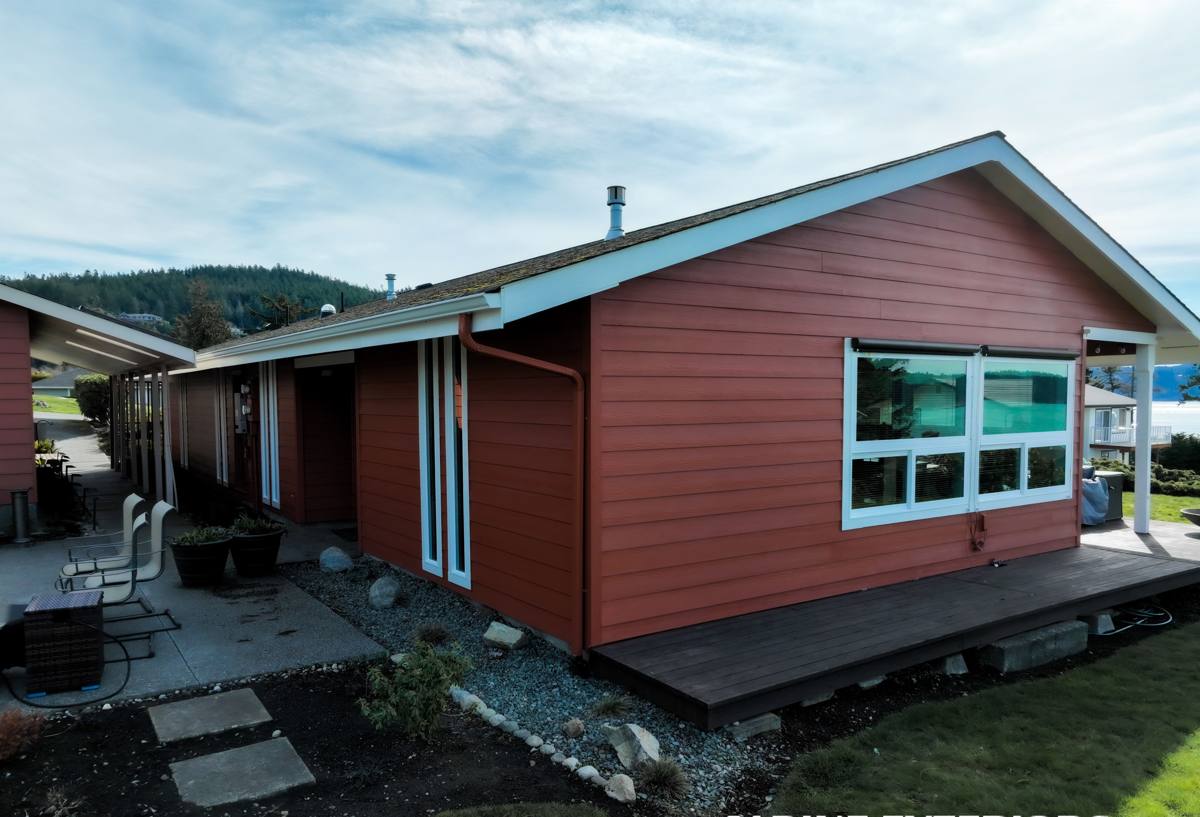
Why Color Choice Matters More in This Climate
Salt air, driving rain, and a long moss season all take a toll on exterior finishes — and color plays a bigger role in that than most homeowners expect. Darker colors absorb more heat and can accelerate the wear of an inferior finish, while very light colors show algae and moss streaking sooner, especially on north-facing walls and under eaves where the siding rarely dries out fully between storms. None of this is unique to any one brand of siding, but it's exactly why the factory-cured ColorPlus finish matters here: it's formulated to resist fading and hold its color through repeated wet-dry cycles, not just look good in a showroom.
Whatcom County's microclimate also means shaded sides of a house — common on lots backed by trees or facing north — stay damp longer than a home in a drier part of the state would. That doesn't rule out any color, but it's worth thinking about maintenance, especially with lighter shades, before you commit.
The ColorPlus Palette and Product Lines
James Hardie offers ColorPlus finishes across its core product lines, and the palette is built around colors that work well in Pacific Northwest settings — a mix of classic neutrals, deeper statement tones, and traditional trim whites. A few things to know about how the lineup is organized:
- Standard palette: a curated set of colors available across most Hardie products, from soft neutrals to deeper grays and greens common in Whatcom County neighborhoods.
- Statement Collection: a smaller set of bolder, deeper colors for homeowners who want more contrast or a modern look.
- Trim and accent colors: coordinated whites and neutrals designed to pair with the field colors, so trim, fascia, and soffit pieces match without guesswork.
- HZ10 vs. HZ5 engineering: Hardie's HZ product lines are engineered for specific climate zones (moisture exposure, freeze-thaw), which is separate from color but matters when your installer specs the right product for our zone.
Availability can vary by product (lap siding, panels, shingles, trim), so it's worth confirming which colors are offered on the specific profile you're planning to use before falling in love with a swatch.
Matching Color to Whatcom County Architecture
Lynden's mix of farmhouse, craftsman, and traditional Pacific Northwest homes tends to favor a few reliable approaches, though there's no single "right" answer:
Neutral and Earth Tones
Warm grays, greiges, and muted greens are common choices because they read as timeless rather than trendy, and they tend to hide the light pollen and dust film that settles on exterior walls between rains.
Classic White and Cream
Popular on farmhouse-style homes, but worth pairing with a factory finish specifically because lighter colors show moss and algae streaking sooner than mid-tones. A well-cured ColorPlus white resists that better than a field-painted equivalent, but eave overhangs and gutter maintenance still matter.
Deeper Statement Colors
Charcoal, deep green, and navy tones have become more common on newer builds and remodels in the area. These hide streaking better but can show fading over many years faster than mid-tones if the finish quality isn't there — another reason the factory-cured process matters.
Color, Moss, and Long-Term Maintenance
No siding color is immune to moss or algae in a climate this wet — the difference is how visible it is and how easy it is to clean. A few practical notes:
- North-facing and shaded walls will need periodic gentle washing regardless of color; factory finish makes that easier because the surface resists staining better than porous or field-painted surfaces.
- Avoid pressure washing directly at the joints or at high pressure generally — a soft wash with a garden hose and mild detergent is usually enough and won't damage the finish or force water behind the planks.
- Keep gutters and downspouts clear; most premature staining comes from water sheeting down a wall from a clogged or misaligned gutter, not from the siding itself.
- Trim vegetation and tree branches back from walls where possible — reduced airflow is a major driver of moss growth in shaded Whatcom County yards.
The ColorPlus Warranty and What It Covers
James Hardie's ColorPlus finish carries its own limited warranty separate from the substrate warranty on the siding itself, and it's transferable to a new owner if you sell the home within the warranty period — a detail worth mentioning to a future buyer. The specifics (length of coverage, what's included) are spelled out in Hardie's published warranty documentation, and we'll walk you through exactly what applies to the products you choose before installation. The short version: a factory finish that's engineered and tested as a system tends to have a more defined, honest warranty than field-applied paint, where coverage is usually limited to contractor labor rather than the coating itself.
Why We Only Work With ColorPlus, Not Job-Site Painted Siding
We install James Hardie fiber cement exclusively, and part of that decision comes down to finish reliability. A factory-cured finish removes weather and application variables from the equation — no worrying about whether it rained the week the crew painted, or whether every plank got the same number of coats. In a climate with as much sustained moisture as Whatcom County sees, that consistency matters more than it would somewhere drier. It's also simply less for a homeowner to manage: no repaint schedule to plan around, no guessing whether a touch-up coat will match the original color years later.
Practical Checklist Before You Choose a Color
- Confirm the color is available on the specific Hardie product and profile you're installing (lap, panel, shingle, trim).
- Check your HOA or neighborhood covenants, if any apply, for color restrictions before finalizing.
- View large color samples outdoors, in both direct sun and shade — small chips can be misleading.
- Consider which walls face north or stay shaded, and how a lighter color will look there after a few wet seasons.
- Coordinate trim, fascia, and accent colors from the same coordinated palette rather than mixing brands.
- Ask about the ColorPlus touch-up kit process for the rare case a plank gets nicked during or after installation.
- Get the warranty documentation in writing before the project starts, not after.
What Correct Installation Means for Your Color
Even the best factory finish depends on correct installation to perform as designed. That means proper clearance from grade and hardscaping so the bottom edge of the siding isn't sitting in standing water, correctly sized gaps and flashing at joints and penetrations, and fasteners installed per Hardie's specifications so the finish isn't compromised by improper nailing. A color that looks great on day one can develop uneven weathering if the install work behind it is careless — another reason to hire a crew that installs Hardie to spec rather than treats it like any other siding material.
If you're weighing colors for a Lynden home and want to see large-format samples against your actual house, or want a straight answer on which colors and product lines fit your project, we're happy to walk through it with you. Reach out for a free, no-pressure estimate — no obligation, just an honest look at what will hold up on your home.