 Lynden Siding
 Two Very Different Materials, One Big Decision
If you're re-siding a home in Lynden, you've probably narrowed things down to two finalists: vinyl siding and James Hardie fiber cement. Both are common, both are sold by contractors up and down Whatcom County, and both will make your house look finished on installation day. That's about where the similarity ends. Underneath the surface, these are two fundamentally different materials — one is an engineered wood-fiber and cement composite, the other is a formed plastic (PVC) panel. That difference shows up in how each one handles our local weather, how each one ages, and what each one costs you over 20 or 30 years, not just on day one.
This page lays out the honest comparison. We're not going to tell you vinyl is garbage — millions of homes wear it just fine. We're going to tell you why, after years of installing siding in this specific climate, we standardized on James Hardie and stopped installing vinyl.
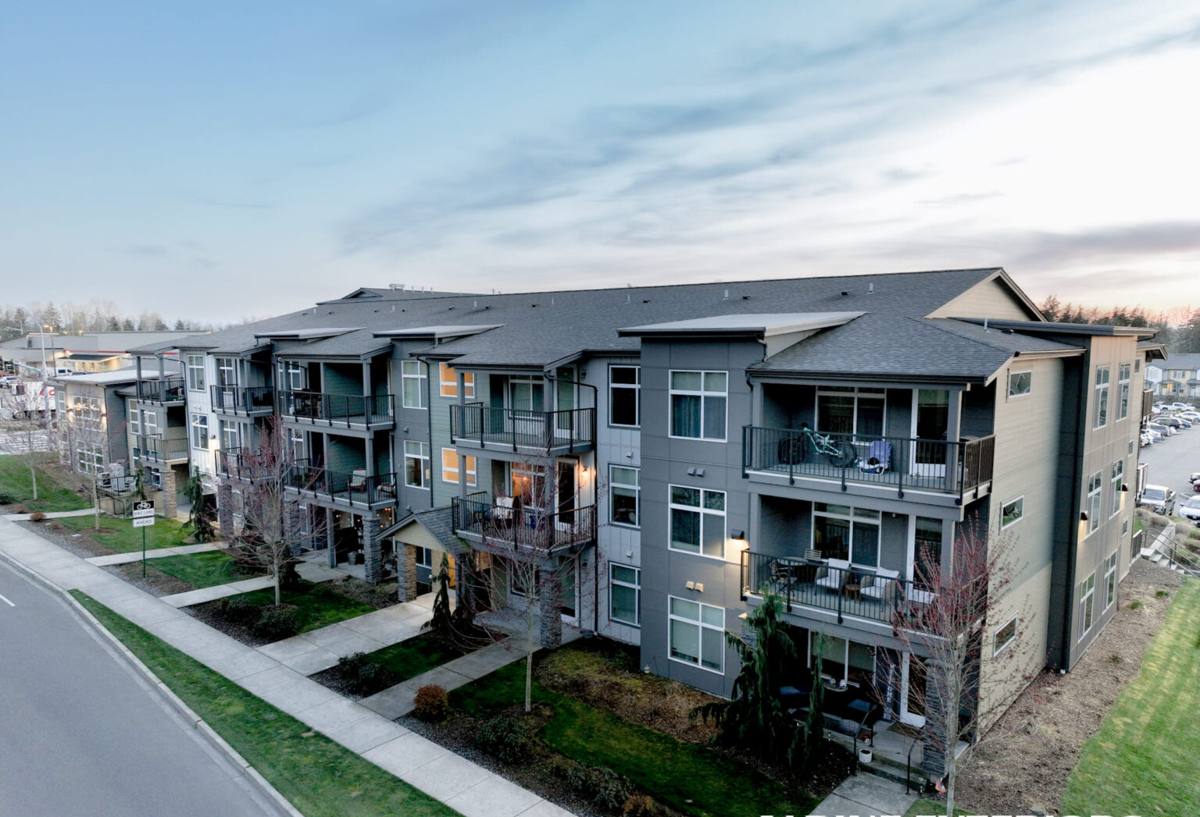
Why Local Climate Actually Matters Here
Lynden sits close enough to the Salish Sea and the Strait of Georgia that salt-laden air is a real factor on siding, trim, and fasteners — even set back from the water, marine air moves inland on the regional weather patterns. Add Whatcom County's driving winter rain, wind-driven moisture against west and south-facing walls, and a moss season that can run from October through April in shaded, north-facing exposures, and you've got a climate that's genuinely tougher on exterior materials than a lot of homeowners assume. Siding here isn't just decorative — it's the first and most-tested line of defense against moisture intrusion, and it needs to hold its shape, color, and seal for decades in conditions that include freeze-thaw cycles, sustained damp periods, and UV exposure during the dry summer stretch.
Vinyl Siding: What It Gets Right
Vinyl earned its market share honestly. It's worth understanding its real strengths before we get into the trade-offs:
- Lower upfront material and labor cost — generally the least expensive siding option installed today.
- No painting required — color is mixed through the panel, not applied as a surface coating.
- Lightweight and fast to install — crews can cover a house quickly, which keeps labor costs down.
- Low-maintenance in mild, dry climates — a rinse with a hose handles most surface dirt.
In a dry inland climate with moderate sun and little wind-driven rain, vinyl can be a perfectly reasonable choice for a lot of homeowners. Our reservations are specific to how it performs in a wet, marine-influenced, moss-prone environment like ours — not a blanket claim that the product doesn't work anywhere.
Where Vinyl Runs Into Trouble in Our Climate
Vinyl is a plastic panel that's engineered to expand and contract with temperature — that's normal and by design. The issue in Whatcom County is what happens at the overlaps, J-channels, and butt joints where panels meet: those are the exact spots where wind-driven rain gets pushed sideways during a winter storm, and vinyl's installation method (hung loosely on nails to allow for movement) isn't a sealed system the way fiber cement with correctly caulked and flashed joints is. Over enough seasons of driving rain, some homes see moisture working behind panels at those transition points, especially on exposed west walls.
Vinyl also softens and can distort or warp when exposed to sustained high heat — reflected sunlight off a window or a dark-colored surface nearby is enough in some cases. And in freezing temperatures, vinyl becomes noticeably more brittle; a stray branch, ladder, or hard impact in January can crack a panel in a way it wouldn't in July. None of this is catastrophic on its own, but it adds up to a material that behaves differently across our seasonal swings than a rigid fiber cement panel does.
Color is the other long-term issue. Vinyl's color runs through the material, but it still fades under UV exposure over the years, and unlike a painted surface, faded vinyl can't be refreshed with a repaint to match — the color is baked into the resin formulation, so a faded 15-year-old panel won't match a new replacement panel bought off the shelf today.
James Hardie Fiber Cement: The Case For It
James Hardie siding is a cement, sand, and cellulose fiber composite, cured into rigid planks and panels. It's a heavier, denser material than vinyl, and it's built and finished differently:
- Non-combustible — fiber cement doesn't contribute fuel to a fire the way vinyl or wood products can.
- Dimensionally stable — it doesn't expand, contract, warp, or soften with heat the way vinyl does.
- ColorPlus factory finish — a baked-on, UV-cured coating applied under controlled conditions, engineered to resist fading and hold color far longer than field-applied paint.
- Climate-specific engineering — Hardie's HZ10 product line is formulated for wetter, colder regions like ours, addressing moisture and freeze-thaw performance directly rather than as an afterthought.
- Impact and moisture resistance — it won't crack from cold-weather impact the way brittle vinyl can, and it doesn't support the kind of moisture retention that promotes rot or mold growth against the substrate.
Fiber cement isn't magic — it has to be installed correctly, with proper flashing, clearances, and caulking, to perform the way it's engineered to. That's true of any siding. But the material itself is built for exactly the conditions Whatcom County throws at a house year-round: sustained damp, salt air, moss pressure, and real temperature swings.
Side-by-Side Comparison
| Factor | Vinyl Siding | James Hardie Fiber Cement |
|---|---|---|
| Material | PVC (plastic) panel | Cement, sand, cellulose fiber composite |
| Fire behavior | Combustible plastic, can melt/ignite | Non-combustible |
| Cold-weather durability | Becomes brittle, can crack on impact | Stable across temperature swings |
| Heat exposure | Can warp or distort from reflected heat | Dimensionally stable |
| Color longevity | Fades over time, can't be spot-repainted to match | ColorPlus factory finish resists fading; can be repainted if needed |
| Moisture handling at seams | Overlap system, not a sealed joint | Caulked, flashed joints when installed to spec |
| Typical upfront cost | Lower | Higher |
| Manufacturer warranty | Varies by product line, often prorated | Non-prorated, transferable limited warranty |
| Resale/appraisal perception | Viewed as a standard, budget-friendly upgrade | Often viewed as a premium, durability-driven upgrade |
The Cost Conversation, Honestly
Vinyl will almost always come in cheaper on the initial quote — that's real, and we won't pretend otherwise. The question worth asking is what you're paying for over the life of the siding, not just on installation day. Vinyl's lower cost reflects lighter material, faster installation, and a panel system that isn't designed to be repaired piecemeal or repainted if it fades or fails at one section — often the practical fix is replacing an entire elevation to get a color match. Fiber cement costs more upfront and takes longer to install correctly (it's heavier, requires specific fastening and cutting practices, and benefits from an experienced crew), but it's a system that can be spot-repaired, repainted, and maintained in place for decades without a full tear-off.
Warranty structure is part of this math too. Ask any siding contractor for the actual warranty document, not just the sales pitch — look at whether it's prorated (coverage value declines every year) and whether it transfers to a new owner if you sell the home. That's a real number, not a marketing detail.
What to Check Before You Decide
- Get the actual manufacturer warranty document for any product you're considering — read the proration schedule and transfer terms.
- Ask how the contractor handles flashing and caulking at seams, corners, and penetrations — this is where most siding failures start, regardless of material.
- Ask which specific Hardie product line (or vinyl gauge/profile) is being quoted — not all products within a brand perform the same.
- Ask what happens to a damaged panel in 10 years — can it be color-matched and spot-repaired, or does it require a wider tear-off?
- Check how your home's exposure (west-facing walls, shaded north sides prone to moss, low clearance to grade) factors into the contractor's installation plan.
Why We Only Install James Hardie
We made a decision as a company to install one siding system — James Hardie — rather than offer a menu of products at different price points. That's not because vinyl can't be installed well; it's because we've seen how our climate specifically treats each material over the years, and we'd rather stand behind one system we trust completely than offer a cheaper option we'd have reservations about recommending for a Lynden exterior. Non-combustible construction, a factory-cured finish that holds color, and a product line engineered for wet, marine-influenced climates line up with what actually holds up here — through moss season, driving winter rain, and the salt air that comes with living in Whatcom County.
If you're weighing vinyl against Hardie for your own home, we're glad to walk through both honestly, including where vinyl would genuinely serve you fine and where we think it wouldn't hold up the way you'd want it to. If you'd like a straightforward look at your home and a no-pressure estimate for a James Hardie installation, we're happy to come take a look.