 Lynden Siding
 A Local Crew Just Across the Line
Abbotsford sits close enough to Lynden that a lot of homeowners there have never had a straightforward option for exterior work from a crew that actually knows this stretch of the border region. Most of the big siding and roofing outfits are based well into the Lower Mainland or well south into Washington, and neither one necessarily understands the specific mix of coastal moisture, farmland exposure, and freeze-thaw swings that Fraser Valley homes deal with every year. We work this area regularly, and our crews treat an Abbotsford job the same way we treat a job in Whatcom County: same materials, same install standards, same follow-through.
That matters more than it sounds like it should. Exterior work is one of those trades where the difference between a good job and a bad one doesn't show up for two or three years — and by then, whoever installed it may not be easy to reach. A crew with a permanent base nearby has a reason to get it right the first time.
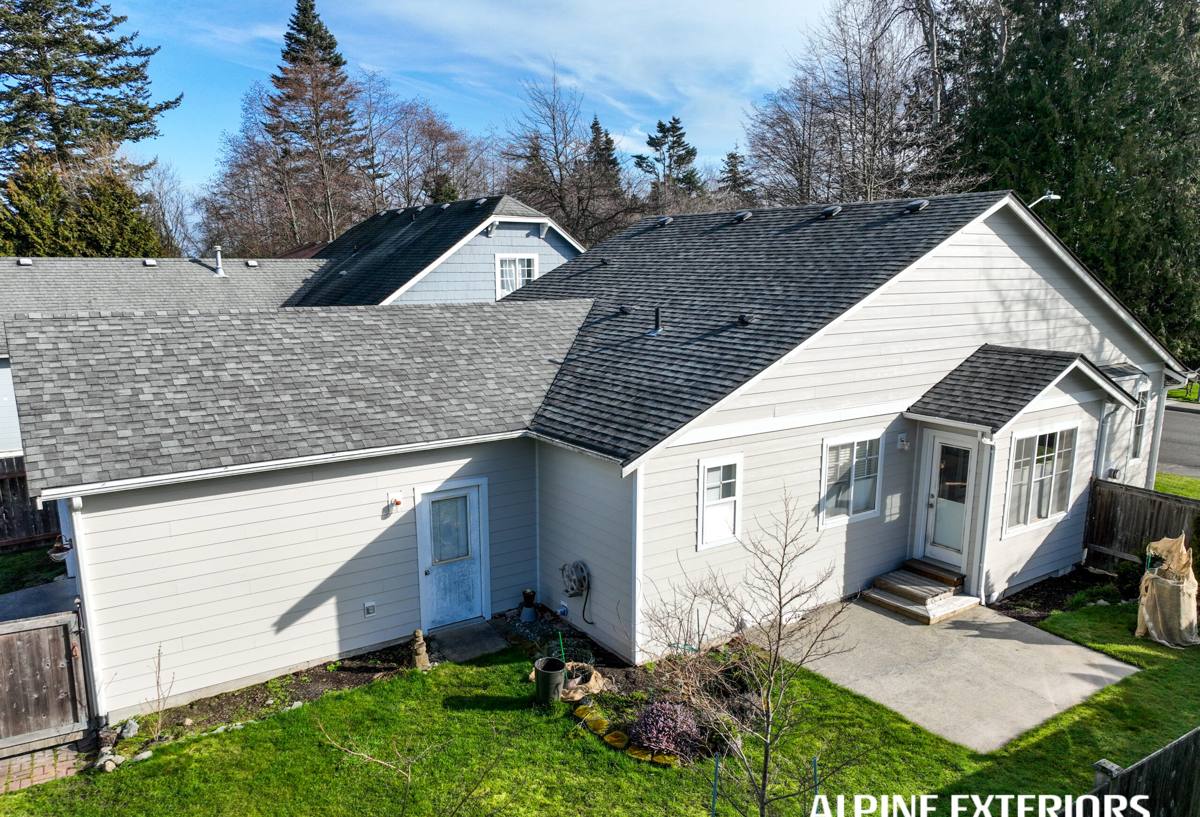
What This Climate Does to a House
Abbotsford and the surrounding Fraser Valley get a version of the Pacific Northwest's marine climate that leans wetter than a lot of people expect, with the Fraser River valley and nearby coastline adding a salt-air component that inland homes further from the water don't deal with as much. Add long stretches of grey, damp weather where surfaces barely get a chance to fully dry, and you've got conditions that are hard on almost every exterior material eventually.
Salt Air and Coastal Moisture
Airborne salt accelerates corrosion on fasteners, flashing, and any metal trim that isn't properly rated for coastal exposure. It also interacts with paint and coatings over time, which is part of why factory-applied, baked-on finishes tend to outlast field-painted surfaces in this kind of environment — a site-painted board is fighting salt exposure with a coating that was never engineered for it.
Driving Rain and Wind-Driven Moisture
Storms coming off the Strait and up the valley don't just drop rain straight down — wind pushes it sideways into wall assemblies, which is exactly the scenario that exposes weak siding laps, poor flashing details, and gaps around windows and trim. A wall system that isn't detailed correctly for wind-driven rain will eventually let moisture behind the cladding, and once that happens the damage is often hidden until it's serious.
Moss, Algae, and a Long Shoulder Season
Shade, moisture, and mild temperatures for much of the year add up to a long moss and algae season on north-facing walls, roofs, and anywhere airflow is limited. Some siding materials resist this better than others, and it's a real factor in how a house looks five or ten years after installation, not just how it performs structurally.
Why We Only Install James Hardie Fiber Cement
We get asked fairly often why we don't offer vinyl, LP SmartSide, Cemplank, Allura, or primed wood siding as options. The honest answer is that we made a decision as a company to standardize on one product system — James Hardie fiber cement — because we think it's the best match for this climate and because a single product standard lets our crews get genuinely expert at installing it correctly, rather than being generalists across five different systems with five different failure modes.
That doesn't mean the other products are worthless. Vinyl is inexpensive and low-maintenance in mild, dry climates. Engineered wood products like LP SmartSide have real strengths in fire-prone, dry regions. Cedar has a look a lot of people love. But in a wet coastal climate with salt air and long damp seasons, each of those comes with trade-offs we're not willing to install and stand behind:
- Vinyl can warp or distort with sustained heat and doesn't hold up as well as fiber cement to physical impact or long-term UV exposure, and it isn't fire-resistant.
- Engineered wood siding relies on maintaining its protective coating and sealed edges over the life of the product; where that maintenance lapses, moisture intrusion at cut edges and fastener points becomes a real risk.
- Primed wood and cedar require an ongoing paint and maintenance cycle, and are naturally more attractive to moisture, insects, and rot in a climate that rarely gives a wall assembly a long dry stretch.
James Hardie fiber cement is cement, sand, and cellulose fiber — it doesn't burn, it doesn't rot, and it isn't attractive to insects. Hardie's ColorPlus finish is a factory-applied, baked-on coating that's engineered to hold color and resist fading far longer than field-applied paint, which matters directly for the salt-air and UV combination this area sees. Hardie also engineers specific product lines (their HZ5 and HZ10 designations) for different climate zones, accounting for moisture and temperature exposure rather than using one generic formulation everywhere. Backed by a strong transferable warranty and a track record of decades of real-world performance when installed to spec, it's the product we're comfortable putting our name behind.
Beyond Siding: Roofing, Windows, and Decks
Siding is only one piece of a home's exterior envelope, and treating it in isolation is a mistake. A house is a system — roof, siding, windows, and any exposed decking all have to work together to keep water out and keep the structure dry.
Roofing
A roof in poor condition undermines even the best siding job, since water that gets past a failing roof will eventually find its way down into wall cavities. We evaluate roofing condition as part of any full exterior project, not as an afterthought.
Windows
Window flashing and integration with the siding plane is one of the most common failure points on older homes in wet climates. When we replace siding around existing windows, we pay close attention to flashing details rather than just trimming around what's there.
Decks
Exposed decks take a direct hit from driving rain, standing moisture, and moss growth, especially on shaded sides of a house. Deck materials and ledger-board flashing details matter just as much as siding choice for keeping water away from the structure.
Siding Material Comparison for a Wet Coastal Climate
| Material | Moisture Resistance | Maintenance | Fire Resistance | Typical Lifespan |
|---|---|---|---|---|
| James Hardie Fiber Cement | Strong; non-combustible core resists water damage | Low; factory finish, no regular repainting | Non-combustible | Multiple decades with proper install |
| Vinyl | Moderate; joints and seams are vulnerable points | Low, but can crack or fade over time | Combustible | 15-30 years |
| Engineered Wood (LP SmartSide) | Depends heavily on maintained coating and sealed edges | Moderate; edge sealing and coating upkeep matter | Combustible | Varies with maintenance |
| Cedar / Primed Wood | Weak without consistent upkeep in wet climates | High; regular painting/staining required | Combustible | Varies widely with maintenance |
What a Local Crew Actually Means Here
Working a border-adjacent area like Abbotsford isn't complicated, but it does help to have a crew that treats it as normal rather than as an inconvenient exception. That means clear communication about scheduling, straightforward logistics for materials and equipment, and a crew that shows up when it says it will rather than deprioritizing a job because it's a few extra minutes past a service boundary on a map. We approach an Abbotsford project with the same standards, materials, and installation practices as any job on the Washington side of the line.
It also means we're not a crew that flew in from three hours away for one job and won't be around if a question comes up two years later. We're based nearby, and we intend to still be nearby when your warranty questions come up.
Cost Factors for a Full Exterior Project
Every home is different, and we don't quote sight-unseen, but these are the main factors that drive cost on a siding, roofing, window, or deck project in this region:
| Factor | Why It Matters |
|---|---|
| Home size and wall complexity | More corners, gables, and cutouts mean more labor and material waste |
| Existing wall condition | Rot or water damage found during tear-off adds repair scope before new material goes on |
| Product line and thickness | Hardie panel and plank options vary in price by profile, texture, and climate rating |
| Trim and accessory work | Corner boards, fascia, and window trim are often replaced alongside siding for a consistent result |
| Access and site conditions | Multi-story walls, tight lot lines, or landscaping obstacles affect labor time |
What to Ask Before You Hire Anyone
Whether you call us or someone else, these are worth confirming before signing a contract for exterior work in this region:
- Are they licensed and insured to work on both sides of the border if that applies to your project?
- Do they carry manufacturer certification for the specific siding product they're proposing?
- Will they put moisture barrier and flashing details in writing, not just "siding replacement" as a line item?
- What's the actual manufacturer warranty, and is it transferable if you sell the home?
- Can they explain why they recommend one product over another for this specific climate, rather than just what they happen to stock?
- Do they have a plan for disposing of old siding material responsibly?
Our Process
We start with an on-site look at the home, not a phone estimate, because moisture damage and flashing issues aren't visible from a photo. From there we walk through material options, give you a straightforward written quote, and if you move forward, we handle tear-off, any necessary repair to the sheathing or framing underneath, and full installation to manufacturer specification. We check our own work against Hardie's installation guidelines before we call a job finished, not after a callback.
If you're weighing a siding, roofing, window, or deck project for a home in Abbotsford, we're happy to come take a look and give you a straightforward, no-pressure estimate — no obligation, just an honest read on what your home actually needs.