 Lynden Siding
 Siding Built for Aldergrove's Coastal Weather
Aldergrove sits close enough to the border that many homeowners here already know our crew from work we've done around Lynden and the rest of Whatcom County. The building envelope challenges don't stop at the line on the map. Homes in this part of the Pacific Northwest, on both sides of the border, deal with the same weather patterns: damp winters, a marine-influenced climate that carries salt air in from the Strait of Georgia and Puget Sound, driving rain that comes in sideways during fall and winter storms, and a moss and algae season that can stretch for most of the year on shaded exterior walls. Siding here isn't just a cosmetic choice. It's the first line of defense against moisture intrusion that, left unchecked, leads to rot, mold, and expensive structural repairs.
We approach every Aldergrove-area project the same way we approach a job in Lynden: assess the specific exposure of that particular house, not a generic template. A wall that faces prevailing southwest winds needs different detailing than a sheltered north wall tucked behind trees. Getting that right is the difference between siding that looks good for two years and siding that performs for decades.
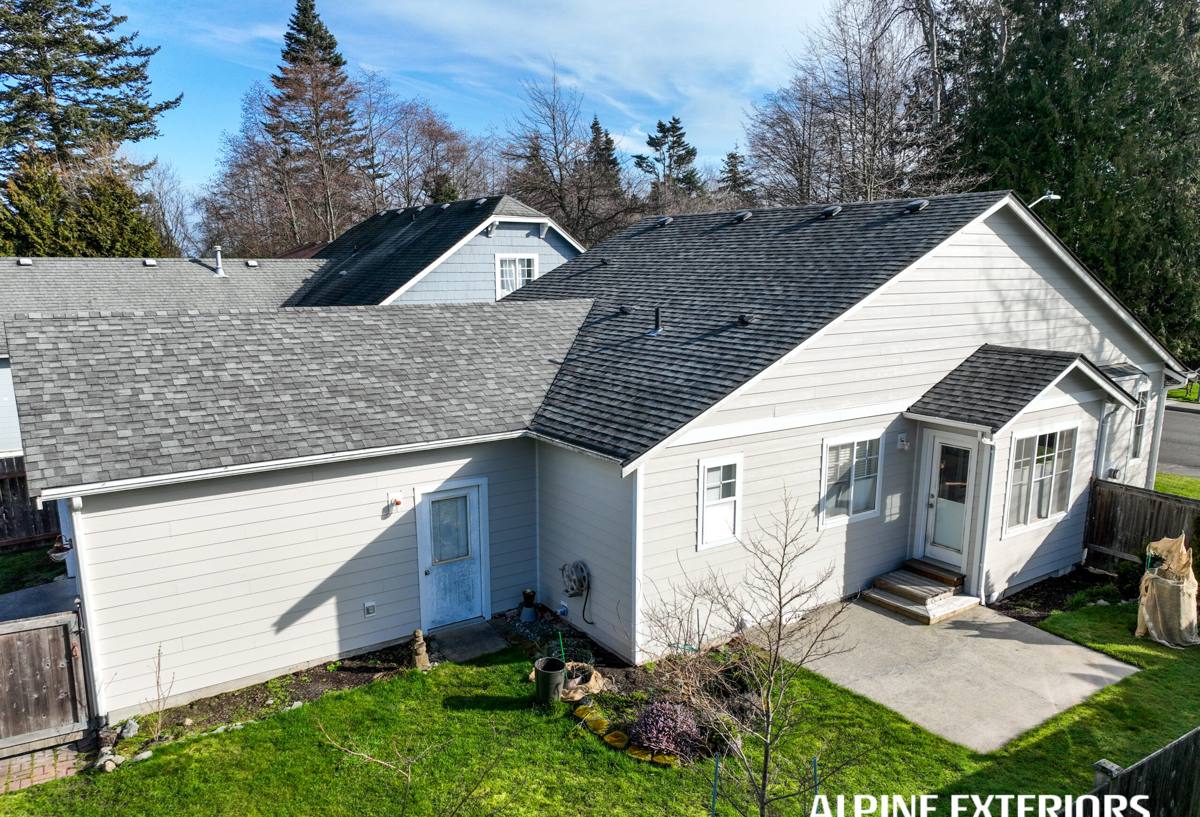
What the Local Climate Actually Does to Siding
Salt Air and Corrosion
Proximity to the Strait of Georgia and the broader Salish Sea means airborne salt is a real factor for exterior materials in this region, even well inland from the immediate shoreline. Salt-laden moisture accelerates corrosion of fasteners, trim hardware, and any metal flashing that isn't properly rated for coastal exposure. It also breaks down lower-quality paint finishes faster than an inland climate would, leading to chalking, fading, and early repainting.
Driving Rain and Wind-Driven Moisture
Storms coming off the water don't just drop rain straight down — wind pushes it sideways into wall assemblies, especially around window and door openings, corners, and anywhere siding meets trim. This is where most real-world moisture problems start. It's rarely the field of the siding that fails first; it's the transitions, laps, and penetrations where water finds a path behind the cladding.
Moss, Algae, and the Shade Factor
Between the tree cover common in this area and the long stretches of overcast, damp weather, north-facing and shaded walls stay wet longer than sun-exposed ones. That extended dampness is exactly what moss and algae need to take hold. On porous or absorptive siding materials, that growth can work into the surface over time. On a properly finished, dense fiber cement product, it stays on the surface and washes off far more easily.
Why Fiber Cement Makes Sense Here
We install James Hardie fiber cement siding exclusively, and the reasoning is straightforward when you look at what this climate does to different materials over a 20-30 year ownership horizon.
- Non-combustible core — fiber cement doesn't feed a fire the way wood-based products can, which matters for insurance conversations and peace of mind.
- Dimensionally stable — it doesn't swell, warp, or cup the way wood and some engineered wood products can when they take on repeated moisture cycling.
- Factory-applied finish — ColorPlus finish is baked on under controlled conditions, which holds up better against UV and salt exposure than field-applied paint, and touch-up product is available for the rare nick or scratch.
- Rot resistance — cement-based composition means it isn't a food source for the organic growth that plagues damp-climate exteriors.
We get asked fairly often why we don't offer vinyl, LP SmartSide, or cedar as options. It's not that these products don't have a place in the market — it's that after years of doing exterior work in exactly this kind of weather, we don't think they hold up as well here, and we'd rather stand behind one system we trust completely than offer a menu of products with different long-term outcomes. Vinyl can warp and fade under UV and temperature swings, and it doesn't offer the same fire performance. Engineered wood siding relies heavily on maintaining an intact factory coating — any breach at a cut edge or fastener hole becomes a moisture entry point. Cedar is a beautiful, honest material, but it demands a maintenance commitment (staining or sealing on a real schedule) that most homeowners underestimate going in. James Hardie asks less of you over time while holding its look.
How We Approach a Siding Project
Assessment First
Before we talk products or pricing, we look at the house: current siding condition, any signs of past moisture intrusion, window and door flashing condition, and the specific wind and rain exposure of each elevation. This tells us where extra attention is needed during installation, not just what color the homeowner likes.
Installation to Manufacturer Spec
James Hardie siding performs the way it's rated to perform only when it's installed correctly — proper clearances, correct fastener pattern and type, correct flashing and weather-resistive barrier integration, and correct joint treatment. A lot of the siding problems we get called out to diagnose on other companies' work trace back to shortcuts at these exact details, not the product itself.
Trim, Flashing, and Water Management
Given how much of the region's moisture problems originate at transitions rather than open wall surfaces, we pay particular attention to head flashing above windows and doors, kick-out flashing where rooflines meet walls, and proper drainage planes behind the siding itself.
Comparing Siding Options for This Climate
| Factor | James Hardie Fiber Cement | Vinyl | Engineered Wood (LP SmartSide) | Cedar |
|---|---|---|---|---|
| Fire performance | Non-combustible | Combustible, can deform under heat | Combustible | Combustible |
| Moisture/rot resistance | High | Won't rot, but seams can trap moisture | Moderate; relies on intact coating | Requires ongoing sealing/staining |
| Coastal/salt air durability | Strong with proper finish | Can chalk and fade faster | Coating breakdown at exposed edges | Weathers, needs regular maintenance |
| Typical maintenance | Occasional wash, repaint decades out | Low, but limited repair options | Regular coating inspection | Stain/seal every few years |
| Warranty structure | Long-term, transferable | Varies by manufacturer | Varies, coating often shorter than substrate | None (natural material) |
Beyond Siding: Roofing, Windows, and Decks
Siding doesn't work in isolation. A roof with failing flashing or an aging window that's lost its seal can undermine even a perfect siding installation by letting moisture into the wall assembly from a different direction. Because we handle roofing, windows, and decks in addition to siding, we can look at a home's whole exterior envelope rather than treating each component as a separate problem. That matters a lot in a climate that stresses every part of the exterior at once — roof, walls, and window openings all take the same driving rain and salt air.
Decks in particular take a beating from this weather: standing moisture, freeze-thaw cycling in cold snaps, and UV exposure all shorten the life of a poorly built or poorly maintained deck. If you're already planning siding work, it's worth having us look at the whole exterior at the same time.
What to Expect From a Local Crew
A crew that works this region regularly understands things a traveling or out-of-area contractor doesn't: which elevations of a typical house here take the worst weather, how long moss actually takes to become a problem on a shaded wall, and how to schedule around the wetter months so installation happens in workable conditions. That local knowledge shows up in small decisions throughout a project — not just the big ones.
Questions Worth Asking Any Contractor Before You Hire
- Are you a factory-certified installer for the siding product you're proposing?
- What's your approach to flashing at windows, doors, and roof-to-wall intersections?
- Can you walk me through the manufacturer's fastening and clearance requirements?
- What does the warranty actually cover, and is it transferable if I sell the home?
- How do you handle unexpected moisture damage discovered once old siding comes off?
Planning a Siding Project
Most homeowners start thinking about siding for one of three reasons: visible damage or rot, a desire to update the home's appearance before selling or after buying, or simply reaching the end of a previous siding product's realistic service life. Whatever the starting point, the process from there is similar — assessment, product and color selection, a clear scope of work, and a realistic timeline that accounts for weather windows.
Cost varies with house size, complexity of the exterior (number of corners, window openings, and roof intersections), whether trim and flashing need replacement, and whether there's underlying damage to address before new siding goes on. We'll walk through all of that plainly during an estimate, with no pressure to decide on the spot.
If you're weighing a siding project for a home in the Aldergrove area, we're happy to come take a look and give you a straightforward, no-pressure estimate — what we're seeing on your specific house, what it would take to do it right, and what that looks like cost-wise. Use the form below to get started.