 Lynden Siding
 Aldergrove sits close enough to the coast that homes here deal with a version of weather most inland roofing crews never have to think about: salt-laden air moving in off the Strait, long stretches of driving rain pushed sideways by wind, and a moss season that can run most of the year in shaded, north-facing roof sections. A roof repair here has to account for all three, not just patch the spot where water is currently showing up inside the house. That's the standard we hold ourselves to on every repair call in this area.
Why Roofs in Aldergrove, BC Wear Differently
Roofing failures in this part of the Fraser Valley / Whatcom County border region rarely come from one dramatic event. They build slowly, from a combination of conditions that are easy to underestimate:
- Salt air corrosion — metal flashing, fasteners, and vent caps oxidize faster near the coast, and once a fastener starts to corrode it loses its grip on the material around it.
- Driving rain — wind-driven rain doesn't just fall on a roof, it gets pushed uphill under shingle edges, around chimney flashing, and into any gap that a calm-weather roof wouldn't leak from.
- Extended moss season — shaded slopes, especially those facing north or sitting under tree cover, stay damp long enough for moss and lichen to root into the shingle mat itself, not just sit on top of it.
- Freeze-thaw cycling — even mild winters here bring enough freeze-thaw swings to widen small cracks in sealant, flashing, and aging shingles.
None of these are dramatic on their own. Together, over several seasons, they're the reason a roof that looks fine from the ground can have real problems underneath.
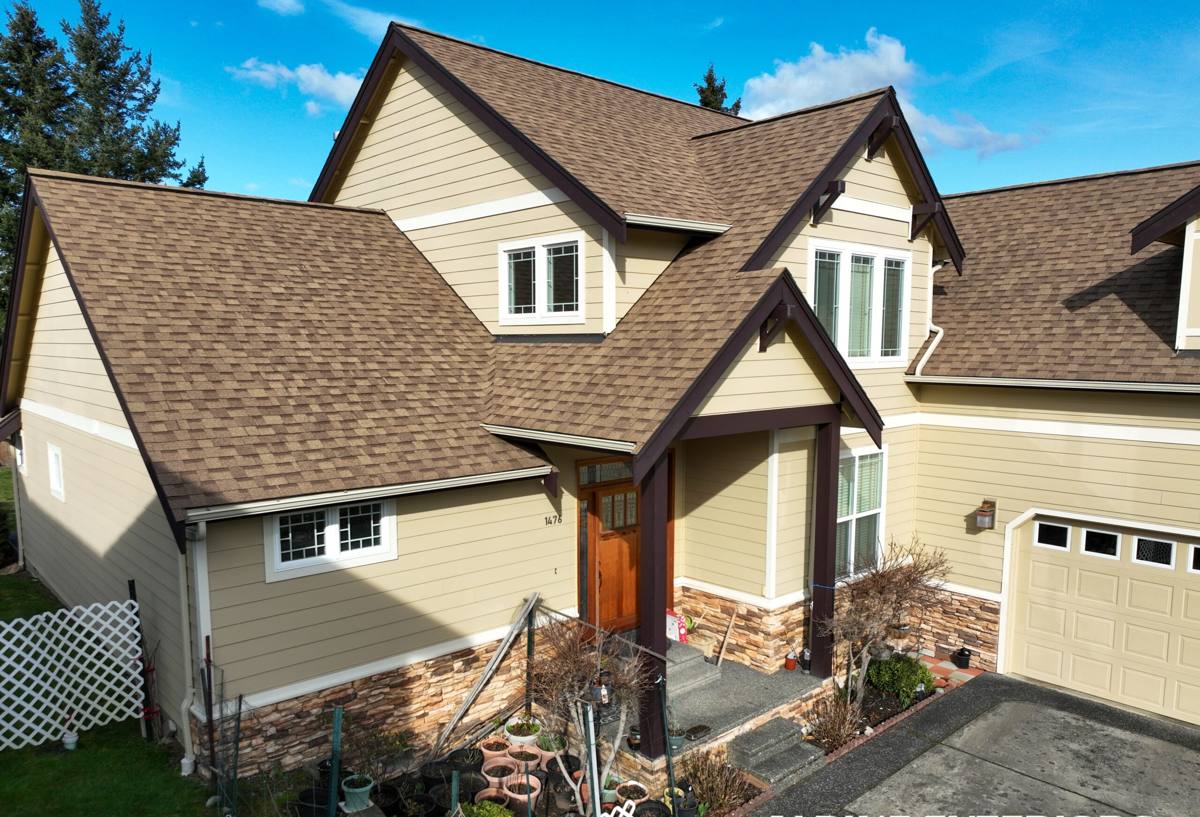
The Repair Issues We See Most in This Area
Moss-Related Damage
Moss holds moisture directly against the shingle surface. Left long enough, it lifts shingle edges, breaks the granule seal, and creates channels for water to travel sideways instead of shedding downhill. By the time moss is visible from the street, it's often already done damage that isn't visible from the ground.
Flashing Failures
Flashing around chimneys, skylights, vent pipes, and roof-to-wall transitions is where most active leaks actually originate — not the open field of the roof. Salt air speeds up corrosion on lower-grade metal flashing and fasteners, and driving rain finds any gap in the seal almost immediately.
Wind and Impact Damage
Coastal storm systems bring gusts strong enough to lift shingle tabs, crack ridge caps, or loosen the seal strip that keeps shingles locked to each other. A few missing or lifted shingles rarely cause an immediate leak, but they're an open invitation for the next storm.
Valley and Gutter Backups
Roof valleys concentrate a large volume of water in a narrow channel. Combined with debris from nearby trees, a valley that isn't clear can back water up under the shingles above it — a slow leak that often shows up as a stain well away from the actual entry point.
What a Correct Roof Repair Actually Involves
A repair that just covers the visible symptom tends to come back within a season or two. A repair done correctly starts with figuring out why the failure happened in the first place, then fixing that root cause along with the visible damage.
- Full-roof inspection, not just the problem spot. A leak in one room can originate several feet away, following the roof deck or rafters before it shows up on a ceiling.
- Deck condition check. If water has been getting in for a while, the plywood or OSB underneath may be soft or delaminated. Shingling over a compromised deck doesn't fix anything.
- Matching materials, not just matching color. Shingle profile, weight, and granule type all affect how well a patch blends and seals with the surrounding roof.
- Flashing done to spec, not caulked over. Proper step flashing, counter-flashing, and pipe boots — not a bead of sealant standing in for missing metal.
- Moss and debris cleared before repair, not after. Repairing over moss just traps it under new material.
Our Roof Repair Process
We keep this straightforward because roof repair doesn't need to be a mystery:
- Inspection and diagnosis — we get on the roof (weather permitting) and identify the actual source of the problem, not just where water is showing up inside.
- Plain-language estimate — what needs to be repaired, why, and what it costs, with repair and replacement options laid out honestly if the roof is borderline.
- The repair itself — matched materials, correct flashing detail, and fastening appropriate for coastal wind exposure.
- Site cleanup — old material and debris hauled off, gutters and valleys cleared of anything dislodged during the work.
- Follow-up — a straightforward explanation of what was done and what to watch for going forward.
Repair or Replace? How We Help You Decide
Not every roof problem needs a full replacement, and not every roof is a good candidate for another round of patching. Here's how we generally think through it:
| Factor | Favors Repair | Favors Replacement |
|---|---|---|
| Roof age | Under 15 years, single localized issue | Near or past expected lifespan |
| Extent of damage | Isolated area (flashing, one slope, a few shingles) | Multiple areas failing at once |
| Deck condition | Solid, dry decking underneath | Soft, delaminated, or repeatedly wet decking |
| Moss/algae history | Recent growth, shingle mat still intact | Long-term moss growth with granule loss |
| Repair history | First or second repair on this roof | Repeated repairs to the same areas |
When a roof falls clearly on the repair side, we say so and repair it — we don't push a replacement a roof doesn't need. When it's borderline, we'll walk you through the honest trade-offs rather than making the call for you.
What Affects the Cost of a Roof Repair
Every roof and every repair is different, but the same handful of factors tend to drive cost up or down:
| Factor | Why It Matters |
|---|---|
| Roof pitch and access | Steeper roofs and difficult access take longer and require more safety setup |
| Extent of moss or debris removal | Heavier growth means more prep time before repair can even begin |
| Flashing complexity | Chimneys, skylights, and multiple roof planes require more detailed flashing work than an open field repair |
| Deck repair needed | Replacing soft or damaged decking adds material and labor beyond the surface repair |
| Material match | Older or discontinued shingle profiles can be harder to match than current standard products |
We give a firm quote after inspection, not a phone-estimate guess — a lot of these factors simply aren't visible until someone is actually on the roof.
Materials We Work With for Repairs
For most repair work in this area, we use standard asphalt composition shingles matched to what's already on the roof, along with galvanized or better-grade flashing metal appropriate for coastal exposure. For roofs with metal panel or standing-seam sections, repairs focus on seam integrity, fastener condition, and panel-to-flashing transitions rather than patching the panel material itself, since metal roofing repair is a different skill set than sealing it over. Our general standard is to use flashing and fasteners rated for the corrosion exposure this area sees, even when it costs a little more up front — replacing corroded fasteners twice costs more than doing it right once.
Signs Your Roof Needs a Repair Call
- Granules collecting in gutters or at downspout outlets
- Shingle edges curling, cracking, or lifting
- Visible moss or dark streaking on north-facing or shaded slopes
- Daylight visible through the attic at roof joints or vents
- Water stains on ceilings or upper walls, especially after wind-driven rain
- Sagging or soft spots noticeable when walking the attic
- Rust staining below metal flashing or vent caps
Moss Prevention and Ongoing Maintenance
Because moss season runs long here, prevention matters as much as repair. A roof that's been recently repaired can grow moss again within a couple of seasons if nothing changes about drainage, shade, or debris buildup. Between repairs, the maintenance steps that make the biggest difference are keeping valleys and gutters clear so water actually reaches the ground instead of pooling against shingle edges, trimming back overhanging branches so shaded sections get more sun and airflow, and having moss and debris cleared before it has a chance to root into the shingle mat rather than after. None of this replaces a proper repair when there's already damage, but it stretches the life of the repair once it's done.
Why It Matters to Hire a Crew That Already Works Aldergrove, BC
Roof repair isn't just about swinging a hammer — it's about correctly reading what a specific climate has done to a specific roof. A crew that regularly works both sides of the Lynden–Aldergrove border area already knows what coastal salt exposure does to fasteners, how far driving rain can travel under a shingle edge in this wind pattern, and which slopes in this region tend to hold moss the longest. That familiarity shows up in faster, more accurate diagnosis and in repair work that's built for the conditions the roof will actually face next winter — not generic conditions from a training manual.
If you're dealing with a leak, visible moss, storm damage, or just want an honest read on whether a roof needs a repair or something more, we're happy to take a look. Reach out for a free, no-pressure estimate using the form below.