 Lynden Siding
 Exterior Work Built for Kendall's Weather
Kendall sits in the foothill country east of Lynden, where the Nooksack Valley starts climbing toward the North Cascades. It's a different exposure than the flat farmland closer to town — more tree cover, more shade, and a longer stretch of wet weeks in fall, winter, and spring. Whatcom County as a whole sits in a marine-influenced weather pattern, and that damp Pacific air pushes rain and humidity inland across the whole county, Kendall included. Add the tree canopy and slower-drying yards that come with living closer to the foothills, and you get siding, trim, and roofing that stay wet longer than they would in a more open, sun-exposed part of town.
That combination — driving rain, shaded lots, and a long moss season — is exactly the kind of environment that separates exterior products that hold up from ones that don't. It's also why we standardized on one siding system instead of offering a menu of options and letting the weather sort out the winners.
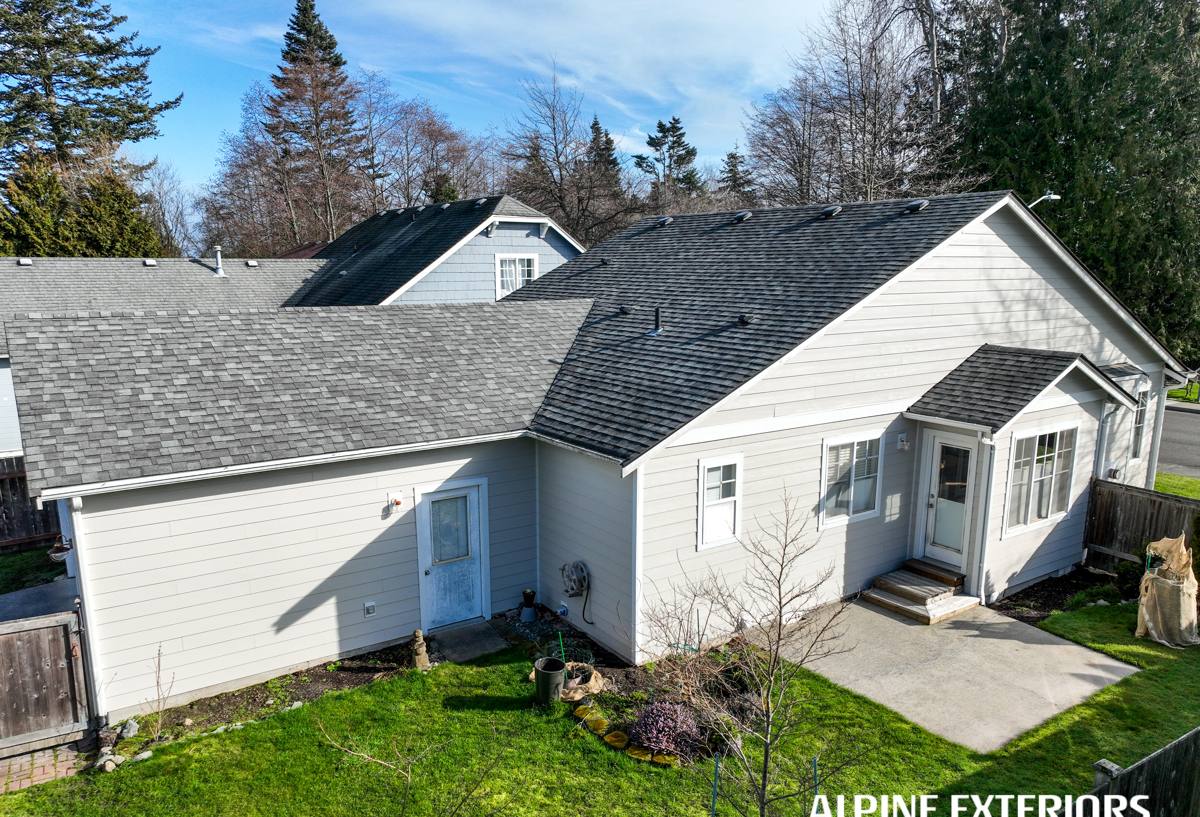
What Kendall Homes Are Up Against
Driving Rain and Wind-Driven Moisture
Storms moving through Whatcom County don't just drop rain straight down — wind pushes it sideways into wall assemblies, especially on the west- and south-facing sides of a house. Over years, that wind-driven moisture finds every weak seam, every poorly caulked joint, and every piece of trim that wasn't flashed correctly. Siding that swells, delaminates, or lets water track behind it turns a cosmetic problem into a rot problem fast.
Moss, Mildew, and Shade
Kendall's tree cover is part of what makes the area appealing, but it also means more shaded wall sections that never fully dry out between storms. Moss and algae don't just sit on the surface — on organic or moisture-sensitive siding materials, they can hold water against the substrate and accelerate breakdown. On a home with a lot of shade, siding choice matters more here than it does on an open, sun-facing lot in town.
Temperature Swings and Seasonal Movement
Foothill properties tend to see a bit more temperature variation than the valley floor — colder mornings, more frost pockets, occasional snow that lingers under tree cover. Siding materials expand and contract with those swings. Products that aren't dimensionally stable can gap at the seams or work fasteners loose over time, which opens the door to the moisture problems above.
Why a Local Crew Matters Out Here
Kendall isn't a subdivision with identical homes — it's a mix of older farmhouses, newer builds, and everything in between, often on larger lots with more tree exposure than in-town properties. A crew that works this specific stretch of Whatcom County knows how the wind typically hits a given orientation, where moss tends to build up fastest, and how to sequence a job around the wetter months instead of fighting them. That local knowledge shows up in small decisions — flashing details, ventilation gaps, product selection — that add up to a siding job that actually performs for the next few decades instead of just looking good on install day.
It also matters for accountability. A crew based in the area is the crew you can call five years from now if something needs a look. We're not passing through.
Why We Install Only James Hardie Fiber Cement
We get asked why we don't offer vinyl, LP SmartSide, cedar, or other fiber cement brands. The honest answer is that we sell one system because we believe it holds up best to exactly the conditions Kendall deals with:
- Fiber cement composition — Hardie siding is made primarily from cement, sand, and cellulose fiber. It doesn't have the wood content that makes engineered wood products vulnerable to moisture-driven swelling and edge deterioration.
- Non-combustible material — Hardie board is rated non-combustible, which is a meaningful difference from wood-based siding, particularly given the wildfire risk that has become more relevant across Washington and the wider Pacific Northwest in recent years.
- ColorPlus factory finish — a baked-on finish applied and cured under controlled conditions, which holds color and resists the fading and peeling that field-applied paint is more prone to over time.
- HZ5 engineering — Hardie makes region-specific formulations for different climate zones. The HZ5 product line is engineered for colder, wetter climates like ours, rather than being a one-size-fits-all product.
- Transferable warranty — a long-term, transferable warranty backed by a manufacturer with decades in the fiber cement category, which matters if you sell the home down the road.
None of this means other products are without merit — vinyl is inexpensive, cedar has real natural appeal, and engineered wood has improved over the decades. But when we weigh moisture behavior, maintenance burden, fire rating, and long-term cost against what Kendall's climate demands, fiber cement from Hardie is what we're willing to stand behind and warranty our labor on.
How the Common Alternatives Compare
| Material | Moisture Behavior | Maintenance | Fire Rating | Typical Lifespan |
|---|---|---|---|---|
| James Hardie fiber cement | Dimensionally stable, resists swelling | Low — factory finish, occasional wash | Non-combustible | 30+ years with correct install |
| Vinyl | Can warp/buckle with heat and cold cycling | Low, but color fades over time | Combustible | 20-30 years, varies widely |
| LP SmartSide / engineered wood | Wood-based; sensitive to sustained moisture at cut edges and seams | Moderate — edge sealing and caulk upkeep matter | Combustible | Manufacturer-rated, install-dependent |
| Cedar | Natural material; absorbs and releases moisture, prone to rot if not maintained | High — refinishing, sealing, moss removal | Combustible | Varies widely with maintenance |
Our Siding Process for a Kendall Property
1. On-Site Assessment
We walk the property, look at sun and shade exposure on each wall, check existing siding and trim condition, and look for signs of past moisture intrusion around windows, doors, and roof-wall intersections — the details that matter more on a shaded foothill lot than a flat, open one.
2. Tear-Off and Substrate Check
Removing the old siding lets us inspect the sheathing underneath. If there's hidden rot or water damage — more common on homes that have sat under tree cover for years — we address it before anything new goes up. Covering a compromised substrate just hides a problem, it doesn't fix it.
3. Weather Barrier and Flashing
Correct house wrap, flashing at every penetration, and proper drainage gaps behind the siding are what actually keep wind-driven rain out. This step matters as much as the siding material itself — even the best siding fails early if it's installed directly against a wall with no way for incidental moisture to drain and dry.
4. Hardie Installation to Manufacturer Spec
Correct nailing patterns, proper clearances at grade and roof lines, and factory-finished cut edges sealed per Hardie's installation guidelines. This is where a lot of siding jobs go wrong industry-wide — installation errors, not the product itself, are the most common cause of premature failure.
5. Trim, Caulking, and Final Walkthrough
Trim details finished out, seams sealed, and a walkthrough so you understand what you're looking at and what (if anything) needs periodic attention.
Beyond Siding: The Full Exterior
Siding doesn't work in isolation — it's one piece of a home's weather envelope alongside the roof, windows, and any exterior structures like decks. We handle all four because they interact:
- Roofing — a roof in poor condition sends water down onto siding and trim it was never meant to handle; roof and siding age together on most homes.
- Windows — poor window flashing is one of the most common sources of hidden wall moisture, regardless of how good the siding is.
- Decks — ledger board connections and deck-to-wall junctions are a frequent moisture entry point if not detailed correctly during a siding project.
When we're already on-site for siding, it's often the right time to have us take a look at the roof, window flashing, or deck ledger condition too, rather than treating each as a separate future project.
Maintenance: What Kendall Homeowners Should Actually Do
Fiber cement is low-maintenance, not no-maintenance. In a shaded, moss-prone area like Kendall, a little seasonal attention goes a long way:
- Rinse siding with a garden hose once or twice a year, more often on heavily shaded walls
- Keep gutters clear so overflow doesn't run down the siding face
- Trim back vegetation and tree limbs that keep a wall section shaded and damp
- Check and refresh caulking at trim joints and penetrations every few years
- Address any moss growth early with a soft wash rather than pressure washing directly into seams
- Have flashing and trim inspected if you notice discoloration or soft spots near grade
What a Free Estimate Looks Like
We come out, look at your home's specific exposure — sun, shade, wind direction, roof condition, existing siding — and give you a straightforward assessment of what it needs and what it would cost to do right. No pressure, no inflated scope. If your home isn't a good candidate for a full re-side yet, we'll tell you that too.
If you're in Kendall and thinking about siding, roofing, windows, or a deck, reach out for a free, no-pressure estimate. We'll walk the property with you and talk through what your home's specific exposure actually calls for.