 Lynden Siding
 Composite Decking Built for Nooksack's Climate
Nooksack sits in a part of Whatcom County that gets more than its share of soaked, gray months. Homes here deal with driving rain off the valley, damp marine air carried inland from the Sound, and a moss season that can run from October clear through April. A deck that isn't built with that reality in mind starts showing problems fast — soft spots, green film underfoot, fastener corrosion, and boards that cup or split after a few wet-dry cycles. Composite decking, installed correctly, is one of the more sensible answers to that climate, but "composite decking" covers a wide range of products and installation quality, and not all of it holds up the same way out here.
This page is about one thing: what a composite deck needs to actually perform in Nooksack, and how we build it so it does.
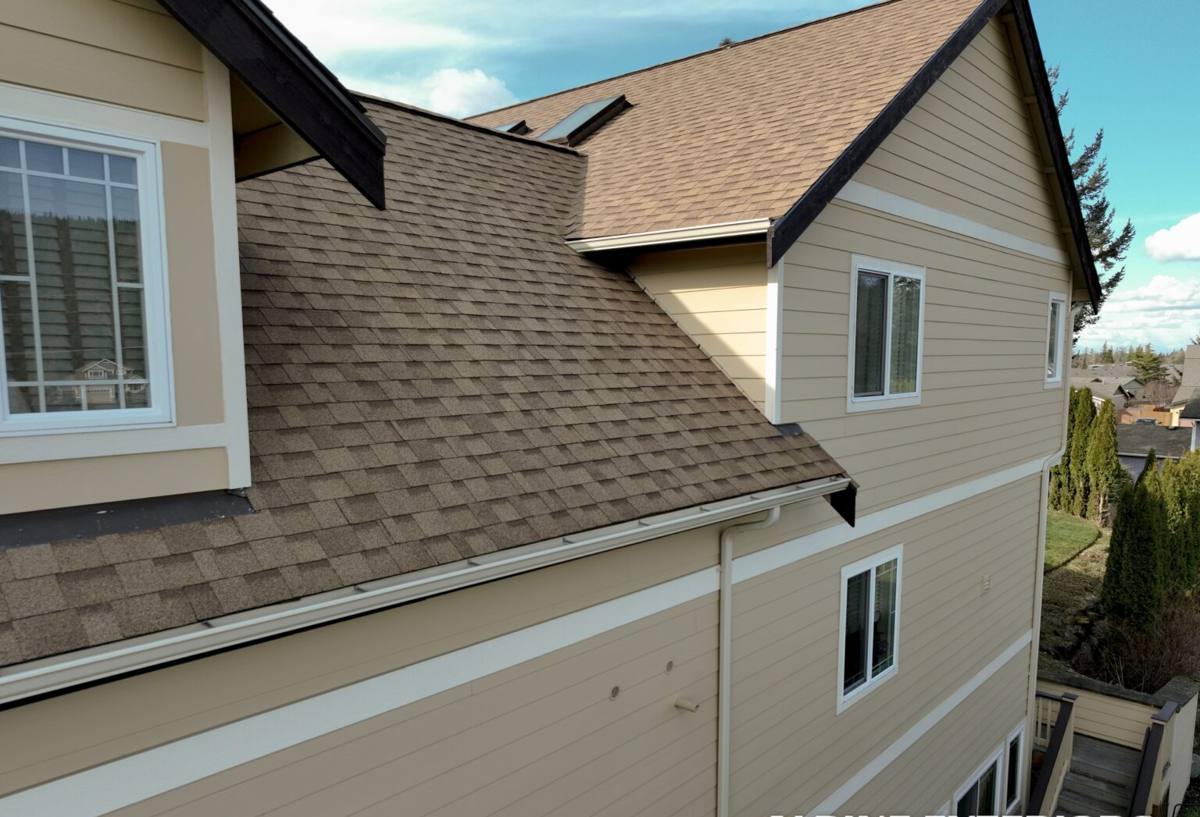
What Whatcom County Weather Does to a Deck Over Time
Before talking about the product, it helps to understand what it's up against. A few things are consistent across Nooksack and the surrounding Lynden area:
- Persistent moisture keeps deck surfaces damp for days at a stretch, which is exactly the environment moss and algae need to establish.
- Driving rain pushes water sideways under railings, against fascia boards, and into any gap in the framing that wasn't flashed or sloped properly.
- Salt-tinged marine air moving inland accelerates corrosion on lower-grade fasteners, brackets, and any exposed metal hardware.
- Freeze-thaw swings, while milder here than east of the mountains, still happen enough in winter to stress joints and any wood component that's holding water.
None of this is unusual for the region — it's just the baseline a deck has to survive, year after year, without babying.
Composite vs. Wood vs. PVC: How They Actually Compare Here
Every decking material has real trade-offs. We install composite most often in this climate because of how it balances maintenance, moisture behavior, and appearance, but it's worth seeing the honest comparison rather than taking that on faith.
| Material | Moisture Behavior | Maintenance | Typical Lifespan |
|---|---|---|---|
| Pressure-treated wood | Absorbs water, prone to cupping/splintering in wet climates | Annual staining/sealing recommended | 10–15 years before major repair |
| Capped composite | Resists moisture absorption; cap layer sheds surface water | Periodic washing; no staining or sealing | 25–30+ years (manufacturer-dependent) |
| PVC decking | Fully moisture-resistant, does not absorb water | Low; occasional cleaning | 25–30+ years |
| Uncapped composite (older-style) | Can absorb some moisture at the surface, more prone to mold/mildew | Regular cleaning needed to prevent staining | 15–20 years |
We're upfront that wood costs less up front and PVC costs more. Composite, particularly capped composite, tends to be the middle ground that makes sense for most Nooksack homeowners: it doesn't need the yearly upkeep wood does, and it costs less than full PVC while still shedding moisture well.
Why We Steer Away from Uncapped and Lower-Grade Composite
Older or budget uncapped composite boards were a real improvement over wood when they came out, but in a climate this wet, the exposed composite surface can still hold surface moisture long enough for mold and mildew to take hold, especially in shaded or north-facing installations common in this area. Our standard is capped composite for exactly that reason — it's a maintenance and moisture call, not a brand preference.
What a Correctly Built Composite Deck Requires
The board itself is only part of the job. Most of the decks we get called out to repair failed because of what's underneath, not the decking material on top.
Substructure and Ventilation
Composite boards need airflow beneath them just as much as wood does — trapped moisture under a deck causes rot in the framing even when the surface boards themselves can't absorb water. That means correct joist spacing, proper ground clearance, and no dead air pockets where damp Whatcom County air just sits.
Flashing and Ledger Attachment
Where a deck attaches to the house, the ledger board and flashing detail matter more than almost anything else on the project. A poorly flashed ledger is the single most common cause of hidden water damage behind a deck, and it's invisible until siding or framing rot shows up years later.
Fastener and Hardware Grade
With the marine-influenced air this area gets, we use fasteners and structural hardware rated for coastal/corrosive exposure, not standard interior-grade hardware. It costs a little more up front and saves a lot of grief later.
Drainage and Slope
Decking should be sloped slightly away from the house so water actually leaves the surface instead of pooling against the siding — a detail that matters even more here given how many wet days in a row Nooksack gets in a typical winter.
Our Installation Process
We keep the process straightforward and don't skip steps to save time on a job that's supposed to last decades.
- On-site assessment — we look at existing framing (if it's a replacement), grading, drainage direction, and how the deck ties into the house.
- Framing and structural work — repair or build the substructure to current code, with corrosion-rated hardware and proper joist spacing for the composite product being used.
- Flashing and waterproofing — ledger flashing and any house-to-deck transition points sealed before a single board goes down.
- Board installation — hidden fastener systems where the product allows, consistent spacing for expansion, and attention to board orientation for drainage.
- Railing, stairs, and trim — matched fascia and trim pieces, railing systems installed to code for height and baluster spacing.
- Final walkthrough — we go over care and what to expect in the first year as the deck settles in.
Choosing Boards, Colors, and Fastener Systems
Composite decking now comes in a wide range of colors and grain patterns, including options designed to resist fading from the region's UV exposure during the drier summer stretch. Two practical choices matter more than color:
- Hidden vs. face-screwed fasteners — hidden fastener systems give a cleaner surface with no exposed screw heads for water to sit around, though they require tighter installation tolerances.
- Grooved-edge vs. square-edge boards — grooved boards work with hidden clip systems; square-edge boards are typically face-screwed and better suited to certain stair or picture-frame details.
We'll walk through samples on-site so you can see how a color actually looks against your siding and in your yard's actual light, rather than guessing from a small swatch.
Maintenance: What Composite Actually Needs Here
One of the real selling points of composite is how little it asks for, but "low maintenance" doesn't mean "no maintenance" in a climate that grows moss on everything that sits still.
| Task | Frequency | Why It Matters Here |
|---|---|---|
| Sweep debris / leaves | Regularly in fall | Trapped organic matter holds moisture against boards, feeding moss and staining |
| Wash surface | 1–2x per year | Removes pollen film and early moss growth before it establishes |
| Check railing hardware | Annually | Marine-influenced air can corrode lower-grade hardware over time |
| Inspect under-deck ventilation | Annually | Confirms airflow hasn't been blocked by landscaping or storage |
No staining, no sealing, no sanding — that's the real difference from wood, and it's a big part of why composite makes sense in a place where a dry weekend to do yard maintenance isn't guaranteed.
Cost Factors to Expect
Every deck is different, but the line items that move the price are consistent:
| Factor | Effect on Cost |
|---|---|
| Deck size and shape | Larger and more complex layouts (angles, multiple levels) increase material and labor |
| Board tier (capped composite vs. PVC) | Higher-tier materials cost more up front but reduce long-term maintenance |
| Substructure condition | Replacing rotted or undersized framing adds cost but is not optional for a safe deck |
| Railing and stair complexity | Custom railing systems and multi-run stairs add labor |
| Site access | Difficult access or grade changes on a given lot can add setup time |
We give a specific number after seeing the site — broad ranges without an on-site look aren't much use to you, and we'd rather walk your property first.
Why Hiring a Crew That Already Works Nooksack Matters
A deck built to a generic spec sheet doesn't account for how much rain this part of Whatcom County actually sees, how shaded certain lots get, or how the local building department handles permitting and setback questions for deck additions. A crew that already works in and around Lynden and Nooksack has already worked through those details on other homes nearby — what ventilation actually holds up, which fastener grade is worth the extra cost, and how to sequence a build around a wet forecast instead of fighting it.
That local familiarity is also what tells us when a homeowner is being upsold on more deck than they need, or undersold on the structural work a replacement actually requires. We'd rather tell you the truth about your specific site than recite a national sales script.
Questions Worth Asking Before You Hire
- Will the substructure be inspected or rebuilt, not just covered over?
- What fastener and hardware grade is included, and is it rated for our climate?
- Is the ledger board flashing detail part of the written scope of work?
- Is the composite product capped, and what's the manufacturer's warranty?
- Does the quote include permitting where required?
If you're weighing a new composite deck or a replacement for one that's showing its age in Nooksack, we're happy to take a look and give you a straight, no-pressure estimate — just fill out the form below.