 Lynden Siding
 Deck Building in Blaine: Built for Salt Air and Driving Rain, Not Against Them
Blaine sits right at the water's edge on the northern tip of Whatcom County, close enough to Semiahmoo Bay and Drayton Harbor that salt air reaches most homes in town, not just the ones with a water view. Add in driving rain off the water and a moss season that runs a good part of the year, and an outdoor deck in Blaine faces a tougher climate than the same structure would in a drier, more sheltered part of the county. We're based just up the road in Lynden, and Blaine is regular territory for our crew, which means we've watched decks age here over years, not just guessed at how they'd hold up.
A deck is one of the more exposed structures on a property. Unlike a wall, which sheds water down and away, a deck's horizontal surfaces catch rain directly, hold onto moisture longer, and take direct sun and freeze-thaw cycling on top of that. In a coastal town like Blaine, those conditions compound quickly if the framing, fasteners, and decking material weren't chosen and installed with the local climate in mind. This page covers what we've learned building decks specifically for Blaine's conditions, and what a homeowner here should expect from a correctly built one.
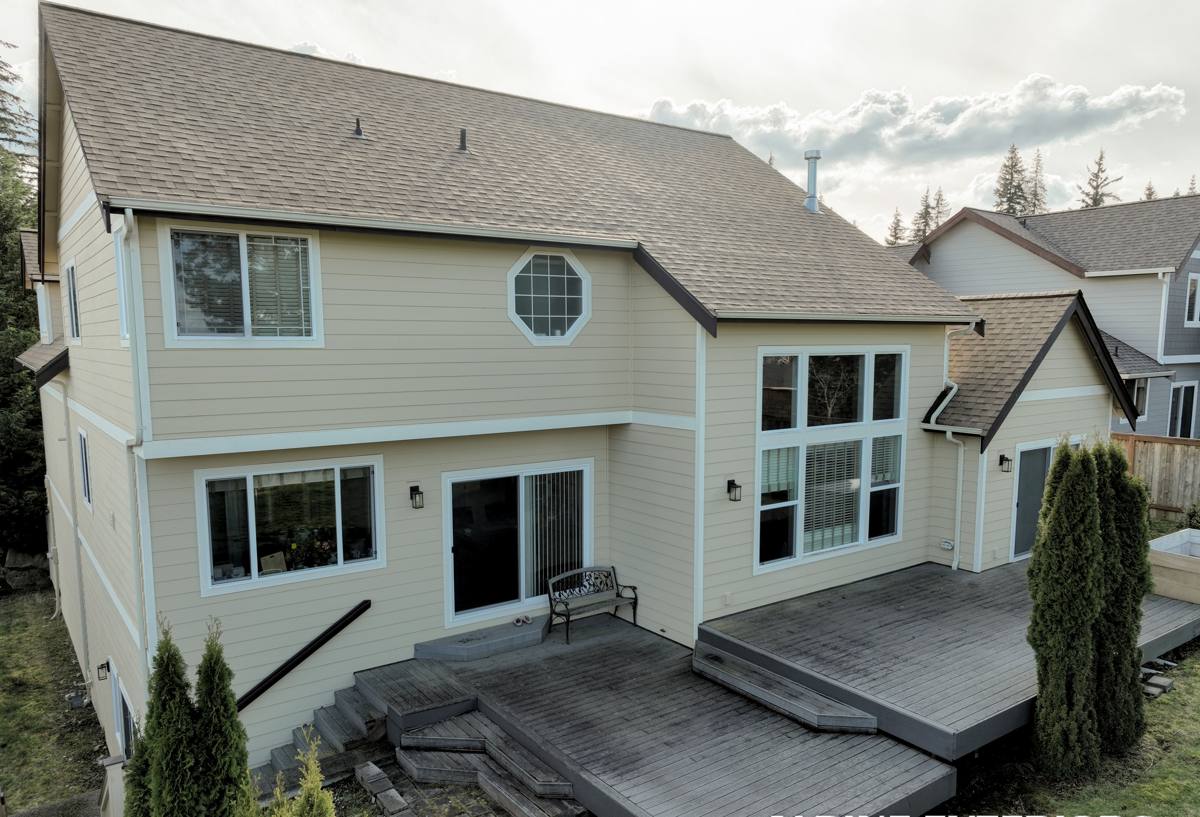
What Blaine's Climate Does to a Deck
Salt Air Near the Water
Salt-laden air accelerates corrosion on any exposed metal — fasteners, joist hangers, railing hardware, structural screws. A deck built with standard-grade hardware in Blaine will show rust and pitting years before the same deck would inland, and corroded fasteners are one of the more common reasons an older deck develops loose boards or a wobbly railing. This isn't a hypothetical; it's the pattern we see on service calls and rebuilds close to the water.
Driving Rain and Standing Moisture
Storms off the water don't just fall straight down — wind pushes rain sideways into ledger connections, under railing posts, and into any gap where water can collect instead of drain. A deck's flat surface holds that moisture longer than a vertical wall does, especially where boards are spaced too tightly or the substructure doesn't allow air to move underneath. That standing moisture is what eventually softens wood, rusts fasteners from the inside out, and starts rot at the connection points a homeowner can't see without pulling boards.
A Long Moss Season
Mild temperatures and near-constant dampness give moss and algae a long growing season on shaded or north-facing decks, and Blaine's mix of tree cover and coastal humidity makes this worse than it is further inland. Moss on decking isn't just cosmetic — it holds moisture against the board surface and turns a deck slick and genuinely unsafe underfoot, particularly on stairs.
Decking Material Options for a Coastal Deck
Every decking material handles Blaine's climate differently, and the right choice depends on budget, how much maintenance a homeowner actually wants to do, and how close the deck sits to the water. We'll walk through the honest tradeoffs rather than push one material as a universal answer.
| Material | Coastal Performance | Maintenance | Typical Lifespan |
|---|---|---|---|
| Pressure-treated lumber | Good if properly sealed and re-treated; softer wood is more prone to splintering near salt air over time | Annual sealing/staining recommended | 15-20 years with upkeep |
| Cedar | Naturally rot- and insect-resistant, but surface graying and moss growth happen faster in constant coastal moisture | Regular cleaning and periodic sealing | 15-20 years with upkeep |
| Composite decking | Doesn't absorb moisture the way wood does, resists rot, and sheds algae growth more easily than wood surfaces | Occasional washing; no sealing or staining | 25-30 years, per manufacturer warranties |
| Aluminum decking | Highly resistant to salt corrosion and moisture; a strong fit directly on the water, at a higher material cost | Minimal | 30+ years |
We install all of these depending on what a homeowner is after. Composite has become the most common choice for Blaine decks specifically because it holds up against moisture and moss without the annual sealing routine wood needs — but a well-built cedar or pressure-treated deck, maintained on schedule, can still serve a homeowner well for many years. The honest answer depends on how much upkeep you want to sign up for.
Structural Framing Still Matters Regardless of Decking Choice
Whatever decking material sits on top, the framing underneath is pressure-treated lumber built to structural code, and that framing is where a lot of coastal deck problems actually start. A composite deck built on framing with substandard fasteners or poor ledger flashing will still fail at the substructure, even though the visible boards look fine. We treat the framing and hardware choices as just as important as the decking surface itself.
What a Correctly Built Blaine Deck Involves
A deck that's going to hold up against salt air and driving rain needs a handful of details done right from the start, most of which aren't visible once the project is finished.
- Proper ledger board flashing: Where a deck attaches to the house, flashing has to shed water away from the ledger connection and the home's wall assembly — this is one of the most common failure points on older decks we've been called out to repair.
- Corrosion-resistant fasteners and hardware: Stainless steel or hot-dip galvanized fasteners and joist hangers, rated for exterior and coastal use, instead of standard-grade hardware that starts rusting within a few seasons this close to the water.
- Board spacing for drainage and airflow: Correct gapping between boards lets water drain through instead of pooling, and lets air move underneath to help the structure dry out between storms.
- Footings set below frost depth and on solid bearing: Footings that aren't set correctly can shift with freeze-thaw cycling and ground moisture, leading to an uneven or bouncy deck over time.
- Joist tape or capping on framing lumber: A protective layer over the tops of joists and beams keeps standing water from soaking directly into the wood at the connection points where fasteners penetrate.
None of this is unusual or exotic — it's standard best practice for deck construction. The difference in Blaine is that skipping any one of these details shows up faster than it would in a drier, more sheltered part of the county, because the climate here doesn't give a shortcut much room to hide.
Railings, Stairs, and Hardware Built for Salt Air
Railings and stairs take more direct handling and weather exposure than the deck surface itself, and they're also where corroded hardware becomes a real safety issue rather than just a maintenance annoyance. We build railing posts with through-bolted connections rather than relying only on lag screws, and we spec corrosion-resistant hardware throughout, since a loose or rusted railing post close to the water is a problem that develops quietly until it isn't. Stair stringers get the same attention to fastener quality and drainage, since stairs hold moss and standing water more than a flat deck surface does, and a slick stair tread is the kind of thing that turns into a fall.
Our Deck Building Process
Every deck project starts with an actual site visit, not a phone estimate. Blaine properties vary a fair amount depending on how close they sit to the water, how much tree cover shades the lot, and what the existing grade and drainage look like, so a real look at the site is the only way to scope the job accurately.
- Site walk and design conversation: We look at the site, talk through size, layout, and material preferences, and factor in sun exposure, shade, and proximity to the water.
- Design and material selection: We put together a plan with the decking, framing, and hardware specified up front, so there's no ambiguity about what's being built before work starts.
- Permitting: Deck projects of most sizes in Whatcom County require a building permit; we handle that process as part of the job rather than leaving it to the homeowner.
- Construction: Footings, framing, decking, and railings go in following the details above, with inspections at the points the permit requires.
- Final walkthrough: We walk the finished deck with the homeowner, cover basic care and what to expect from the material chosen, and answer any questions before calling the job done.
Deck Maintenance in a Moss-Prone Climate
Even a well-built deck needs some seasonal attention in a climate like Blaine's, and how much depends heavily on the decking material chosen.
- Sweep debris and standing leaves off the deck regularly, especially in fall — trapped organic matter holds moisture and feeds moss growth.
- Wash the deck surface at least once or twice a year to knock back algae and moss before it takes hold, particularly on shaded sections.
- Check railing posts and stair connections periodically for looseness, which can signal fastener corrosion underneath.
- Reseal or re-stain wood decking on the schedule the product calls for — skipping a cycle in this climate lets moisture in faster than it would in a drier region.
- Keep an eye on the area under the deck for standing water or poor drainage, which affects the framing even when the surface above looks fine.
- Trim back overhanging tree branches where possible to reduce shade and debris, both of which extend how long the deck surface stays damp.
Cost Factors for a Blaine Deck
| Factor | What Drives Cost | Coastal Consideration |
|---|---|---|
| Size and layout | Square footage, multiple levels, built-in features like benches or planters | Larger horizontal surface area means more exposure to standing water and moss |
| Decking material | Pressure-treated, cedar, composite, or aluminum, each at a different price point | Lower-maintenance materials cost more up front but resist moisture and moss better long-term |
| Framing and hardware | Standard vs. corrosion-resistant fasteners and hangers | Salt air exposure makes upgraded hardware worth the added cost close to the water |
| Railings and stairs | Material, height requirements, number of stair runs | Through-bolted connections and slip resistance matter more on exposed, wet stairs |
| Site conditions | Slope, existing grade, access for equipment and materials | Drainage planning around the deck footprint to keep water moving away from the structure |
These are general cost drivers rather than a quote — every lot in Blaine sits a little differently relative to the water, tree cover, and existing grade, so we scope each project on site rather than over the phone. A deck built to hold up in this climate costs more up front than the cheapest version of the same structure, but that difference is mostly in fasteners, flashing, and material choices that prevent the kind of early failures we see on decks built without them.
Why a Local Crew Matters in Blaine
A crew that builds decks across Whatcom County regularly sees how salt air, driving rain, and moss actually affect a structure over years, not just how a material performs on a spec sheet. That experience shapes real decisions on a Blaine project: where to spend extra on hardware, how to detail the ledger flashing, and which decking material actually fits a homeowner's site and maintenance appetite rather than a generic recommendation. Blaine's exposed, coastal position isn't the same as more sheltered towns further inland in the county, and a deck built without that difference in mind tends to show its age faster than it should.
If you're planning a new deck or need to replace one that's showing its age, we're happy to take a look and walk you through honest options for your property. Reach out using the form below to schedule a free, no-pressure estimate.