 Lynden Siding
 Metal Roofing Built for the Abbotsford–Lynden Corridor
Homes along the Abbotsford, BC and Lynden, WA border sit in one of the wettest, mossiest stretches of the Pacific Northwest. The Fraser Valley funnels marine air up from the Salish Sea, and that same weather pattern rolls straight across the international line into Whatcom County. If you own a home here, you already know the pattern: months of steady drizzle, the occasional hard windstorm off the water, and a roof that never really gets a chance to dry out between October and May. Metal roofing has become a popular answer to that problem, and for good reason — but only when it's specified and installed correctly for this specific climate.
We install metal roofing on homes throughout Lynden and the surrounding area, including properties close enough to Abbotsford to share its exact weather exposure. This page covers what that actually means for material choice, installation details, and long-term performance — not a generic rundown of metal roofing in general.
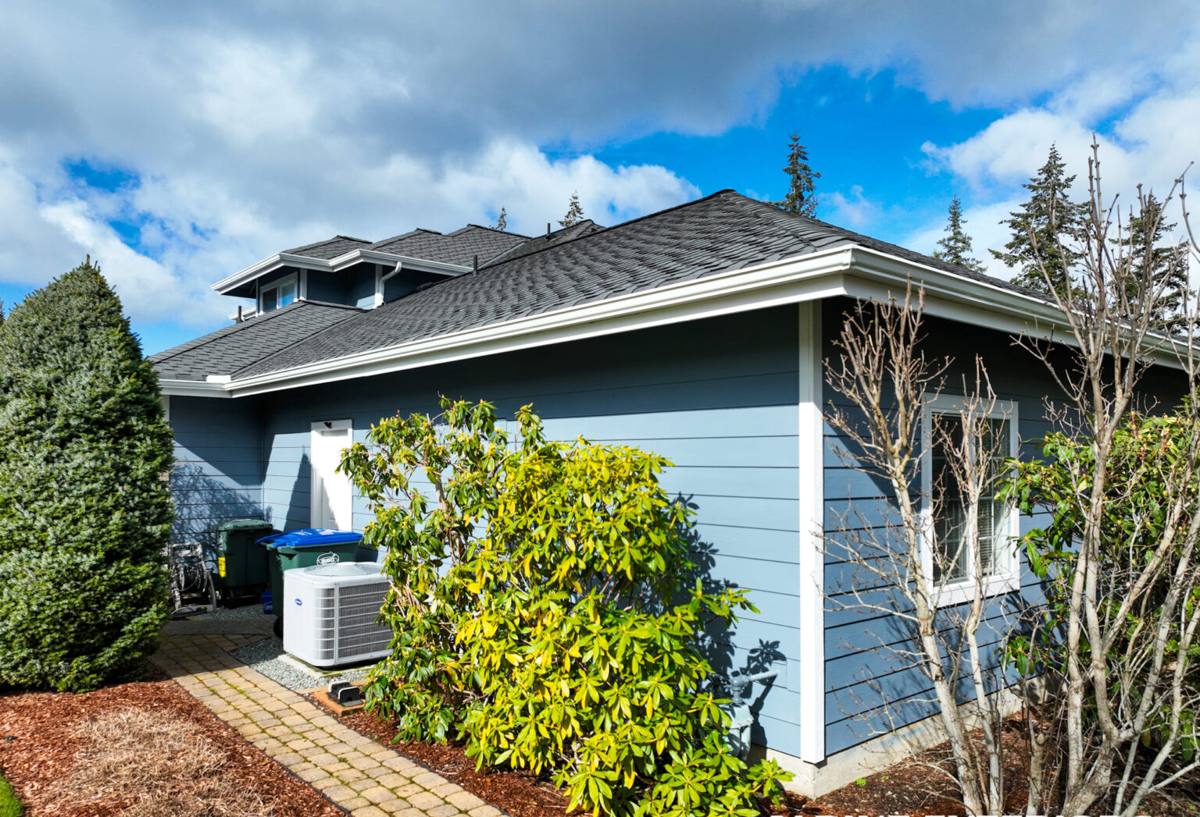
What Salt Air, Driving Rain, and Moss Actually Do to a Roof Here
Three regional factors drive almost every roofing decision we make for homes in this corridor:
- Salt-tinged marine air: Proximity to Georgia Strait and the broader Salish Sea means airborne moisture carries trace salt, which accelerates corrosion on unprotected or poorly coated metal fasteners, flashing, and cut edges.
- Driving, wind-driven rain: Storms here don't just fall straight down — wind pushes rain sideways under laps, around penetrations, and into any gap in the underlayment or flashing system. A roof that's fine in a light rain can leak badly in a wind-driven one.
- Extended moss season: Shaded, north-facing, and low-slope sections stay damp for months at a time, which is exactly what moss and algae need to establish. On asphalt shingles that means granule loss and mat degradation; on metal it's mostly cosmetic, but only if the panel finish and fastening details are right.
None of these factors are unique to Abbotsford or Lynden individually — they're a regional condition shared across the border. That's why we treat this as one climate zone when we spec a roof, regardless of which side of the line a house sits on.
Why Metal Handles This Combination Well
Metal roofing has a real advantage in wet, moss-prone climates: it doesn't provide the organic surface texture that moss and algae need to root into. Water sheds fast off a properly installed metal panel, and there's no granule layer to erode. It also handles wind-driven rain better than most roofing types when the panel system, underlayment, and flashing are matched correctly — which is the part that actually determines whether a metal roof performs or disappoints.
Panel Types We Install and How They Perform Here
Not every metal roofing product is a good fit for this climate. We steer homeowners toward systems that have a proven track record in wet coastal-influenced climates, and we're upfront about the trade-offs of the alternatives.
| Panel Type | Best For | Local Climate Notes |
|---|---|---|
| Standing seam (concealed fastener) | Most roof types, especially lower slopes | No exposed fastener heads means no long-term source of leaks or rust streaking from driving rain — our default recommendation here |
| Exposed-fastener metal panels | Budget-conscious projects, outbuildings, shops | Lower upfront cost, but exposed fasteners need periodic inspection and eventual re-torquing or replacement as gaskets age in this rain volume |
| Metal shingles/shakes | Homes wanting a traditional roofline profile | Good moss resistance and curb appeal, but more seams and laps than standing seam, so installation precision matters even more |
We also pay close attention to finish and coating. A quality painted (PVDF/Kynar-type) finish resists fading and holds up to the salt content in the air far better than a bare or lower-grade coated panel. In a marine-influenced climate, this isn't a cosmetic upgrade — it's the difference between a roof that looks the same in fifteen years and one that's chalking and streaking in five.
What a Correct Metal Roof Installation Involves
Metal roofing is unforgiving of shortcuts in a way that shingle roofing sometimes isn't. A slightly wrong detail on an asphalt roof might not show up for years; on a metal roof exposed to driving rain, a poor flashing detail can leak the first hard storm. Here's what we consider non-negotiable:
- Full synthetic underlayment — a continuous, high-temperature-rated underlayment as the true waterproof backup layer, not an afterthought under the metal.
- Ice-and-water shield at vulnerable zones — valleys, eaves, and penetrations get a self-adhered membrane, since these are exactly where wind-driven rain finds its way in.
- Proper panel fastening and expansion allowance — metal expands and contracts with temperature swings; fastening that doesn't account for movement leads to oil-canning or fastener fatigue over time.
- Custom-fabricated flashing at every transition — chimneys, skylights, wall intersections, and valleys get flashing bent and sealed for that specific detail, not a generic stock piece forced to fit.
- Corrosion-appropriate fasteners and trim — matched metals and coated fasteners to avoid galvanic corrosion, which is more of a concern in salt-influenced air than it is further inland.
- Adequate ventilation — proper intake and exhaust airflow so moisture doesn't get trapped against the underside of the deck, which matters even more under a non-breathable metal surface.
A Homeowner's Pre-Install Checklist
- Confirm the panel type and gauge being quoted, not just "metal roof"
- Ask what underlayment system is included, not just the panel material
- Get flashing details in writing for valleys, chimneys, and wall transitions
- Confirm the paint/coating grade and its warranty terms separately from the panel warranty
- Ask how existing roof ventilation will be maintained or improved
- Get a clear scope for tear-off, deck repair contingencies, and disposal
Our Process for Abbotsford-Area and Lynden Projects
We keep the process straightforward because most of the risk in a metal roofing project is in the details getting skipped, not in the concept itself.
- On-site assessment. We walk the roof, check the deck condition, note ventilation, valleys, and any problem areas tied to the home's exposure — shaded sides, low-slope sections, prevailing wind direction.
- Product and system recommendation. Based on the roof's slope, exposure, and your budget, we recommend a panel type and finish rather than just quoting the cheapest option.
- Written estimate. Scope, materials, underlayment system, flashing approach, and timeline in writing before anything starts.
- Tear-off and deck prep. Old roofing removed, deck inspected and repaired as needed before a single panel goes on.
- Underlayment and flashing installation. The waterproofing layer and all custom flashing go in first — this is where most future leaks are prevented or created.
- Panel installation. Panels installed to manufacturer spec with correct fastening and expansion allowance.
- Final walkthrough. We review the finished roof with you, including care and maintenance notes specific to a metal roof in this climate.
Why It Matters That We Already Work This Area
A roof spec that works fine in a dry inland climate can underperform here. Crews unfamiliar with this corridor sometimes under-detail flashing or skip ice-and-water shield in areas that don't strictly require it by code but clearly need it given how rain behaves here. Working regularly in Lynden and the surrounding Whatcom County and Fraser Valley area means we're not guessing at how wind-driven rain moves across a roof, how long moss season really lasts, or which finishes hold up against the salt content in the air. Those are things you learn from doing the work here repeatedly, not from a spec sheet.
It also means we're familiar with the mix of roof styles common to this area — from older farmhouse-style homes to newer builds — and can match a metal roofing system to the existing structure without over-selling a product that doesn't fit the home.
Maintenance: What a Metal Roof Actually Needs Here
One reason homeowners move to metal in this climate is reduced maintenance, but "reduced" isn't "none." A properly installed metal roof in the Abbotsford–Lynden area typically needs:
- An annual visual check of flashing, fasteners (on exposed-fastener systems), and sealant points
- Gutter and valley clearing before the fall rains hit, since debris buildup is what creates standing water and moss-friendly conditions even on metal
- Prompt attention to any physical damage — a dropped branch or hail dent should be assessed for coating integrity, since a compromised finish is where corrosion can start
Compare that to the moss treatment, granule loss, and shortened lifespan that shingle roofs often face under this same rain and shade pattern, and the lower long-term maintenance burden of a well-installed metal roof becomes clear.
Cost Factors to Understand Before You Compare Quotes
Metal roofing quotes can vary widely, and the difference usually comes down to a handful of factors rather than the contractor simply marking up the price:
| Factor | Why It Affects Price |
|---|---|
| Panel system (standing seam vs. exposed fastener) | Concealed-fastener systems cost more in material and labor but reduce long-term leak risk |
| Roof complexity | Valleys, dormers, and multiple roof planes increase custom flashing work |
| Deck condition | Rot or damage found at tear-off adds repair cost not visible from the ground |
| Coating/finish grade | Higher-grade paint systems cost more upfront but resist fading and salt exposure longer |
| Ventilation upgrades | Adding or correcting intake/exhaust venting during the reroof adds cost but protects the deck long-term |
We break these out clearly in our estimates so you can see exactly what you're paying for, rather than one lump-sum number.
If you're weighing metal roofing for a home in Abbotsford, BC, Lynden, or anywhere else in the surrounding area, we're happy to walk your roof and give you a straightforward, no-pressure estimate — including an honest read on whether metal is the right call for your specific roof. Use the form below to get started.