 Lynden Siding
 Window Installation Built for Laurel's Climate
Laurel sits in a part of Whatcom County that takes real weather. Driving rain off the Sound, damp air that never fully clears, and long stretches of low winter sun that leave moss and mildew a foothold on anything that stays wet too long. Windows here don't fail because they're old — they fail because water and moisture found a way in around the frame, and nobody caught it until the sill was soft or the drywall inside was staining. If you're a homeowner in Laurel looking at window replacement, the climate should shape almost every decision you make, from the flashing detail to the frame material.
We install windows across the Lynden area, and Laurel's mix of older farmhouses, mid-century ranch homes, and newer builds means we see a wide range of window conditions — original single-pane wood sash, tired aluminum-frame units from a 1980s remodel, and vinyl windows that were installed without proper flashing and are already showing rot at the corners. Whatever your starting point, the goal is the same: a window that seals out wind-driven rain, resists the moss and mildew this region breeds, and actually performs on your heating bill through a Whatcom County winter.
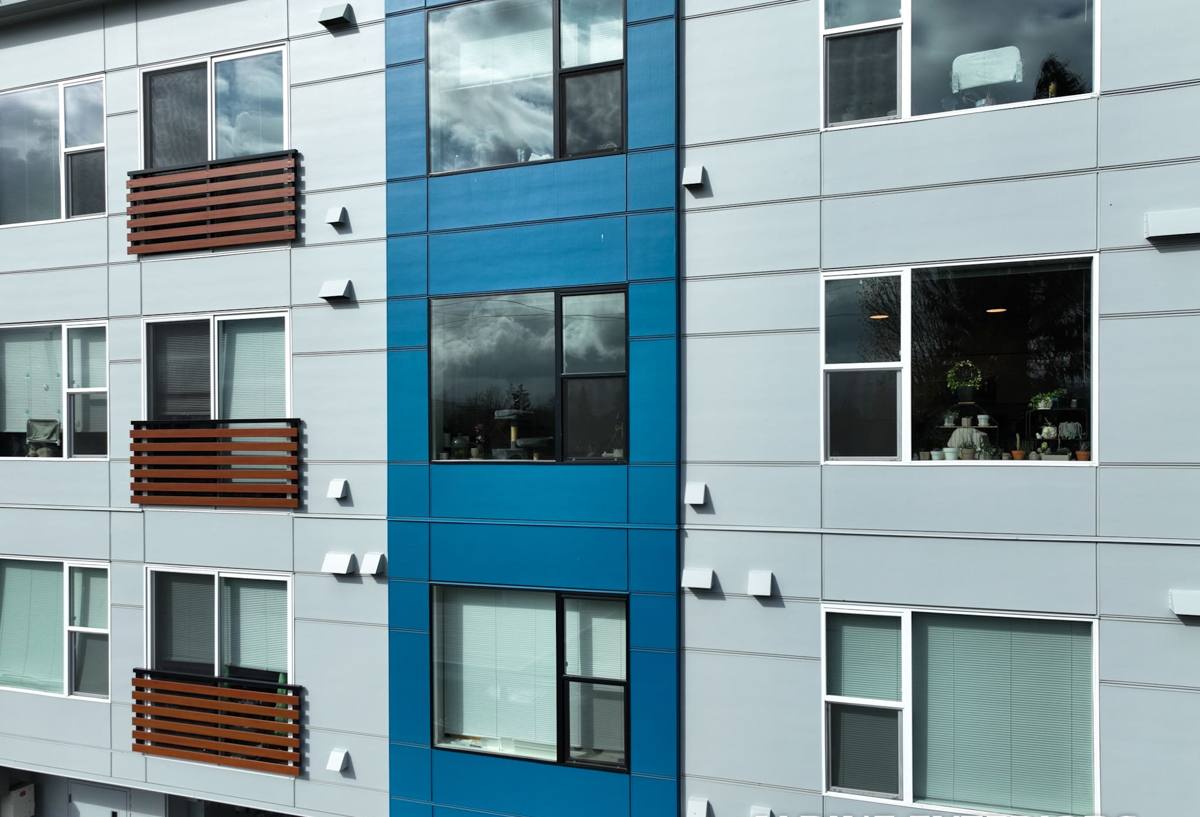
What Laurel Homes Need From a Window Replacement
Wind-Driven Rain Resistance
Rain that falls straight down is easy to shed. Rain that's being pushed sideways by wind off the Sound is what finds every gap in a window's flashing and trim. A correct installation treats the window opening like a small roof — water has to be directed down and out at every layer, from the house wrap behind the siding down through the sill pan and out over the exterior trim, never trapped behind the frame where it can sit against wood sheathing.
Moss and Mildew Resistance
Anything that stays damp in this climate eventually grows something. Window sills, especially wood sills and wood trim, are prime real estate for moss and mildew if water isn't shedding properly or if the sill doesn't have a slight outward pitch. This matters as much for the exterior trim and cladding around the window as it does for the window unit itself.
Condensation and Interior Moisture
Whatcom County's damp air means interior condensation is a year-round concern, not just a winter one. A window with a poor thermal break will sweat on the inside glass and frame, and that moisture running down onto a sill or into a wall cavity causes slow, hidden damage. Proper glazing and a well-sealed frame reduce this significantly.
Wind Load and Air Sealing
Open farmland and exposed lots around Laurel mean wind isn't just a rain-delivery mechanism — it's also a direct source of drafts and pressure on window seals. Air sealing at the rough opening, not just at the window itself, is what actually stops the whistling drafts and cold spots homeowners notice near windows in an older house.
What a Correct Window Installation Actually Involves
A lot of window replacement problems in this region don't come from a bad window — they come from a rushed installation that skipped steps nobody sees once the trim goes back on. Here's what we consider non-negotiable on every job:
- Remove the old window and inspect the rough opening and sill framing for rot or water damage before anything new goes in
- Repair or replace any soft or water-damaged framing — never install a new window over a compromised opening
- Install a proper sill pan flashing that directs water outward, not just a bead of caulk
- Integrate window flashing with the existing house wrap or weather-resistive barrier in the correct shingle-lap order (so upper layers overlap lower ones)
- Air-seal the gap between the window frame and rough opening with a compatible low-expansion foam or sealant — not just insulation stuffed in the gap
- Set the window level, plumb, and square, then confirm it operates smoothly before final fastening
- Finish exterior trim and caulking with materials rated for continuous wet exposure, not standard interior-grade caulk
Skip any one of these steps and the window can look fine for a year or two before a leak shows up — usually as a stain on interior drywall or a soft spot in exterior trim, by which point water has already been getting in for a while.
Choosing the Right Window for a Laurel Home
There's no single "best" window brand or material for every house — it depends on your home's age, exposure, and what you're trying to solve. What we won't do is install a product in a way that ignores how this climate treats it. Below is an honest comparison of the frame materials we work with most often in this area.
| Frame Material | Moisture Behavior Here | Maintenance | Best Fit |
|---|---|---|---|
| Vinyl | Doesn't absorb water or rot; performs well if installed with proper flashing | Low — occasional cleaning | Most Laurel homes wanting value and low upkeep |
| Fiberglass | Very stable in wet/dry cycling, minimal expansion or contraction | Low | Homes with high wind or temperature swing exposure |
| Wood (clad exterior) | Good if exterior cladding is intact; exposed wood sills need vigilance | Moderate to high — repaint/reseal on a schedule | Older or historic-style homes where wood interior trim matters |
| Aluminum | Poor thermal performance, prone to condensation in this climate | Low, but condensation issues are hard to fully fix | We generally steer homeowners away from this for our conditions |
On glazing, double-pane with a low-E coating and an argon fill is the practical standard for this climate — it cuts condensation risk and keeps heating costs down through the wet season without the added cost of triple-pane, which most homes here don't need to justify.
Cost Factors Homeowners Should Understand
We won't quote a number without seeing the job, but the honest answer is that window replacement pricing in this area is driven by a handful of factors, not just the window itself:
| Factor | Why It Matters |
|---|---|
| Frame material and glazing package | Vinyl is generally the most economical; fiberglass and clad-wood cost more upfront |
| Condition of the existing rough opening | Rot or water damage found during removal adds repair time before the new window can go in |
| Number and size of windows | Bundling multiple windows in one visit typically costs less per window than one-off jobs |
| Window style | Simple sliders and single-hungs cost less than casements, bays, or custom shapes |
| Trim and siding work | Matching existing exterior trim or siding around the new window adds labor |
The biggest unknown going in is usually the condition behind the old window, not the window itself — which is exactly why we inspect before we quote a firm number.
Our Process for Laurel Window Installations
We keep the process straightforward and try not to waste your time with a hard sales pitch:
- On-site visit to measure openings, assess condition, and talk through what you actually need — repair vs. full replacement, style, and budget range
- A written estimate with clear scope, so you know what's included before any work starts
- Scheduled installation, typically completed in a single day for most residential jobs, with the opening protected from weather at every stage of the swap
- Final walkthrough to confirm operation, seal, and finish before we consider the job done
We don't leave a rough opening exposed overnight in this climate if we can help it — an unplanned rainstorm on an open wall cavity is exactly the kind of thing that turns a window job into a bigger repair.
Why Hire a Crew That Already Works Laurel
Window installation isn't exotic work, but doing it right in a climate like this one is a matter of habit and attention, not just skill. A crew that installs windows in dry inland climates most of the year can still do competent work — but a crew that installs windows in Whatcom County, week in and week out, has already seen what happens when flashing is skipped, when a sill isn't pitched right, or when a window is set without accounting for how hard the rain comes in sideways off the Sound. That's not a marketing point, it's just what repetition in a specific climate teaches you.
We're familiar with the range of home styles around Laurel and Lynden — older farmhouses with original wood windows, ranch homes from past decades with aging aluminum or early vinyl units, and newer construction where the goal is usually just making sure the original installation was done correctly. Whatever your house, we approach the job the same way: protect the opening, get the flashing and sealing right, and install a window that's going to hold up through a lot of Whatcom County winters, not just look good on installation day.
Signs It's Time to Replace, Not Repair
Not every window issue means full replacement. Here's a general guide to when repair makes sense versus when replacement is the more honest recommendation:
- Fogging or moisture between panes usually means a failed seal — often replaceable as a sash or glass unit rather than the whole window
- Difficulty opening or closing can sometimes be hardware or paint buildup, not a structural issue
- Soft, spongy, or discolored sills and frames usually indicate water intrusion that's already spread into the framing — this is a replacement situation
- Persistent drafts even with the window closed and locked point to a failed seal or a poor original installation
- Visible daylight or gaps around the frame from outside mean the flashing or seal has already failed
If you're not sure which category your windows fall into, that's a normal thing to ask us to look at before committing to a full replacement.
If you're weighing window replacement or repair for a home in the Laurel area, we're glad to take a look and give you a straight answer — no pressure, no upsell, just an honest estimate based on what your windows and openings actually need. The form below gets you started.