 Lynden Siding
 Roofing Built for Wiser Lake's Weather
Wiser Lake sits in a pocket of Whatcom County where the weather does a number on roofs that isn't always obvious from the ground. Homes here catch a steady mix of salt-tinged air moving in off the coast, long stretches of driving rain through fall and winter, and shaded, damp conditions around the lake that keep moss growing for most of the year. None of that is dramatic on its own, but together it wears out roofing materials faster than most homeowners expect, and it punishes a poorly installed roof much sooner than a well-installed one.
A roof that's correct for Wiser Lake isn't just "a roof." It's one that's flashed, ventilated, and sealed with this specific climate in mind — not a generic install pulled from a spec sheet written for a drier part of the state. That's the standard we hold every new roof installation to in this neighborhood.
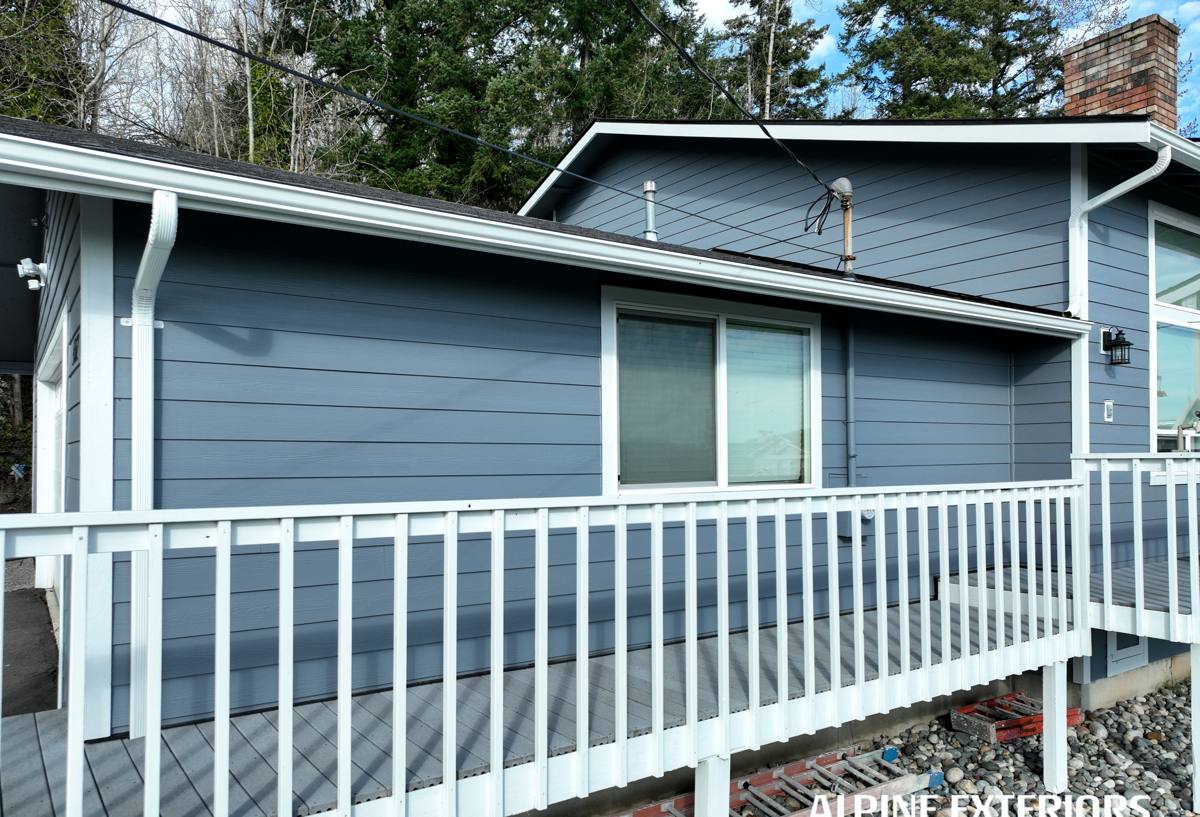
What This Climate Actually Does to a Roof
Moisture That Doesn't Let Up
Driving rain doesn't just fall straight down — wind pushes it sideways and up under shingle edges, around vents, and into any flashing detail that was cut corners on. Over years, that's how leaks start at valleys, chimneys, and skylights long before the shingles themselves look worn out.
Moss and Shade
Properties near the lake and under tree cover stay damp longer after storms, which is exactly what moss and algae need to take hold. Moss isn't just cosmetic — its root structure works into the granule surface of shingles and lifts them slightly, which is where water finds its way in. A roof with poor airflow or shaded north-facing slopes will grow moss faster than one that's ventilated and gets some sun exposure.
Salt Air and Metal Components
Being close enough to feel coastal influence means fasteners, flashing, and any exposed metal on a roof are exposed to slightly corrosive air over time. Cheap or mismatched metal components corrode faster here than they would further inland, which is why material selection for flashing and fasteners matters as much as the shingle brand.
Signs a Wiser Lake Roof Needs Replacing, Not Patching
- Granules collecting in gutters or at downspout outlets — a sign the shingle surface is breaking down
- Dark streaking or thick moss growth across multiple slopes, especially shaded sides
- Soft or spongy spots when walked (a sign of decking damage underneath)
- Daylight visible through the attic roof deck, or damp insulation below the roofline
- Curling, cracking, or missing shingles concentrated near valleys and edges
- A roof older than 20-25 years for asphalt composition, even if it "looks fine" from the driveway
- Repeated leak repairs in the same area — a sign the underlying system, not just the surface, has failed
If a roof is showing two or more of these, a repair is usually a short-term patch on a longer-term problem. We'll tell you honestly which category your roof is in — we don't sell replacements to homeowners who genuinely just need a repair.
What a Correct New Roof Installation Actually Involves
The shingle or panel on top is the part homeowners see, but it's the layers underneath that determine whether a roof holds up through a Whatcom County winter. For a Wiser Lake installation, we treat these as non-negotiable:
Tear-Off and Deck Inspection
We remove the old roofing down to the deck rather than layering over it, because you can't properly inspect or waterproof a roof deck you can't see. Any soft, rotted, or water-damaged sheathing gets replaced before anything new goes down — skipping this step is the single most common cause of early roof failure we see when we're called to fix someone else's work.
Ice-and-Water Shield at Vulnerable Points
Valleys, eaves, and roof penetrations get a self-adhering waterproof membrane underneath the primary underlayment. This is standard practice for our climate, not an upsell — it's the difference between a roof that sheds wind-driven rain and one that lets it wick backward under the shingles.
Synthetic Underlayment, Not Just Felt
A quality synthetic underlayment holds up better to the extended wet exposure common during a multi-day install and provides a more consistent secondary water barrier than older felt products, especially in a climate where rain can move in with little warning.
Proper Flashing at Every Transition
Chimneys, skylights, sidewalls, and roof-to-wall intersections are where most leaks actually originate — not in the open field of shingles. Correct step flashing, counter-flashing, and kick-out flashing at these points is what separates a roof that lasts from one that leaks within a few winters.
Balanced Attic Ventilation
Intake at the eaves and exhaust at the ridge, sized to move air through the attic space, keeps the roof deck dry from underneath and reduces the moisture load that feeds moss growth from the surface. Poor ventilation also shortens shingle life by trapping heat and moisture against the underside of the deck.
Choosing the Right Roofing Material for Wiser Lake
There's no single "best" roofing material — the right choice depends on your home's slope, exposure, budget, and how much long-term maintenance you're willing to do. Here's how the common options actually compare for a property in this area:
| Material | Moss/Moisture Resistance | Typical Lifespan | Maintenance |
|---|---|---|---|
| Asphalt composition shingle | Moderate — needs periodic cleaning in shaded areas | 20-30 years | Low to moderate |
| Metal (standing seam) | High — sheds moisture, resists moss | 40-50+ years | Low |
| Cedar shake | Low without upkeep — absorbs moisture, moss-prone in shade | 20-30 years with maintenance | High |
| Synthetic/composite shake | High — engineered to resist moisture uptake | 40-50 years | Low |
We don't push one material as universally superior. Cedar shake, for example, can look excellent, but on a shaded, damp Wiser Lake lot it demands a maintenance commitment most homeowners underestimate — that's a trade-off we'll walk you through honestly rather than let you find out the hard way. Asphalt composition remains the most common choice for good reason: it's cost-effective, performs well when properly ventilated and flashed, and comes with straightforward manufacturer warranties.
Our Installation Process
- On-site inspection and estimate — we assess your current roof, attic ventilation, and any problem areas before quoting anything
- Material selection walkthrough — we go over options and trade-offs based on your home's exposure and your budget, no pressure toward the most expensive choice
- Scheduling around the weather — we plan installs to minimize open-deck exposure time, which matters more here than in drier regions
- Tear-off, deck repair, and dry-in — old roofing removed, deck inspected and repaired, waterproof underlayment installed same day where possible
- Flashing, ventilation, and final roofing installation — done to manufacturer spec and local code, not shortcuts
- Final walkthrough — we go over the finished roof with you and answer questions before we consider the job done
Permits, Code, and Doing It Right the First Time
Whatcom County and local jurisdictions require permits for full roof replacements, and inspections confirm the work meets current building code — including ventilation and underlayment requirements that matter specifically because of our wet climate. We handle the permitting process as part of the job rather than leaving it on the homeowner, and we build to code minimums as a floor, not a target.
Why a Crew That Already Works Wiser Lake Matters
Roofing crews unfamiliar with this specific area sometimes underestimate how much moss and moisture exposure a lakeside or tree-shaded property actually gets, and they detail the roof accordingly — which shows up as callbacks a few years later. Working regularly in Wiser Lake and throughout Lynden means we already know which slopes need extra ventilation, which properties need moss-resistant material recommendations, and how local wind-driven rain patterns affect flashing decisions. That familiarity doesn't replace good workmanship, but it does mean fewer surprises during the job and a roof that's actually built for the conditions it has to survive.
Keeping a New Roof Performing Long-Term
- Have gutters cleaned at least twice a year — clogged gutters back water up under the roof edge
- Schedule moss treatment or gentle cleaning before it establishes heavily, especially on shaded slopes
- Trim back overhanging branches to reduce shade and debris buildup on the roof surface
- Check attic ventilation isn't blocked by insulation or storage
- Have flashing points (chimney, skylights, sidewalls) visually checked annually, ideally before the wet season
A well-installed roof in this climate can go a long time without major issues, but "install it and forget it" isn't realistic here the way it might be in a drier region. A small amount of upkeep protects a much larger investment.
If your Wiser Lake roof is showing its age or you're planning ahead of the wet season, we're happy to take a look and give you a straightforward, no-pressure estimate — the form below gets you started.