 Lynden Siding
 Abbotsford's Climate Is Harder on Siding Than It Looks
Homes in the Abbotsford area sit in a stretch of the Fraser Valley that gets the worst of two worlds: marine-influenced air moving in off the coast, and long stretches of overcast, wet weather that settle into the valley and don't move on quickly. That combination means siding here deals with more than just rain. It deals with salt-tinged moisture in the air, driving rain that gets pushed sideways into walls during winter storms, and shaded, damp conditions that let moss and algae take hold on north-facing walls and anything under tree cover.
None of that is unique to one street or subdivision — it's the nature of this corner of the Pacific Northwest, on both sides of the border. But it does mean the siding choice and the installation details matter more here than they would in a drier climate. Siding that's marginal in a dry inland town can fail outright in a few years in a place like this.
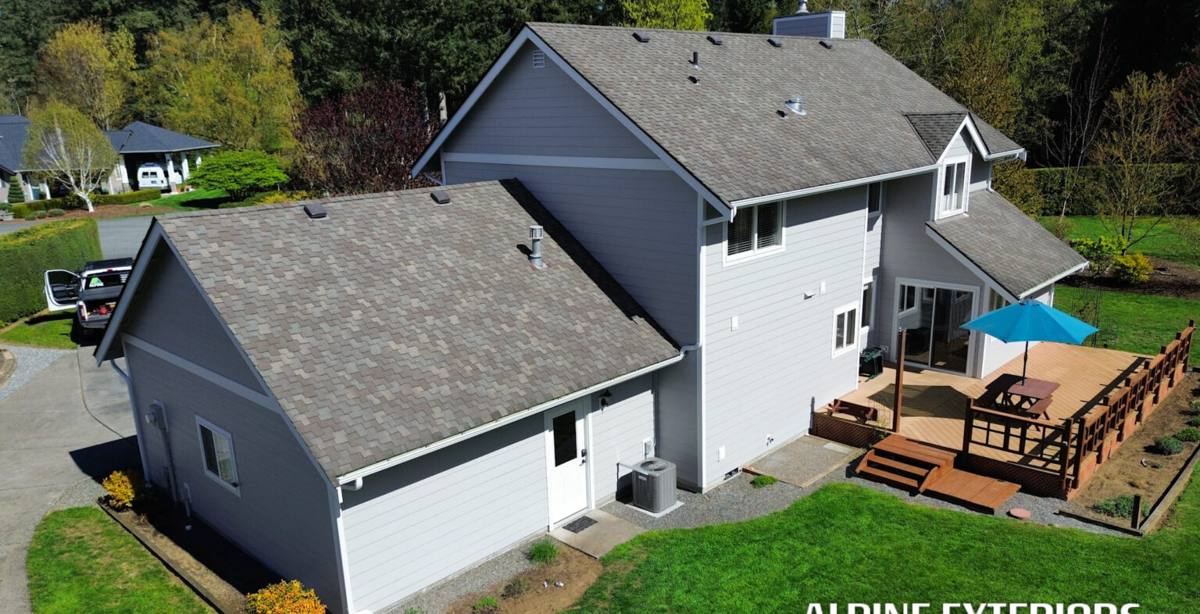
Why Fiber Cement Handles This Climate Better Than the Alternatives
Moisture and Rot Resistance
Fiber cement is made from cellulose fiber, sand, and Portland cement. It doesn't have the organic wood content that gives moisture something to feed on, so it doesn't rot, delaminate, or swell the way wood-based or wood-adjacent products can when they stay damp for weeks at a time — which is exactly what happens on shaded or north-facing walls through an Abbotsford-area winter.
Salt Air and Coastal-Influenced Exposure
Salt-laden air accelerates corrosion on fasteners and trim, and it degrades some coatings faster than a straight rain exposure would. Fiber cement's cement-based composition isn't affected by salt the way bare wood or some coated foam products can be, and when it's paired with stainless or coated fasteners and a factory finish built for the coast, the whole assembly is built to shrug off that exposure rather than slowly losing ground to it.
Moss and Algae Resistance
A long moss season means anything porous or slow-drying stays green longer. Fiber cement's dense, non-porous surface doesn't give moss and algae the foothold that wood grain or textured foam products do, and it holds up to the occasional gentle wash needed to keep growth from establishing without the surface breaking down.
What a Correct Fiber Cement Installation Actually Involves
Fiber cement is only as good as the installation behind it. The material itself resists moisture; the assembly around it is what actually keeps water out of the wall. That's where a lot of siding jobs — on any brand — go wrong.
Clearances and Drainage
Siding needs proper clearance from grade, roofing, decks, and hardscaping, and it needs a drainage plane behind it so any moisture that does get past the surface can escape instead of sitting against the sheathing. In a climate that sees this much sustained rain, skipping or shortcutting the water-resistive barrier and flashing details is the single most common cause of siding failure we see — not the siding material itself.
Fastening and Joints
Fiber cement has to be fastened per the manufacturer's specifications — correct nail type, spacing, and depth — and butt joints, corners, and penetrations (hose bibs, vents, light fixtures) need to be flashed and sealed correctly rather than just caulked over. Caulk is a maintenance item, not a waterproofing strategy on its own.
Factory Finish vs. Field Painting
A factory-applied finish is baked on under controlled conditions and carries its own warranty against fading, chipping, and cracking. Field-painted siding depends entirely on paint quality, weather during application, and repainting on schedule — an easy thing to fall behind on, especially on a home that isn't lived in year-round or is managed from a distance.
Why We Install Only James Hardie Fiber Cement
We don't install every brand of fiber cement, and we don't install vinyl, LP SmartSide, primed wood, or cedar. That's a deliberate standard, not a sales preference. James Hardie is the fiber cement we've found holds up most consistently when installed to spec, for a few concrete reasons:
- Hardie's HZ product lines are engineered for specific climate zones, including the wetter, cooler conditions typical of the Pacific Northwest — the formulation is matched to the moisture and temperature cycling this region actually sees.
- ColorPlus factory-finish technology bakes the color onto the board rather than relying on job-site painting, which matters when a home is going to spend most of the year under cloud cover and rain.
- Fiber cement is non-combustible, which is a meaningful difference from wood-based siding products in wildfire-adjacent regions of the Pacific Northwest.
- Hardie backs its products with a strong, transferable limited warranty — useful if the home changes hands down the road.
Other fiber cement brands exist, and some are reasonable products. We standardized on one manufacturer because it lets us install to a single, well-documented spec every time, order matching trim and accessories without guesswork, and stand behind a consistent warranty structure for every customer.
Our Installation Process
- On-site assessment. We look at the existing siding, sheathing condition, moisture history, and any problem areas (north walls, ground contact, deck ledgers) before quoting anything.
- Tear-off and sheathing check. Old siding comes off and we inspect the sheathing underneath for rot or hidden moisture damage before it gets covered back up.
- Water-resistive barrier and flashing. House wrap or building paper goes on correctly lapped, and flashing is installed at every window, door, and penetration before a single piece of siding goes up.
- Hardie installation to manufacturer spec. Correct clearances, fastener type and spacing, and joint treatment throughout — not just on the parts that are easy to see.
- Trim, caulking, and finish details. Corners, trim boards, and transitions get sealed and finished so the whole exterior reads as one system, not patched-together panels.
- Final walkthrough. We go over the finished work with the homeowner before calling the job done.
Fiber Cement vs. Other Siding Options in This Climate
| Material | Moisture/Rot Behavior | Moss & Algae Resistance | Maintenance |
|---|---|---|---|
| James Hardie Fiber Cement | Does not rot; cement-based composition | Dense, non-porous surface resists growth | Occasional gentle wash; factory finish holds color |
| Vinyl | Doesn't rot, but can warp or crack in temperature swings; seams can allow water behind panels | Can hold growth in seams and overlaps | Low, but color fades and isn't repairable — panels are replaced |
| Primed Wood / Cedar | Vulnerable to rot and swelling if coating fails or maintenance lapses | Porous grain gives moss and algae a foothold | Requires regular repainting/staining on a strict schedule |
| LP SmartSide (engineered wood) | Treated wood strand product; performance depends heavily on edge sealing and correct installation | Moderate; textured surface can hold moisture longer than cement | Field-applied or factory finish depending on product; edge maintenance matters |
This isn't a claim that every alternative fails — it's why, given the climate this home sits in, fiber cement is the material we're willing to put our name behind and warranty.
Signs Your Siding May Already Be Losing the Battle
- Soft or spongy spots when you press on the siding, especially near the bottom courses or under windows
- Persistent green or black staining that comes back shortly after washing
- Paint that's peeling, bubbling, or chalking heavily, especially on shaded walls
- Visible warping, cupping, or gaps opening up at seams and corners
- Higher heating bills or drafts that suggest the wall assembly behind the siding isn't sealing properly
- Siding that's more than 20-25 years old and has never been fully inspected behind the surface
Any one of these on its own might be minor. Several together usually mean moisture has been getting behind the siding for a while, and it's worth having someone look at the sheathing, not just the surface.
Why It Matters to Hire a Crew That Already Works This Area
A contractor based in Whatcom County who regularly serves the Lynden–Abbotsford corridor already understands the moisture patterns, the moss and algae pressure, and the coastal-influenced weather this region deals with every winter. That's different from a crew installing the same product spec in a dry inland climate where none of those failure modes show up for a decade. It also means straightforward logistics for scheduling, material delivery, and follow-up — no guessing on lead times or availability because the crew is unfamiliar with getting to your side of the border.
If you're planning a siding project on a home in the Abbotsford area and want to talk through what correct fiber cement installation looks like for your specific house, we're happy to take a look and put together a free, no-pressure estimate.