 Lynden Siding
 Window Installation Built for Everson's Climate, Not a Catalog Photo
Everson sits close enough to the Nooksack River bottomlands and the marine air moving in off the Salish Sea that homes here take a different kind of weather beating than houses fifty miles inland. Windows in this part of Whatcom County deal with driving horizontal rain for months at a stretch, salt-tinged air working its way into metal components, and a moss season that seems to start earlier and end later every year. A window that's rated fine on paper can still fail here in eight or ten years if it wasn't installed with this specific climate in mind.
We install windows for homes in and around Everson and Lynden regularly, which means we're not guessing at how this weather behaves — we're accounting for it in the flashing details, the sealant choices, and the way we sequence the install itself.
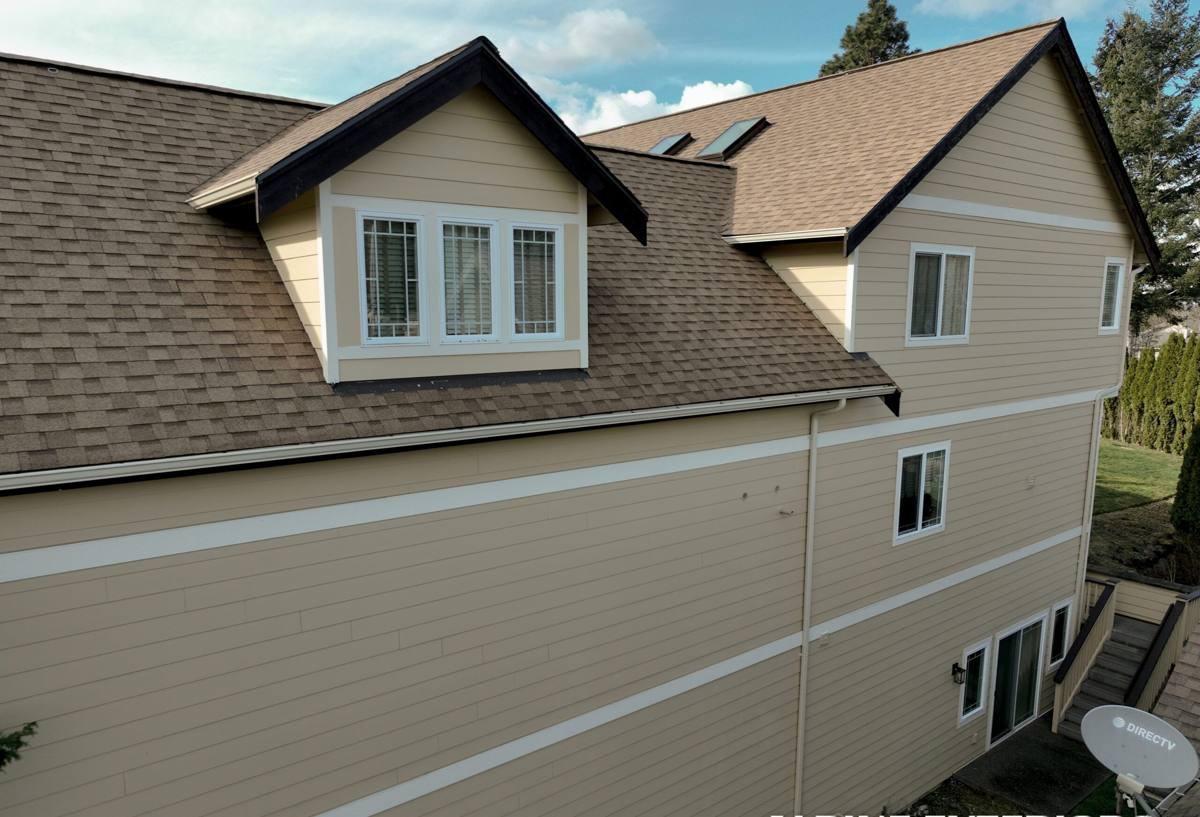
What This Climate Actually Does to a Window Over Time
Most window failures we see out here aren't about the glass itself. They're about water finding a path in around the frame, and moisture sitting somewhere it shouldn't. Common signs a window has been compromised by the local weather include:
- Fogging or a permanent haze between the panes, meaning the seal has failed and the gas fill is gone
- Soft, spongy, or dark wood at the sill or lower frame corners
- Persistent drafts even with the window latched and locked
- Moss or dark green streaking on the exterior sill or frame, especially on north- and west-facing walls
- Paint or finish bubbling near the corners, a sign water is trapped behind the surface
- Difficulty opening or closing a window that used to operate smoothly, often from swelling wood or a warped frame
Any one of these on its own might not mean much. Two or three together, especially on a window that's fifteen-plus years old, usually means the install underneath has been compromised and a patch job won't hold.
What a Correct Installation Actually Involves
Swapping the sash and calling it done is how a lot of window problems start in the first place. A correct installation in a wet, wind-driven climate like ours treats the window as one piece of a larger water management system that includes the wall behind it. That means a sloped sill pan so any water that gets past the window has somewhere to go besides your framing, properly lapped house wrap and flashing tape integrated with the existing weather-resistive barrier, backer rod and a quality sealant at the right joints (not sealant everywhere, which can trap moisture instead of shedding it), and insulation packed into the gap between the window frame and the rough opening without over-compressing it.
Full-Frame Replacement vs. Insert Replacement
One of the first decisions on any project is whether to do a full-frame (new construction style) replacement or an insert replacement into the existing frame. Both have a place, and the right call depends on the condition of what's already there.
| Factor | Full-Frame Replacement | Insert Replacement |
|---|---|---|
| Best used when | Existing frame or sill shows rot, water damage, or was poorly flashed originally | Existing frame is sound, square, and dry |
| Access to structure | Full access to sill, jack studs, and flashing for repair | Limited — existing frame stays in place |
| Labor and disruption | More involved, more exterior siding work | Faster, less disturbance to siding and interior trim |
| Long-term reliability here | Higher, since hidden problems get fixed, not covered up | Good, but only as good as the existing frame's condition |
We won't push a faster insert job on a frame that's already showing signs of water damage just to save a day of labor — that's exactly how a "new" window ends up with the same problem in five years.
Choosing the Right Window for a Home Near Everson
Frame material matters more here than in a drier climate. Vinyl frames are a solid, low-maintenance option for most homes and handle moisture well since there's no wood substrate to rot. Fiberglass frames cost more up front but resist expansion and contraction better across our wet-to-dry seasonal swings and hold paint longer if you want a custom color. Wood and wood-clad windows can look excellent, but they demand more upkeep in a climate with this much sustained moisture and moss pressure — we'll always walk a homeowner through that maintenance reality honestly rather than oversell a product that needs more attention than they're expecting to give it.
On glass, double-pane with a low-E coating and argon fill is the standard baseline for this region and performs well against both our wet winters and warmer summer afternoons. Triple-pane adds incremental insulation value and sound dampening, which is worth discussing if the home is on a busier road or the owner wants to maximize efficiency, but it's not a requirement for every project — it's a upgrade to weigh against the added cost.
Our Process for an Everson or Lynden Home
We keep the process straightforward and try not to leave a homeowner guessing at any stage:
- On-site assessment — we look at the existing windows, the condition of the sills and framing, and talk through what's actually driving the need for replacement
- Accurate measurement and product selection — matched to the specific opening and the home's exposure to wind and rain
- Ordering and scheduling — with a realistic timeline, since lead times vary by product line
- Careful removal — protecting interior finishes and siding while the old unit comes out
- Sill, flashing, and structural check — repairing anything compromised before the new window goes in, not after
- Installation, sealing, and insulation — set plumb, level, and square, with flashing and sealant sequenced correctly for water to shed outward
- Final check and cleanup — operation tested, site cleaned, and a walkthrough so you know exactly what was done
What Affects the Cost
Every home is different, but the same handful of factors drive most of the price variation we see on window projects in this area:
| Cost Factor | Why It Matters |
|---|---|
| Full-frame vs. insert replacement | Full-frame involves more labor and often exterior siding repair around the opening |
| Frame material (vinyl, fiberglass, wood-clad) | Material cost and long-term maintenance needs differ significantly |
| Glass package (double vs. triple-pane, coatings) | More layers and coatings add upfront cost but change efficiency and comfort |
| Number and size of openings | Larger units and multi-window projects have different per-unit economics |
| Existing damage discovered during removal | Rot or water damage found behind an old window needs repair before the new one goes in |
| Access and site conditions | Second-story windows, tight landscaping, or difficult access add time |
We give a straightforward, itemized estimate before any work starts, so there's no surprise invoice if something unexpected turns up.
Why a Crew That Already Works This Area Matters
A contractor who mainly works drier inland regions can still do competent carpentry, but they may not think twice about details that matter specifically here — how far to run flashing tape given our rain angles, which sealants actually hold up under a Whatcom County wet season instead of just a lab test, or how much ventilation clearance to leave so moss doesn't establish itself against a fresh sill within a year. Working Everson and Lynden regularly means we're already calibrated to this weather instead of adapting to it project by project. It also means we're familiar with the permitting expectations in Whatcom County and the City of Lynden, so that part of the process doesn't become a delay.
Simple Maintenance That Extends the Life of New Windows
A correctly installed window still benefits from a little seasonal attention in this climate:
- Rinse and brush sills and tracks in early spring and again in fall to clear moss spores before they take hold
- Check exterior caulking annually for cracking or separation, especially after a hard winter
- Keep gutters and downspouts clear so overflow isn't running down onto window heads
- Trim back vegetation or landscaping that keeps a window frame shaded and damp longer than it should be
- Operate every window at least a few times a year, even ones you rarely open, to keep hardware and weatherstripping working properly
If you're noticing drafts, fogged glass, soft sills, or moss creeping onto your window frames on a home in Everson or the greater Lynden area, we're happy to take a look and give you an honest, no-pressure estimate — no obligation, just a clear picture of what's going on and what it would take to fix it right.