 Lynden Siding
 Metal Roofing Built for Birch Bay's Coastline, Not Just Any Roof
Birch Bay sits right where Whatcom County meets the water, and that location shapes everything about how a roof needs to perform. Homes here take on salt-laden air blowing off the bay, wind-driven rain that finds its way under loose flashing, and a moss season that can run most of the year in the shade of mature evergreens. A roofing product that works fine twenty miles inland in Lynden doesn't automatically hold up the same way a few blocks from the water. Metal roofing, installed correctly for this specific environment, is one of the few options that can genuinely go the distance here — but "installed correctly for this environment" is the part that separates a roof that lasts decades from one that starts showing rust streaks and lifted seams in under ten years.
This page is about that one job: metal roofing on Birch Bay homes, done with the coastal exposure in mind from the first fastener to the final ridge cap.
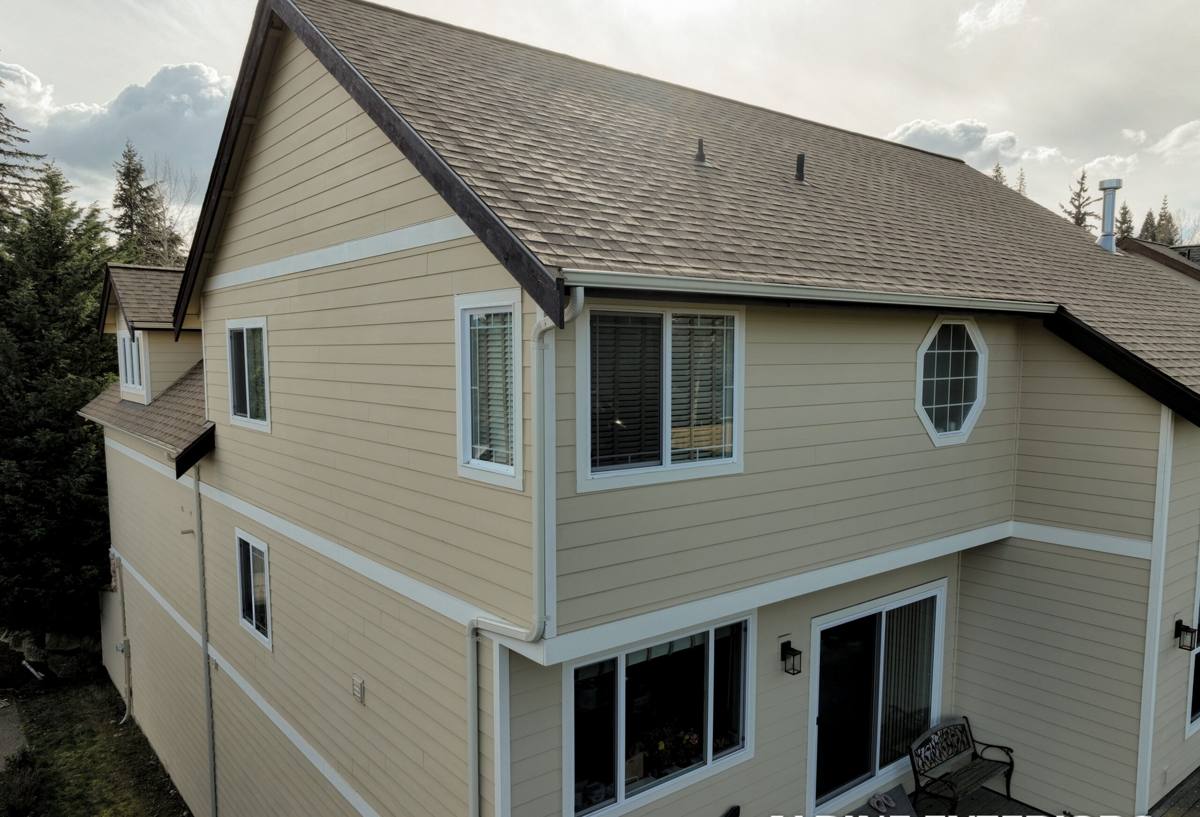
What Birch Bay's Climate Actually Does to a Roof
It helps to be specific about what's working against a roof out here, because it changes real decisions about materials and installation.
Salt Air
Airborne salt is corrosive to bare or poorly coated metal, and it doesn't stay near the beach — wind carries it well inland across the whole Birch Bay area. Fasteners, cut edges, and flashing details are usually where corrosion starts first, long before the field of the panel shows any wear.
Driving Rain and Wind
Storms off the Strait of Georgia don't just drop rain straight down — wind pushes it sideways and up under laps, ridge caps, and penetrations. A roof that only sheds water well in calm conditions isn't built for this coastline.
A Long Moss and Algae Season
Mild, wet weather for much of the year means moss and algae have a long window to establish themselves, especially on north-facing slopes and anywhere shaded by trees. Moss holds moisture against roofing material and works into any gap it can find.
None of this makes metal roofing a bad choice for Birch Bay — quite the opposite. Metal handles wind-driven rain and resists moss far better than most other roofing materials. But the details of the installation have to account for salt exposure specifically, or the metal's natural durability gets undermined by the wrong fastener or a skipped flashing step.
What a Correct Metal Roof Installation Involves Here
A metal roof is only as good as its weakest connection point. For Birch Bay homes, we treat the following as non-negotiable, not upgrades:
Fasteners and Hardware
In a salt-air environment, fastener material matters as much as panel material. Mismatched metals or under-rated coatings on screws and clips are a common source of early corrosion and staining — the panel itself can look fine while the fasteners holding it down are failing.
Underlayment
A high-quality synthetic or self-adhered underlayment underneath the metal gives the roof a second line of defense if wind-driven rain ever works past a seam or flashing detail. This is standard practice, not an optional add-on, on any coastal install we do.
Flashing and Penetrations
Valleys, chimneys, vent pipes, and wall transitions are where most roof leaks actually start, on metal or any other material. Flashing needs to be formed and layered correctly — not just caulked — because sealant alone breaks down faster than properly lapped metal.
Ventilation
Moisture trapped in the attic or roof deck causes problems regardless of what's on top of it. Balanced intake and exhaust ventilation keeps condensation from building up underneath the metal, which matters even more in a climate this consistently damp.
Choosing a Metal Roofing System for a Coastal Property
Not all metal roofing is the same product wearing different colors. The panel style and finish you choose changes how the roof performs specifically against salt air and driving rain.
| System | How It Sheds Water | Coastal Considerations |
|---|---|---|
| Standing seam (concealed fastener) | Raised interlocking seams, no exposed screws in the field | Fewer penetration points for salt-laden water to reach fasteners; generally the strongest choice this close to the bay |
| Exposed-fastener panel | Screws driven through the panel face with sealing washers | More affordable up front, but washers and screw heads are exposed to salt air and need periodic inspection |
| Standing seam with high-end coating | Same as standard standing seam | Added protection against fading and coating breakdown from sun and salt combined; best for full sun-exposed slopes |
For homes directly along the water or on higher, wind-exposed lots in Birch Bay, we generally steer clients toward standing seam because it minimizes the exposed hardware that salt air targets first. Exposed-fastener panels aren't a bad product — they're a legitimate, more budget-friendly option — but they do ask more of the homeowner in terms of periodic fastener checks over the years.
Color, Coating, and Finish Choices That Matter Here
Finish quality affects two things in a salt-air environment: how long the coating resists chalking and fading, and how well it protects the metal underneath from corrosion at cut edges and scratches. We favor factory-applied finishes with strong warranty backing over field-painted or lower-grade coatings, specifically because a compromised finish near the coast tends to fail faster than the same product would twenty or thirty miles inland. Darker colors also show chalking and fading differently than lighter ones over time, which is worth factoring in alongside your home's style and sun exposure.
Our Process for a Birch Bay Metal Roof
- On-site evaluation — we look at your home's exposure (how close to open water, how much tree cover, roof pitch and orientation) before recommending a system.
- Tear-off and deck inspection — old roofing comes off and the deck is checked for soft spots or moisture damage before anything new goes down.
- Underlayment and flashing installation — the waterproofing layer and all flashing details are set before a single metal panel is installed.
- Panel installation — panels are fastened and seamed to the coastal specification appropriate for the system chosen, not a generic inland spec.
- Ventilation and trim details — ridge vents, drip edge, and trim are finished to shed wind-driven rain rather than just look complete.
- Final walkthrough — we go over what was done and what maintenance, if any, you should expect going forward.
What to Ask Any Contractor Before They Touch Your Roof
Whether you call us or someone else, these are reasonable questions for any Birch Bay homeowner to ask before signing a metal roofing contract:
- What fastener material and coating are you using, and is it rated for coastal/salt exposure?
- What underlayment goes down before the metal, and is it a full synthetic or self-adhered product?
- How are valleys and penetrations flashed — formed metal, or mostly sealant?
- What's the manufacturer's coating warranty, and does it account for coastal environments?
- How will the roof be ventilated, and does that match the home's current attic setup?
- Do you have experience installing specifically in Birch Bay or comparable Whatcom County coastal areas?
A contractor who can answer these without hesitation has done this kind of work before. One who shrugs off the salt-air question is telling you something too.
Maintenance: What Birch Bay Metal Roofs Actually Need
Part of why we recommend metal for this area is that it needs less upkeep than most alternatives — but "less" isn't "none." A reasonable maintenance rhythm for a coastal metal roof includes periodic visual checks of fasteners and flashing, keeping gutters and valleys clear of needles and debris so water doesn't pool, and addressing any moss growth on shaded slopes before it spreads rather than after. None of this is heavy labor, but skipping it entirely for years at a time is how small issues on any roof — metal or otherwise — turn into bigger ones.
What a Rough Investment Looks Like
Metal roofing costs more up front than asphalt shingles, and the final number depends heavily on your roof's size, pitch, complexity, and which system you choose. As a broad range, homeowners in this region typically see metal roofing land somewhere in the moderate-to-higher end of roofing options per square foot installed, with standing seam running higher than exposed-fastener panels. We'll give you an exact number for your specific roof rather than a generic estimate, because pitch, penetrations, and access all move the price meaningfully from house to house.
Why Local Experience in Birch Bay Matters
A crew that's worked roofs across Whatcom County — from inland Lynden out to the coastline — has seen firsthand how differently the same roofing product ages depending on exposure. That experience shows up in small decisions during the job: which fastener grade to spec, how much extra attention a north-facing valley gets, where moss is most likely to establish itself on your particular lot. It's the difference between a roof that's technically installed correctly and one that's installed correctly for Birch Bay specifically.
If you're weighing metal roofing for a home in Birch Bay, we're happy to take a look and walk you through what your roof specifically needs — no pressure, no pushy sales pitch. Use the form below to request a free estimate.