 Lynden Siding
 Why Blaine's Marine Climate Wears Out Roofs Faster
Blaine sits right on the water at the edge of Whatcom County, and that location shapes what a roof has to survive year after year. Salt-laden air off the marine waterfront works on metal fasteners, flashing, and hardware in ways that inland roofs never experience. Add in driving rain that comes sideways off Pacific storm systems, and every seam, valley, and penetration on a roof gets tested repeatedly, not just during the occasional heavy downpour. Then there's the long moss season — the stretch from fall through spring when shaded, damp roof surfaces barely get a chance to dry out between storms.
None of these factors alone is unusual for Western Washington. Together, on a coastal property like the ones common in Blaine, they add up faster than most homeowners expect. A roof that would last two or three decades in a drier, less exposed part of the county can show real wear well ahead of schedule if it wasn't installed with these conditions in mind.
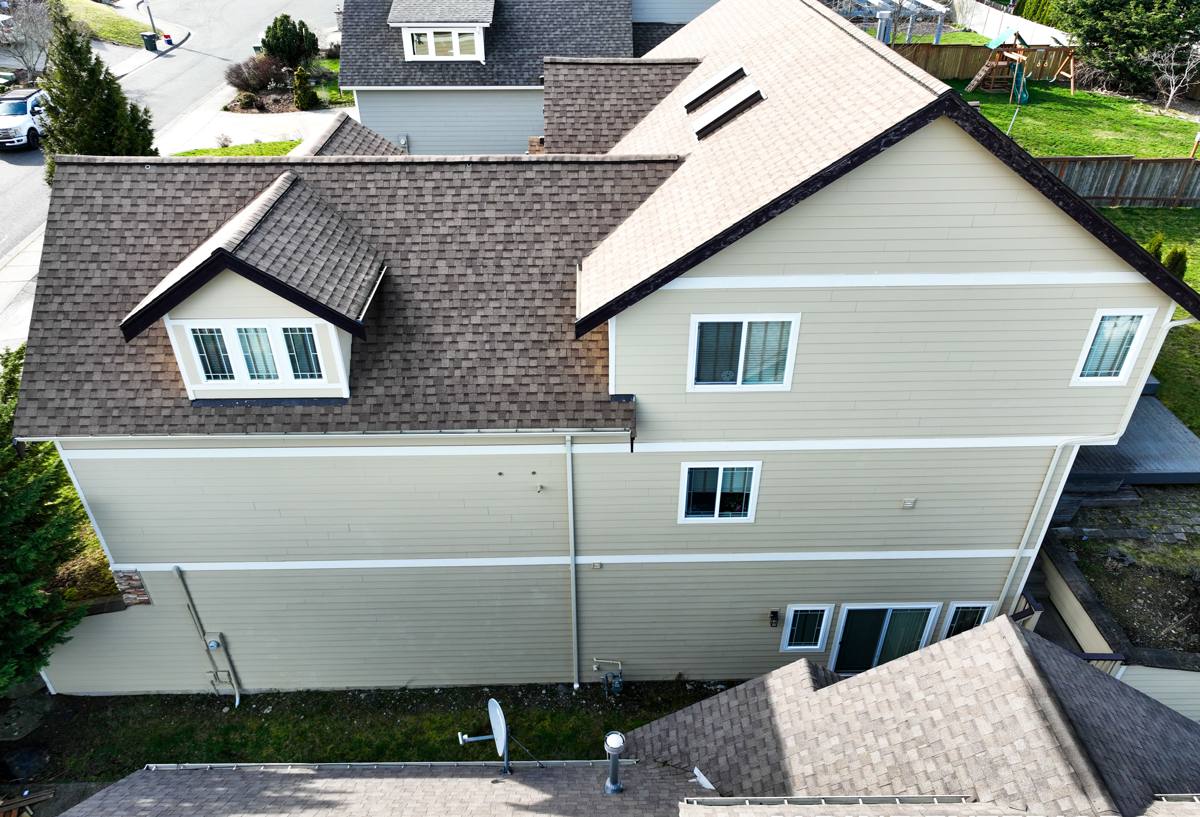
Signs a Blaine Home Needs a New Roof — Not Just a Repair
Repairs make sense for isolated damage. A full replacement becomes the honest recommendation when the roofing system itself — not just one spot — is compromised. Here's what we look for during an inspection:
- Granule loss showing up in gutters, or shingles that have gone from flat to curling or cupping
- Moss or dark algae staining that keeps returning even after cleaning
- Soft or spongy spots when walking the roof, which usually mean the decking underneath has taken on moisture
- Leaks that only appear during wind-driven rain, which often points to failed flashing rather than a simple shingle problem
- Shingles that are near or past their rated service life, especially on slopes with heavy sun or salt exposure
- Rust streaking on flashing, vents, or exposed fasteners
- Ceiling stains, musty attic smells, or a noticeable jump in heating costs, all of which can trace back to a roof that's no longer doing its job
If a roof is showing two or more of these at once, patching it is usually a short-term fix on a system that's already failing underneath.
What a Correct New Roof Installation Actually Involves
A new roof is only as good as what's underneath the shingles or panels. For Blaine's conditions specifically, a handful of details matter more than they would in a milder, drier location.
Tear-Off and Deck Inspection
We remove the old roofing down to the decking rather than layering over it. That's the only way to actually see what condition the sheathing is in — years of trapped moisture from moss cover or minor leaks can rot decking in ways that aren't visible from the surface. Any damaged sections get replaced before anything new goes down.
Underlayment and Water-Shedding Details
Given how much driving rain this stretch of the coast gets, we pay close attention to ice-and-water membrane at eaves, valleys, and around every penetration — pipe boots, skylights, chimneys. These are the spots where wind-driven rain finds its way in, not the open field of the roof.
Flashing
Step flashing at walls, kick-out flashing at roof-to-wall transitions, and properly lapped valley flashing are what actually keep water out over the long run. Flashing that's cut corners on is one of the most common causes of "mystery" leaks in coastal homes.
Fasteners and Hardware
Salt air accelerates corrosion on standard fasteners. We use corrosion-resistant nails and hardware suited to a coastal environment rather than whatever's cheapest, because rusted fasteners eventually back out or fail, taking shingles with them.
Ventilation
Balanced intake at the soffits and exhaust at the ridge keeps the attic dry and temperature-regulated. Poor ventilation traps moisture, which shortens the life of the decking and the roofing material from underneath — a slow failure that's easy to miss until it's advanced.
Choosing a Roofing Material for Blaine's Coastal Conditions
There's no single "best" roofing material for every home — it depends on budget, roof design, and how much long-term maintenance a homeowner wants to take on. Here's an honest comparison for a marine climate like Blaine's:
| Material | Performance in Salt Air | Moss Resistance | Maintenance | Typical Lifespan |
|---|---|---|---|---|
| Architectural asphalt shingles | Good, with corrosion-resistant fasteners and flashing | Moderate — benefits from periodic cleaning and good ventilation | Low to moderate | 25–30 years |
| Standing seam metal | Very good when properly coated and fastened | High — sheds moss and debris well due to slick, sloped panels | Low | 40–50+ years |
| Cedar shake or composite shake | Fair — natural wood needs more upkeep near salt air | Lower — textured surface holds moisture and organic debris | Higher | 20–30 years, more with diligent upkeep |
We'll walk through these trade-offs honestly during an estimate rather than steering every homeowner toward one product. A shaded, moss-prone lot might tip the decision toward metal or a well-ventilated shingle system, while a home with a lot of exposed, sun-hit roof plane may do fine with a straightforward architectural shingle.
Our Installation Process, Step by Step
- On-site inspection. We walk the roof and attic, checking decking condition, ventilation, flashing points, and any signs of moisture or moss damage.
- Material walkthrough. We go over the options that fit the home's layout, sun/shade exposure, and budget, with honest pros and cons for each.
- Written estimate. A clear scope of work and pricing before anything is scheduled — no surprises added mid-project.
- Tear-off and deck repair. Old roofing comes off, decking is inspected, and any damaged sheathing is replaced.
- Underlayment, flashing, and ventilation installation. This is where the roof's actual long-term performance is determined.
- Final roofing material installation. Shingles or panels go on to manufacturer specification, with attention to fastening patterns suited to coastal wind and rain exposure.
- Walkthrough and cleanup. We review the finished roof with the homeowner and make sure the property is left clean, including magnetic nail sweeps.
Ventilation and Moss Prevention for Long-Term Roof Health
Moss doesn't grow because a roof is old — it grows because a roof surface stays damp and shaded long enough for spores to take hold. Blaine's tree cover, marine humidity, and long stretch of overcast, wet months create exactly those conditions on north-facing slopes and anywhere a roof sits under overhanging branches.
Good attic ventilation helps from underneath by keeping the roof deck at a more even temperature, which reduces the condensation that can encourage moss and algae growth from below. From above, keeping branches trimmed back and gutters clear of debris goes a long way. Some homeowners also opt for zinc or copper strips near the ridge, which release trace metals that discourage moss growth over time — a reasonable option worth discussing, though it's not a substitute for periodic roof cleaning done the right way. Pressure washing, in particular, can strip granules and shorten a shingle roof's life, so we recommend gentler cleaning methods when moss buildup needs addressing.
Cost Factors for a New Roof in Blaine
Every roof is different, so exact pricing only comes from an on-site estimate — but the factors that move the number are consistent across most projects:
| Factor | Why It Matters |
|---|---|
| Roof size and pitch | More square footage and steeper slopes mean more material and labor time |
| Material choice | Asphalt shingles, metal, and shake carry different material and installation costs |
| Decking condition | Rotted or damaged sheathing found during tear-off adds repair work |
| Number of layers to remove | Roofs with multiple old layers take longer to strip than a single-layer tear-off |
| Roof complexity | Valleys, dormers, skylights, and chimneys each add flashing and labor time |
| Accessibility | Steep sites or limited equipment access can affect labor and setup time |
In general, most full roof replacements in this part of Whatcom County range from the high four figures for smaller, straightforward asphalt shingle jobs up into five figures for larger homes, steeper or more complex rooflines, or premium materials like standing seam metal. An accurate number always comes from seeing the actual roof.
Why a Local Crew That Already Works Blaine Matters
A roofing crew that regularly works Blaine and the surrounding Whatcom County coastline already knows how salt air affects hardware choices, how driving rain exposes weak flashing details, and which slopes on which lots tend to hold moss the longest. That's not something a crew based well outside the region picks up on a single job — it comes from doing the work here repeatedly and seeing how roofs actually perform over time in this specific climate.
It also means faster response if a storm causes an issue, straightforward follow-up on workmanship, and a contractor who's easy to reach after the job is done rather than a name that only shows up for the sale.
If your roof is showing its age or you're planning ahead for a replacement, we're happy to take a look and give you a straightforward, no-pressure estimate — just fill out the form below to get started.