 Lynden Siding
 Siding Repair, Not Just a Patch Job
Abbotsford sits just across the border from us, close enough that it's part of our regular service territory rather than a special trip. Homes here deal with the same Pacific Northwest weather pattern that shapes everything we do on the Lynden side of the line — wet winters, storms that push rain sideways instead of straight down, and a damp season that runs longer than most homeowners expect. Siding repair in this area isn't just about matching a color or covering up a crack. Done right, it's about figuring out why a section of siding failed in the first place and making sure the fix doesn't just hide the same problem for another year or two.
We install and repair James Hardie fiber cement siding exclusively. That matters for repair work specifically, because how a repair holds up depends heavily on whether the material underneath is capable of taking on moisture, corrosion, and pest damage in the first place, and whether the crew doing the work understands how the existing wall assembly is supposed to function as a system.
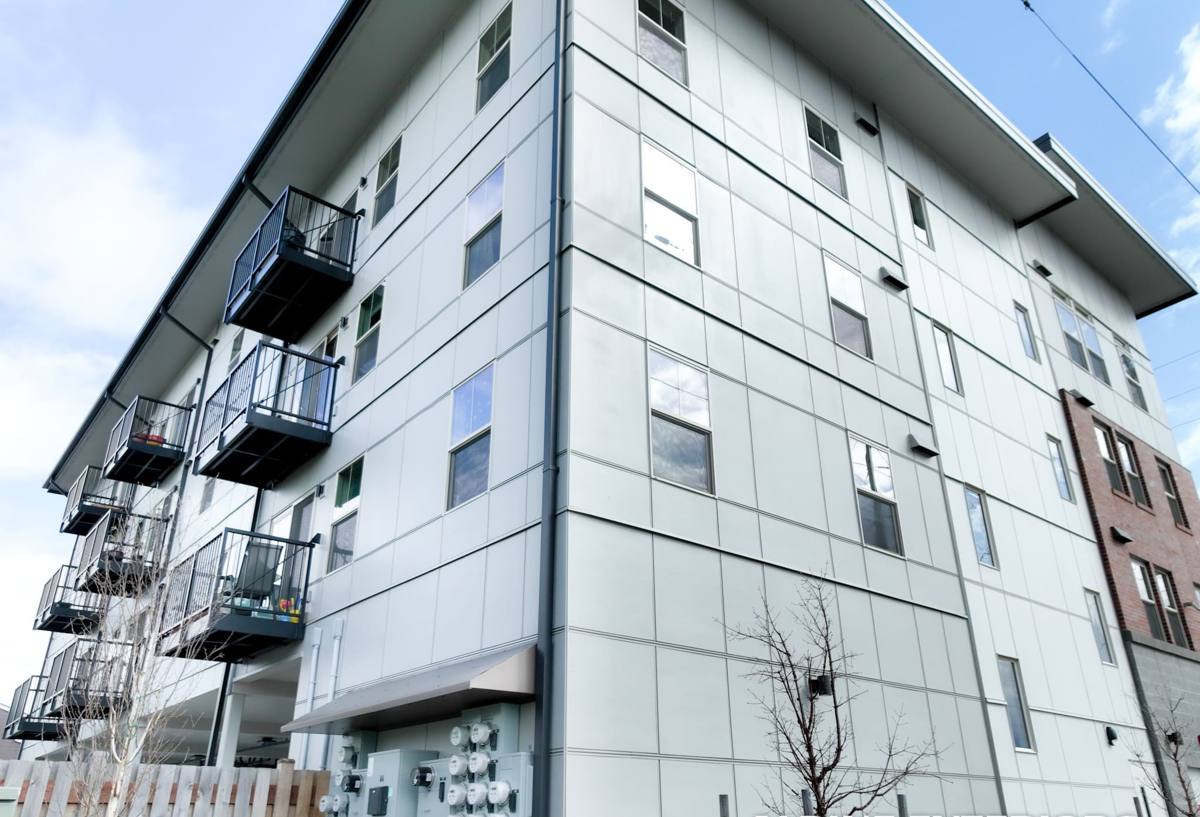
What Drives Siding Damage in Abbotsford
Salt Air and Coastal Moisture
Abbotsford isn't right on the water, but the broader Fraser Valley and Whatcom County region both sit close enough to the coast that salt-laden air moving inland is a real factor, especially on homes with more open exposure. Salt speeds up corrosion on fasteners, flashing, and any exposed metal trim, and it breaks down lower-grade paint and coatings faster than a dry inland climate would. When we're diagnosing a repair, corroded fasteners or trim are often one of the first things we check, because a failing fastener can be the actual root cause behind a section of siding that looks like it just cracked or came loose on its own.
Driving Rain
Storm systems coming off the Pacific don't just drop rain straight down by the time they reach this part of the valley — wind pushes it sideways into walls, window trim, and the seams where different building materials meet. That sideways-driven rain finds gaps that vertical rain never would, which is exactly why so much siding damage shows up first around window and door trim, at butt joints, and near roof-to-wall transitions. A repair that only addresses the visible damage without correcting the flashing or joint detail underneath tends to fail again in the same spot.
A Long Moss Season
Mild temperatures combined with near-constant moisture give moss and mildew a growing season that can run most of the year on shaded or north-facing walls. Moss holds water against the siding surface far longer than it would otherwise sit there, which extends every wet-dry cycle the material goes through and accelerates whatever damage process is already underway. On repair calls, we regularly find that the worst deterioration is on the side of the house that gets the least sun.
What a Correct Siding Repair Actually Involves
A siding repair that's done right starts before anyone touches a piece of siding — it starts with figuring out why that section failed. Skipping that step is the single most common reason a repair doesn't hold.
Diagnose Before Replacing
We look past the visible damage to the water-resistive barrier, flashing, and sheathing behind it. If moisture has already worked its way past the siding, replacing just the outer piece without addressing what's behind it means the same failure comes back, often faster the second time because the underlying materials are already compromised.
Match Material and Profile
Repairs on a Hardie installation need Hardie product — matched to the existing plank width, texture, and ColorPlus finish where possible, so the repair doesn't stand out as an obvious patch. Mixing in a different material or an unmatched profile creates a visible seam and can also create a point where two materials expand and contract differently, which is its own long-term problem.
Correct the Detail That Failed
If the original damage traces back to a flashing gap, an unsealed joint, or fastener spacing that didn't follow spec, the repair needs to fix that detail, not just cover it. This is the step that separates a repair that lasts from one that's really just a temporary patch.
Reseal and Reintegrate
Butt joints, trim transitions, and penetrations around the repaired section all need to be resealed and tied back into the surrounding wall assembly so water sheds the way it's supposed to across the whole wall, not just around the new piece.
Signs a Home Needs Siding Repair
- Cracked, chipped, or visibly damaged siding panels, especially near corners or trim
- Soft or spongy siding when pressed, particularly low on the wall or around window sills
- Moss or dark staining that returns quickly after cleaning
- Rust streaks or visibly corroded fasteners and metal trim
- Gaps or separation at butt joints and corner boards
- Peeling or bubbling paint concentrated in one area rather than across the whole wall
- Musty smell or soft drywall on an interior wall that backs onto a suspect exterior section
Repair vs. Replacement: How We Make the Call
Not every damaged section needs a full re-side, and not every repair is worth doing instead of a broader replacement. The honest answer depends on how much of the wall is affected and what's happening behind the siding.
| Factor | Favors Repair | Favors Full Replacement |
|---|---|---|
| Extent of damage | Isolated to one or two sections | Spread across multiple walls or elevations |
| Underlying moisture | Sheathing and framing behind the damage are dry | Moisture has already reached the sheathing or framing in several areas |
| Age of existing siding | Relatively recent installation, still under warranty | Siding is old, discontinued, or already showing wear elsewhere |
| Material match | Matching product and finish are readily available | Existing siding is a discontinued color or profile that can't be matched cleanly |
We won't push a full replacement on a homeowner when a targeted, correctly diagnosed repair will genuinely hold up. We also won't patch over a problem that's clearly going to resurface in another spot next season just because a repair is the cheaper answer today.
Why We Only Work With James Hardie Siding
We don't install or repair with LP SmartSide, vinyl siding, Cemplank, Allura, primed spruce, or cedar. That's a professional standard we settled on after years of seeing how different materials actually perform on tear-offs and repair calls in this climate, not a marketing position.
- Non-combustible core: Fiber cement doesn't feed a fire the way wood-based siding can, which matters for both safety and insurance considerations.
- Factory-applied ColorPlus finish: Baked on under controlled factory conditions rather than field-applied, so both the original installation and any later repair panels hold their finish longer against fading and moisture.
- Climate-engineered HZ product lines: Hardie's HZ5 formulation is built for regions with sustained moisture and freeze-thaw cycling, which fits this region well.
- Dimensional stability: Fiber cement doesn't swell, cup, or warp the way engineered wood or solid wood siding can after repeated wet-dry cycles, which is exactly the kind of movement that tends to reopen a repair.
- Strong transferable warranty: Hardie backs the product with a solid warranty structure, provided the installation and repairs follow their spec.
Each of the products we don't install has homeowners who are satisfied with them, and we're not here to tell anyone their existing siding was a bad decision. But when it comes to what we put our name behind — for new installs and for repairs alike — we'd rather work with one system we trust fully than offer a cheaper fix that quietly shifts risk back onto the homeowner.
How We Approach a Repair Call
- Walk the property and inspect the damaged section along with the surrounding wall, not just the spot the homeowner called about
- Check behind the visible damage where accessible, to see whether moisture has reached the water-resistive barrier or sheathing
- Identify the underlying cause — flashing gap, fastener failure, unsealed joint, impact damage, or material fatigue
- Give a straightforward recommendation: targeted repair, larger section replacement, or full re-side, along with the reasoning behind it
- Match material, profile, and finish as closely as possible, and correct the underlying detail so the same failure doesn't repeat
We're upfront when a repair is genuinely the right call and just as upfront when it isn't. A homeowner deciding between a patch and a bigger project deserves a clear answer, not a sales pitch either direction.
Timing a Repair Around the Region's Weather
The wettest, windiest stretch of the year here typically runs from late fall through winter, which is also when driving rain does the most damage to compromised siding and flashing. Spring and summer offer more stable, drier conditions for repair work, since fiber cement, sealants, and flashing materials all perform better when they can be installed and set up without a storm moving through mid-project. That said, active moisture intrusion doesn't wait for good weather — a section that's already letting water into the wall assembly is worth addressing on its own timeline rather than holding out for July.
Why a Crew That Works This Border Region Matters
A repair is only as good as the diagnosis behind it, and that diagnosis gets sharper the more a crew has actually seen — on real houses, across real seasons, in this specific stretch of the Pacific Northwest. Working regularly on both sides of the Lynden–Abbotsford border means we see how the same weather pattern plays out on different lot orientations, tree cover, and construction styles, which shapes practical decisions on a repair call: where the moisture actually traveled, which fastener or flashing detail is worth extra attention, and whether a quick patch is enough or the problem runs deeper. That's the kind of judgment that's hard to get from a crew that only passes through occasionally.
If you're dealing with damaged, failing, or aging siding on an Abbotsford-area home, we're glad to take a look and give you a straightforward assessment of what's actually going on and what it would take to fix it right. Reach out using the form below to schedule a free, no-pressure estimate.