 Lynden Siding
 Siding Replacement for Abbotsford, BC Homes
Abbotsford sits just across the line from Lynden, in the same stretch of Fraser Valley lowland that catches whatever the Pacific throws at it. Homeowners here deal with the same siding-killers we see on the Whatcom County side of the border: long stretches of driving rain, damp air that pushes up the valley from the Strait of Georgia, and a moss and mildew season that can run most of the year on shaded or north-facing walls. Siding that isn't built and installed for this exact climate tends to fail early — not dramatically, but quietly, one soft spot at a time.
We're a Lynden-based crew that already works this border region regularly, so Abbotsford jobs aren't a detour for us — they're part of our normal territory. That matters more than it sounds like it should, for reasons we'll get into below.
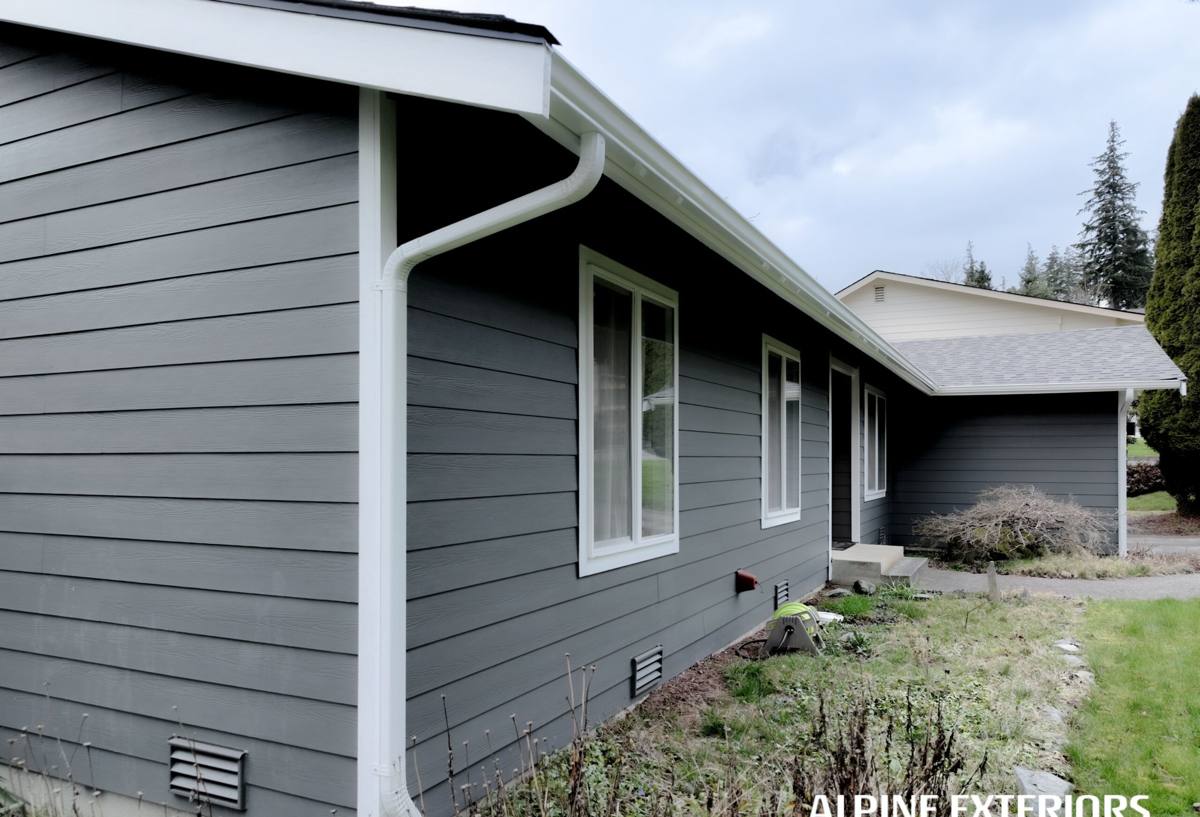
Signs Your Siding Has Crossed From "Repair" to "Replace"
A lot of Abbotsford homeowners call us thinking they need a patch job, and a fair number of them are right — a cracked board or two, some caulking failure around a window, that's a repair. But there's a point where patching stops making sense and full replacement is the honest answer. Watch for:
- Soft, spongy, or crumbling spots when you press on the siding, especially near the bottom courses and around window and door trim
- Persistent moss or black streaking that comes back within weeks of being cleaned, even on siding that's supposedly "washed" every year
- Paint that won't hold — bubbling, peeling, or needing a repaint far more often than the 8-10 year interval you'd expect
- Visible gaps, warping, or bowing between boards, particularly on walls that take the most weather
- Interior clues: musty smells near exterior walls, peeling interior paint, or trim that feels damp to the touch
Any one of these on its own might be a localized fix. Several at once, especially spread across more than one wall, usually means the water-resistive barrier behind the siding has been compromised for a while — and at that point, patching the visible siding without addressing what's underneath just buys you a year or two before the same symptoms come back.
Why Older Siding Fails Faster in This Climate
Wood-based products — cedar, primed spruce, and similar materials — are the most common casualties here. They can perform fine in a drier climate, but in a region where surfaces stay damp for days at a stretch and moss has time to establish itself, wood-based siding needs a maintenance schedule most homeowners don't realize they signed up for: regular repainting, moss treatment, caulk inspection, and prompt attention to any damage before moisture gets behind the boards. Skip a cycle or two and the damage is often already happening where you can't see it.
What a Correct Siding Replacement Job Actually Involves
Ripping off old siding and nailing up new boards is the easy part to picture. The part that actually determines whether the job lasts is what happens in between, and it's also the part that's easiest for a rushed crew to shortcut:
1. Full Tear-Off and Inspection
We remove the old siding down to the sheathing so we can actually see what's there — not guess at it. This is where hidden rot, damaged sheathing, or a failed water-resistive barrier gets found and dealt with, rather than sealed up behind new siding to keep working on the house unseen.
2. Sheathing Repair and a New Water-Resistive Barrier
Any compromised sheathing gets replaced. Then a new weather-resistive barrier goes on correctly lapped — every seam and penetration matters, because this layer is doing the real waterproofing work. The siding itself is the second line of defense, not the first.
3. Flashing at Every Vulnerable Point
Windows, doors, deck ledgers, roof-to-wall transitions, and any other penetration need proper flashing detail. In a climate that gets sustained, wind-driven rain rather than quick summer showers, flashing mistakes are exactly where water finds its way in — and they're invisible until the damage shows up years later.
4. Correct Installation to Manufacturer Spec
Fastener pattern, board overlap, clearance from grade, gaps at joints and trim, caulking only where the manufacturer actually calls for it — these details are boring to list and they're also the entire difference between siding that lasts its full service life and siding that needs attention again in five years.
Why We Install Only James Hardie Fiber Cement
We don't install vinyl, LP SmartSide, cedar, primed spruce, or other fiber cement brands like Cemplank or Allura. That's a deliberate standard, not a sales pitch, and it's worth explaining honestly.
Vinyl is inexpensive and low-maintenance in the sense that it doesn't need painting, but it's a thin plastic product that can warp in temperature swings, crack in impacts, and fade unevenly over time — and it doesn't hold up as a long-term surface in a climate this wet and shaded. Wood-based products like cedar and primed spruce can look excellent when new, but they carry a real ongoing maintenance burden — repainting, moss treatment, moisture vigilance — that most homeowners underestimate until they're a few years in. Other fiber cement brands aren't bad products in the abstract, but we've standardized on one manufacturer so we can guarantee installation quality, warranty support, and product consistency, rather than juggling multiple systems and specs across every job.
What James Hardie Actually Gets You
| Factor | What It Means for This Climate |
|---|---|
| Non-combustible core | Fiber cement doesn't feed a fire the way wood-based siding can — a real factor as wildfire smoke seasons stretch further north each year |
| HZ climate engineering | Hardie's HZ product lines are engineered for specific moisture and temperature zones, matched to Pacific Northwest conditions rather than a one-size-fits-all spec |
| ColorPlus factory finish | Baked-on finish applied under controlled conditions, holding color and resisting moss and mildew better than field-applied paint |
| Transferable warranty | Backed by the manufacturer and structured to transfer to a new owner, which matters for resale in a market where buyers ask about siding condition |
| Dimensional stability | Resists the swelling, warping, and cracking that wood-based and vinyl products are prone to under repeated wet-dry cycles |
None of that means James Hardie is maintenance-free forever — it still needs to be installed correctly and it's still worth an annual look-over. But it starts from a material that's built for exactly the conditions Abbotsford and Lynden throw at it, which is more than you can say for most of the alternatives.
Our Process, Start to Finish
- Free on-site estimate — we walk the house, look at the current siding and any moisture signs, and talk through what we're seeing
- Written scope and product selection — you'll know exactly what's being removed, what's being repaired, and which Hardie product and color you're getting
- Scheduling around weather windows — tear-off and barrier work need dry conditions, so we plan around the forecast rather than rushing into a wet stretch
- Tear-off, inspection, and any needed sheathing repair — done before a single new board goes up
- Installation to spec — barrier, flashing, and siding installed correctly, not just quickly
- Final walkthrough — we go over the finished job with you before calling it done
What Drives the Cost of a Siding Replacement
Every home is different, so we won't quote a number without seeing the house — but these are the factors that actually move the price up or down:
| Factor | Why It Matters |
|---|---|
| Home size and wall complexity | More square footage and more corners, gables, and trim details mean more labor and material |
| Existing siding layers | Homes with siding installed over older siding take longer to strip down to bare sheathing |
| Hidden moisture damage | Rotted sheathing or framing found during tear-off adds repair scope that can't be priced sight-unseen |
| Trim and detail work | Custom trim, extensive window and door casing, and architectural features add labor time |
| Access and site conditions | Steep lots, tight setbacks, or limited equipment access can affect labor time and staging |
Why a Crew That Already Works the Lynden–Abbotsford Border Matters
Whatcom County and the Fraser Valley share the same weather system, but they don't always share the same suppliers, permitting expectations, or scheduling realities near an international border. A crew that only occasionally crosses into Abbotsford is relearning logistics on your job. We work this corridor regularly, which means fewer surprises on scheduling, material delivery, and coordination — and a crew that's seen how this specific climate treats siding on both sides of the line, not just in theory.
It also means accountability that doesn't disappear once the truck leaves. If something needs a follow-up look after the first wet season, we're not a company that has to plan a special trip to get back to you.
After Installation: What to Expect and Keep an Eye On
- A yearly visual check for caulking wear, especially around windows, doors, and trim joints
- Gentle rinsing to clear moss and debris from shaded or north-facing walls before it takes hold
- Keeping gutters clear so overflow doesn't run down the siding face repeatedly
- Trimming back vegetation that keeps siding shaded and damp longer than necessary
- Prompt attention to any impact damage, even minor, so it doesn't become an entry point for moisture
Correctly installed James Hardie siding is genuinely low-maintenance compared to wood-based alternatives — but "low-maintenance" isn't "no-maintenance," and a few minutes of attention a couple times a year goes a long way toward getting the full service life out of the material.
If your siding is showing wear, or you're planning ahead before the next wet season sets in, we're happy to come take a look. The estimate is free, there's no pressure, and you'll get a straight answer about whether you're looking at a repair or a full replacement.