 Lynden Siding
 Decking in the Acme Area Has to Answer to the Climate First
Acme sits in the wooded, low-lying stretch of the Nooksack River valley southeast of Lynden, tucked closer to the foothills than to town. That location changes what a deck has to survive. Homes here get heavier tree cover than open Lynden farmland, which means shade lingers longer on deck boards after a storm, moisture off the river valley sits in the air, and moss finds a foothold faster than it would on a south-facing lot with open sun. Add in Whatcom County's long wet season and the marine-influenced air that moves inland off the Sound, and you get a deck environment that punishes anything installed without real drainage and airflow in mind.
None of this makes composite decking a bad fit for Acme — it makes it a good one, as long as the install accounts for what the site actually does to a deck year-round. A lot of the problems we get called out to fix on older decks trace back to a good product installed the same way you'd install it on a dry, open lot in a different climate. That's the gap we work to close.
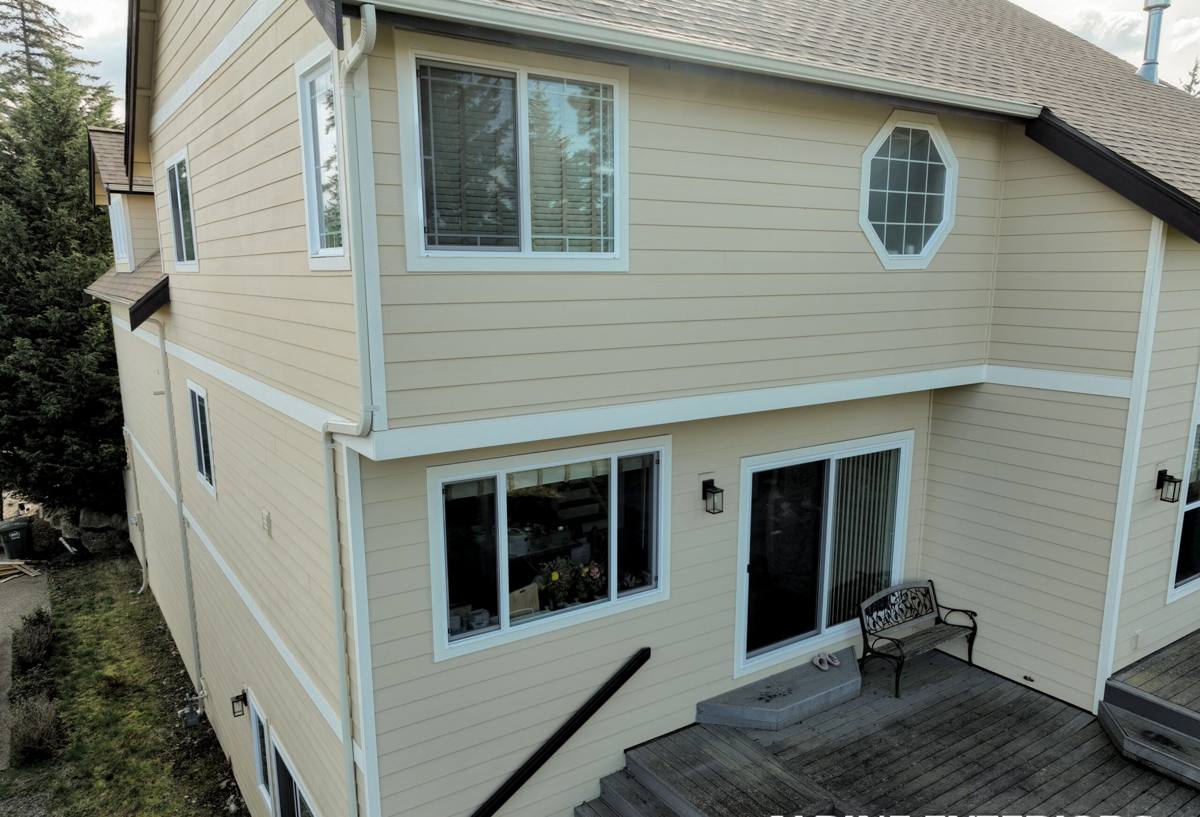
What Driving Rain and a Long Moss Season Actually Do to a Deck
It helps to be specific about the failure points, because "wet climate" is vague and homeowners deserve better than vague.
Moisture That Doesn't Leave
Composite boards themselves don't rot, but they still need to shed water and dry out between rain events. Under heavy tree canopy, a deck can stay damp for days after a storm passes. Boards installed tight against siding, without gap allowance, or over a substructure with no airflow underneath trap that moisture right where it does the most damage — to the framing, the fasteners, and the ledger connection, not the decking surface itself.
Moss and Algae Growth
Moss doesn't attack composite boards chemically, but it holds water against the surface, stains the cap layer over time, and turns a walking surface slippery and dangerous during the wet months. Shaded, north-facing, or tree-covered sections of a deck near Acme will always grow moss faster than open sun areas — that's a design constraint to plan around, not a maintenance failure to blame on the homeowner later.
Driving Rain and Fastener Exposure
Wind-driven rain in this part of Whatcom County doesn't just fall straight down — it gets pushed sideways into ledger boards, stair stringers, and any exposed fastener. Hardware that isn't rated for sustained wet exposure corrodes and stains long before the decking itself shows wear.
What a Correct Composite Install Looks Like Here
Substructure and Ledger Connection
The framing underneath a composite deck matters as much as the boards on top, arguably more in this climate. We use pressure-treated or naturally durable framing lumber, flash the ledger connection properly where the deck meets the house, and keep joist spacing tight enough to handle wet, heavier composite boards without long-term sag. A ledger that isn't flashed correctly is one of the most common hidden failure points we find on older decks in wooded, wet lots.
Airflow and Drainage Underneath
Composite decking needs clearance underneath to let air move and water drain away instead of pooling against joists. On lower decks close to grade — common on sites with mature trees and uneven ground — that means grading, gravel, or in some cases a deck drainage system underneath, not just a slab or dirt that holds standing water against the framing.
Fastening and Board Spacing
We set board gapping to account for this area's humidity swings and use hidden fastener systems rated for the specific composite product going down, not a generic screw pattern. Gaps set too tight for a wet climate can pinch closed and trap debris; gaps set too wide invite more moss growth between boards.
Choosing the Right Composite Board for a Shaded, Wet Lot
Not every composite product performs the same way once tree cover and moisture enter the picture. The table below covers the honest trade-offs we walk homeowners through before recommending a specific line.
| Decking Option | How It Handles Shade & Moisture | Maintenance Burden |
|---|---|---|
| Capped composite | Cap layer resists staining and moisture absorption at the board surface; core still needs proper drainage underneath | Low — periodic cleaning to keep moss and algae from taking hold |
| Uncapped composite | More prone to surface moisture absorption and staining under heavy shade over time | Moderate — more frequent cleaning, shorter practical lifespan in wet shade |
| Pressure-treated wood | Needs consistent sealing to resist the moss and moisture cycle; shaded boards stay damp longer | High — annual cleaning and re-sealing to hold up in this climate |
For most Acme-area lots with real tree cover, we steer homeowners toward capped composite specifically because the cap layer is what stands between the board and the moss-and-moisture cycle this site produces. It's not that other materials can't work here — it's that they demand more upkeep to hold up the same way, and we'd rather be upfront about that trade-off than sell a product that fights the site.
Our Process, Start to Finish
- On-site walkthrough: We look at sun exposure, tree cover, existing drainage, and how the deck ties into the house before recommending anything.
- Honest product conversation: We explain board options and trade-offs for this specific lot — not a one-size-fits-all pitch.
- Framing and drainage plan: We confirm substructure condition, ledger flashing, and underdeck drainage needs before any composite goes down.
- Installation: Framing, fastening, and board layout done to spec for the product and this climate, including gap allowances for humidity.
- Final walkthrough: We go over the finished deck together, including what maintenance to expect given the shade and moisture on your specific lot.
Living With Moss and Long-Term Maintenance
A composite deck near Acme still needs some seasonal attention — anyone who tells you composite is zero-maintenance in a shaded, wet climate isn't being straight with you. The difference between composite and wood is how little that maintenance actually is, and how much less it costs you in the long run.
- Sweep debris and standing leaf litter off the deck regularly through fall and winter — trapped organic material is what feeds moss growth fastest.
- Rinse the surface with plain water on a schedule that matches your shade level; heavily shaded sections may need it more often than sunny ones.
- Use a soft-bristle brush and a cleaner made for composite decking on stained or slippery areas — avoid pressure washers on high settings, which can damage the cap layer.
- Check underneath the deck once or twice a year to make sure drainage is still working and nothing is pooling against the framing.
- Trim back overhanging branches where practical to cut down on shade and debris load over the deck surface.
Mistakes We See on Older Decks in This Area
Most of the repair calls we get on wooded, wet lots trace back to a handful of avoidable issues: ledger boards that were never properly flashed, framing set too close to grade with no drainage plan, fastener hardware that wasn't rated for sustained wet exposure, and board spacing that ignored how much moisture this environment holds onto. None of these are exotic problems — they're standard details that get skipped when a crew treats every lot the same instead of accounting for tree cover, drainage, and how the site actually behaves through a wet Whatcom County winter.
Why a Crew That Already Works This Area Matters
A deck built for a dry, open lot in a different part of the state and a deck built for a shaded, moisture-heavy site near Acme aren't the same project, even if the materials list looks identical on paper. Knowing which sections of a given lot will hold shade through the day, how fast moss sets in on a north-facing run of boards, and how the ground drains after a heavy Nooksack valley rain is the kind of knowledge that only comes from working decks in this specific area repeatedly. That's what keeps a composite deck performing the way it's supposed to for the long haul, instead of needing early intervention because the install didn't account for the site.
If you're weighing composite decking for a home in or around Acme, we're happy to walk the site, talk through honest options for your specific sun and shade conditions, and give you a straightforward, no-pressure estimate. There's no obligation — just a clear look at what your deck actually needs. Use the form below to get started.