 Lynden Siding
 Composite Decking Built for the Wiser Lake Climate
Wiser Lake sits in a part of Whatcom County where moisture is the constant. Between the marine air moving in off the Sound, long stretches of driving rain through fall and winter, and shaded, tree-lined lots that hold onto damp air longer than open ground, decks here take a different kind of beating than decks in drier parts of the state. A deck that looks fine on the showroom floor doesn't always hold up once it's sitting under a fir canopy a few hundred feet from the water. Composite decking, installed correctly, is one of the more reliable answers to that problem — but "correctly" is doing a lot of work in that sentence, and it's worth understanding what that actually means before you sign a contract.
This page is about composite decking specifically for Wiser Lake properties — what the local conditions demand, what a properly built composite deck looks like underneath the surface, and how we approach the work.
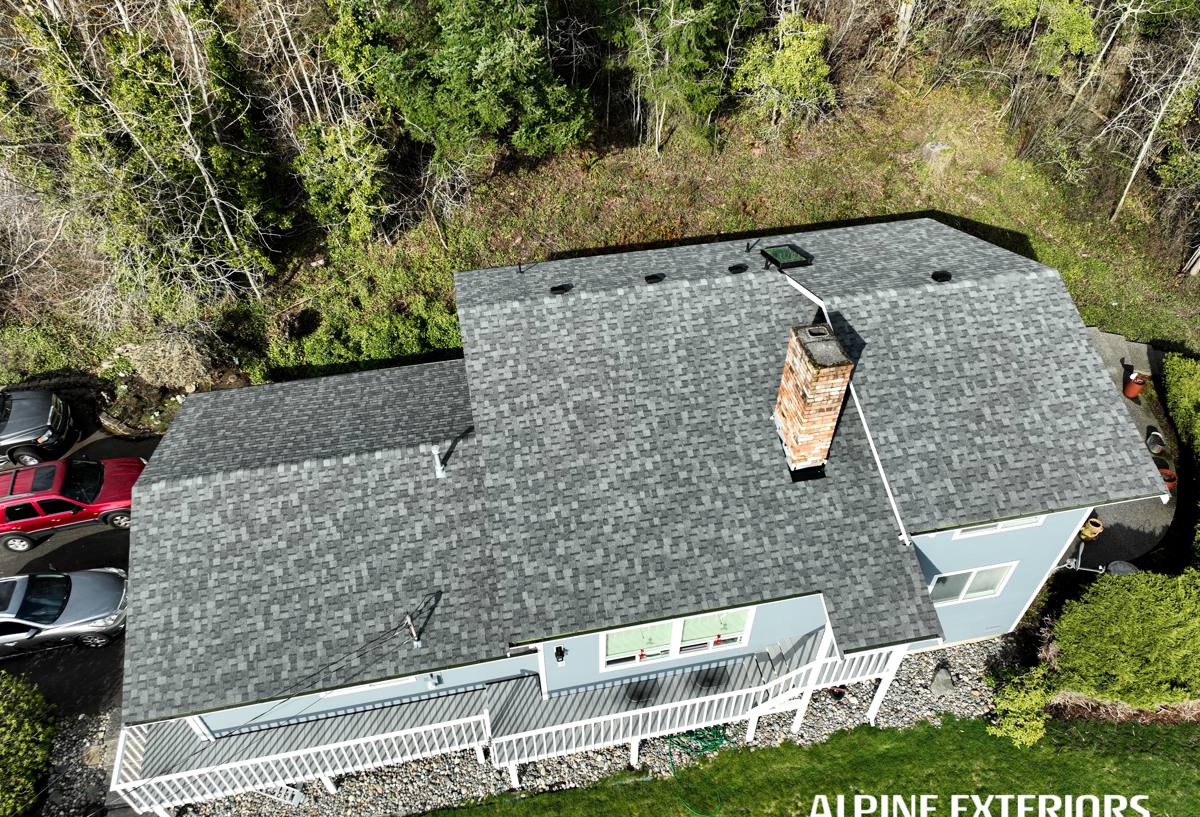
What Wiser Lake Properties Actually Need From a Deck
Lake-adjacent and tree-shaded lots around Wiser Lake share a few traits that matter a lot for decking, even though they don't always show up in a sales brochure.
Shade and slow drying
Homes near the lake and set back among trees get less direct sun than open properties closer to town. That means surface moisture — rain, dew, condensation — sits longer before it evaporates. Any decking material that's sensitive to standing moisture, or any deck built without enough airflow underneath, is going to show it first in a spot like this: dark streaking, slick spots, and moss creeping in at the board seams.
Moss and organic buildup
Whatcom County's moss season runs long, and it isn't picky about what it grows on. Wood decking gives moss and algae something to grip onto and, eventually, something to feed on. Composite boards resist that far better because there's no exposed wood grain for spores to colonize, but "resist" isn't "immune" — buildup can still form on the surface if a deck is never cleaned, and it will still form underneath a deck if airflow is blocked.
Salt-tinged, damp air
Fasteners, flashing, and structural hardware take the brunt of this. Standard steel connectors corrode faster in a persistently damp, mildly salt-influenced environment than they would in a dry inland climate. This matters more than the decking material itself in the long run, because hardware failure is what actually brings a deck down.
Composite vs. Other Decking Options: The Honest Trade-Offs
We install composite decking because, for this climate, it holds up with less maintenance than the alternatives — not because every other material is bad. Here's how the trade-offs actually break down.
| Factor | Composite Decking | Pressure-Treated Wood | Cedar |
|---|---|---|---|
| Moss/algae resistance | Strong — no exposed wood grain | Weak without regular treatment | Moderate, needs upkeep |
| Maintenance | Periodic washing only | Sealing/staining every 1-3 years | Sealing/staining every 1-2 years |
| Upfront cost | Higher | Lowest | Mid to high |
| Lifespan in wet shade | Long, with proper substructure | Shorter without diligent upkeep | Moderate |
| Repair approach | Board replacement | Sand, reseal, or replace | Sand, reseal, or replace |
Wood isn't a bad material — it's a maintenance commitment. Composite shifts that commitment from "every year or two" to "occasional cleaning," which matters a lot on a shaded, damp lot where staying on top of a wood sealing schedule is easy to fall behind on.
What a Correct Composite Deck Installation Actually Involves
The decking boards themselves get all the attention, but most of what determines whether a composite deck lasts happens underneath them.
Framing and joist spacing
Composite boards flex differently than wood and most manufacturers require tighter joist spacing than a traditional wood deck — often 12" on-center instead of 16", especially on diagonal patterns or stair treads. Skipping this is a common shortcut that shows up later as bounce or sag.
Ventilation underneath
This is the single biggest factor for damp, shaded lots. A deck built low to the ground or against the house without adequate airflow underneath traps moisture, which accelerates moss growth on the underside of boards and speeds up corrosion of the framing hardware. Proper clearance and, where the design requires it, ventilation gaps are non-negotiable in this climate.
Flashing at the house
Ledger board flashing is where a huge share of deck-related water damage originates — not on the deck itself, but where it meets the house. Correct flashing (and a proper gap or flashing tape at the rim joist) keeps water from tracking behind siding and into the wall assembly.
Fasteners and hardware
Stainless steel or coated, corrosion-rated fasteners and joist hangers matter more here than in a drier climate. Standard hardware that would be fine in eastern Washington can start showing rust within a few seasons this close to the water and under a tree canopy.
Board spacing and drainage
Consistent gapping between boards lets water shed through rather than pool on the surface. Tight or inconsistent spacing is a common cosmetic mistake that turns into a moisture problem within a year or two.
Our Process for a Wiser Lake Composite Deck
The work follows the same sequence on most jobs in this area:
- Site visit and assessment — we look at sun exposure, tree cover, existing drainage patterns, and the condition of any structure we're replacing before quoting anything.
- Design and material selection — board style, color, and railing choices, matched to your budget and how the space actually gets used.
- Permitting — most new or replacement decks in this area require a permit; we handle that paperwork so it isn't on you.
- Demolition (if replacing an existing deck) — including an honest look at the ledger board and framing underneath, since that's often where the real problems are hiding.
- Framing built to composite manufacturer spec — correct joist spacing, corrosion-rated hardware, and proper flashing at the house.
- Decking installation — hidden or face-fastened depending on the product, with consistent spacing for drainage.
- Final walkthrough — we go over care and cleaning specific to the board you chose before we consider the job done.
Choosing a Composite Board That Fits This Climate
Not all composite decking is built the same way, and the difference matters more in a wet, shaded climate than a dry one.
Capped vs. uncapped composite
Capped composite boards have a protective polymer shell wrapped around a wood-plastic core, which resists moisture absorption and staining far better than older uncapped composite products. For a lot with heavy shade and long damp periods, we generally steer homeowners toward capped products — the cap is what actually keeps moisture and organic growth from working into the board over time.
Color and heat
Darker boards look sharp but absorb more heat in direct sun and can show pollen, dust, and streaking differently than lighter tones. On a shaded Wiser Lake lot, heat is less of a concern than it would be on an open, south-facing deck — but streaking visibility is still worth thinking through when picking a color.
Warranty structure
Composite warranties vary by manufacturer and typically separate structural/fade coverage from staining and mold coverage — and mold/stain coverage often comes with maintenance requirements attached. We'll walk you through what a given product's warranty actually covers before you commit, because the fine print differs more than people expect.
Maintaining a Composite Deck in a Long Moss Season
Composite decking cuts maintenance dramatically compared to wood, but "low-maintenance" isn't "no-maintenance," especially this close to the lake and under tree cover.
- Sweep off leaves, needles, and organic debris regularly — this is the single biggest driver of surface staining and moss growth on composite boards.
- Wash the deck surface a few times a year with a soft-bristle brush and mild soap and water; avoid high-pressure washing directly into board seams.
- Check the gaps between boards periodically and clear out any buildup that collects there, since trapped debris holds moisture against the board edge.
- Keep gutters and downspouts near the deck clear so runoff isn't dumping directly onto or under the deck surface.
- Trim back overhanging branches where practical to cut down on falling debris and let more light and air reach the deck.
- Have the substructure checked every few years — the framing and hardware underneath age differently than the boards on top, and that's where problems tend to start.
Why Local Experience With Wiser Lake Properties Matters
A lot of deck problems in this area trace back to a crew building to a generic spec instead of the conditions actually in front of them — treating a shaded, damp, lake-adjacent lot the same as a dry, open one on the other side of Lynden. Knowing to tighten up ventilation clearance, spec corrosion-rated hardware as standard rather than an upsell, and flash a ledger board properly for a climate that stays wet for months at a stretch isn't guesswork — it's what happens when a crew has actually built and later serviced decks in conditions like these. That experience shows up in fewer callbacks, not in anything you'd notice on install day.
It also means we're not guessing at permitting requirements or common site conditions in unincorporated Whatcom County versus inside Lynden's city limits — we've navigated both before.
Get a Free Estimate for Your Wiser Lake Deck
If you're planning a new composite deck or replacing one that's showing its age near Wiser Lake, we're happy to come take a look, walk the site with you, and give you a straightforward, no-pressure estimate. Use the form below to get started.