 Lynden Siding
 Deck Replacement in Deming: What It Actually Takes to Get It Right
Deming sits back from the coast in the wooded river-valley country east of Lynden, where big trees hold shade over a lot of yards well into the afternoon. That's a beautiful setting for a deck, but it's also a tough one. Combine constant shade, damp ground, and a long stretch of the year where the sun barely dries anything out, and you get decks that fail years before their Lynden-area cousins out in more open, sunnier yards. When we replace a deck in Deming, we're not just swapping old boards for new ones — we're building for the specific way this part of Whatcom County stays wet.
This page covers what actually goes wrong with decks out here, what a proper replacement involves, and how our process works for homeowners in and around Deming.
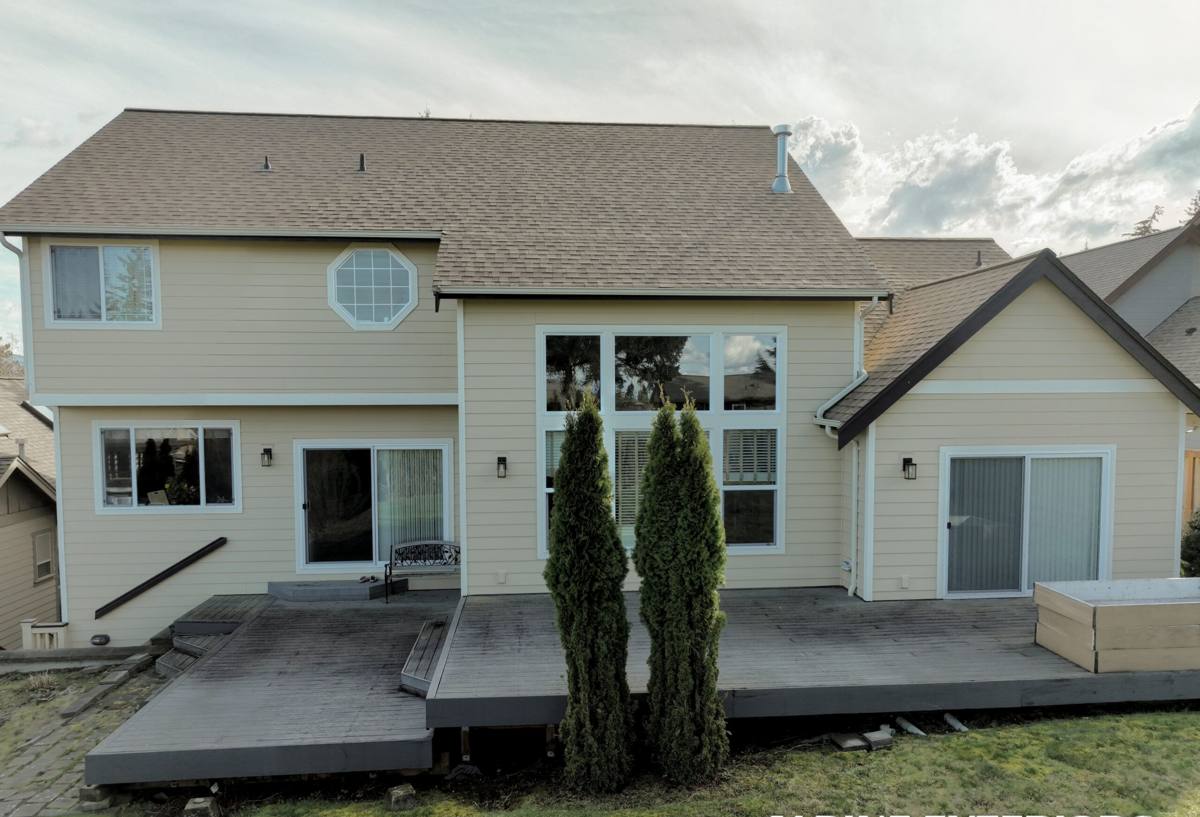
Why Deming's Climate Is Hard on Decks
Whatcom County sits under the same marine weather systems that push salt-tinged air off Puget Sound and the Strait of Georgia across the whole region. By the time that moisture works its way inland to the Nooksack valley around Deming, it usually shows up as driving rain and long stretches of damp, low-light weather. Add tree cover and you get a deck environment that's wet more often than it's dry.
A few things make this location tougher than average on wood and fasteners:
- Shade slows drying. A deck that stays wet for days after a storm is a deck that's constantly feeding rot, even if the wood itself is treated.
- Moss and algae take hold fast. Whatcom County's long wet season gives moss months to establish on decking, railings, and stair treads — and moss holds moisture against the wood surface even between rains.
- Driving rain finds gaps. Wind-driven rain doesn't just fall straight down — it gets pushed sideways into ledger connections, stair stringers, and any spot where flashing or fasteners were installed carelessly.
- Freeze-thaw cycles stress footings. Whatcom County winters aren't brutal, but repeated freezing and thawing of wet ground around undersized or shallow footings will eventually shift a deck out of level.
None of this means a deck can't hold up here for decades. It means the details that get skipped on a quick rebuild — proper flashing, the right fastener metal, ventilation underneath — matter more in Deming than they would in a drier climate.
Signs Your Deck Needs Replacement, Not Repair
Not every tired-looking deck needs to come out. Sometimes new boards and a good cleaning solve the problem. But there's a point where patching just delays a bigger failure. Here's how we tell the difference on a site visit:
- Soft or spongy spots in the decking, especially near the house or around post bases
- A screwdriver sinks easily into joists, beams, or the ledger board with light pressure
- Visible gaps, rust streaks, or staining at the ledger where the deck meets the house
- Railings that flex or wobble more than a firm push should cause
- Stairs that feel uneven, bouncy, or have visibly rotted stringers
- Persistent black or green staining that comes back within weeks of cleaning
- A deck built with older fasteners on newer treated lumber (a corrosion mismatch that accelerates hardware failure)
- Footings that have shifted, heaved, or no longer sit flush and level
If the framing and footings are sound and it's really just the surface boards that have given out, a resurfacing conversation makes sense. If the problems are in the structure — joists, ledger, footings — replacement is the honest recommendation, because rebuilding on top of compromised framing just moves the failure a few years down the road.
What a Correct Deck Replacement Involves
Tear-Off and Inspection
We remove the old deck down to the ledger and posts and take a real look at what's underneath — the rim joist, the sheathing behind the ledger, and the soil condition around the footings. This is often where hidden rot near the house shows up, especially in shaded Deming yards where the wall behind the old deck rarely gets a chance to dry.
Ledger Flashing
The ledger-to-house connection is the single most common failure point on any Pacific Northwest deck, and it's the one detail that causes the most expensive damage when it's wrong — water tracking behind the ledger and into the house framing. A correct install uses proper flashing that sheds water away from the wall, not caulk alone standing in for a flashing detail.
Footings and Framing
Footings get sized and set to current code depth, not just re-used from the old deck if they're undersized or shallow. Joists and beams are spaced and sized for the actual span and load, with joist tape or another moisture barrier on top of the framing to keep water from wicking into the wood from fastener holes.
Fasteners and Hardware
All structural hardware — joist hangers, post bases, ledger bolts — needs to be rated for contact with treated lumber. Treated wood today is more corrosive to standard hardware than older treatments were, and using the wrong metal is a slow, invisible way to weaken a deck's structure.
Decking and Railing Installation
Boards get installed with proper gapping for drainage and airflow, which matters even more under tree cover where boards don't dry between rains the way they would in full sun. Railings are set to current code height and baluster spacing, which matters if the old deck predates current guardrail requirements.
Decking Material Options for This Climate
Every decking material has trade-offs. In a shaded, wet environment like Deming, moisture behavior and maintenance tolerance matter more than they would in a drier yard.
| Material | How It Handles Shade & Moisture | Maintenance | Typical Lifespan |
|---|---|---|---|
| Pressure-treated wood | Needs airflow and drainage gaps to avoid trapping moisture; prone to moss and mildew in constant shade | Annual cleaning, periodic sealing or staining | 10-15 years with upkeep |
| Cedar | Naturally rot-resistant but still needs to dry between rains; shade slows that | Regular cleaning and finish maintenance | 15-20 years with upkeep |
| Capped composite | Resists moisture absorption well; still needs cleaning where moss and algae land on the surface | Occasional washing, no sealing or staining | 25-30 years |
| PVC decking | Fully moisture-resistant board; best option for constant-shade, high-moisture spots | Occasional washing | 25-30+ years |
We don't push one product on every job. Composite and PVC cost more up front but make sense in shaded, wet spots where wood simply won't dry out fast enough between storms. Wood costs less and still has a place, especially in areas of a yard that get more sun and airflow. What we won't do is install any decking material without the drainage gaps and structural prep it needs underneath — that's what actually determines how long any of these materials last out here, not the marketing on the packaging.
Our Deck Replacement Process
- Site visit and assessment. We look at the existing deck, the framing underneath if accessible, drainage around the footings, and how much shade and rain exposure the location gets.
- Honest scope and estimate. We tell you what's structural and needs replacing versus what's cosmetic, and give you a clear, no-pressure estimate before any work starts.
- Permit handling. If the project requires a Whatcom County permit, we handle that paperwork as part of the job.
- Tear-off and framing. Old structure comes out, footings and framing go in to current code, and ledger flashing gets done correctly the first time.
- Decking, railing, and stairs. Final surface materials, railings, and stairs are installed to your chosen spec.
- Final walkthrough. We walk the finished deck with you before calling the job done.
Permits and Code Considerations
Most full deck replacements in unincorporated Whatcom County — which covers Deming — require a building permit, particularly when footings, framing, or railings are being rebuilt rather than just resurfaced. Requirements can depend on the deck's height, size, and attachment to the house, and they can change over time, so we confirm current requirements for your specific property rather than assuming last year's rules still apply. Guardrail height and baluster spacing requirements are also worth checking against your existing deck, since a lot of older Deming-area decks were built before current spacing standards.
Why a Crew That Already Works Deming Matters
A deck built for a dry, sunny lot and a deck built for a shaded, wet one shouldn't be built the same way, even though they can look identical from the street. A crew that regularly works the Deming and greater Lynden area already knows which details — drainage gaps, fastener choice, ledger flashing, footing depth — matter most for this specific mix of shade, rain, and moss. That's not something you can fully substitute with a generic spec sheet, no matter how good the materials are.
It also means we're not a stranger showing up once and disappearing. We're local, we service what we build, and if something needs a look a few years down the road, we're not far away.
Get a No-Pressure Estimate
If your Deming deck is showing soft spots, persistent moss, wobbly railings, or you're just planning ahead before it becomes a safety issue, we're happy to take a look. The estimate is free, there's no pressure, and you'll get a straight answer about whether you need a full replacement or just targeted repairs. Use the form below to get started.