 Lynden Siding
 Building a Deck That Can Actually Handle Nooksack's Weather
Nooksack sits in the same marine-influenced climate belt as the rest of Whatcom County — long stretches of grey, wet weather, moss that finds a foothold on anything that stays damp too long, and salt-tinged air working its way in from the Sound that quietly speeds up corrosion on the wrong hardware. A deck design that works fine on the dry side of the state, or even in a milder coastal city, doesn't automatically hold up here. The wood, the fasteners, the framing details, and the drainage all need to be chosen for this specific climate, not a generic one.
We build custom decks for homeowners in and around Nooksack and Lynden, and most of the failures we get called out to repair on other people's decks trace back to the same handful of shortcuts: the wrong fastener in a damp environment, no gap for water and debris to clear, or framing that was never properly protected from moisture before the boards went down. None of that shows up on day one. It shows up two or three wet seasons later.
What a Nooksack Property Usually Tells Us
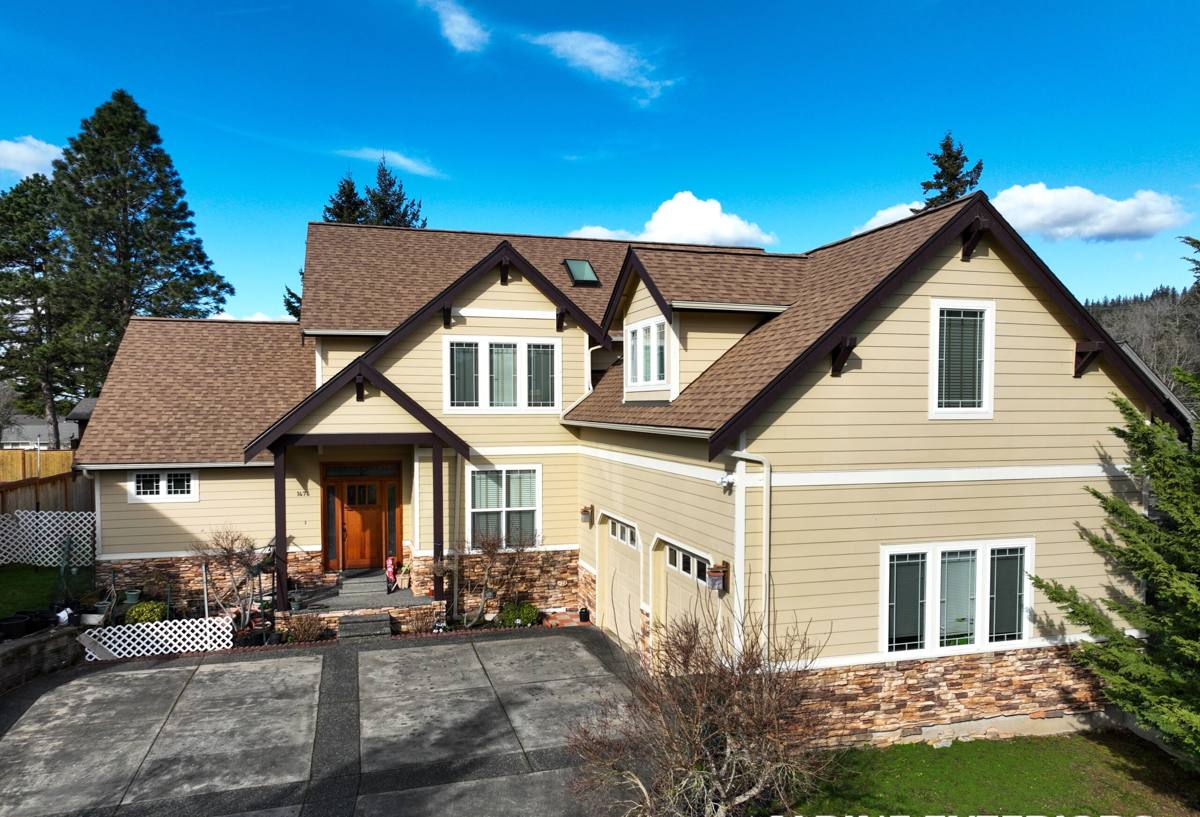
Every site visit starts with reading the lot, not just the house. A lot of properties around Nooksack sit near tree lines, farmland, or the Nooksack River corridor, which tends to mean more shade, higher ambient humidity, and slower-drying ground than a wide-open, sun-exposed lot closer to town. That matters for deck design in a few concrete ways:
- Heavier shade means boards stay damp longer after rain, so material choice and airflow underneath the deck matter more than they would on a sunnier lot.
- Ground moisture and drainage patterns affect footing depth, post placement, and whether we need to grade or add drainage before framing even starts.
- Older homes in the area often have ledger board connections that were never properly flashed, which we have to correct before attaching a new deck, not after.
- Wind exposure and prevailing weather direction affect how much protection the deck needs on its most exposed side, especially for stairs and railings.
None of this is guesswork we do from a truck. It's a walk-around, a look at how water currently moves across the yard, and a conversation about how the family actually plans to use the space — grilling, entertaining, a quiet spot off the kitchen — before a single board gets specified.
Choosing Decking Material for This Climate
Wood decking
Cedar remains a popular choice locally because it looks the part and it's a natural fit for Pacific Northwest homes. It's naturally resistant to rot and insects, but in a climate with this much sustained moisture and shade, cedar still needs regular cleaning and resealing to keep moss and mildew from taking hold, especially on the shaded side of a house or under tree cover.
Composite decking
Modern composite boards resist moisture and moss far better than wood, and they don't need annual sealing. The trade-off is cost, and not all composites are built the same — capped composite sheds water and resists staining much better than older uncapped versions, which is the main reason we don't install uncapped composite anymore. It's a maintenance and moisture-performance call, not a brand opinion.
PVC decking
Fully synthetic PVC decking is the most moisture-resistant option available and holds up well in shaded, damp conditions where wood and even some composites will develop surface mildew. It comes at a price premium, and it's the material we recommend most for spots that barely see direct sun.
| Material | Moisture Performance | Moss/Mildew Resistance | Maintenance | Typical Lifespan |
|---|---|---|---|---|
| Cedar | Good if sealed regularly | Moderate — needs upkeep in shade | Annual cleaning and resealing | 15–20 years with upkeep |
| Capped Composite | Very good | Good | Occasional washing | 25–30 years |
| PVC | Excellent | Excellent | Minimal — occasional rinse | 30+ years |
Structural Details We Don't Skip
The decking surface is the part everyone sees, but the framing underneath is what determines whether a deck is still solid in ten years. In a wet, moss-prone climate like Whatcom County's, a few details are non-negotiable for us:
Ledger and framing protection
Where the deck attaches to the house, proper flashing keeps water from working its way behind the siding and into the wall framing — this is one of the most common failure points we see on older decks, and it's invisible until there's rot to deal with.
Fasteners and hardware
Salt-tinged coastal air moving inland accelerates corrosion on the wrong grade of fastener. We use stainless steel or coated, corrosion-rated hardware throughout, not standard galvanized screws that can start rusting and staining boards within a few seasons.
Board spacing and airflow
Proper gap spacing between boards lets water and debris pass through instead of pooling, which is one of the simplest and most effective defenses against moss buildup. We also make sure there's enough clearance and airflow underneath the deck so the framing can actually dry out between rain events instead of staying damp for weeks at a stretch.
Footings
Footings are set to the depth required for our soil and frost conditions, not just poured to a convenient depth. A footing that's too shallow can shift over time as the ground freezes and thaws, which eventually shows up as a wobbly rail post or an uneven deck surface.
Railings, Stairs, and Permits
Any elevated deck needs a code-compliant guardrail, and stairs need proper rise, run, and handrail details — these aren't optional design touches, they're safety requirements under the Washington state building code, and they're one of the first things a permit inspector checks. Getting them wrong means a failed inspection and rework, which costs more time than doing it right the first time.
Most new decks and any significant deck replacement require a building permit. We handle the permitting process as part of the job, which matters locally because permit requirements and inspection scheduling can vary between jurisdictions in Whatcom County — knowing the process ahead of time keeps the project moving instead of stalling at the counter.
Our Process for a Nooksack Deck Project
- Site visit and consultation. We walk the property, talk through how the space will be used, and note drainage, shade, and structural conditions specific to the lot.
- Design and material selection. Based on the site conditions, we recommend materials and a layout suited to the exposure — not a one-size-fits-all package.
- Permitting. We handle the permit application and coordinate required inspections so nothing holds up construction unexpectedly.
- Construction. Framing, flashing, fastener selection, and decking installation follow the details above — no shortcuts on what's underneath the surface.
- Final walkthrough. We go over the finished deck together, including basic care so it's set up to last through the wet seasons ahead.
Maintaining a Deck Through Whatcom County's Wet Season
Even a well-built deck needs some seasonal attention in this climate. A short list of habits goes a long way toward keeping moss, staining, and slow rot from getting a foothold:
- Sweep debris out of the gaps between boards regularly — trapped leaves and needles hold moisture against the wood.
- Keep gutters and downspouts above or near the deck clear so water isn't dumping directly onto the surface.
- Wash the deck surface at least once a year to remove early moss and algae growth before it spreads.
- Reseal wood decking on the schedule recommended for the product — don't wait until it looks weathered.
- Check railing posts and stair connections periodically for movement, especially after a hard winter.
- Trim back overhanging branches that keep sections of the deck shaded and slow to dry.
Why Hiring a Crew That Already Works in Nooksack Matters
A deck built by a crew that hasn't worked much in this part of Whatcom County is more likely to treat moisture protection and drainage as an afterthought rather than the starting point. We're already familiar with local permitting steps, the soil and drainage patterns typical of Nooksack and Lynden properties, and how to schedule construction around the region's rainy stretches so the project doesn't drag out. That local familiarity is part of what keeps a deck performing well past the first couple of wet seasons, not just looking good on installation day.
If you're planning a new deck or replacing one that's showing its age, we're happy to walk the site, talk through material options for your specific spot, and give you a straightforward, no-pressure estimate — just fill out the form below to get started.