 Lynden Siding
 Building at Wiser Lake Means Getting the Window Install Right the First Time
New-construction window installation is a different trade than window replacement, even though both involve setting glass in a wall. On a replacement job, we're working around an existing opening, existing siding, and existing trim. On new construction, we're working directly with bare sheathing, house wrap, and a rough opening that hasn't been closed in yet — which means every layer of the water management system is exposed and has to be built correctly, in the right order, before the siding crew ever shows up.
For homes going up around Wiser Lake, that sequencing matters more than it does in a lot of places. Whatcom County's marine climate — damp air moving in off the water, long stretches of driving rain, and a moss and algae season that runs most of the year — puts steady pressure on every seam, sill, and fastener in a window assembly. A new-construction window installed correctly here can go decades without a leak. One installed carelessly can start showing water staining, rot at the sill, or fogged glass within a few winters, and by then the drywall and trim around it are already damaged.
This page is about that one job — setting new-construction windows correctly on homes being built in and around Wiser Lake — not a general overview of window replacement.
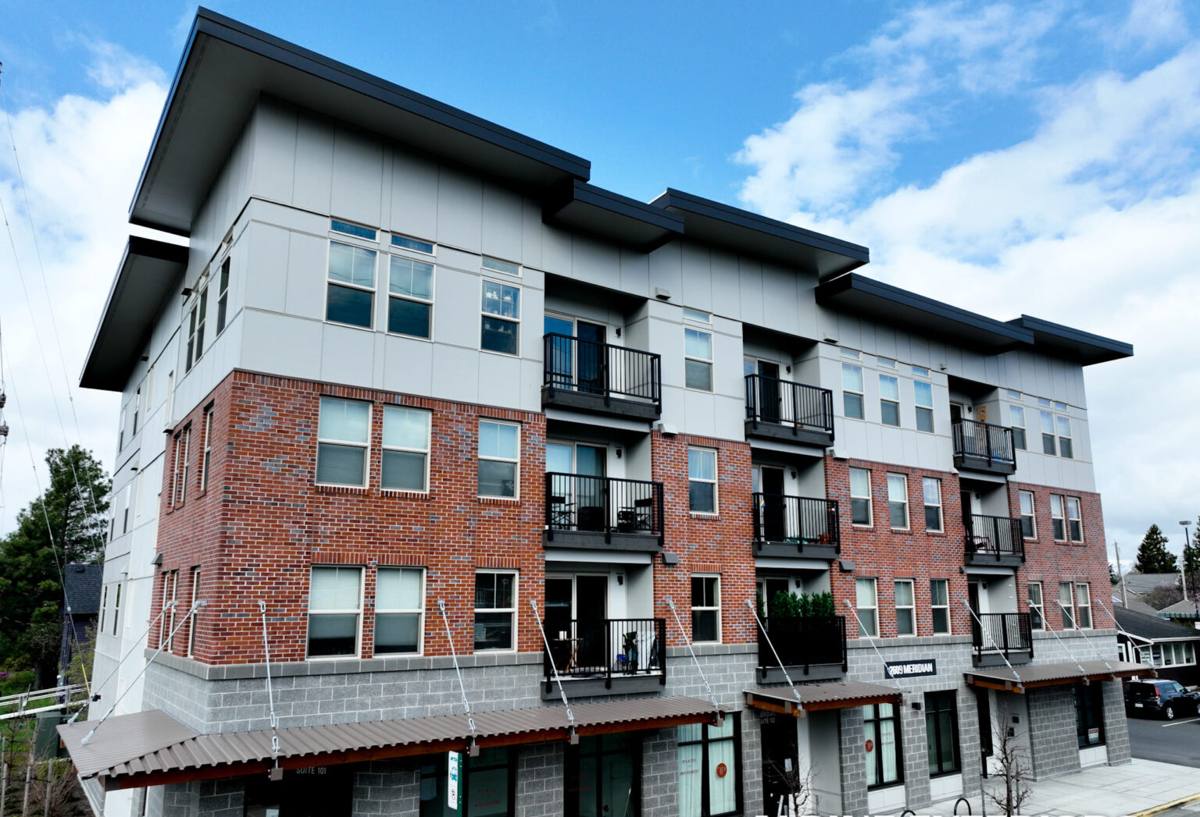
What This Climate Actually Does to a Window Opening
Lynden and the rest of Whatcom County sit under a wet, mild, marine-influenced climate. That combination brings three specific stresses to a new window opening:
Driving Rain
Rain here doesn't just fall — it's frequently pushed sideways by wind coming off open water and low pressure systems moving through the Fraser Valley corridor. Driving rain finds any gap in a house wrap lap, any reversed shingle-fold in the flashing, or any spot where a nail fin wasn't fully sealed. On a new build, this is the single biggest reason the installation sequence has to be followed exactly — not approximated.
Salt-Laden, Humid Air
The marine air that moves through this part of Whatcom County carries moisture and trace salinity that accelerates corrosion on fasteners, hardware, and unprotected metal flashing. Over years, that slow corrosion is what turns a small flashing gap into a real leak path. It's a reason to use corrosion-resistant fasteners and flashing components on every install, not just the ones facing open water.
Shade, Humidity, and Moss
Wiser Lake's setting — mature trees, shaded lots, and the humidity that sits over any body of water — is exactly the environment moss and algae like best. On north- and east-facing elevations especially, frames and sills that stay damp longer collect biological growth faster than they would on an open, sun-exposed lot. That doesn't just affect appearance; sustained dampness against a sill is what eventually finds its way into end grain, caulk joints, and fastener heads.
None of this means a window installation on Wiser Lake is exotic or requires unusual materials. It means the ordinary best-practice steps — sill pans, proper flashing laps, sealed nail fins, correct house wrap integration — aren't optional extras here. They're the difference between a window that performs for its full service life and one that starts causing problems while the house is still under warranty.
The Installation Sequence That Actually Keeps Water Out
New-construction windows are set with a nail fin (also called a flange) that gets integrated directly into the wall's water-resistive barrier before siding goes on. Done correctly, water that reaches the wall is shed down and out, layer over layer, like shingles on a roof. Done out of order, water gets trapped behind the cladding instead of directed away from it — and that mistake is invisible until the damage shows up years later.
The sequence we follow on every new-construction window, regardless of size or brand:
- Confirm the rough opening is square, level, and sized correctly before the window ever gets near it — a slightly out-of-square opening stresses the frame and can cause the sash to bind or fail to seal properly.
- Install a sloped sill pan flashing at the bottom of the opening so any water that does get past the window is directed back outside the wall, not down into the framing.
- Set the window and fasten it per the manufacturer's specific instructions — fastener type, spacing, and shim placement all affect both performance and warranty coverage.
- Seal and tape the nail fin so the head, jambs, and sill integrate correctly with the house wrap in the proper shingle-lap order — sides first, then head, with the head flashing lapping over the wrap above it.
- Apply backer rod and a compatible sealant at the interior and exterior perimeter, sized and placed so the window can expand and contract without the seal cracking.
- Photograph and document the flashing details before they're covered by siding — this is standard practice on our jobs and useful if a warranty question ever comes up years down the road.
Every one of those steps is straightforward on its own. What makes them work is doing them in the correct order and not skipping ahead because a builder's schedule is tight. Rushing the flashing sequence is the single most common cause of new-construction window leaks we get called out to diagnose.
Choosing a Frame Material for a Wiser Lake Build
There's no single "best" window material — the right choice depends on the home's exposure, the budget, and how much upkeep the owner wants to take on. Here's how the common options actually compare in this climate:
| Frame Material | How It Handles This Climate | Maintenance | Typical Fit |
|---|---|---|---|
| Vinyl | Good moisture resistance, won't rot; performance varies by manufacturer quality | Low — occasional cleaning | Budget-conscious builds, rental or spec homes |
| Fiberglass | Excellent dimensional stability in wet, temperature-swinging conditions; resists warping | Low | Homes wanting long service life without upkeep |
| Wood-clad | Warm interior look; exterior cladding protects wood from rain, but any breach in the cladding exposes wood to moisture | Moderate — exterior clad surfaces need periodic inspection | Owners who want a wood interior and are comfortable with more careful upkeep |
| Aluminum | Strong and slim-profile, but conducts heat and cold and needs a thermal break to perform well in a wet climate | Low | Modern designs prioritizing large glass and narrow sightlines |
For most Wiser Lake builds, we steer owners toward vinyl or fiberglass on shaded, north-facing elevations where moisture sits longest, and reserve wood-clad for elevations that get more sun and airflow to dry out between rain events. That's a professional judgment call based on how the specific lot sits, not a blanket rule — every site is a little different.
Glass and Performance Choices That Make Sense Here
Whatcom County's climate is mild compared to a lot of the country — we're not fighting extreme cold or extreme heat. That changes how we'd prioritize performance specs compared to a colder or hotter region:
- U-factor (how well the window resists heat loss) matters, but Lynden's winters are moderate enough that chasing the absolute lowest U-factor rarely pays for itself the way it would in a harsher climate.
- Air infiltration rating matters more here than in drier regions, since wind-driven rain will find any gap that also lets air through.
- Condensation resistance is worth real attention on lake-facing or heavily shaded openings, where interior humidity combined with cooler glass surfaces can lead to condensation on the interior pane if the assembly isn't well insulated at the frame and glass edge.
- Low-E glass coatings are standard on nearly every quality window sold today and help manage both solar heat gain on open, sun-exposed elevations and heat loss on shaded ones.
We help owners and builders pick a spec sheet that matches the actual exposure of each elevation rather than applying one generic spec to every window on the house — a lake-facing wall of glass and a shaded north bedroom window don't need to perform the same way.
Coordinating With Your Builder or GC
New-construction windows don't get installed in isolation — they're one step in a sequence that includes framing, house wrap, window set, flashing, and siding, usually with more than one trade involved. Timing matters:
Before Delivery
We confirm rough opening sizes against the actual window order before the units arrive on site. Catching a sizing mismatch before delivery is a phone call; catching it after framing is closed in is a change order.
At Set
Windows go in after the house wrap is on but before siding starts. We coordinate directly with the general contractor or framing crew so the wrap is installed and ready for our flashing sequence — not so far behind schedule that we're working around exposed sheathing in the rain, and not so far ahead that our flashing gets covered improperly by a siding crew unfamiliar with how it was built.
After Set
Once windows are in and flashed, we walk the openings with photos before siding closes them in. If a builder or owner wants a second set of eyes at that stage, we're glad to walk it with them.
We're used to working inside someone else's build schedule — showing up when a GC needs us there, communicating delays honestly, and not being the trade that holds up the next crew.
What We See Go Wrong When This Job Is Rushed
We're not going to name products or other companies here — every manufacturer makes a usable window, and every installer has an off day. What we will say is what we see repeatedly on new-construction jobs that get flashed incorrectly, whatever the cause:
- House wrap taped over the nail fin instead of properly lapped in shingle order, which traps water against the frame instead of shedding it.
- Missing or flat (non-sloped) sill pans, so any water that gets past the window sits against the sill instead of draining back out.
- Fasteners driven through the fin at the wrong spacing or angle, which can void the manufacturer's warranty even if the window never leaks.
- Sealant used as a substitute for correct flashing sequence rather than as a supplement to it — caulk fails eventually; a properly lapped flashing system doesn't depend on it.
Our standard is to follow the manufacturer's written installation instructions on every unit, document the flashing before it's covered, and treat sill pan flashing as required, not optional — regardless of what the schedule looks like that day.
What Influences the Cost of a New-Construction Window Package
Every build is different, but the same handful of factors drive most of the cost variation we see on Wiser Lake and Lynden-area projects:
| Factor | Why It Moves the Price |
|---|---|
| Frame material | Vinyl is generally the most budget-friendly; fiberglass and wood-clad cost more up front but shift the maintenance and lifespan equation |
| Window size and count | Larger openings and lake-facing walls of glass cost more per unit than standard bedroom or bathroom windows |
| Glass package | Upgraded Low-E coatings, tempered glass where code requires it, and specialty glazing add cost per unit |
| Site access and staging | Second-story installs, tight lake-lot access, or long carry distances from the driveway add labor time |
| Flashing and sill pan detailing | Doing it correctly takes real labor time — it's not a place we cut corners to hit a lower number |
As a broad range, homeowners in this area typically see installed new-construction window packages fall somewhere in the mid-hundreds to low-thousands of dollars per opening depending on size and material, with the total project cost obviously scaling with how many windows the home has. We'll always give a specific, itemized number once we've seen the plans — broad ranges aren't a substitute for an actual quote.
Why a Crew That Already Works Wiser Lake Matters
Wiser Lake isn't a subdivision with identical lots — it's a mix of wooded, shaded parcels and more open lake-facing sites, often with the kind of soil, drainage, and access quirks that come with building near water. A crew that's already worked in this specific area knows to expect shaded, slower-drying elevations on the tree-side of a lot, understands how Whatcom County's inspection and permitting process runs for new builds, and isn't learning the local climate's demands on someone else's house for the first time.
That familiarity shows up in small decisions — which elevation gets the more moisture-tolerant frame material, how tight to run a build schedule around a rainy forecast, where extra attention on flashing pays off on a shaded lot. None of that comes from a spec sheet. It comes from having done this work, on homes like this, in this exact area, more than once.
If you're building near Wiser Lake and want a straightforward conversation about your window package — what fits the site, what fits the budget, and how it'll be installed — reach out for a free, no-pressure estimate using the form below.