 Lynden Siding
 Ferndale's Siding Problem Isn't Like Everywhere Else
Ferndale sits close enough to Bellingham Bay and the Strait of Georgia that salt-laden air is a regular part of the weather, even for homes that aren't waterfront. Add in Whatcom County's long wet season — driving rain that comes in sideways off the water, followed by months of overcast, low-drying-potential days — and you get siding conditions that are genuinely harder on a wall assembly than what you'd see thirty miles inland. Salt air accelerates corrosion on fasteners and trim. Constant dampness feeds moss, algae, and mildew on anything that doesn't dry out quickly. And homes that sit in the shade of mature trees or face the prevailing wind and rain get hit from two directions at once.
None of this means siding fails fast in Ferndale. It means siding that isn't detailed correctly for this climate fails quietly — moisture gets behind the cladding, trim rots from the inside out, and by the time paint is peeling or boards are visibly warped, there's often more damage behind the wall than what you can see from the yard. Replacement done right here isn't just about swapping old boards for new ones. It's about correcting whatever let moisture in over the years and building an assembly that's actually suited to this coastal, high-rainfall corner of the county.
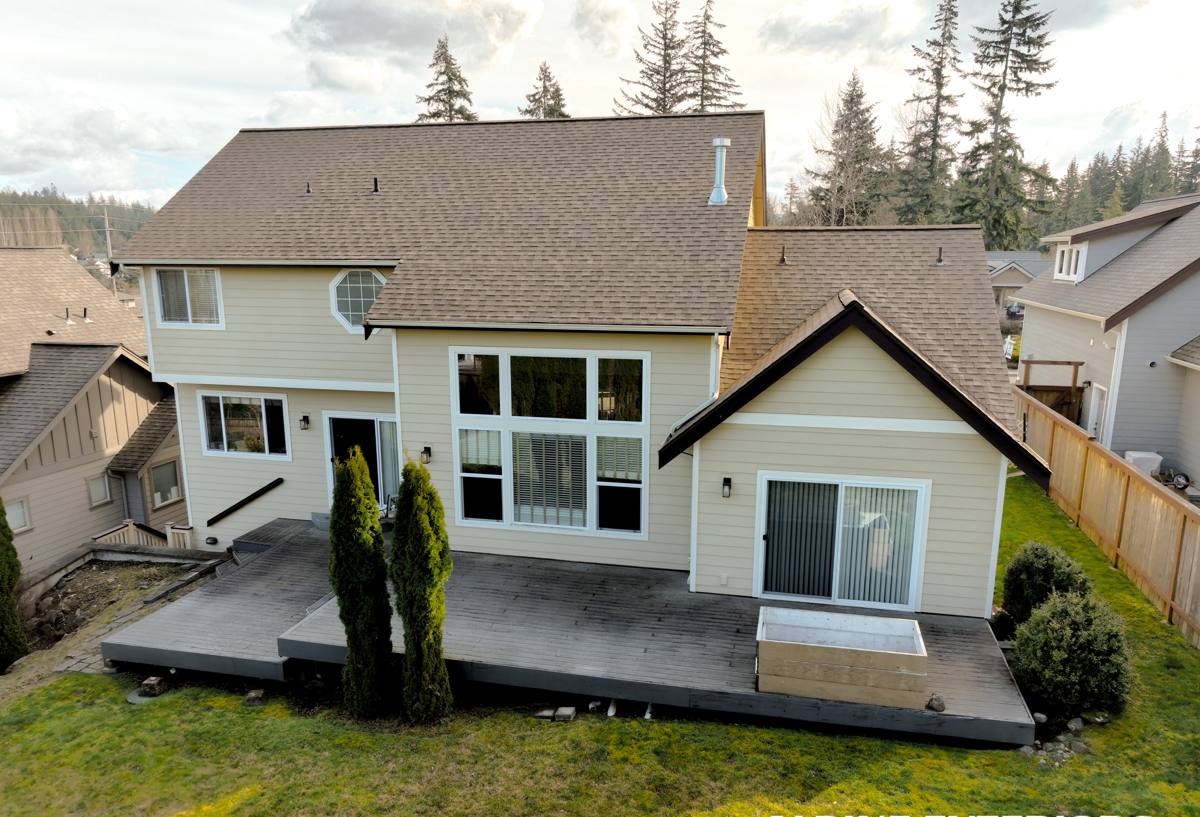
Signs a Ferndale Home Needs Siding Replacement, Not Just Repair
Not every siding problem calls for a full replacement. But there's a point where patching individual boards stops making sense and a full re-side becomes the more honest recommendation. In Ferndale, we look for:
- Soft or spongy spots when you press on siding, especially near the bottom courses, window sills, and anywhere gutters overflow
- Persistent moss or dark streaking that comes back within a season of cleaning, even on siding facing away from direct sun
- Paint that's bubbling, peeling, or failing repeatedly in the same spots — usually a sign of moisture trying to escape through the finish
- Visible gaps, warping, or cupping in individual boards, particularly on the weather-facing (typically west and southwest) elevations
- Rust streaking from fasteners, which shows up faster here due to airborne salt
- Interior clues — musty smells near exterior walls, peeling interior paint, or trim that's swelling — that point to moisture already past the cladding
- Siding older than its expected service life for the material it's made of, especially if it was never back-primed or properly flashed at installation
If you're seeing two or more of these, especially the soft-spot or interior signs, it's worth having someone look at the sheathing underneath before deciding between repair and replacement. Sometimes a full re-side is what protects the investment — sometimes targeted repair is genuinely enough. We'll tell you which one it is.
What a Correct Siding Replacement Actually Involves
A siding replacement is only as good as what happens underneath it. The visible boards get the attention, but in a climate like Ferndale's, the layers behind them do most of the work.
Tear-Off and Substrate Inspection
Once the old siding comes off, the sheathing gets inspected board by board. This is the point where hidden rot, soft sheathing, or old moisture damage from a previous installation shows up. Any compromised sheathing gets replaced before anything new goes back on — covering damaged substrate with new siding just resets the clock on the same failure.
Weather-Resistive Barrier and Flashing
A continuous, properly lapped weather-resistive barrier is non-negotiable here. Flashing at windows, doors, and any horizontal trim needs to be integrated with that barrier so water is directed out and down, never trapped behind the cladding. This is the detail that separates siding that lasts decades from siding that fails in ten years — and it's invisible once the job is done, which is exactly why it has to be done right the first time.
Drainage Gap
Coastal, high-rainfall climates like this one benefit from a drainage gap (rainscreen) between the siding and the water-resistive barrier. That gap lets any moisture that does get past the cladding drain and dry out instead of sitting against the wall. It's a detail that costs a little more up front and pays for itself in how the assembly performs through a Whatcom County winter.
Fastening and Installation to Manufacturer Spec
Fiber cement siding has specific nailing patterns, fastener types, and clearance requirements — from the ground, from roof lines, at butt joints. Installed off-spec, it can still look fine on day one and still have problems in year three. We install to the manufacturer's published requirements, not to whatever's fastest.
Why We Install Only James Hardie Fiber Cement
We don't install vinyl, LP SmartSide, primed cedar, or other fiber cement brands. That's a deliberate standard, not a sales pitch, and it comes down to how those products actually perform in a climate like this one over time versus what a factory-finished, engineered fiber cement product from Hardie offers:
- Non-combustible material — fiber cement doesn't burn, which matters more every wildfire season in the Pacific Northwest
- ColorPlus factory finish — baked-on finish that resists the fading and peeling that field-applied paint struggles with in a wet, low-sun climate
- HZ5 product engineering — Hardie's HZ product lines are built for specific climate zones, and our region calls for the moisture- and freeze-aware HZ5 formulation rather than a generic national product
- Strong, transferable warranty — backed by a manufacturer with decades in fiber cement, and it follows the house if you sell
- Proven longevity when installed to spec — the material itself doesn't rot, delaminate the way some engineered wood products can when moisture gets past a seam, or need the periodic refinishing that raw wood siding demands
We're not going to tell you every other product is worthless — vinyl is cheap and low-maintenance in the right setting, LP SmartSide has genuine fans, and cedar has real curb appeal. But for what a Ferndale home is up against — salt air, sustained rain, moss pressure — we've made the call that fiber cement done right, with a factory finish and climate-matched engineering, is what we're willing to put our name behind. That's why it's the only thing we install.
Our Ferndale Siding Replacement Process
- On-site assessment. We walk the exterior, check the elevations that take the worst weather, and look for the signs listed above — including probing for soft spots, not just a visual look.
- Written estimate. You get a clear scope: what's being replaced, what sheathing repair (if any) is anticipated, product and color selections, and a real price — no vague allowances.
- Tear-off and substrate repair. Old siding comes off, damaged sheathing gets replaced, and we document anything we find so you're not surprised mid-project.
- Weather barrier, flashing, and drainage gap installation. This is the part that determines how the house performs in ten years, and we don't rush it.
- Hardie siding installation to manufacturer fastening and clearance specs, with attention to the joints and terminations that are most exposed to wind-driven rain.
- Trim, caulking, and final detailing at windows, doors, corners, and roof lines.
- Walkthrough and cleanup so you can see the finished work and ask questions before we call it done.
What Affects the Cost of a Ferndale Siding Replacement
Every home is different, so we won't quote a number without seeing the house — but these are the factors that most often move the price up or down:
| Factor | Why It Matters |
|---|---|
| Extent of sheathing damage found at tear-off | Rot or moisture damage behind old siding has to be repaired before new siding goes on; this is the biggest source of variability |
| Home size and number of stories | More square footage and more elevations mean more material, labor, and staging/scaffolding time |
| Trim and architectural detail | Homes with more corners, dormers, or decorative trim take longer to flash and finish correctly |
| Siding profile and color selection | Lap width, shingle-style panels, and ColorPlus color choice all affect material cost |
| Access and site conditions | Tight lots, mature landscaping, or difficult access for equipment can add labor time |
| Existing moisture or moss remediation needs | Heavily moss-affected or moisture-compromised walls may need extra prep before install |
Why a Crew That Already Works Ferndale Matters
Siding detailing that works fine in a drier climate can be undersized for what Ferndale actually sees over a winter. A crew that works this area regularly already knows which elevations tend to take the worst of the wind-driven rain, how much drainage capacity a wall assembly actually needs here, and what moss and salt exposure do to fasteners and trim over years, not just months. That local pattern recognition shows up in the small decisions — flashing details, gap sizing, fastener choice — that don't show up on a spec sheet but do show up in how the siding performs a decade from now.
There's also a practical side: familiarity with local permitting, realistic scheduling around Whatcom County's wet months, and being reachable if a question comes up after the job is done. A crew that's already established in the area has a reason to get it right the first time and to stand behind the work after the trucks leave.
After Replacement: Keeping Fiber Cement Performing
Hardie fiber cement is low-maintenance compared to wood, but "low-maintenance" isn't "no-maintenance," especially in a moss-prone climate. A few habits go a long way:
- Rinse siding annually, and more often on shaded or north-facing walls where moss and algae take hold fastest
- Keep gutters clear so overflow doesn't run down the siding at concentrated points
- Trim back vegetation and tree limbs that keep siding shaded and damp
- Re-caulk joints and trim as needed — caulk is a maintenance item on any siding system and typically needs attention well before the siding itself does
- Address any impact damage (a stray branch, equipment bump) promptly so it doesn't become a moisture entry point
If you're seeing signs of trouble on your Ferndale home, or your siding is simply old enough that replacement is worth planning for, we're happy to take a look and give you a straight answer about what you're facing. Reach out for a free, no-pressure estimate using the form below.