 Lynden Siding
 Window Replacement Built for Acme's Climate, Not a Catalog Average
Acme sits in the kind of Whatcom County weather pattern that's hard on windows: long stretches of driving rain, salt-laden air moving in off the coast, and a moss season that can run most of the year in shaded, tree-lined lots. Homes out here don't fail because owners neglected them. They fail because the windows installed years ago were never really matched to this environment, or because the install itself left small gaps that rain and humidity eventually found.
Window replacement in Acme isn't just picking a product out of a brochure. It's understanding how wind-driven rain hits a wall, how moisture behaves once it's inside a frame cavity, and how to flash and seal an opening so water has nowhere to go but back outside. That's the standard we hold every job to, and it's the reason a window replacement done right here should outlast the one it's replacing by decades, not years.
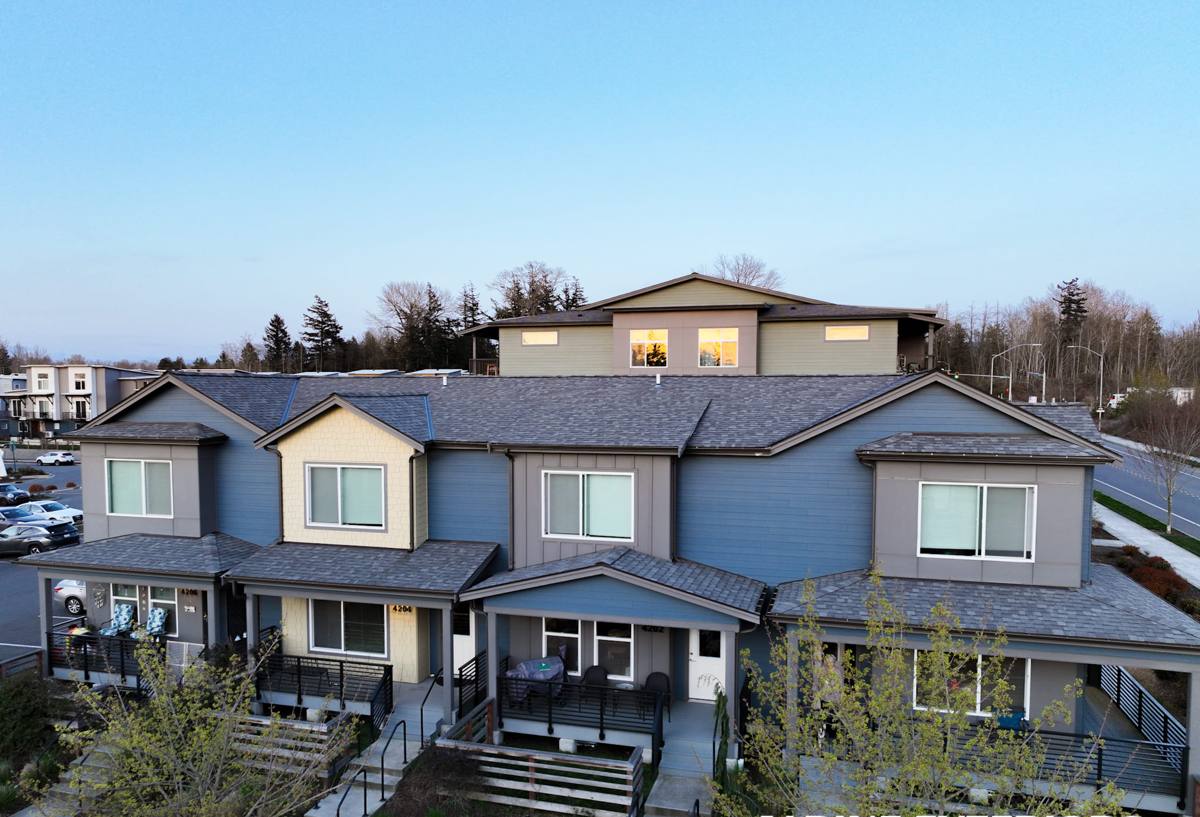
What This Climate Actually Does to Windows Over Time
Understanding the failure pattern helps explain why we approach replacement the way we do.
Moisture Intrusion
Whatcom County gets sustained, wind-driven rain rather than short bursts. Over years, that pressure finds any weak point in flashing, sealant, or window-to-wall transitions. Once water gets behind a frame, it can sit there for months at a time given how little the region dries out between storms.
Wood Rot and Frame Degradation
Older wood-frame windows, or vinyl windows with wood sub-sills, are especially vulnerable. Trapped moisture doesn't evaporate quickly in this climate, so rot can progress well before it's visible from inside the house.
Moss and Organic Growth
Shaded lots near tree lines hold moisture longer, and moss doesn't stop at the roofline. It colonizes sills, tracks, and weep holes, which blocks drainage paths that are supposed to let incidental water escape a window assembly. A blocked weep system turns a well-built window into a bathtub.
Salt Air and Hardware Corrosion
Coastal-influenced air affects metal components — hinges, cranks, balance systems, and screws — faster than it does in drier inland climates. Corroded hardware is often the first visible sign that a window's finish and seals have been under pressure for a while.
Signs an Acme Home's Windows Need Replacing
Not every window issue calls for full replacement, but these are the signals we take seriously:
- Fogging or a persistent haze between panes of double-glazed glass (a failed seal)
- Soft, spongy, or discolored wood at the sill or bottom corners of the frame
- Windows that are difficult to open, close, or lock, especially after damp weather
- Visible gaps between the frame and siding, or daylight showing around the trim
- Persistent moss, algae, or black staining on the sill that keeps returning after cleaning
- Noticeable draft or cold spots near the window even when it's fully closed
- Rising heating costs without a clear explanation elsewhere in the home
Choosing the Right Window for This Climate
Frame material matters more here than in drier parts of the state. We walk homeowners through the honest trade-offs rather than pushing a single product line.
| Frame Material | How It Handles This Climate | Maintenance |
|---|---|---|
| Vinyl | Won't rot, resists moisture well, performs consistently in wet cycles | Low — occasional cleaning |
| Fiberglass | Excellent dimensional stability, holds up well to moisture and temperature swings | Low |
| Wood (clad exterior) | Warm interior look, but exterior cladding and sealant integrity become critical in this rainfall pattern | Moderate — sealant and joints need periodic inspection |
| Aluminum | Prone to condensation and corrosion in salt-influenced, damp climates unless thermally broken | Higher — hardware and finish need monitoring |
We're not going to tell homeowners that one material is objectively "best" — it depends on budget, the home's style, and how much upkeep an owner wants to take on. What we will say is that in a climate like this, moisture performance and installation quality matter more than any single brand name on the frame.
Glass Packages Worth Considering
Double-pane glass with low-E coating and argon fill is the practical baseline for this region — it cuts heat loss and helps manage condensation on cold, wet days. Triple-pane adds further performance but at a real cost premium; for most Acme homes, a well-installed double-pane unit with a good glazing package delivers most of the benefit without the added expense.
Full-Frame Replacement vs. Insert Replacement
This is one of the most consequential decisions in a window project, and it should be based on the condition of the existing frame and sill — not just the lowest quote.
| Factor | Insert (Pocket) Replacement | Full-Frame Replacement |
|---|---|---|
| When it's appropriate | Existing frame and sill are sound, no rot present | Frame, sill, or sheathing shows moisture damage or rot |
| Access to flashing | Limited — reuses existing flashing and sill pan | Full access to re-flash and correct any past water paths |
| Disruption | Faster, less exterior siding disturbance | More involved — siding and trim removed and reset |
| Cost | Lower | Higher, but resolves underlying issues |
| Best fit for this climate | Homes with well-maintained, dry existing frames | Homes with any history of leaks, rot, or older single-pane wood frames |
Given how much water this region moves past a wall over a typical winter, we won't recommend an insert replacement over a frame that shows signs of past moisture damage just because it's the cheaper path. If we open up a window and find rot in the sheathing, that gets addressed properly rather than covered over.
How We Approach a Window Replacement in Acme
- On-site assessment. We look at each window opening individually — frame condition, sill pitch, existing flashing, and how water has historically moved around that wall.
- Honest scope and options. We explain whether insert or full-frame replacement fits each opening, and walk through frame material and glass options suited to the home's exposure.
- Proper removal. Old units and any compromised trim or sheathing are removed carefully, without rushing past what's underneath.
- Correct flashing and sill pan installation. This is the step that determines whether a window lasts 10 years or 30 in this climate. Water management details — house wrap integration, sill pans, and head flashing — get the same attention as the window itself.
- Precision setting and sealing. The new window is shimmed, leveled, and sealed with materials rated for sustained wet exposure, not just a generic caulk bead.
- Interior and exterior finish work. Trim, casing, and siding are reset cleanly so the finished opening looks original to the house.
- Final walkthrough. We check operation, sealing, and appearance with the homeowner before calling the job done.
Why Hiring a Crew That Already Works in Acme Matters
Window replacement done by a crew unfamiliar with this specific microclimate tends to treat every home the same way a drier region would. That shows up later — in sealant that wasn't rated for constant damp exposure, flashing details that assumed less rainfall, or a glazing recommendation that doesn't account for how much condensation this climate produces on cold mornings.
Working regularly in Lynden and the surrounding Whatcom County communities, including Acme, means we've seen how different lot conditions — tree cover, wind exposure, proximity to water — change what a given home actually needs. A window package that's right for an open, sun-exposed lot isn't automatically right for a shaded property that holds moisture longer. That local pattern recognition is part of what a homeowner is paying for when they hire a crew that already knows the area, not just a general contractor passing through.
What a Correct Installation Involves — And Why It's Worth Checking
Homeowners don't need to become installation experts, but it helps to know what separates a durable job from one that will cause problems in a few years:
- A sill pan or sloped sill detail that directs any incidental water back outside, not into the wall cavity
- Flashing integrated with the house wrap in the correct shingle-lap order, so water sheds downward and outward
- Sealants and backer rod rated for continuous moisture exposure, not general-purpose caulk
- Proper shimming so the window operates smoothly without stressing the frame
- Weep holes and drainage paths left clear and functional, not sealed shut by mistake
- Exterior trim and siding reset tightly, with no gaps that invite moss or water behind the cladding
Any of these steps done poorly can look fine on installation day and still cause a leak two or three winters later. That's why we treat the water-management details as the core of the job, not an afterthought to hanging the window itself.
Getting Started
If your Acme home has windows that are drafty, fogged, sticking, or showing signs of moisture at the sill, it's worth having them looked at before another wet season adds to the damage. We're happy to walk the property, give a straightforward read on what each window actually needs, and provide a free, no-pressure estimate — no obligation, just an honest assessment from a crew that knows this climate. Use the form below to get started.