 Lynden Siding
 Why Everson Decks Wear Out Faster Than You'd Expect
Everson sits in the Nooksack River valley in Whatcom County, close enough to the water and the marine air pattern that moves through this part of Washington to take a real toll on outdoor structures. Between the driving rain off the Puget Sound weather systems, the salt-tinged air that reaches this far inland on a windy day, and a moss season that can stretch from October well into April, a deck here is working harder than a deck almost anywhere else in the country. Wood fibers stay damp for days at a time. Fasteners corrode faster than manufacturers' ratings assume. And moss doesn't just look bad on a deck surface — it holds moisture against the boards and turns walking surfaces slick and dangerous.
Most decks in this area aren't failing because the homeowner neglected them. They're failing because they were built to a generic standard instead of a Whatcom County one. That distinction matters when it's time to replace one.
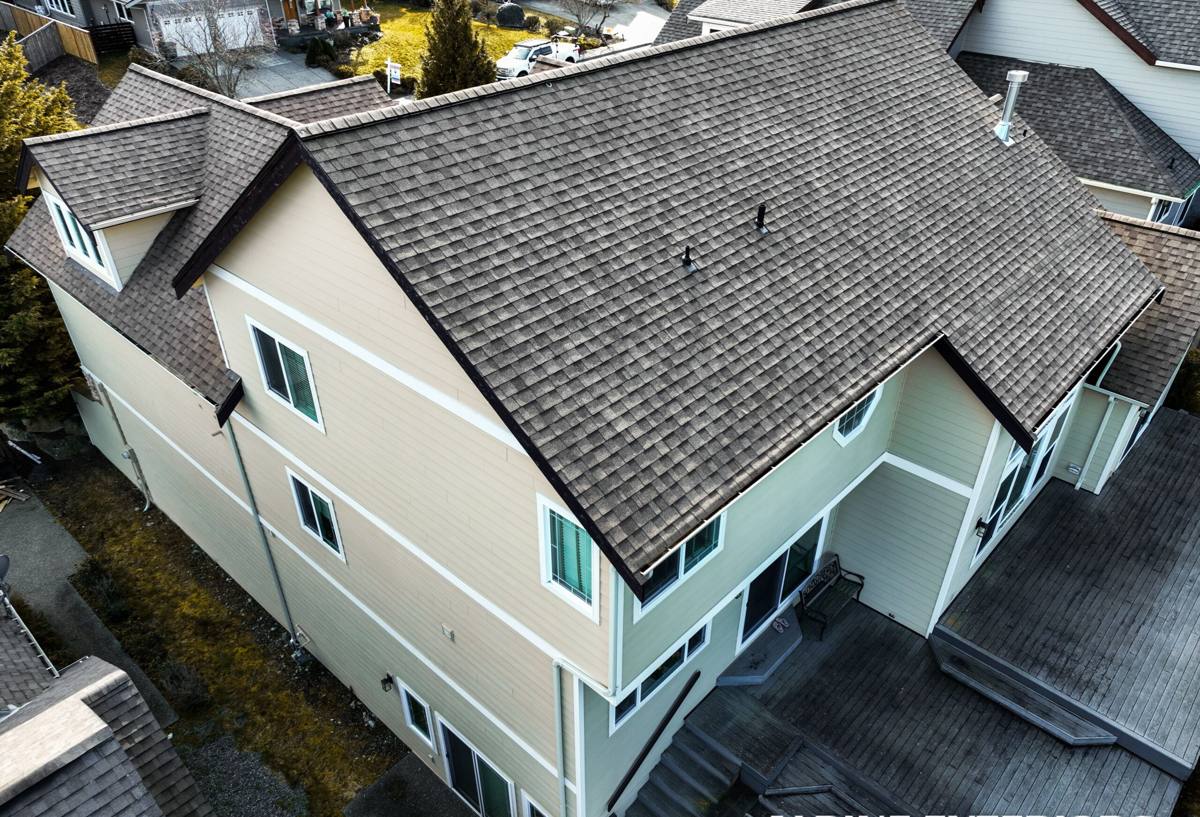
Repair or Replace? How We Tell the Difference
Not every tired-looking deck needs a full teardown. But in our experience working on homes around Everson and greater Lynden, there's a point past which patching becomes false economy. We look at a few things before recommending replacement over repair:
- Soft or spongy spots in the decking boards, especially near the house or in shaded corners where moss holds moisture longest
- Rust streaking or crumbling around fastener heads and joist hangers
- A ledger board attachment that shows separation, gaps, or water staining where the deck meets the house
- Posts or footings that have shifted, settled unevenly, or show rot at the base
- Railings that flex or wiggle under normal pressure — a safety issue, not a cosmetic one
- A structure that's simply past the practical service life of its original materials
If the problems are limited to surface boards on an otherwise sound frame, a resurfacing project can make sense. If the framing, ledger connection, or footings are compromised, replacement is the honest recommendation — patching a failing frame just delays a bigger problem and puts a nicer deck surface over an unsafe base.
What a Correct Deck Replacement Actually Involves
It starts underneath, not on top
A deck is only as good as what you can't see once it's finished. In this climate, the ledger board connection to the house is one of the most important — and most commonly done wrong — parts of the whole structure. We flash it properly to keep water from tracking behind the siding and into the wall framing, which is a much more expensive problem than a deck if it's ignored.
Footings sized for wet ground
Whatcom County soil holds water longer than people expect, especially through a wet winter. Footings that are undersized or set too shallow can shift over time as the ground freezes, thaws, and saturates repeatedly. We set footings to depth and size for the actual load and soil conditions on your property, not a bare-minimum guess.
Fasteners and hardware that won't corrode away
This is where a lot of decks quietly fail years before the boards look bad. Standard fasteners corrode in coastal-influenced, high-moisture air faster than most homeowners realize. We use fasteners and structural hardware rated for the exposure this region actually delivers, not the minimum a big-box fastener bin offers.
Drainage and airflow underneath
Water needs somewhere to go, and air needs to move underneath the deck to let framing dry out between rain events. Poor grading or dense landscaping tight against the structure traps moisture and accelerates rot — something we account for in how we frame and finish the underside of a new deck.
Choosing the Right Decking Material for Everson's Climate
There's no single "best" decking material — it's a trade-off between upfront cost, maintenance commitment, and how the material actually behaves in sustained damp, mossy conditions. Here's how the common options stack up for this specific climate:
| Material | Moss/Moisture Behavior | Maintenance | Typical Lifespan Here |
|---|---|---|---|
| Pressure-treated wood | Absorbs moisture; needs sealing to resist moss growth and cupping | Annual cleaning, periodic sealing/staining | 10-15 years with upkeep |
| Cedar | Naturally moisture-resistant but still needs care; moss can still take hold if shaded | Regular cleaning, oiling to preserve color and grain | 15-20 years with upkeep |
| Composite decking | Doesn't absorb water or rot, but moss and algae can still grow on the surface film | Occasional washing; no staining or sealing | 25-30+ years |
| PVC/capped composite | Best resistance to moisture absorption; surface still needs occasional cleaning | Lowest — mostly rinsing | 25-30+ years |
For homes in shaded, tree-lined lots around Everson — which is common along the river valley — we lean toward recommending materials with lower moisture absorption regardless of budget tier, simply because shade plus dampness is the exact combination that grows moss fastest and rots wood soonest. That said, some homeowners prefer the look and feel of real wood and are willing to keep up with the maintenance. We'll walk through the honest trade-offs for your specific lot and sun exposure rather than push one product across the board.
Our Deck Replacement Process
- On-site assessment — we inspect the existing structure, ledger, footings, and surrounding drainage to determine the real scope, not just the visible surface
- Honest scope and estimate — you'll know upfront whether this is a full teardown-and-rebuild or a more limited repair, and why
- Permit handling — Whatcom County and City of Everson permitting requirements vary by deck size, height, and location relative to property lines; we handle the paperwork so you don't have to chase it
- Demolition and disposal — old material removed cleanly, with attention to protecting landscaping and the house exterior during teardown
- Framing and structural work — ledger flashing, footings, joists, and hardware built to hold up against this region's rain and moisture load, not just code minimums
- Decking, railing, and finish work — installed to the material manufacturer's spec, with attention to spacing and fastening that accounts for wood movement and drainage
- Final walkthrough — we go over the finished deck with you, including basic care guidance specific to the material you chose
Permits and Local Considerations
Deck replacement projects in and around Everson typically require a permit once the structure exceeds certain height or size thresholds, and setback rules apply depending on how close the deck sits to property lines. Requirements can differ slightly depending on whether a property falls under Whatcom County jurisdiction or city limits. We handle this step as part of the project so the work is inspected and legitimate — which also matters if you ever sell the home, since unpermitted structural work can complicate a sale.
Keeping a New Deck Ahead of Moss and Moisture
Even a well-built deck needs some seasonal attention in this climate. A few habits go a long way toward protecting the investment:
- Sweep leaves and debris off the surface regularly through fall — trapped organic matter is what moss feeds on first
- Rinse or lightly scrub the surface a couple of times a year, especially shaded sections, before moss gets a foothold
- Check that gutters and downspouts near the deck aren't dumping extra water onto the structure
- Trim back overhanging branches or dense shrubs that keep the deck surface from drying out between rain events
- For wood decking, keep to a sealing or staining schedule rather than waiting until boards show visible graying or cupping
None of this requires special equipment or a big time commitment — it's mostly about not letting moisture and moss get a multi-month head start, which is exactly what happens when a deck goes unattended through a wet Whatcom County winter.
Why Local Experience on This Specific Job Matters
Deck framing and material choices that hold up fine in a drier inland climate don't necessarily hold up here. A crew that primarily works other regions may default to standard fasteners, standard sealing schedules, or decking choices that look fine on install day but struggle two or three moss seasons in. Working regularly in and around Everson and Lynden means we're not guessing at how the driving rain, shade patterns, and moss cycle here actually affect a deck over time — we're building around conditions we deal with on every project in this area, not applying a generic playbook.
Get an Honest Look at Your Deck
If your deck is showing soft spots, corroded hardware, or just isn't holding up the way it should, we're happy to take a look and give you a straight answer about whether it needs replacing or can be brought back with targeted repair. Use the form below to request a free, no-pressure estimate, and we'll walk the property with you and talk through the options in plain terms.