 Lynden Siding
 Building a Deck That Actually Holds Up in Acme
Acme sits in the wetter, more wooded stretch of Whatcom County, and that setting changes what a deck needs to survive. Between the driving rain that blows through the valley for months at a stretch, the salt-tinged air that moves inland off the Sound, and tree cover that keeps decks shaded and damp long after a storm passes, this is not an easy environment for outdoor structures. A deck built to a generic spec might look fine the first summer and start showing rot, moss, and loose fasteners within a few winters. A deck built for this specific area is a different thing entirely, and that difference shows up in the framing, the fasteners, the decking material, and the details most homeowners never think to ask about.
We build and replace decks throughout the Lynden area, including Acme, and the biggest lesson we've taken from years of working this ground is that moisture management matters more than almost anything else. Get that right and a deck will last decades. Get it wrong and you're looking at repairs within five to seven years, sometimes sooner.
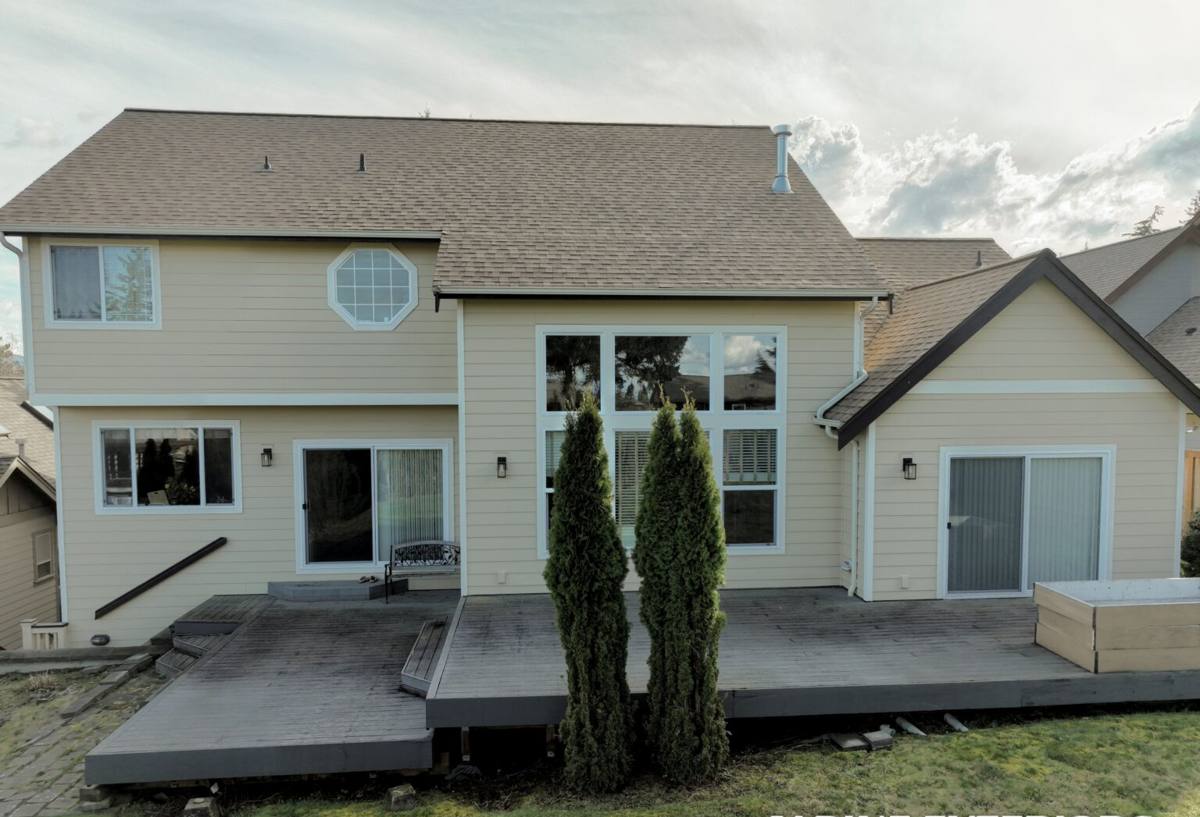
What Acme's Climate Actually Does to a Deck
Driving Rain and Standing Moisture
Rain here doesn't just fall straight down — wind pushes it sideways into ledger boards, under railings, and into any gap where water can find a path. Combined with the tree canopy common around Acme properties, decks stay wet longer between storms than they would in an open, sunny yard. That extended damp period is exactly what wood-decay fungi and moss need to take hold.
Long Moss Season
Moss on a deck isn't just a cosmetic problem. It holds moisture against the decking surface, creates a slip hazard, and can work into board seams and fastener holes, accelerating rot from the top down instead of just the underside. Shaded, low-airflow decks in this area can grow a moss layer within a single wet season if the surface material and spacing aren't right.
Salt Air and Metal Fatigue
Even away from the immediate waterfront, Whatcom County's marine air carries enough salt to speed up corrosion on lower-grade fasteners, brackets, and railing hardware. Once a fastener starts corroding, it loses holding strength long before it looks obviously bad — which is part of why we don't cut corners on hardware grade.
What a Correctly Built Deck Requires Here
A deck that's going to hold up around Acme needs a handful of things done right from the ground up, not patched in later:
- Footings sized and set below frost depth, with proper drainage so water doesn't pool against the post base
- Ledger board flashing that actually sheds water away from the house rim joist, not just a bead of caulk
- Joist tape or a comparable protective barrier on top of every joist to stop standing water from soaking directly into the wood
- Deck board spacing calculated for wet-climate expansion and drainage, not a one-size-fits-all gap
- Stainless or coated fasteners rated for coastal/marine exposure, not standard interior-grade hardware
- Airflow underneath the deck — proper joist height and skirting design so the underside can actually dry out between storms
Skip any one of these and the deck will still look complete on installation day. The problems show up later, usually starting at the ledger connection or the fastener heads, which is exactly where homeowners can't see them without pulling boards.
Choosing the Right Decking Material for This Area
Material choice matters as much as construction technique. Here's how the common options actually perform under Acme's rain-and-shade conditions:
| Material | Moisture Behavior | Moss/Mildew Resistance | Maintenance |
|---|---|---|---|
| Pressure-treated wood | Absorbs water; needs sealed cuts and consistent airflow underneath | Low — needs regular cleaning and treatment | Annual cleaning, periodic sealing/staining |
| Cedar | Naturally moisture-resistant but still absorbs water over time | Moderate — better than PT wood, still needs care in shade | Periodic cleaning and oil/sealant refresh |
| Composite decking | Doesn't absorb water into the core; surface can still hold surface moisture | Good, varies by brand/capstock quality | Occasional washing, no staining or sealing |
| PVC/capped composite | Fully moisture-resistant board | Best — smooth capped surface sheds moss growth more easily | Lowest — mostly just washing |
We don't push one material on every job. A shaded, tree-covered lot in Acme is a strong argument for composite or capped decking simply because it removes the moss-holding, rot-prone wood surface from the equation. A more open, sunnier lot can make a well-built cedar or treated-wood deck a perfectly reasonable choice, especially if the homeowner is committed to the annual maintenance it needs. What we won't do is install a wood deck without properly protected framing underneath it, regardless of which surface material goes on top — that framing is what actually determines the deck's lifespan.
Our Process for a Custom Deck Build
1. On-Site Assessment
We walk the property, look at drainage patterns, sun/shade exposure, existing structures the deck will attach to, and any site-specific issues like slope or tree root proximity — all things that affect how the deck should be framed and where.
2. Design and Material Selection
We talk through layout, railing style, stairs, and decking material based on how the space is actually used and how much maintenance the homeowner wants to take on long-term, not just what looks good in a catalog.
3. Permitting
Deck projects of most sizes require a permit through Whatcom County or the applicable local jurisdiction. We handle that process so the structure is inspected and compliant, which also protects the homeowner if the property is ever sold.
4. Framing and Flashing
This is where the climate-specific work happens: proper ledger flashing, joist protection, correctly sized footings, and fastener selection. It's the least visible part of the job and the most important.
5. Decking, Railing, and Finish Work
Boards, railings, stairs, and any built-in features go in last, with attention to board spacing and fastening patterns that account for our wet climate.
6. Final Walkthrough
We walk the finished deck with the homeowner, cover basic maintenance expectations for the material chosen, and make sure everything meets both our standard and the inspector's.
What We See Go Wrong on Older or Poorly Built Decks in This Area
When we're called out to inspect or repair an existing deck in the Acme/Lynden area, a few problems come up repeatedly:
- Rot at the ledger board connection from missing or failed flashing
- Soft, spongy joists where water pooled on unprotected framing lumber for years
- Moss buildup between boards spaced too tightly for the amount of shade and rainfall the deck gets
- Rusted or corroding fasteners and brackets, especially on older decks built with standard hardware
- Railing posts loosening because the original attachment wasn't built to handle wind-driven rain intrusion
Most of these are preventable with correct construction up front. Some are repairable without a full rebuild if caught early, which is part of why we recommend a periodic inspection rather than waiting until a board fails underfoot.
Simple Maintenance That Extends Deck Life Here
- Sweep off leaves, needles, and debris regularly — trapped organic matter holds moisture and feeds moss
- Rinse or wash the deck surface at least once or twice a year, more often in heavily shaded areas
- Check fastener heads and railing connections annually for rust or looseness
- Keep gutters and downspouts near the deck clear so runoff isn't dumping extra water onto or under the structure
- For wood decks, reapply sealant or stain on the manufacturer's recommended schedule — don't wait until it's visibly worn
- Trim back overhanging branches where possible to improve airflow and sun exposure on shaded decks
Why It Matters to Hire a Crew That Already Works in Acme
A contractor who mostly builds decks in drier, sunnier climates isn't necessarily going to default to the flashing details, fastener grade, and framing protection that this part of Whatcom County actually requires — those aren't universal building code minimums, they're judgment calls based on what a structure will face over the next 20 years. Crews that work Acme and the greater Lynden area regularly see how decks age under this specific mix of rain, shade, and salt air, and that experience shapes decisions before the first post hole is dug, not after a callback.
It also means realistic expectations from day one — an honest conversation about which materials make sense for a shaded, moss-prone lot versus an open one, and what maintenance a homeowner is actually signing up for with each option.
Get a Free Estimate
If you're planning a new deck or replacing one that's showing its age in Acme or elsewhere around Lynden, we're happy to come take a look, walk the site, and give you a straightforward, no-pressure estimate. There's a form below — reach out and we'll go from there.