 Lynden Siding
 Acme Decks Face a Different Kind of Wear
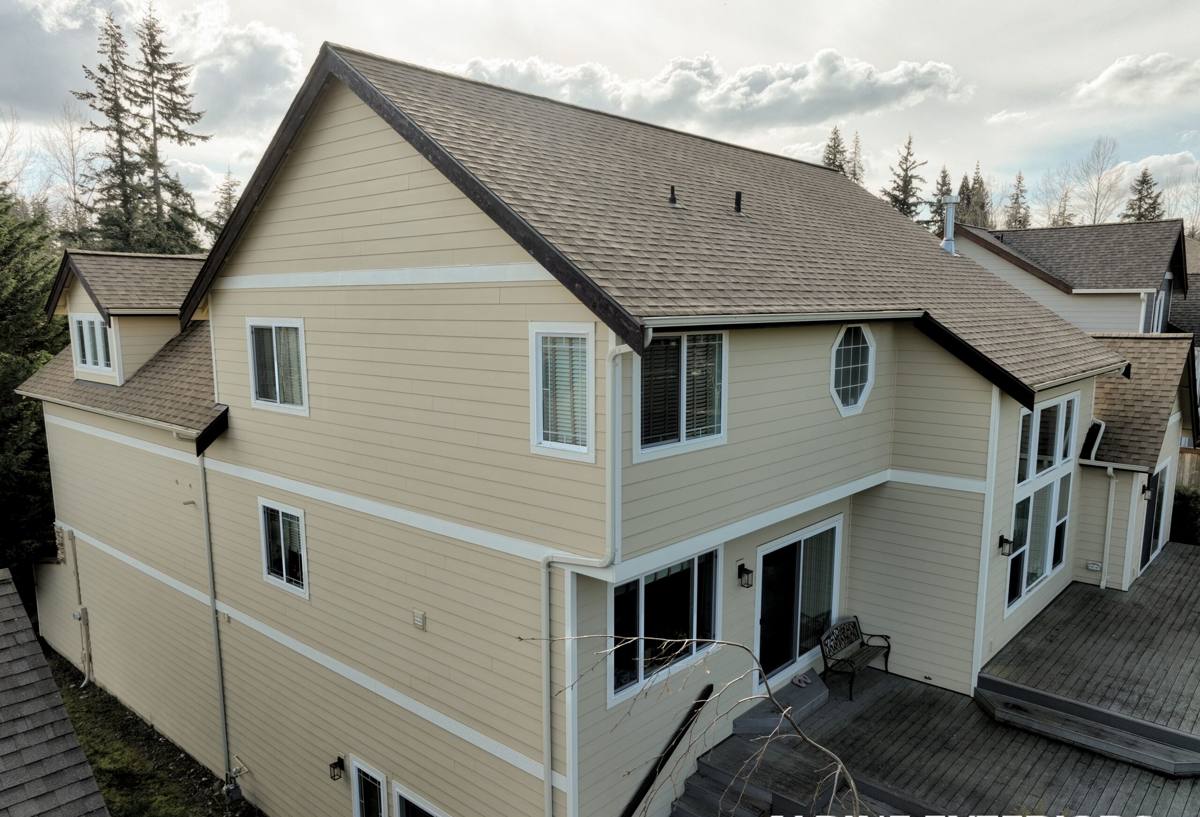
Homes out toward Acme sit in some of the shadier, more tree-covered lots in the greater Lynden service area. That tree cover is part of the appeal, but it also means decks here dry out slower than decks on open, sun-exposed lots closer to town. Add in the driving rain that moves through Whatcom County most of the fall and winter, the salt-tinged air that rides in off the Sound on a marine push, and a moss season that can stretch from October into May, and you've got a structure that's under near-constant moisture pressure for more than half the year.
None of that means an Acme deck is doomed. It means the repair work has to account for how water actually moves through and off the structure in this specific setting, not just patch what's visibly broken. A board replacement that ignores drainage, ventilation, or fastener choice will just fail again in the same spot in a year or two.
How to Tell a Deck Needs Repair (Not Just Cleaning)
A lot of what looks like "the deck is getting old" is actually a specific, fixable problem. Some signs point to surface wear you can live with a while longer. Others mean water has already gotten into the structure and needs attention before it spreads.
- Boards that feel soft, spongy, or spring back slowly when you step on them
- Persistent green or black staining that comes back within weeks of cleaning
- Rust streaks running down from screw heads or joist hangers
- Gaps opening up between the ledger board and the house, or daylight visible behind it
- Railing posts that wiggle at the base, even slightly
- A musty smell coming from underneath the deck, especially near the house
- Cupped or crowned boards that hold standing water after rain
The first two on that list are often cosmetic and manageable with regular cleaning. The rest usually mean moisture has reached the framing, fasteners, or ledger connection, and that's structural, not cosmetic.
What a Correct Deck Repair Actually Involves
Starting Underneath, Not on Top
The visible decking boards are the easiest part to judge and the easiest part to fix. The framing underneath — joists, beams, posts, and especially the ledger board where the deck attaches to the house — is where a repair either holds for years or fails again quickly. A repair that only replaces surface boards without checking what's underneath is addressing the symptom, not the cause, especially on a shaded lot where the underside of a deck rarely gets a chance to dry out.
The Ledger and Flashing Connection
Most of the serious deck failures we see start at the ledger board — the piece bolted to the house that the deck framing hangs from. If the flashing behind it is missing, cracked, or was never properly lapped with the house's water-resistive barrier, rain works its way behind the siding and rots the ledger, the rim joist, and sometimes the wall framing behind it from the inside out, long before anything looks wrong from the yard. Any repair we do at the ledger includes correcting the flashing detail, not just resetting the same bolts.
Fasteners and Hardware
Under constant damp conditions, the wrong fastener will rust and stain the wood, weaken its grip, and eventually fail outright. We use hot-dip galvanized or stainless connectors and coated deck screws rated for ground contact and outdoor exposure, matched to whatever decking material is already on the house. Mixing metals — say, a stainless screw into a galvanized hanger — sets up corrosion between the two metals and shortens the life of both.
Drainage and Airflow Underneath
A deck that can't shed water and can't breathe underneath will keep rotting no matter how many boards you replace. Where it's practical, we correct grading or add gaps and venting so air actually moves under the structure instead of sitting stagnant against damp soil — a bigger factor on a shaded, tree-covered lot than it would be on an open one.
Repair Considerations by Decking Material
What the repair involves changes depending on what's already on your deck. Here's how the common options in this area compare when it comes to repair, not just first installation.
| Material | How It Fails Locally | Repair Approach | Moss/Moisture Behavior |
|---|---|---|---|
| Pressure-treated wood | Rot at fastener points, splitting, checking | Sister or replace individual boards/joists; usually the most repairable option | Absorbs moisture; needs periodic cleaning and re-sealing to resist moss |
| Cedar | Surface graying, softening in shaded areas, splintering | Board-for-board replacement to match grain; sealing after repair | Naturally rot-resistant but still holds moisture under heavy shade |
| Composite decking | Fastener pull-through, delamination at cut edges, mold in the grain texture on shaded boards | Board replacement usually straightforward; framing underneath still needs full inspection | Doesn't rot, but can grow surface mold/moss film in constant shade — needs cleaning, not sealing |
| Older PVC/vinyl decking | Cracking at fastener points, fading, brittle in cold snaps | Often limited replacement parts available; repair scope depends on age of product | Sheds water well but can trap moisture underneath if drainage wasn't built in originally |
Framing underneath is almost always pressure-treated lumber regardless of what the surface decking is, and that's usually where the real repair work happens even when the visible boards are composite or PVC.
How We Approach a Deck Repair
1. Full Inspection, Not a Quick Look
We check the ledger connection and flashing, probe joists and beams for soft spots, check post bases and footings, and look at how water is currently draining off and away from the structure. This tells us whether we're looking at a targeted repair or something more extensive.
2. A Clear, Written Scope
You get a plain description of what's failing, what we're fixing, what materials and fasteners we're using, and what it costs — before any work starts. No surprise change orders for problems we should have caught during inspection.
3. Repair the Cause, Then the Surface
Framing, flashing, and fastener issues get corrected first. Surface boards, railings, and stairs come after, so the finished repair isn't hiding a problem underneath.
4. Clean Up and Walkthrough
We walk the finished repair with you, point out anything worth keeping an eye on, and haul away old material — nothing left behind for you to deal with.
Repair vs. Rebuild: How We Help You Decide
Not every deck problem needs a full rebuild, and not every deck is worth patching indefinitely. The honest answer depends on how much of the structure is affected.
| Factor | Leans Toward Repair | Leans Toward Rebuild |
|---|---|---|
| Ledger/flashing condition | Sound, or an isolated fix | Widespread rot behind siding at the ledger |
| Framing (joists/beams) | A few soft spots, easily sistered | Rot spread across multiple joists or the main beam |
| Age of the deck | Under 15-20 years, built to a reasonable standard | Original construction has known shortcuts (undersized footings, no flashing) |
| Surface decking | Isolated bad boards | Most boards cupped, splitting, or failing |
| Your plans for the deck | Keeping the current size and layout | Wanting a different footprint, railing style, or added coverage |
Broad ranges only, since every deck's scope is different: small targeted repairs (a handful of boards, a section of railing, a ledger flashing correction) are typically a modest, contained cost. Structural repairs involving multiple joists or the ledger connection cost more because of the demolition and access work involved. A full rebuild is a bigger investment but resets the clock on the whole structure. We'll always tell you honestly which category your deck falls into.
Keeping an Acme Deck in Good Shape Between Repairs
Given the shade and moisture typical of this area, a little regular upkeep goes a lot further than it would on a sunnier lot.
- Sweep debris and needles off the deck regularly — they trap moisture against the boards
- Clean moss and algae off the surface at least once a year, before it gets slick and dangerous
- Check underneath periodically for standing water or blocked drainage paths
- Look at the ledger-to-house connection once a year for gaps, staining, or soft wood
- Re-seal wood decking on the manufacturer's recommended schedule, not just when it looks dry
- Trim back overhanging branches to let more light and air reach the surface
- Address a soft board or loose railing as soon as you notice it — small fixes stay small if caught early
Why a Crew That Already Works in Acme Makes a Difference
A contractor who works this specific area regularly already knows what shaded, tree-covered Whatcom County lots do to a deck over time — where moss builds up fastest, which framing details tend to fail first in constant damp, and how differently a deck ages here compared to a more open lot closer to Lynden proper. That's not something you can fully judge from a single visit; it comes from having repaired enough decks in these conditions to know where to look first. It also means straightforward logistics — material runs, scheduling around weather windows, and follow-up if something needs a second look — without the overhead of a crew coming from well outside the area.
Get an Honest Look at Your Deck
If your deck out toward Acme has soft spots, rust stains, moss that won't stay gone, or just feels less solid than it used to, it's worth having someone take a real look underneath before deciding what it needs. We offer free, no-pressure estimates — walk us through what you're seeing, and we'll tell you straight whether you're looking at a simple repair or something bigger. Use the form below to get started.