 Lynden Siding
 Siding Replacement in Birch Bay: A Job Built Around Water and Salt
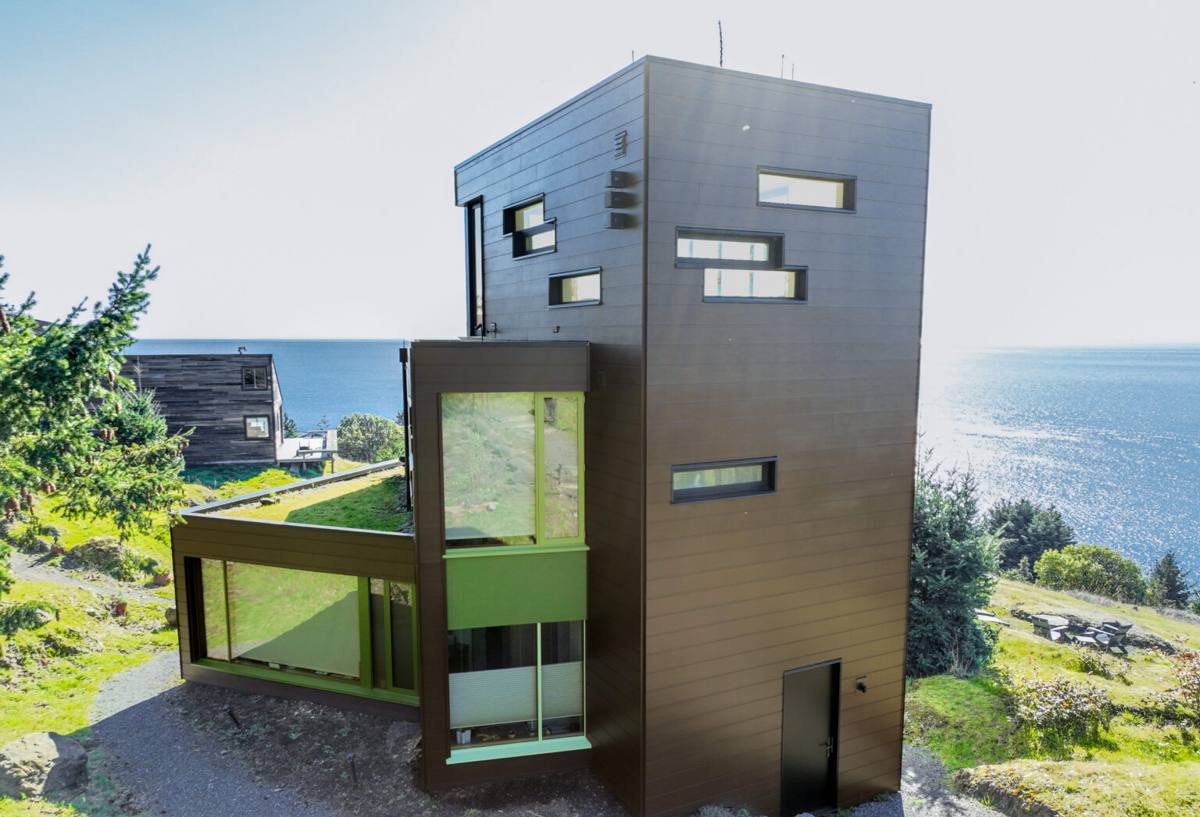
Birch Bay sits on the water in northern Whatcom County, and that single fact changes what a siding job actually needs to hold up to. Homes here take a steadier dose of salt-laden marine air than properties set back even a few miles inland, along with long stretches of wind-driven rain through the fall and winter and a moss season that can run close to year-round on shaded, north-facing walls. Siding that would be perfectly adequate on a sheltered inland lot can start showing problems within a handful of wet seasons out here if it isn't matched to what a waterfront exposure actually puts it through.
This page is specifically about siding replacement for Birch Bay homes — not a general overview of exterior work, and not a page about siding in general. It covers what the local climate demands, what a correctly done replacement involves from tear-off to finish, and why the crew doing the work matters as much as the material itself. We install James Hardie fiber cement exclusively. That's a professional standard, not a sales pitch, and the reasoning behind it is laid out below alongside the honest trade-offs of the products we don't install.
What Birch Bay's Climate Puts a Siding System Through
Salt Air and Direct Water Exposure
Being this close to the water means fasteners, flashing, and trim hardware take on more corrosion pressure than the same materials would see on an inland property. Salt in the air works on metal continuously, not just during storms, and it can also degrade lower-quality paint and finish systems faster than a drier climate would. Material and hardware choices for a Birch Bay home need to assume ongoing salt exposure as a baseline condition, not an occasional event.
Driving Rain and Wind Load
Waterfront exposure also means more consistent wind, and wind-driven rain doesn't behave like a simple rainfall total suggests — it gets pushed sideways into wall assemblies, window and door flashing, and the transitions where roof meets wall. That sideways load is what actually determines whether a siding installation holds up for decades or starts letting water in behind the cladding within a few winters. It's a detail that matters far more here than it does on a sheltered, inland lot.
A Moss Season That Runs Most of the Year
Mild temperatures, shade, and near-constant moisture combine to produce a moss and mildew season in this part of Whatcom County that can last most of the year on walls that don't get much direct sun. Any siding material that's porous, or that holds moisture against the substrate rather than shedding it, becomes a growth surface over time. On Birch Bay properties specifically, north-facing walls and anything shaded by trees or a neighboring structure typically need more attention than sun-exposed sides of the same house.
Signs a Birch Bay Home Is Due for Siding Replacement
Not every issue means a full replacement, but these are the signs worth having a professional look at before another wet season adds to the damage:
- Moss or dark staining that comes back quickly after cleaning, especially on shaded or north-facing walls
- Soft, spongy, or visibly warped siding, particularly low on the wall or around window and door trim
- Peeling paint, chalking, or fading well ahead of what the material's age should show
- Cracked, buckled, or missing panels after a windstorm off the water
- Rust streaking running down from fasteners, flashing, or trim hardware
- Musty odors or staining on interior walls that back up to exterior siding
- Siding original to a home built more than 20-25 years ago, with no documented replacement
Any one of these is worth a real inspection rather than a guess. On a waterfront property, small gaps in the weather barrier tend to turn into sheathing damage faster than they would a few miles inland, simply because there's more moisture pressure working on them.
What a Correct Siding Replacement Actually Involves
Tear-Off and Sheathing Inspection
Once the old siding comes off, the sheathing underneath gets checked for rot, soft spots, or trapped moisture before anything new goes up. Covering damaged sheathing with new siding just hides a problem that keeps getting worse behind the wall — on a property this close to the water, we'd rather find and address it at this stage than have it resurface in a few years as a much bigger repair.
Weather-Resistive Barrier and Flashing
This is the step that's easiest to rush and hardest to inspect once the new siding is up, which is exactly why it gets careful attention here. The house wrap, window and door flashing, and every wall penetration need to be detailed correctly to handle wind-driven rain coming in sideways, not just water running straight down the wall. Most siding failures near the water trace back to a gap in this layer, not a problem with the siding material itself.
Installing to Manufacturer Spec
James Hardie's warranty depends on installation following the company's published specifications — correct fastener type and spacing, proper clearance above grade and roof lines, and correctly sealed or factory-mitered joints. We treat that spec as the minimum standard for every job, not as an upgrade option, because a Hardie product installed loosely will still develop moisture problems in this climate no matter how good the material is on paper.
Trim, Caulking, and Finish Details
The last stage covers trim work, caulking at joints and penetrations, and a final check that colors and reveals are consistent across the whole exterior. On a waterfront home, these finish details also double as the last line of defense against wind-driven rain finding a way in at a seam or corner, so they get the same level of attention as the structural steps before them.
Why We Replace Siding With James Hardie Fiber Cement Only
We used to install a wider range of siding products. We narrowed that down to one system after seeing, repeatedly, what actually holds up on homes exposed to sustained salt air and moisture versus what looks fine on a spec sheet and struggles on a real wall a few winters in.
- Non-combustible core: Fiber cement doesn't feed a fire the way wood-based siding products can, which matters for both safety and insurance underwriting.
- Factory-applied ColorPlus finish: The finish is baked on in a controlled factory process rather than brushed on in the field, which holds color and adhesion far longer under sustained moisture, salt, and UV exposure.
- Climate-engineered HZ product lines: Hardie's HZ5 formulation is built specifically for regions with significant moisture exposure and freeze-thaw cycling, which describes waterfront Whatcom County well.
- Dimensional stability: Fiber cement doesn't swell, cup, or warp the way engineered wood siding can after repeated wetting cycles over a wet season.
- A strong transferable warranty: Hardie backs the product with one of the more robust warranty structures in the industry, provided the installation follows their published specs.
We don't install LP SmartSide, vinyl siding, Cemplank, Allura, primed spruce, or cedar. Each has a legitimate place in the market, and plenty of homeowners elsewhere are satisfied with them. Our call is a professional one, specific to what we see in this climate: on a property this exposed to salt air and driving rain, we'd rather stand fully behind one system than offer a cheaper option that quietly shifts maintenance risk onto the homeowner a few years down the road.
How Other Siding Products Hold Up in a Waterfront Climate
| Product | Common trade-off near the water |
|---|---|
| Vinyl siding | Can warp or distort under sustained UV and wind load; seams and panel gaps give wind-driven rain an entry point |
| LP SmartSide / engineered wood | Wood-strand core is more moisture-sensitive at cut edges and fastener points, which matters more under constant salt-air moisture |
| Primed spruce or cedar | Needs ongoing paint and moisture maintenance to avoid rot; a heavier long-term ownership cost than the upfront price suggests |
| Other fiber cement brands | May lack a climate-specific HZ-style line or the same factory-finish warranty depth as James Hardie |
Our Siding Replacement Process for Birch Bay Homes
The process is the same discipline every time, adjusted for the specific exposure of the property:
- On-site inspection and estimate: We look at current siding condition, signs of trapped moisture or sheathing damage, and how sun, shade, and wind exposure differ across each wall of the house.
- Written scope and product selection: We walk through the right Hardie product line and color for the home before any work begins, so there's no guessing about what's being installed.
- Tear-off and substrate check: Old siding comes off and the sheathing gets inspected before anything new goes up.
- Weather barrier and flashing: House wrap, flashing, and penetrations get detailed to handle sideways-driven rain, not just vertical runoff.
- Installation to spec: Fastener spacing, clearances, and joint treatment follow Hardie's published requirements throughout.
- Final walkthrough: We review the finished job with the homeowner, cover maintenance expectations specific to a waterfront property, and confirm everything matches the original estimate.
What Affects the Cost of Siding Replacement Here
Every estimate is specific to the individual house, but a few factors consistently move the number on Birch Bay properties: total square footage and number of stories, how much trim and detail work surrounds windows and rooflines, the condition of the sheathing once old siding comes off, and which James Hardie product line and color fits the home and its exposure. Waterfront and near-waterfront lots sometimes call for additional flashing or drainage detailing given the wind and moisture load, which is a factor an inland estimate wouldn't need to account for. We walk through these specifics during the estimate rather than handing over a flat per-square-foot number with no explanation behind it.
| Cost Factor | Why It Matters in Birch Bay |
|---|---|
| Home size and wall complexity | More square footage and more corners, gables, and trim mean more material and labor |
| Sheathing condition | Rot or moisture damage found during tear-off needs repair before new siding goes up |
| Flashing and drainage detailing | Wind-driven rain exposure can call for extra attention at windows, doors, and wall transitions |
| Hardie product line and finish | HZ5 boards and ColorPlus finish options vary in price depending on style and color |
Why a Crew That Already Works Birch Bay Matters
A crew that regularly works this stretch of the county already knows how salt air, wind, and sustained moisture behave differently here than they do a few miles inland. That familiarity shows up in the details that actually determine how long a siding job lasts: how flashing gets lapped at a wall transition, which fastener grade holds up against salt exposure, and where extra drainage detailing is worth the time rather than an unnecessary upsell. It also means that if a warranty question or maintenance issue comes up years down the line, it's a call to a crew still working in the same area, not a company that bid the job once and moved on.
If your Birch Bay home needs new siding, we're glad to come take a look and give you a straightforward, no-pressure estimate. Reach out using the form below to get started.