 Lynden Siding
 Roofing for Acme's Particular Climate
Acme sits far enough from town that homeowners here deal with a different mix of weather stress than a house in central Lynden. You get long stretches of driving rain funneled up from the valley, marine-influenced air that carries salt and moisture even well inland, and shaded, tree-heavy lots that hold dampness long after a storm passes. That combination is hard on a roof in a specific way: it's not one big failure, it's slow, steady wear that shows up as moss colonies, soft decking, and fasteners that corrode faster than the warranty paperwork assumes.
A roof built for this area has to handle water that doesn't just fall straight down — wind-driven rain gets pushed sideways under shingle tabs and around flashing details that would be fine in a drier climate. It also has to shed moss pressure for months at a stretch, because Whatcom County's wet season isn't a few weeks, it's most of the year. When we install a new roof for an Acme property, we're building for that reality, not for a generic spec sheet.
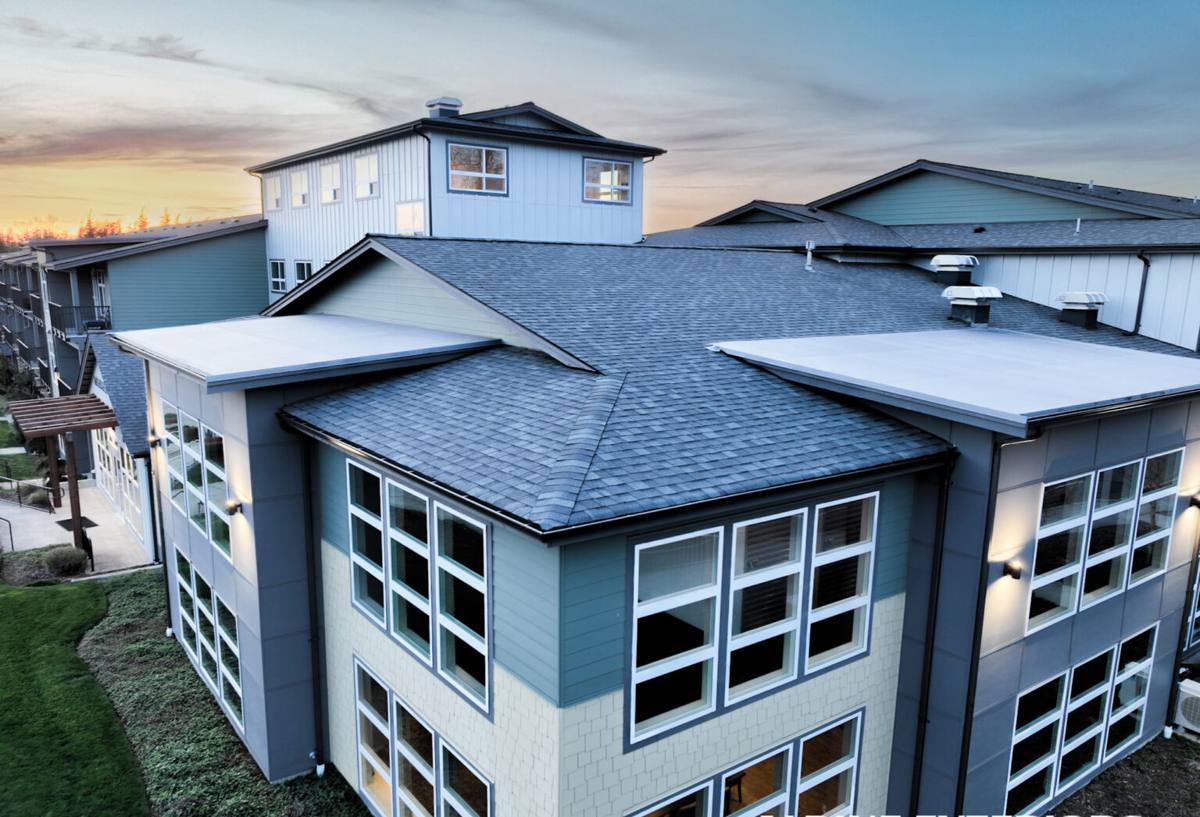
What "Correct" Actually Means on a New Roof Install
A new roof is more than shingles nailed to plywood. Most of the roofs that fail early around here didn't fail because of the shingle brand — they failed because a step underneath got rushed or skipped. Here's what has to happen for the roof to actually perform:
Deck Inspection and Repair
Once the old roofing is stripped, the deck gets inspected board by board. Soft spots, delamination, and rot from years of trapped moisture get cut out and replaced before anything new goes down. Skipping this step is the single most common shortcut in the trade, and it's invisible until the new roof starts sagging or leaking from the inside.
Underlayment Built for Wet Climates
In a region with this much sustained rain, we treat underlayment as a real second line of defense, not a formality. Synthetic underlayment across the field, with self-adhered ice-and-water membrane at the eaves, valleys, and any low-slope transitions, gives the roof a backup layer if wind-driven rain ever gets past the shingles.
Flashing at Every Penetration
Chimneys, skylights, vent pipes, and wall-to-roof transitions are where most leaks actually start — not in the open field of shingles. Correct step flashing, counter-flashing, and pipe boots, properly lapped with the underlayment and shingles, are what keep water out at these joints for the long run.
Ventilation Sized to the House
A roof that can't breathe traps moisture in the attic, which shows up as condensation, mold, and premature decking rot — problems that have nothing to do with the shingles themselves. Balanced intake and exhaust ventilation is calculated for the specific roof, not just installed as a token ridge vent.
Material Choices for Acme Properties
There's no single "best" roofing material — the right choice depends on the home's exposure, roof pitch, budget, and how much upkeep the owner wants to do. Here's an honest comparison of what we most often install in this area:
| Material | Moss & Moisture Behavior | Typical Lifespan | Maintenance |
|---|---|---|---|
| Architectural asphalt shingle | Good with proper ventilation and periodic cleaning; algae-resistant granules help | 25–30 years | Low — occasional moss treatment |
| Standing seam metal | Sheds moisture fast, very poor surface for moss to establish | 40–50+ years | Very low |
| Cedar shake | Attractive but holds moisture longer in shaded, damp settings; needs active upkeep to avoid rot | 20–30 years with maintenance | High — regular treatment and inspection |
| Synthetic composite shingle | Resists moisture absorption well; performance varies by product line | 30–50 years (product-dependent) | Low to moderate |
For shaded, tree-covered Acme lots specifically, we tend to steer conversations toward asphalt or metal, simply because both shed water and resist moss colonization better than a wood product will in a low-sun, high-moisture setting. That's a maintenance-burden judgment call, not a knock on cedar as a material — it's a beautiful roof, it just asks more of the homeowner in exactly the conditions this area produces.
Our Process, Start to Finish
- On-site assessment — we walk the roof, check the attic, and look at how the property sheds water around trees, valleys, and low-slope sections.
- Written scope and material selection — you get a clear breakdown of what's being removed, repaired, and installed, with material options and honest trade-offs explained.
- Tear-off and deck inspection — old roofing is fully removed so the deck can be checked properly rather than roofed over.
- Underlayment and flashing installation — the moisture-management layer goes in first, correctly lapped and sealed at every penetration.
- Ventilation setup — intake and exhaust are balanced to the specific attic, not just added as an afterthought.
- Roofing material installation — installed to manufacturer spec, which matters for both performance and warranty coverage.
- Final walkthrough and cleanup — magnetic sweep for stray fasteners, debris haul-off, and a walk-through so you know exactly what was done.
Ventilation and Moss: The Two Problems That Actually Shorten a Roof's Life
Most premature roof failures in this part of Whatcom County trace back to one of two things: trapped attic moisture or unmanaged moss growth. Both are preventable, and both get addressed during a proper install rather than left as "maintenance items" for later.
Moss doesn't just sit on top of shingles — its rhizoids work into the granule layer and lift shingle edges, which is exactly where wind-driven rain gets a foothold. On a new install, proper ventilation, correct shingle exposure, and (where the roof design allows it) zinc or copper strips near the ridge give the roof a real head start against moss before it ever becomes a problem requiring cleaning or treatment.
Trapped moisture works from the inside. An attic that can't exhaust warm, humid air properly will condense that moisture against the underside of the deck, which rots plywood from below — often long before anyone notices a leak from above. Sizing ventilation correctly during installation is one of the cheapest insurance policies on the whole project.
Signs an Acme Home May Need a New Roof
Not every roof problem calls for full replacement, but these are signs worth having checked out sooner rather than later:
- Granules collecting in gutters or at the base of downspouts
- Shingles that are cupping, curling, or missing tabs
- Heavy, spreading moss or algae staining across large sections of the roof
- Daylight visible through the attic decking
- Soft or spongy spots when walking the roof
- Water stains on interior ceilings, especially near chimneys or vents
- A roof already past 20–25 years old, regardless of visible condition
If a roof is showing two or more of these, it's usually more cost-effective to plan a full replacement than to keep patching individual trouble spots.
What Drives the Cost of a New Roof
Every roof is priced individually after an actual walk-through, but these are the factors that move the number most:
| Factor | Why It Matters |
|---|---|
| Roof size and pitch | Steeper roofs take longer to work safely and use more material per square |
| Number of penetrations | Each chimney, skylight, or vent pipe adds flashing labor |
| Deck condition | Rotten or delaminated decking found during tear-off adds repair cost |
| Material selection | Asphalt, metal, and composite products carry different material and labor costs |
| Access and site conditions | Tree cover, tight driveways, or steep lots affect staging and disposal logistics |
We'd rather walk a property and give a real number than quote a range that doesn't hold up once we see the actual roof.
Why Working With a Crew That Knows Acme Matters
Roofing crews that mostly work drier, more open subdivisions can miss details that matter on shaded, tree-covered Acme lots — how much extra moss pressure a north-facing slope will carry, where wind funnels rain sideways along a valley, or how much ventilation an older attic actually needs once it's opened up. A crew that regularly works this specific area brings that judgment into the estimate and the install, not just into a sales pitch. It also means someone local is available if a question comes up after the job is done, rather than a phone number tied to a job three counties away.
After the Install: What Keeps a New Roof Performing
A correctly installed roof still benefits from a little basic upkeep, especially in a climate that stays wet as much as this one does. Keep gutters and downspouts clear so water isn't backing up under the eaves. Keep overhanging branches trimmed back to cut down on shade and debris buildup, both of which feed moss growth. And have the roof looked at every few years, particularly after any major windstorm, so small issues get caught before they turn into deck damage or an interior leak.
If your Acme-area roof is showing its age, or you just want a straight answer about what condition it's really in, we're happy to take a look. Reach out for a free, no-pressure estimate using the form below.