 Lynden Siding
 Siding Replacement for Acme Homes
Acme sits in the foothills east of Lynden, tucked closer to the Nooksack River and the timbered slopes that climb toward the Cascade foothills. Homes out here deal with a different mix of weather than a house sitting in downtown Lynden or out on the flats — more shade from tree cover, more standing moisture in the air during the fall and winter months, and long stretches where a north-facing wall barely sees direct sun for weeks at a time. That combination is exactly the kind of environment that wears out the wrong siding material fast, and it's why we treat an Acme siding replacement differently than a job in a more open, sun-exposed part of Whatcom County.
We install James Hardie fiber cement siding exclusively. We don't carry vinyl, LP SmartSide, cedar, primed spruce, or other fiber cement brands like Cemplank or Allura. That's a deliberate standard, not a sales pitch, and we'll explain why throughout this page as it relates specifically to homes in Acme.
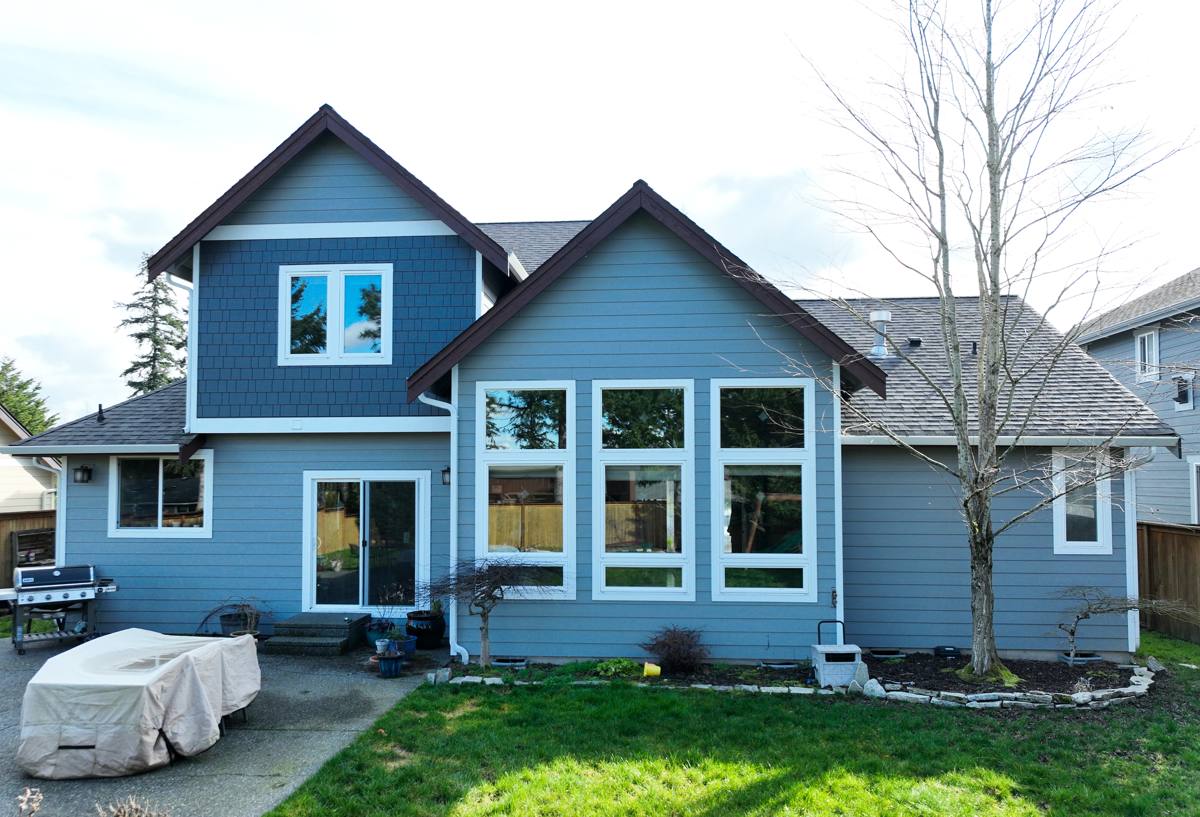
What Acme's Climate Actually Does to Siding
Whatcom County as a whole gets a long wet season, but Acme's terrain adds a few wrinkles that matter for exterior materials:
- Salt air influence: Whatcom County sits close enough to Puget Sound and Bellingham Bay that marine air moves inland regularly, carrying moisture and salt content that accelerates corrosion on fasteners and finish breakdown on lower-grade materials.
- Driving rain: Fall and winter storms in this part of Washington rarely fall straight down — wind-driven rain gets pushed sideways into wall assemblies, which is a much tougher test for siding and flashing than vertical rainfall.
- Extended moss season: Shaded, tree-lined lots like many found around Acme stay damp longer after a rain event than open lots. Moss, algae, and mildew get a longer runway to establish themselves on north and east-facing walls.
- Temperature swings: Even modest freeze-thaw cycling through the winter months stresses any siding material that absorbs and releases moisture, causing expansion and contraction over years of exposure.
None of this is unique to Acme in isolation, but the combination — shade, moisture retention, and driving rain off the foothills — is more aggressive than what a lot of siding products were designed to handle long-term.
Why This Matters More on Shaded Lots
A wall that dries out within a few hours of a rain event is far less likely to grow moss or trap moisture behind the cladding than a wall that stays damp for a day or two. Homes with heavy tree cover, north-facing exposures, or tight setbacks from neighboring structures — common around Acme — need siding that resists moisture absorption at the material level, not just a good paint job on top.
Why We Only Install James Hardie in This Area
We get asked regularly why we don't offer vinyl or LP SmartSide as a lower-cost option. Here's the honest answer, specific to what we see in Acme conditions:
Vinyl Siding's Trade-Offs Here
Vinyl is inexpensive and low-maintenance in mild, dry climates, and it has real advantages in some markets. But it's a petroleum-based product that expands and contracts significantly with temperature swings, and it's not fire-rated the way fiber cement is. In a shaded, moisture-heavy environment like Acme, vinyl also tends to trap moss and mildew in its lap joints and channels, since it doesn't offer much for cleaning texture or drainage compared to a properly detailed fiber cement installation. It's also more vulnerable to impact damage from wind-blown debris coming off tree cover, which is a real consideration on wooded lots.
LP SmartSide and Wood-Based Products
LP SmartSide is an engineered wood product — strand-based, with a resin binder and factory coating. It performs reasonably well when installation and caulking are perfect and maintained on schedule, but it's still wood at its core, meaning it can swell, delaminate at cut edges, or take on moisture damage if the finish is compromised even slightly. In a long moss season with extended damp exposure, any wood-based product is working against its own material weakness. We don't think it's worth the risk on homes that already have shade and moisture working against them before the first board goes up.
Cedar and Primed Spruce
Traditional wood siding has real curb appeal, and some homeowners want that look specifically. But solid wood requires the most maintenance of any siding option — repainting or restaining on a recurring cycle, careful caulking, and vigilant moisture monitoring. In a climate with this much sustained dampness and moss pressure, wood siding maintenance becomes a near-constant homeowner responsibility rather than an occasional task. We're honest with clients that we don't install it, because we don't want to sell a product we'd be calling them back about in a few years.
Why James Hardie Fits Acme Specifically
James Hardie fiber cement siding is non-combustible, doesn't swell or rot the way wood-based products can, and holds its factory-applied ColorPlus finish far longer than field-applied paint on wood or vinyl's baked-in color. Hardie also engineers specific product lines (the HZ5 line, for example) for regions with more moisture exposure, which is directly relevant to a shaded, damp lot like you'll find around Acme. It gives us a material that resists moisture absorption at the board level, holds paint and caulk lines properly, and comes with a strong transferable warranty that isn't dependent on a perfect maintenance record from day one.
What a Correct Acme Siding Replacement Involves
Replacing siding is not just pulling off old material and nailing up new boards. A correct job in this climate means paying close attention to what's happening behind the siding, not just what it looks like from the curb.
1. Tear-Off and Inspection
We remove the existing siding and inspect the sheathing and framing underneath for rot, water staining, or soft spots — especially common on north-facing walls or areas that have been shaded and damp for years. Any compromised sheathing gets addressed before new material goes up; covering a moisture problem with new siding just delays a bigger repair.
2. Water-Resistive Barrier and Flashing
Given how much wind-driven rain this area sees, the water-resistive barrier (house wrap) and flashing details around windows, doors, and penetrations matter as much as the siding itself. Improperly lapped or taped house wrap, or missing kick-out flashing at roof-wall intersections, is one of the most common causes of hidden water damage we find behind old siding.
3. Proper Fastening and Clearances
James Hardie specifies exact fastener types, spacing, and clearances from grade, roofing, and trim. Cutting corners here — using the wrong fastener or letting siding sit too close to grade or a roofline — is one of the fastest ways to void a warranty and invite moisture problems, especially in a climate that doesn't give materials much of a chance to fully dry out between rain events.
4. Finish and Caulking Details
Factory-primed cut edges, correctly caulked joints, and proper paint touch-up at seams all matter more in a high-moisture environment. We treat these as required steps, not optional finishing touches.
Comparing Siding Options for a Home Like This
| Factor | Vinyl | LP SmartSide | Cedar / Primed Spruce | James Hardie Fiber Cement |
|---|---|---|---|---|
| Moisture resistance in shaded/damp lots | Moderate; traps moss in joints | Moderate; vulnerable at cut edges | Low; requires vigilant upkeep | High; engineered for wet climates |
| Fire resistance | Low | Low to moderate | Low | Non-combustible |
| Maintenance cycle | Low, but limited repair options | Moderate; finish upkeep needed | High; regular repainting/restaining | Low; factory finish holds long-term |
| Impact/debris resistance | Lower | Moderate | Moderate | High |
| Typical warranty structure | Prorated, material only | Limited, install-dependent | None (unfinished material) | Strong, transferable |
Cost Factors for an Acme Project
Every home is different, but a few things consistently affect the scope and cost of a siding replacement in this area:
- Sheathing condition: Homes with hidden moisture damage behind old siding often need sheathing repair before new siding can go on, which adds material and labor.
- Access and lot layout: Wooded or tight lots common around Acme can affect staging, scaffolding, and material handling.
- Trim and detail work: Homes with more corners, window trim, and architectural detail take more time to flash and finish correctly.
- Siding profile choice: Lap siding, panel siding, and shingle-style Hardie products carry different material and labor costs.
- Existing material removal: Multiple layers of old siding, or siding installed directly over sheathing without a proper barrier, add to tear-off time.
We walk every property in person before giving a number — there's no accurate way to estimate a job like this without seeing the actual condition of the walls.
Our Process for Acme Homeowners
- On-site assessment: We inspect the current siding, sheathing condition where accessible, and any problem areas you've noticed — leaks, soft spots, visible moss buildup, or paint failure.
- Written estimate: A clear scope of work and cost breakdown, with no pressure to sign on the spot.
- Material selection: We walk you through James Hardie product lines, profiles, and ColorPlus color options suited to your home's style and exposure.
- Tear-off and prep: Careful removal, sheathing repair if needed, and correct house wrap and flashing installation.
- Installation to spec: Fastening, clearances, and joint treatment done to James Hardie's published requirements — not shortcuts.
- Final walkthrough: We go over the finished work with you before calling the job complete.
A Quick Homeowner Checklist
If you're trying to decide whether it's time to replace siding on an Acme property, look for:
- Persistent moss or algae growth that returns quickly after cleaning, especially on shaded walls
- Soft or spongy spots when you press on the siding
- Visible cracking, warping, or separation at seams and corners
- Paint that's peeling, bubbling, or failing faster than expected
- Rising energy bills that may point to compromised insulation behind failing siding
- Visible gaps around windows, doors, or trim where water could be getting behind the wall
Why Local Experience with This Area Matters
A siding contractor who mostly works dry, open lots elsewhere in Whatcom County may not think twice about the extra moisture load a shaded Acme property carries year-round. We work throughout Lynden and the surrounding area regularly, which means we're used to sizing up how tree cover, terrain, and exposure on a specific lot should shape decisions about flashing details, product line selection, and drying time between installation phases. That local familiarity is part of what keeps a siding job performing well ten and fifteen years down the road, not just on installation day.
If you're considering a siding replacement for a home in Acme, we're happy to walk the property with you and give you a straightforward, no-pressure estimate — just fill out the form below to get started.