 Lynden Siding
 Building Decks for Aldergrove's Climate
Aldergrove sits just across the border from Lynden, close enough that a lot of the homes here deal with the same weather patterns we see on the Washington side of the line. That means salt-tinged air moving in off the Strait of Georgia, long stretches of driving rain through fall and winter, and a moss season that seems to start earlier every year and hang around longer. A deck built for a dry climate, or even for a colder inland climate with less rain but more freeze-thaw, just doesn't hold up the same way here. Building one that lasts in Aldergrove means designing around moisture from day one, not trying to patch problems after the first wet winter.
We've built and repaired decks throughout the Lynden and Whatcom County area for years, and the properties around Aldergrove present the same core challenges: wood that stays damp longer than it should, fasteners that corrode faster than homeowners expect, and framing details that were fine on paper but never accounted for how much water actually sits on a horizontal surface here for months at a time.
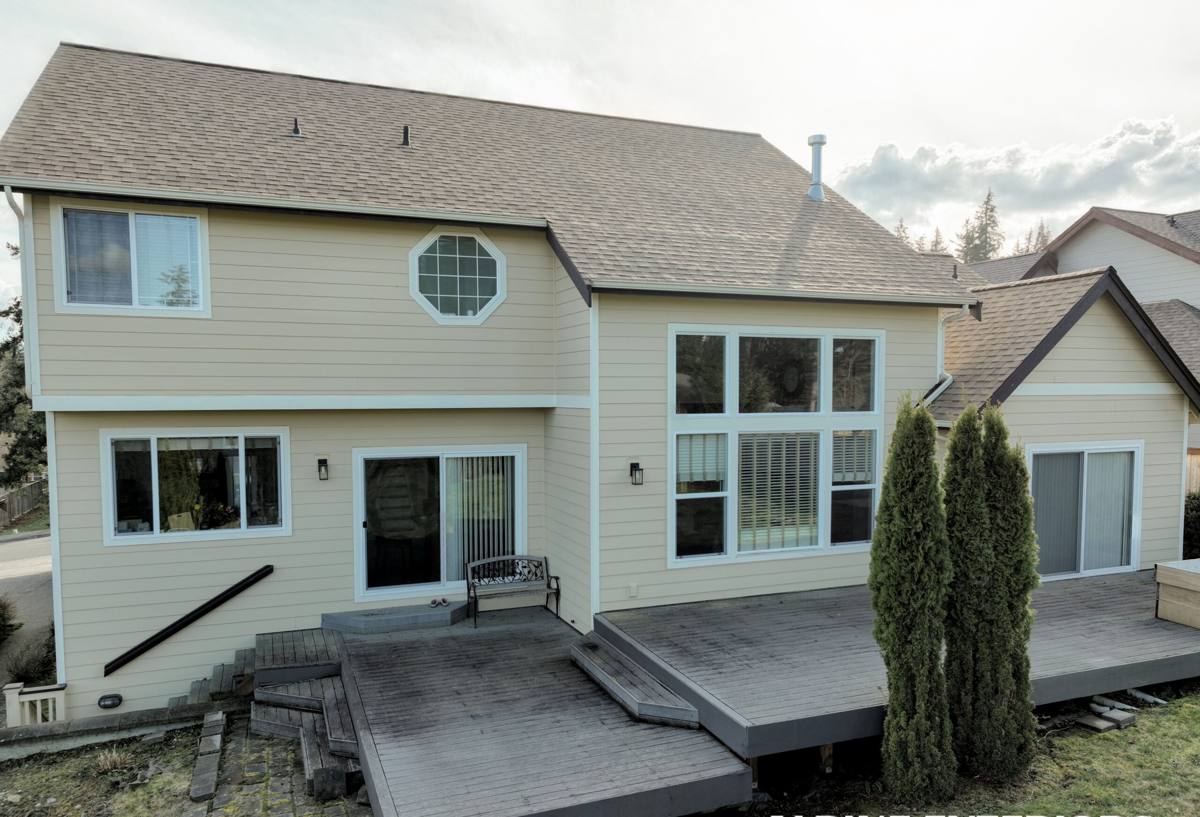
What Local Homes Actually Need From a Deck
A deck in this region isn't just an outdoor living space — it's a structure that has to shed water constantly, resist decay in framing that rarely gets a chance to fully dry out, and stand up to moss and algae growth on every horizontal surface. A few things that matter more here than they would in a drier climate:
- Drainage under the deck. Standing water beneath low decks is one of the most common causes of premature rot we find on service calls.
- Airflow around framing. Joists and beams need room to breathe, or they stay wet long after a storm has passed.
- Surface material that resists moss. Some decking holds onto moisture and organic debris far more than others, which speeds up moss and mildew growth.
- Corrosion-resistant hardware. Salt-laden air accelerates rust on standard fasteners and connectors, especially anything exposed at rail posts and stair stringers.
None of these are exotic requirements. They're just details that get skipped when a deck is built to a generic spec instead of to the conditions it will actually live in.
Material Choices That Hold Up Here
Pressure-treated lumber
Still the most common framing material, and for good reason — it's affordable and, when installed correctly with proper flashing and drainage, performs well. The catch is that pressure treatment protects against decay, not against poor design. A pressure-treated deck built without attention to water management will still rot at the connections, just more slowly than untreated wood would.
Cedar
Cedar has natural resistance to decay and insects and has a long history in this region for a reason. It needs more upkeep than composite — periodic sealing or staining to keep it from graying and to slow moisture absorption — but many homeowners prefer the look and the fact that it's a renewable, repairable material.
Composite decking
Composite boards resist moisture absorption and don't require staining or sealing, which appeals to homeowners who want to spend weekends using the deck instead of maintaining it. The trade-off is a higher upfront material cost and the fact that not all composite products handle moss and mildew the same way — surface texture and drainage grooves matter more here than in drier climates, since anything that traps moisture against the board becomes a growth surface for algae.
| Material | Upfront Cost | Maintenance | How It Handles Our Climate |
|---|---|---|---|
| Pressure-treated lumber | Lowest | Regular sealing/staining recommended | Good if framing and drainage are done right; vulnerable at poorly flashed connections |
| Cedar | Moderate | Sealing/staining every few years | Naturally decay-resistant; still needs airflow and drainage to avoid graying and rot |
| Composite | Highest | Occasional cleaning, no sealing | Resists moisture absorption well; board profile affects moss/algae buildup |
What a Correct Deck Build Actually Involves
The visible parts of a deck — the boards, the railing, the stairs — are the easy part to get right. The parts that determine whether a deck lasts fifteen years or twenty-five happen before a single board is installed.
Footings and structural support
Footings need to be sized and set to the depth your local building department requires, with concrete work done so the post base sits above grade rather than trapping water against the wood. In this climate, ground moisture is a year-round concern, not a seasonal one, so getting footing placement and drainage right at the start matters more than it might in a drier region.
Ledger board attachment and flashing
Where a deck attaches to the house is the single most common point of failure we see on older decks in this area. Without proper flashing that directs water away from the house sheathing, a ledger board becomes a place where water collects against the structure every time it rains — which, here, is often. Correct flashing detail at this connection is not optional; it's the difference between a deck that protects your home and one that slowly damages it.
Joist layout and spacing
Joist spacing affects both how the deck feels underfoot and how well it drains and dries. Tighter spacing than necessary traps moisture between boards; too wide a span and boards flex and hold water longer after rain. The right spacing depends on the decking material chosen, which is one reason material and framing decisions should happen together, not separately.
Fasteners and hardware
Stainless steel or heavily coated fasteners cost more than standard galvanized hardware, but in an area with salt-influenced air moving in off the coast, that difference shows up within a few years as rust streaking and weakened connections at rail posts and stair stringers. This is one of the cheapest details to get right at build time and one of the most expensive to fix later.
Guardrails and stairs
Railings and stairs are structural, not decorative — post attachment, baluster spacing, and stair rise/run all need to meet code, and they need to be built to actually resist lateral load, not just look sturdy.
Permits and Codes on Both Sides of the Border
Aldergrove sits within the Township of Langley, so permitting and inspection follow British Columbia and Township of Langley requirements rather than Washington State rules used on the Lynden side. The two systems aren't identical — inspection sequencing, documentation, and specific code references differ. Before we start any project in Aldergrove, we make sure our build plan and permitting approach match what your local building department actually requires, rather than assuming a Washington-side process will carry over. If you're on the Washington side near Lynden, Whatcom County's permitting process applies instead. Either way, we handle that groundwork before construction starts, not after an inspector flags something.
Our Process
- Site visit and assessment. We look at grade, drainage, sun and wind exposure, and how the deck will attach to your home.
- Design and material selection. We walk through material trade-offs based on your budget, maintenance preference, and how the space will be used.
- Permitting. We confirm requirements with the correct local authority before any work begins.
- Construction. Footings, framing, flashing, decking, and railing — built in that order, with attention to the drainage and hardware details that matter most in this climate.
- Final walkthrough. We go over the finished deck together and explain what maintenance, if any, it will need going forward.
Maintenance in a Moss-and-Rain Climate
Even a well-built deck needs some seasonal attention here. A short checklist that applies to most decks in the Aldergrove and Lynden area:
- Clear leaves and debris from between boards before they trap moisture through the wet months.
- Check for moss buildup on shaded or low-airflow sections and remove it before it holds water against the surface.
- Inspect the ledger board flashing and the area where the deck meets the house at least once a year.
- Look for rust staining around fasteners and railing connections, especially on decks closer to open air exposure.
- Reseal or restain wood decking on the manufacturer's recommended schedule rather than waiting until it visibly grays.
- Confirm under-deck drainage is still directing water away from the structure and hasn't been blocked by landscaping or debris buildup.
Why Hire a Crew That Already Works in Aldergrove, BC
A contractor who mostly builds in drier or colder climates will make reasonable decisions that simply don't hold up here — less attention to under-deck drainage, standard hardware instead of corrosion-resistant fasteners, or flashing details sized for occasional rain instead of months of it. We've seen what happens to decks built without those details in mind, because we're the ones called out to repair them a few years later.
Working regularly in both Lynden and the communities just across the border, including Aldergrove, also means we're familiar with the permitting differences between Washington and British Columbia jurisdictions before we ever show up to bid a job — which keeps the project moving instead of stalling out on paperwork nobody anticipated.
Get a Free Estimate
If you're planning a new deck or replacing one that hasn't held up to the weather here, we're happy to take a look and walk you through your options — no pressure, no obligation. Fill out the form below and we'll get in touch to schedule a time to talk through your project.