 Lynden Siding
 Siding That Can Actually Handle Aldergrove's Weather
Aldergrove sits in the Fraser Valley just north of the Whatcom County line, and it gets the same wet, marine-influenced weather pattern we deal with on the Lynden side of the border — long stretches of drizzle and driving rain, damp air pushing in off the coast, and short, low-sun winter days that never quite dry a north wall out. Siding here doesn't just need to look good; it needs to shed water, resist moss and mildew, and hold its shape through repeated wet-dry cycles year after year. That's a different job than siding a house in a dry climate, and it's why we install one product system, correctly, rather than whatever's cheapest that week.
This page covers fiber cement siding specifically for Aldergrove properties — what the climate does to a home's exterior, what a correct installation actually involves, and how our process works for homeowners on this side of the border.
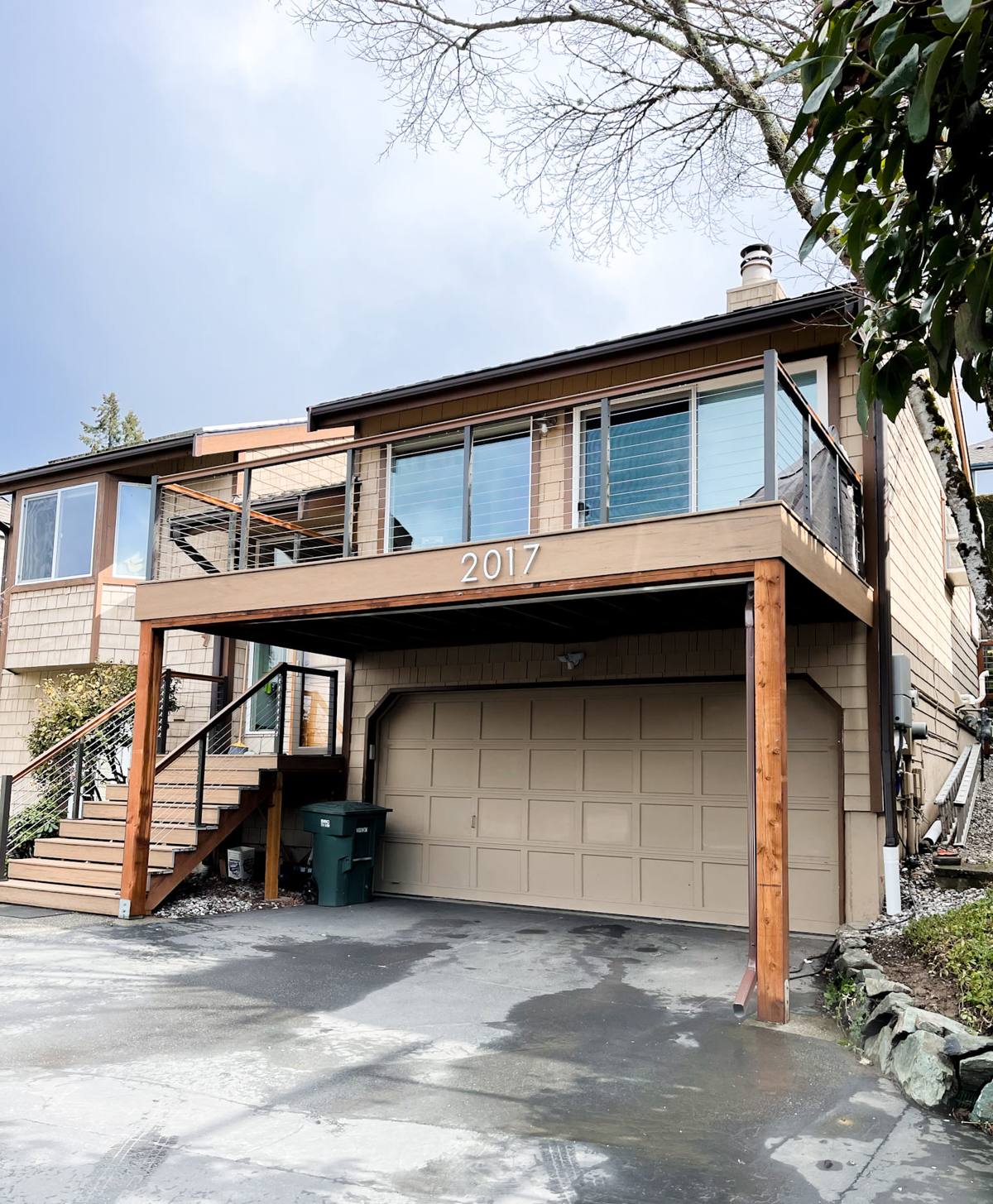
What Rain, Moss, and Marine Air Do to Siding Over Time
Driving rain and wind-driven moisture
Aldergrove doesn't get hurricane-force wind, but it gets steady, sideways rain off the valley for days at a stretch. That kind of weather doesn't just wet a wall's surface — it drives moisture into every gap, seam, and fastener hole that isn't sealed or flashed correctly. Siding materials that swell, wick water, or rely on paint film alone to stay dry are working against the climate here, not with it.
The long moss and algae season
Shaded walls, roof overhangs, and anything facing north or tucked under trees stay damp longer here than most of the country ever experiences. That extended dampness is exactly what moss and algae need to take hold on a siding surface. Once organic growth gets established, it holds even more moisture against the material underneath it, which accelerates whatever damage is already happening.
Freeze-thaw on top of it all
Winters in this area aren't brutally cold, but they do dip below freezing while the siding is often still wet from the last rain. Water that's worked its way into a porous or poorly sealed material can freeze, expand, and start breaking down the surface from the inside — a slow process that shows up as cracking, delamination, or paint failure years before it should.
Why We Only Install James Hardie Fiber Cement
We get asked why we don't offer vinyl, LP SmartSide, cedar, or primed spruce as options. It's not that those products have no place in the industry — it's that we've made a professional decision about what holds up to this specific climate with the least long-term risk to the homeowner.
- Vinyl is affordable and low-maintenance, but it's a thin material that can warp in heat, crack in cold, and it simply floats over the wall rather than bonding with a rigid, moisture-resistant surface — a real limitation in a climate this wet.
- LP SmartSide is an engineered wood product, and wood-based siding, no matter how it's treated, is more vulnerable to moisture intrusion at cut edges and seams than fiber cement is — a meaningful concern in a region with this much annual rainfall.
- Cedar and primed spruce can look beautiful, but they demand ongoing maintenance — recoating, caulking, and vigilant moisture management — to avoid rot in a climate that rarely lets wood fully dry out.
James Hardie fiber cement is non-combustible, dimensionally stable, and engineered specifically for climates like this one. It doesn't rot, it resists moisture-driven swelling, and its factory-applied ColorPlus finish is baked on rather than field-painted, which matters a lot when your painting season is short and unreliable.
The Hardie Product Lines We Use in This Climate
James Hardie engineers its siding by climate zone, and everything we install here is specified for the wet, temperate HZ5 zone that covers the Pacific Northwest, including both Whatcom County and the Fraser Valley. Within that, homeowners typically choose between a few profiles depending on the look they want.
| Product Line | Best For | Look | Maintenance |
|---|---|---|---|
| HardiePlank Lap Siding | Most homes; traditional or modern exteriors | Classic horizontal lap, multiple widths | Low — rinse and inspect annually |
| HardiePanel Vertical Siding | Modern builds, accent walls, gables | Clean vertical lines, board-and-batten option | Low — same care as lap |
| HardieShingle Siding | Craftsman or cottage-style homes | Staggered or straight-edge shingle look | Low, slightly more detail at seams |
All three come with the ColorPlus factory finish option, which carries its own finish warranty separate from the substrate warranty and is designed to hold color in exactly the kind of damp, low-sun conditions Aldergrove sees for much of the year.
What a Correct Fiber Cement Installation Actually Involves
Fiber cement siding is only as good as the assembly it's installed into. In a climate this wet, the details behind the siding matter as much as the siding itself.
Drainage and the rainscreen gap
A weather-resistive barrier goes over the sheathing first, and behind the siding itself we build in a drainage gap so that any moisture that does get past the surface has somewhere to go — down and out, instead of sitting against the wall. This is one of the details most likely to get skipped by crews trying to move fast, and it's the one that matters most in a climate like this.
Flashing at every penetration
Windows, doors, hose bibs, light fixtures, and anywhere else the siding is interrupted need proper flashing and sealant, installed in the right order so water is always directed outward and downward, never trapped behind the material.
Fastening and clearance
Hardie specifies exact fastener types, spacing, and placement, and the siding needs proper clearance from grade, roofing, and decks so it's never sitting in standing water or snow. Cut edges get sealed before installation, since an unsealed cut edge is the one place fiber cement can absorb moisture it wasn't designed to.
Caulking and seams
Butt joints and trim seams get sealed with a high-quality, paintable sealant rated for exterior use — not the cheapest tube on the shelf, since this is one of the few places on the wall doing double duty against wind-driven rain.
Our Process, Start to Finish
- On-site assessment — we look at the existing wall assembly, check for moisture damage or rot in the sheathing, and evaluate sun/shade exposure on each side of the house, since that affects moss risk and product choice.
- Tear-off, not overlay — we remove the old siding rather than installing over it, so we can inspect and correct what's underneath instead of sealing problems inside the wall.
- Weather barrier and rainscreen installation — the drainage plane goes in before a single piece of siding is hung.
- Hardie installation — panels or planks go up to manufacturer spec, with flashing detailed at every window, door, and penetration as we go.
- Finish work — trim, caulking, and touch-up of any factory finish are completed and inspected.
- Final walkthrough — we go over the finished job with the homeowner before calling it done.
Maintenance Aldergrove Homeowners Should Expect
Fiber cement is low-maintenance compared to wood or vinyl, but "low-maintenance" isn't "no-maintenance" in a climate that stays damp this much of the year.
- Rinse siding down once or twice a year, especially shaded and north-facing walls where moss and algae are most likely to start.
- Walk the exterior annually and check caulking at trim, windows, and seams for cracking or separation.
- Keep gutters and downspouts clear so water isn't overflowing directly onto siding below.
- Trim back shrubs, vines, and tree branches that trap moisture or shade a wall for most of the day.
- Watch for any spot where paint or ColorPlus finish looks dull or chalky, and address it before it becomes a moisture entry point.
Why a Crew That Already Works This Area Matters
Aldergrove, part of the Township of Langley, sits close enough to the border that plenty of homeowners here get quotes from contractors based well south or well north of them — crews that don't have day-to-day familiarity with how this particular stretch of the Fraser Valley behaves. Knowing which walls take the worst of the wind-driven rain, how long a north-facing gable actually stays wet after a storm, and where moss tends to establish first isn't guesswork after you've worked enough houses in this specific area — it changes where we pay extra attention to flashing and drainage detail before a problem ever starts. A crew that already knows the region also isn't learning on your house.
If you're planning a siding project in Aldergrove and want to talk through what your home actually needs, we're happy to take a look and give you a straight answer — no pressure, no upsell. Use the form below to request a free estimate.