 Lynden Siding
 Roofing in a Border Climate That Doesn't Forgive Shortcuts
Aldergrove sits in a stretch of the Pacific Northwest where the roof over your head does real work, year-round. Marine air off the Strait and Boundary Bay carries salt and moisture inland, driving rain comes in sideways more often than straight down, and shaded, north-facing slopes stay damp long enough to grow moss for most of the year. None of that is dramatic on any single day. It's the accumulation — season after season of wet-dry cycling, UV, and organic growth — that wears a roof out faster here than it would in a dry inland climate.
A roof replacement done right in this area isn't just "new shingles, same as before." It's an opportunity to correct whatever let water or moss get a foothold the first time, and to choose materials and details that actually hold up to salt air and driving rain instead of just looking good on install day.
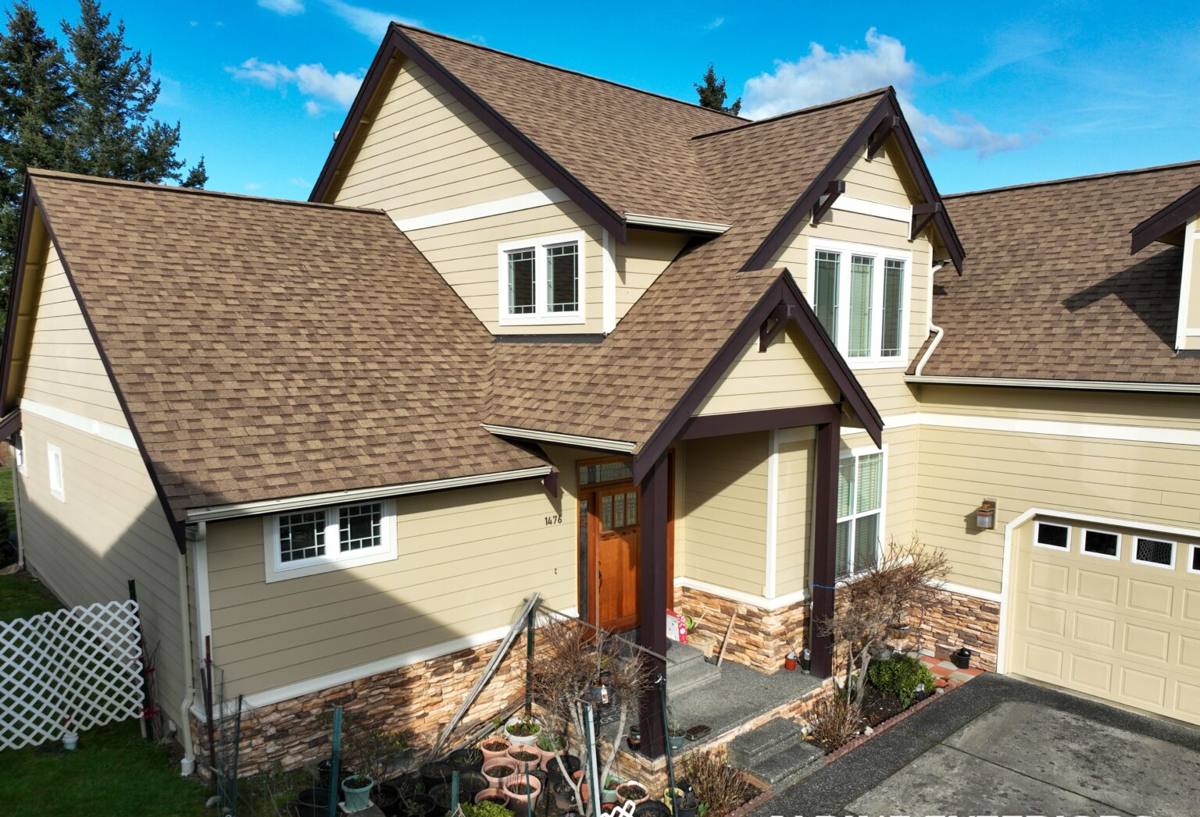
Why Local Roofs Fail Early Around Aldergrove
Salt Air and Slow Corrosion
Salt-laden air accelerates corrosion on exposed metal — flashing, fasteners, gutter hardware, and vent caps. Cheap or mismatched metal components can start rusting years before the shingles themselves are due for replacement, and once flashing fails, water gets behind it regardless of how good the shingles are.
Driving Rain and Wind-Driven Water
Storms moving through the region routinely push rain sideways under normal wind conditions, not just during the occasional big blow. That means water is testing your valleys, roof-to-wall transitions, chimney flashing, and vent boots far more often than in a climate with mostly vertical rainfall. Any weak seal in those areas eventually leaks.
The Long Moss Season
Shaded slopes and tree cover common on Aldergrove lots keep moisture on the roof surface for extended stretches, especially on north- and east-facing planes. Moss holds water against the shingle mat, lifts tabs, and works its way under the edges of aging roofing. A roof that looked fine two years ago can be visibly moss-covered and losing granules today if it was never treated or if ventilation underneath is poor.
Signs a Repair Won't Cut It Anymore
- Granules collecting in gutters or at downspout outlets, with bald patches visible on the shingle surface
- Shingle edges curling, cupping, or lifting, especially on south- and west-facing slopes
- Moss or algae streaking that keeps coming back within months of cleaning
- Soft or spongy spots underfoot when walking the roof, a sign the decking underneath is compromised
- Daylight visible through the attic roof boards, or damp insulation after storms
- Multiple past repairs in different spots rather than one clear problem area
- Roof age at or past 20–25 years for asphalt shingle systems in this climate
Any one of these can sometimes be handled with a repair. Two or more together usually mean the underlying system — decking, underlayment, and flashing — has aged out, and patching shingles on top of a failing base just delays the real cost.
What a Correct Roof Replacement Actually Involves
A tear-off and reroof is more than swapping old shingles for new ones. For this climate, the details matter as much as the materials:
- Full tear-off to bare decking, so we can actually see the wood underneath rather than roofing over hidden rot.
- Decking inspection and repair — any soft, delaminated, or water-stained sheathing gets replaced, not covered.
- Ice-and-water shield at eaves, valleys, and roof-to-wall transitions — the areas where driving rain and moss-related backup cause the most leaks.
- Synthetic underlayment across the full deck for a consistent water-resistant layer beneath the shingles.
- New flashing at chimneys, skylights, sidewalls, and vent penetrations, matched to metal that resists salt-air corrosion rather than reused old flashing.
- Balanced attic ventilation — intake at the eaves, exhaust at the ridge — so moisture doesn't condense under the deck and feed future moss and rot.
- Shingle or material installation to manufacturer spec, with attention to nailing pattern and exposure, which is where a lot of shortcut installs quietly fail.
- Cleanup and magnetic sweep of the yard and driveway for stray nails and debris.
Material Options for This Climate
Not every roofing product performs the same way under constant damp, salt air, and moss pressure. Here's how the common options compare for homes in the Aldergrove area:
| Material | Typical Lifespan Here | Moss / Moisture Behavior | Best Fit |
|---|---|---|---|
| 3-tab asphalt shingle | 15–20 years | Thinner mat, more prone to early granule loss and moss lift | Budget-focused reroofs, secondary structures |
| Architectural (laminate) asphalt shingle | 25–30 years | Heavier mat resists wind-driven rain better; moss-resistant algae-shield versions available | Most primary homes in this climate |
| Standing-seam metal | 40–50+ years | Sheds moss and moisture almost entirely; minimal maintenance | Homeowners wanting a long-term, low-maintenance roof |
| Cedar shake | 20–30 years with upkeep | Attractive but absorbs moisture and needs regular treatment to resist moss and rot in this climate | Homeowners committed to ongoing maintenance for the look |
Our standard recommendation for most Aldergrove homes is an architectural shingle with a granule-based algae/moss-resistant treatment, paired with correct ventilation. It's the best balance of cost, appearance, and real-world performance against the salt air and moss pressure this area sees. We'll walk through metal or cedar with you honestly if that's the direction you want — including the added maintenance cedar requires to hold up here.
What Actually Drives the Cost
| Factor | Why It Matters |
|---|---|
| Roof size and pitch | Steeper roofs take longer and require more safety setup, adding labor cost |
| Number of existing layers | Tearing off two layers of old shingles costs more in labor and disposal than one |
| Decking condition | Rotten or soft sheathing found during tear-off adds material and labor to replace |
| Material choice | Metal and cedar cost more upfront than asphalt, with different long-term payoff |
| Roof complexity | Valleys, dormers, skylights, and chimneys each add flashing work and time |
| Access and site conditions | Steep lots, limited driveway access, or tall trees can slow staging and cleanup |
We give a firm, itemized number after we've actually walked the roof and, when needed, checked the attic — not a phone estimate. That's the only way to price decking repairs and flashing work accurately instead of guessing and adjusting later.
Working Across the Border: Permits and Practical Logistics
Aldergrove falls under Township of Langley, BC, which has its own permitting and building code requirements distinct from Whatcom County and Washington State. A crew based in Lynden that regularly works this side of the border already knows the difference between BC Building Code expectations and what applies back home — including when a permit is actually required for a reroof versus when it isn't, and what inspection steps to plan for.
There's also the practical side: crossing with a loaded material trailer, scheduling deliveries and dump runs on the correct side of the line, and having insurance and business registration that actually covers cross-border work. This isn't complicated if you do it regularly, but it trips up crews who don't — leading to delays, permit problems, or work that doesn't match local code expectations. We handle the paperwork side so you're not the one sorting it out mid-project.
Keeping Moss From Winning the Rematch
A new roof in this climate still needs a little ongoing attention — the goal is to make that attention minor, not structural:
- Keep gutters and downspouts clear so water doesn't back up under shingle edges
- Trim back overhanging branches to cut down shade and debris on moss-prone slopes
- Do a light moss treatment on shaded slopes every year or two rather than waiting for visible growth
- Have the roof looked at after major windstorms, when flashing and vent boots are most likely to get stressed
- Confirm attic ventilation stays unblocked by insulation, since blocked vents lead to trapped moisture
None of this is heavy maintenance — it's the difference between a roof that reaches its full lifespan and one that needs early intervention because moss or trapped moisture got ahead of it.
Why a Crew That Already Works Aldergrove Matters
Roofing crews that only occasionally cross into BC tend to treat every Aldergrove job as a one-off — relearning local permit rules, scrambling on material logistics, and sometimes specifying products or details better suited to a drier climate. A crew based in Lynden and already working this corridor regularly has the border logistics, the BC permit process, and the climate-specific install details already worked out, so the job runs on schedule instead of hitting avoidable delays.
We'd rather walk your roof, tell you honestly whether you're looking at a repair or a full replacement, and give you a straight, itemized number than guess over the phone. If you're in Aldergrove and thinking about a roof replacement, reach out for a free, no-pressure estimate using the form below.