 Lynden Siding
 Bellingham's Climate Is Hard on Windows in Ways Homeowners Don't Always See
Bellingham sits close enough to the water and low enough in Whatcom County's rain shadow gaps that homes here take a specific kind of weathering: salt-laden air off Bellingham Bay, long stretches of driving rain that comes in sideways more often than straight down, and a moss season that can run most of the year on north- and west-facing walls. None of that is dramatic on any single day. It's the accumulation over ten or fifteen years that breaks windows down from the inside — long before the glass itself looks bad.
Most window failures we find in this area aren't glass problems. They're seal, flashing, and frame problems caused by years of moisture finding a way in and never fully drying back out. A window replacement done right in Bellingham has to account for that, not just swap in a newer-looking unit.
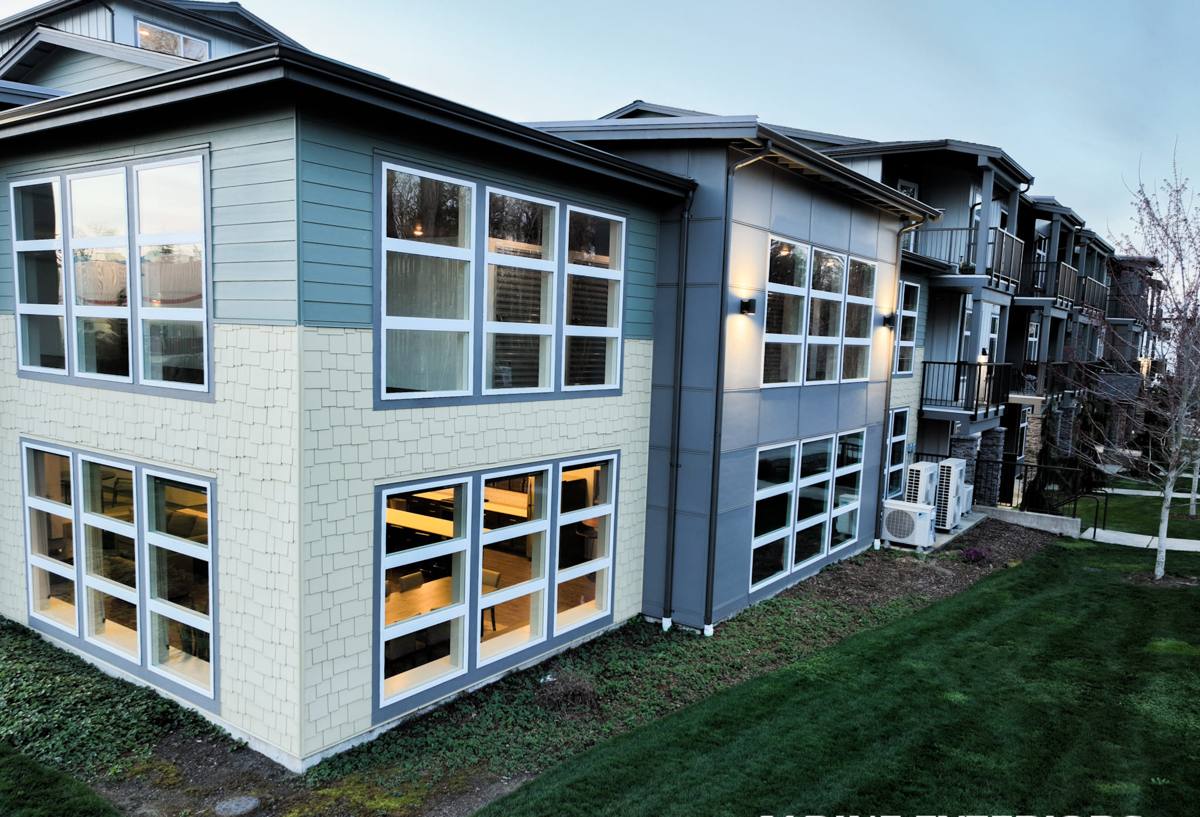
What Salt Air, Rain, and Moss Actually Do to a Window Over Time
Salt Air and Metal Components
Homes within a few miles of the bay see accelerated corrosion on window hardware — hinges, cranks, balance systems, and especially aluminum frames or cladding that wasn't specified for coastal exposure. Corroded hardware is often the first visible sign that a window's service life is winding down, even when the frame and glass still look fine.
Driving Rain and Wind-Driven Moisture
Standard vertical rain testing doesn't tell the whole story for a lot of Whatcom County exposures. Wind-driven rain gets pushed sideways and upward under sills and around trim in a way that finds weak flashing details immediately. Once water gets behind a window instead of running off it, it stays there — wood sheathing and framing in the Pacific Northwest rarely gets the dry stretch it needs to fully recover.
Moss, Algae, and Trapped Moisture
Moss doesn't just grow on roofs. On shaded exterior walls and window sills that don't get direct sun, moss and algae growth holds moisture against wood trim and caulk joints far longer than open, sunny sills. That constant dampness breaks down sealants and paint faster and gives rot a foothold at the sill — one of the most common failure points we see on older wood-frame windows in this area.
Signs a Bellingham Home Is Overdue for Window Replacement
- Visible fogging or a permanent haze between panes (failed seal on double- or triple-pane glass)
- Soft, spongy, or dark-stained wood at the sill or lower corners of the frame
- Windows that are noticeably harder to open, close, or lock than they used to be
- Cold drafts near the frame even when the window is fully closed and latched
- Paint that keeps failing on the exterior trim no matter how often it's repainted
- Visible moss, algae, or persistent green staining around the frame or sill
- Condensation forming on the inside of the glass regularly in fall and winter
- Noticeably higher heating costs compared to similarly sized rooms in the home
What a Correct Window Replacement Job Actually Involves
Swapping the window unit itself is the easy part. The details that determine whether a replacement lasts in this climate happen around the opening, not inside it.
- Remove the old unit and inspect the rough opening. This is where hidden rot, soft sheathing, or old flashing failures usually surface. A good installer stops and addresses what they find here instead of covering it back up.
- Repair or rebuild the opening as needed. Any compromised framing or sheathing gets replaced before a new window ever goes in. Installing a new window into a damaged opening just guarantees a repeat failure.
- Install proper flashing, in the right order. Sill pan flashing, side flashing, and head flashing need to overlap correctly (bottom to top, like shingles) so water is directed out and down, never trapped behind the window.
- Set the window level, plumb, and square. A window that's slightly out of square will bind, won't seal evenly, and puts uneven stress on the frame over time.
- Seal and insulate the gap correctly. Low-expansion foam or backer rod and sealant around the perimeter — not just caulk smeared over the trim — to control both air leakage and moisture.
- Finish the exterior trim and caulking with materials rated for this climate. This is the layer that takes the direct hit from wind-driven rain and UV, so the products used here matter as much as the window itself.
Choosing a Window Type for Bellingham's Weather
Frame material is one of the biggest decisions in a replacement, and it's worth weighing honestly rather than picking on price alone.
| Frame Material | How It Holds Up Locally | Maintenance |
|---|---|---|
| Vinyl | Good moisture and salt resistance; no corrosion risk; performs well in coastal exposure | Low — occasional cleaning |
| Fiberglass | Excellent dimensional stability in temperature and moisture swings; handles driving rain well | Low |
| Aluminum | Prone to corrosion and pitting in salt air unless specifically coated; conducts cold, increasing condensation risk | Moderate to high near the bay |
| Wood (unclad) | Classic look but highest exposure to rot and moss-related moisture without diligent upkeep | High — regular painting and sealing |
| Wood, clad exterior | Good balance — protected exterior face with interior wood warmth, if cladding is properly detailed | Moderate |
We don't push one material on every home. The right call depends on the home's exposure (how close to the water, how shaded, prevailing wind direction), the existing siding and trim, and what the homeowner wants to maintain long-term. What we won't do is install a frame material into an exposure it's poorly suited for just because it's cheaper up front — that's a callback waiting to happen, and it's the homeowner who pays for it twice.
Glass Packages Worth Considering in This Climate
Double-pane glass is standard, but a few upgrades matter more here than in drier climates:
- Low-E coatings help with both winter heat retention and reducing glare/UV, and modestly reduce condensation risk on cold glass surfaces.
- Argon or krypton gas fill improves insulating performance, which matters through Whatcom County's long, damp winters.
- Warm-edge spacer systems reduce the cold edge effect that drives condensation and eventual seal fatigue — a real factor given how much moisture is in the air here for much of the year.
- Triple-pane glass is worth discussing for north-facing rooms or homes with a history of condensation problems, though it adds cost and weight.
Our Process for Bellingham Window Replacement
Assessment
We look at the whole opening, not just the glass — sill condition, existing flashing (or lack of it), signs of past moisture intrusion, and how exposed that particular wall is to prevailing wind and rain. That assessment drives the material and product recommendation, not the other way around.
Installation Day
Openings are protected from weather during the swap, old units are removed carefully to expose the full opening for inspection, and any framing repairs are handled before the new window goes in. We don't rush flashing and sealing steps to finish faster — those steps are the difference between a window that lasts twenty-plus years and one that fails again in five.
Cleanup and Walkthrough
We walk each window with the homeowner, confirm smooth operation and locking, and make sure exterior trim and caulk lines are finished cleanly before we consider the job done.
Why It Matters to Hire a Crew That Already Works in This Area
A crew that regularly works Bellingham and the surrounding Whatcom County towns has already seen how a given wall orientation, siding type, or age of home tends to fail here. That's not a guess — it's pattern recognition built from opening up a lot of walls in this specific climate. A crew based somewhere drier, or one that mostly installs and moves on without checking the opening underneath, is more likely to miss the moisture and rot issues that are common around here and less likely to know which flashing details actually hold up against sustained wind-driven rain off the bay.
What Affects the Cost of a Window Replacement
| Factor | Why It Matters |
|---|---|
| Frame material chosen | Vinyl and fiberglass vary in price; fiberglass and clad-wood typically cost more up front |
| Extent of hidden rot or framing repair | Openings with moisture damage require rebuilding before the window goes in |
| Glass package (Low-E, gas fill, triple-pane) | Higher-performance glass adds cost but pays back in comfort and condensation control |
| Window size and configuration | Larger units, bay/bow windows, and custom shapes cost more than standard double-hung sizes |
| Number of windows replaced at once | Doing multiple windows in one visit typically reduces per-window labor cost |
| Trim and exterior finish work required | Extensive trim replacement or matching existing siding adds time and material |
We give straightforward, itemized estimates so homeowners can see exactly what they're paying for — window unit, labor, flashing and moisture protection, and trim finish — rather than one lump number that hides where the cost is going.
Before You Get Quotes: A Quick Checklist
- Ask whether the quote includes opening inspection and any needed framing repair, or only the window swap
- Confirm what flashing method will be used and whether it's suited for wind-driven rain exposure
- Get the glass package spelled out (Low-E, gas fill, pane count) rather than just "double-pane"
- Ask how corrosion-prone hardware and metal components are addressed for coastal exposure
- Check what warranty covers the window itself versus the installation and sealing work
- Ask how the crew handles unexpected rot or damage found once the old window is removed
If you're noticing drafts, fogged glass, sticking frames, or sill damage on a Bellingham home, it's worth having someone take a real look before deciding what's needed. We offer free, no-pressure estimates — use the form below to get one scheduled.