 Lynden Siding
 Board & Batten Siding Built for Birch Bay's Coastal Conditions
Birch Bay sits close enough to the water that homes here deal with a different set of stresses than siding a few miles inland in Lynden. Salt-laden air, wind-driven rain off the Strait, and a long stretch of gray, damp months every year all work on exterior materials in ways that show up faster near the shoreline than they do farther into Whatcom County. Board and batten siding — with its clean vertical lines and strong shadow reveal — is a popular choice for Birch Bay homes, but it only performs well long-term when the material and the installation are both suited to this specific environment.
This page covers what board and batten siding needs to hold up in Birch Bay, what a correct installation actually involves, and why the crew you hire matters as much as the product on the wall.
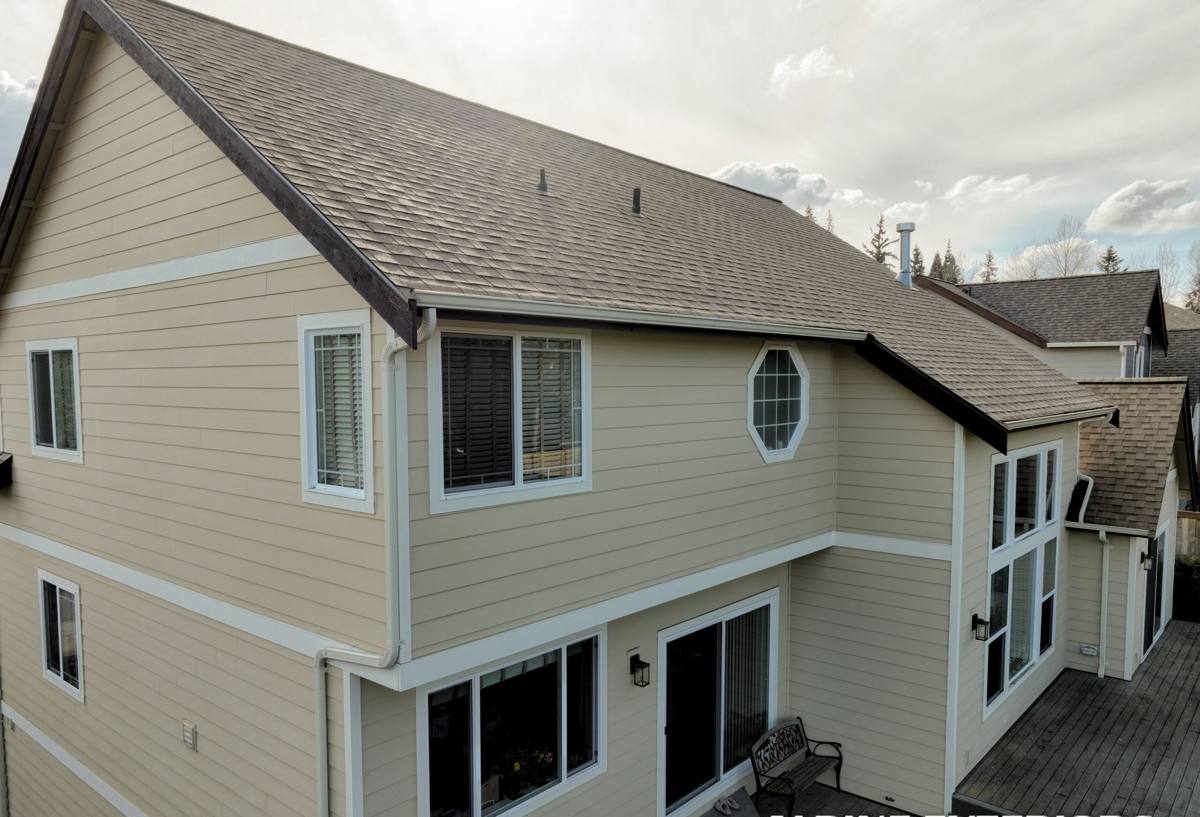
What Birch Bay's Climate Does to Siding Over Time
Salt Air
Proximity to saltwater means airborne salt settles on exterior surfaces, fasteners, and trim. Over years, that accelerates corrosion on anything that isn't rated for coastal exposure — cheap fasteners, unprotected metal flashing, and some factory finishes will show wear near the water noticeably sooner than the same products would inland.
Driving Rain
Storms off the Strait of Georgia don't just fall straight down — wind pushes rain sideways into wall assemblies, seams, and butt joints. Any siding system that relies on caulk alone, or that doesn't manage water behind the cladding, is going to let moisture in eventually. Vertical board and batten has more horizontal joints (at board ends) than lap siding does per square foot in some layouts, so how those joints and the wall behind them are detailed matters more here than on a simpler profile.
Moss and Sustained Moisture
Whatcom County's wet season runs long, and Birch Bay's tree cover and marine humidity keep north- and west-facing walls damp for extended stretches. Moss and algae take hold on surfaces that stay wet, and on siding materials that absorb moisture, that growth can hold water against the substrate instead of just sitting on top of it.
Why Board and Batten Suits This Area — With the Right Material
The vertical board and batten look works well on Birch Bay's mix of cottage-style, craftsman, and newer coastal builds. Beyond appearance, the profile has a practical advantage: fewer horizontal laps means fewer places for wind-driven rain to find a foothold, compared to some other vertical or lap styles — but only if the battens, boards, and the water-resistive barrier behind them are installed correctly. Get the layering wrong and board and batten can actually trap moisture behind the battens, which is a common failure point regardless of what material is used.
The material choice matters just as much as the profile. This is why we install board and batten only in James Hardie fiber cement — specifically because it's engineered to hold up to sustained moisture exposure without swelling, delaminating, or feeding the moss and mildew growth that thrives in Birch Bay's marine climate. Hardie's HZ5 product designation exists specifically for regions with harsher moisture cycling, and installing crews who understand coastal detailing will spec accordingly.
What a Correct Board and Batten Installation Involves
Drainage Behind the Cladding
Board and batten should never be installed directly against the wall assembly with no gap. A rainscreen or drainage mat creates an air space that lets any moisture that does get past the cladding drain and dry out instead of sitting against the sheathing. On a coastal property like this, skipping that step is one of the fastest ways to end up with hidden rot behind siding that looks fine from the street.
Fastener Selection
In a salt-air environment, fastener corrosion is a real long-term concern. Hot-dip galvanized or stainless fasteners rated for the exposure are non-negotiable this close to Birch Bay — standard fasteners can start showing rust streaks and weakening well before the siding itself is due for attention.
Flashing and Batten Joints
Every board end, every window and door transition, and every point where the battens meet trim needs proper flashing — not just caulk. Caulk is a maintenance item that degrades with UV and weather; flashing is a permanent water-management detail. A correct installation treats caulk as a secondary seal, not the primary defense against driving rain.
Proper Fastening Pattern for Battens
Battens need to be fastened into structural framing or properly blocked sheathing, not just into the underlying board, and spaced to allow for the natural expansion and contraction of fiber cement across Whatcom County's seasonal humidity swings.
- Rainscreen or drainage gap installed behind the full assembly
- Corrosion-resistant fasteners rated for coastal/marine exposure
- Metal flashing at all board ends, trim, and penetrations
- Battens fastened into framing or proper blocking, not float-fastened
- Correct fastener spacing to allow for material movement
- Factory-finished ColorPlus coating to reduce field-painting and touch-up needs
Material Comparison for Board and Batten in a Coastal Climate
| Material | Moisture/Salt Air Behavior | Long-Term Maintenance |
|---|---|---|
| James Hardie fiber cement | Engineered for moisture cycling; won't swell, rot, or delaminate; HZ5 line built for harsher climates | Factory ColorPlus finish reduces repainting; occasional wash |
| Vinyl | Doesn't rot, but can warp or become brittle with UV and temperature swings; joints rely on overlap, not true seal | Low upkeep but limited repair options if damaged; color fades over time |
| LP SmartSide (engineered wood) | Wood-based core is more sensitive to sustained moisture exposure than fiber cement | Requires diligent caulk and paint maintenance to prevent moisture entry at joints |
| Primed spruce / cedar | Natural wood absorbs moisture readily; performs worst in prolonged damp, salt-air conditions without constant upkeep | Regular refinishing, sealing, and moss/mildew treatment required |
We install James Hardie exclusively. We don't carry vinyl, LP SmartSide, Cemplank, Allura, primed spruce, or cedar — not because those products have no place in the market, but because we've made a professional decision to stand behind one system we can install correctly, warranty confidently, and trust to perform in exactly the conditions Birch Bay throws at it.
How Our Process Works for Birch Bay Homes
Every Birch Bay board and batten project starts with an on-site look at the specific exposure the home faces — a west-facing wall catching the Strait's wind and rain directly needs different flashing attention than a more sheltered elevation. From there:
- On-site assessment of existing siding, sheathing condition, and problem areas (especially around windows, corners, and roof transitions)
- Removal of failing siding and inspection of the wall assembly underneath for hidden moisture damage
- Repair of any compromised sheathing or framing before new siding goes on — we don't cover up existing problems
- Installation of a proper drainage plane, then Hardie board and batten with coastal-rated fasteners and full flashing details
- Final walkthrough covering what to expect from the ColorPlus finish and how to keep the exterior looking right through Whatcom County's wet seasons
Maintenance That Actually Matters Near Birch Bay
Correctly installed Hardie board and batten is low-maintenance, not no-maintenance. A short seasonal routine keeps it performing the way it's designed to in this climate:
- Rinse salt residue and grime off exterior walls once or twice a year, especially on the sides facing the water
- Keep gutters clear so water isn't overflowing onto siding or pooling near the base of walls
- Trim back vegetation and tree cover that keeps north- and west-facing walls shaded and damp longer than necessary
- Check caulked joints (trim, windows, penetrations) annually and have any cracked or missing sealant addressed promptly
- Watch for early moss or algae growth and address it before it spreads, rather than letting it sit through another wet season
Why a Crew That Already Works Birch Bay Matters
Coastal siding work isn't the same job as siding a home twenty miles inland, even within the same county. A crew that regularly works Birch Bay knows which elevations take the worst of the wind-driven rain, understands how fast salt air can compromise the wrong fastener, and doesn't need to learn coastal detailing on your home for the first time. That familiarity shows up in the small decisions — flashing choices, fastener selection, where extra attention goes — that determine whether board and batten siding holds up for decades or starts showing problems in five years.
If you're considering board and batten siding for a home in Birch Bay, we're happy to take a look and walk you through what your specific property needs. Reach out for a free, no-pressure estimate using the form below.