 Lynden Siding
 Windows Built for Blaine's Weather, Not Just Its Openings
Blaine sits close enough to the water that homes there deal with a different mix of weather stress than houses further inland around Lynden. Salt-laden air off the Strait, wind-driven rain that hits siding and window frames at an angle instead of straight down, and a moss season that can stretch from late fall through spring all add up. "Custom" windows in this context doesn't just mean an odd-sized opening or a specialty shape — it means matching the frame material, glazing, and installation detail to what this specific stretch of Whatcom County throws at a house year after year.
We're a Lynden-based crew that already works in and around Blaine regularly, so this isn't a one-off job for us. We know which sides of a house in that area typically take the worst weather, and we build the window package around that reality instead of a generic spec sheet.
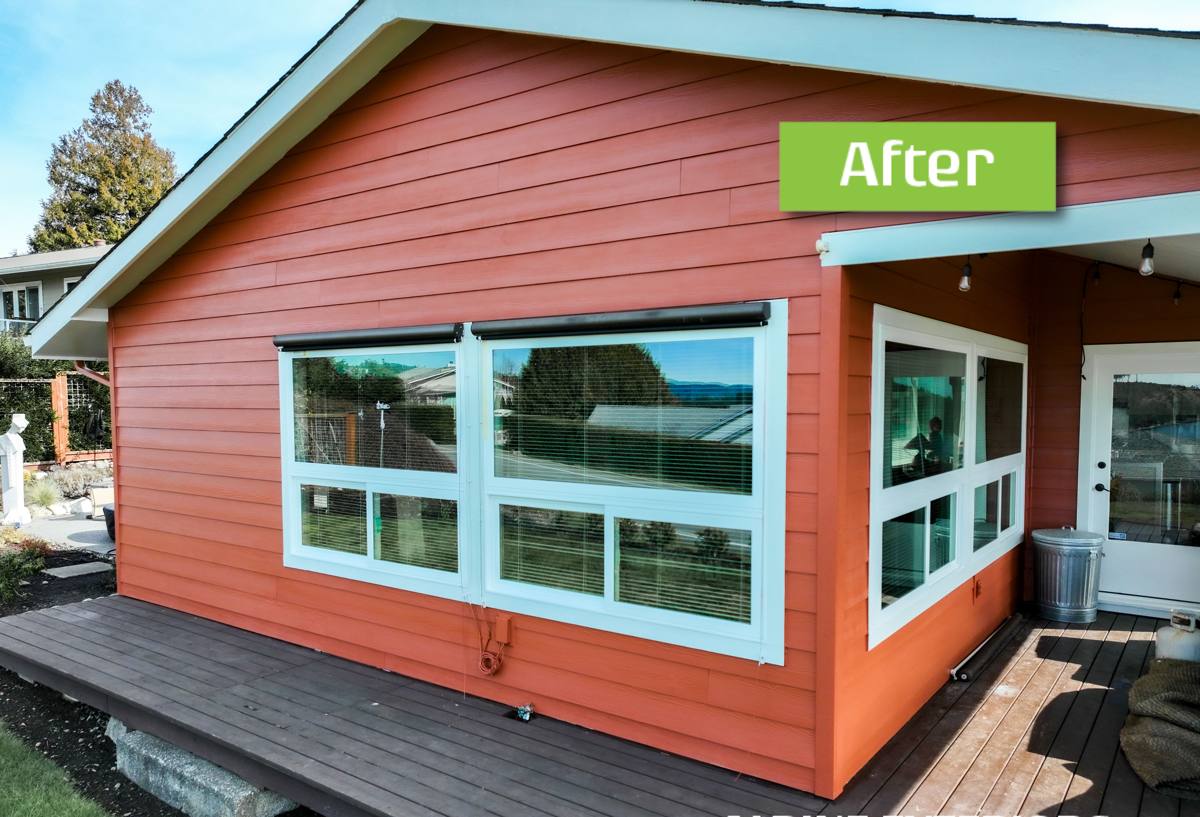
What "Custom" Actually Means Here
Custom windows cover more ground than most homeowners expect. It's not always a bay window or an odd angle — often it's simply matching an older home's original opening sizes, which don't line up with modern standard dimensions, or getting a style and grille pattern that fits a specific architectural period. For Blaine-area homes, custom work usually falls into a few categories:
- Non-standard opening sizes in older farmhouses and coastal cottages, where stock windows would leave gaps needing filler panels
- Matching sightlines and grille patterns across an addition so old and new windows don't look mismatched
- Upgrading frame material and glazing package specifically for wind and moisture exposure, even when the opening size stays the same
- Shaped or specialty units — arched tops, picture windows, bays — that need to be built to spec rather than pulled off a shelf
The common thread is that "custom" starts with an accurate measurement and an honest look at what the wall assembly around that opening can actually support, not just a catalog order.
How Salt Air, Driving Rain, and Moss Season Actually Damage Windows
Salt Air
Airborne salt from the Strait of Georgia settles on exterior surfaces and accelerates corrosion on anything with exposed metal — hinges, hardware, weep hole covers, and especially lower-grade aluminum components. It also degrades some sealants and finishes faster than they'd wear inland. This is why hardware finish and frame material selection matter more in Blaine than they would twenty miles east.
Driving Rain
Wind off the water doesn't let rain fall straight down — it pushes it sideways into window assemblies, testing every seam, sill pan, and flashing detail. A window that would perform fine on a sheltered inland wall can leak on an exposed Blaine-facing elevation if the flashing wasn't detailed for wind-driven water. This is almost always an installation issue, not a product defect — the window itself can be excellent and still leak if the sill pan, house wrap integration, or flashing sequence was done wrong.
Moss Season
A long, damp moss season means more sustained moisture sitting against trim, sills, and the wall assembly below windows for months at a time. Wood components without proper cladding or paint maintenance are the most vulnerable. Moss and organic growth trapped against a sill or trim board holds moisture longer than open air would, which is exactly the condition that causes rot to start where nobody's looking.
Frame Material: Honest Trade-Offs for This Climate
There's no single "best" frame material — each has a real trade-off, and the right call depends on the specific wall, exposure, and budget. Here's how the common options actually compare for a coastal Whatcom County application:
| Material | Salt Air Resistance | Maintenance | Typical Cost | Notes |
|---|---|---|---|---|
| Vinyl | Good — won't corrode | Low | Lower | Reliable value option; quality varies a lot by manufacturer |
| Fiberglass | Very good | Low | Higher | Dimensionally stable in temperature swings, holds paint well if color change is wanted later |
| Wood-clad | Fair — depends on clad quality | Moderate to high | Higher | Interior wood warmth with an exterior clad shell; cladding seams need attention on exposed walls |
| Aluminum (uncladded) | Poor in salt exposure | Moderate | Varies | We generally steer Blaine-area clients away from bare aluminum on exposed elevations — it's simply a harder material to keep looking and performing well against salt air over time |
We're not going to tell a homeowner their existing windows are garbage or that one brand is universally bad — every material has a legitimate use case. Our job is to explain the maintenance burden and moisture behavior honestly so the choice fits the specific wall it's going into, especially on elevations that take the worst of the wind and rain.
What a Correct Installation Actually Involves
The window unit itself is maybe half the job. The other half — the part that determines whether it leaks in year three — is installation detail. For driving-rain exposure like Blaine gets, this matters even more than usual:
- Sill pan flashing that directs any water intrusion back out, not into the wall cavity
- Proper house wrap shingling so upper layers overlap lower layers, following gravity and wind-driven water paths
- Correct fastening and shimming so the frame doesn't rack out of square and compromise the seal over time
- Sealant compatible with the cladding and frame material — the wrong sealant chemistry can fail early or even damage certain frame finishes
- Weep holes kept clear on units that rely on them, so trapped moisture actually drains instead of sitting in the frame
Skipping or rushing any one of these is how a good window ends up with a bad reputation. It's also why we'd rather spend the extra time on flashing detail during install than come back for a warranty leak call later.
Our Process
- On-site assessment — we look at existing openings, wall condition, and which elevations take the worst wind and rain exposure
- Honest material and glazing recommendation — based on that specific wall's exposure, not a one-size-fits-all pitch
- Accurate measurement and ordering — custom units are built to the actual opening, accounting for any out-of-square conditions common in older homes
- Removal and inspection — when we pull the old unit, we check the sill and framing underneath for hidden moisture damage before anything new goes in
- Correct flashing and installation — sill pan, house wrap integration, and sealant done in the right sequence
- Final check and cleanup — operation, seal, and site cleanup before we call it done
If we find rot or moisture damage during removal — which does happen more often on wind-exposed, moss-season walls — we'll show it to you and talk through the repair before proceeding, not surprise you with it on the invoice.
Signs Your Current Windows Are Losing the Battle
- Visible corrosion or pitting on hardware, hinges, or metal trim
- Drafts or whistling during wind events, especially on water-facing sides of the house
- Fogging or moisture between panes on double- or triple-glazed units, indicating a failed seal
- Soft or discolored trim and sill areas, particularly where moss or organic buildup collects
- Difficulty opening, closing, or locking — often a sign the frame has racked slightly out of square
- Paint or finish failing faster on one elevation than the others — usually the one taking the most wind-driven rain
Any one of these on its own isn't necessarily urgent, but a few showing up together on the same window or wall is usually a sign the assembly is losing its fight with the weather.
Why a Local Blaine-Area Crew Matters
General contractors passing through Whatcom County once or twice a year don't build the same working knowledge of how a specific coastal exposure behaves over a Pacific Northwest winter. We're based in Lynden and already do work throughout Blaine and the surrounding area, so we've seen firsthand which elevations and construction types tend to need the most attention here. That local pattern recognition is the difference between a window package that's technically fine on paper and one that's actually right for a specific Blaine property.
It also means straightforward accountability. If a question comes up after the install, you're calling a crew that's still working in the neighborhood, not chasing down a company that was only in town for one job.
Ready to Talk Through Your Windows?
If you're weighing a full custom window replacement or just want an honest read on whether your current windows are holding up, we're happy to take a look. Fill out the form below for a free, no-pressure estimate — we'll walk the exposure on your specific home and tell you straight what we'd recommend and why.