 Lynden Siding
 Roof Repair Built for Blaine's Coastal Conditions
Blaine sits right on the water at the top of Whatcom County, and that location shapes everything about how a roof ages here. Salt-laden air off the Strait of Georgia, driving rain that comes in sideways during winter storms, and a moss season that can stretch for most of the year all put a different kind of stress on a roof than you'd see further inland. A repair approach that works fine in a dry climate often falls short here, because the failure points are different: corroded fasteners, saturated underlayment, and moss that's been working its way under shingles for months before anyone notices a leak.
This page is specifically about roof repair for homes in and around Blaine — what tends to go wrong, what a correct repair actually involves, and how we approach the work when we're called out to a property in this area.
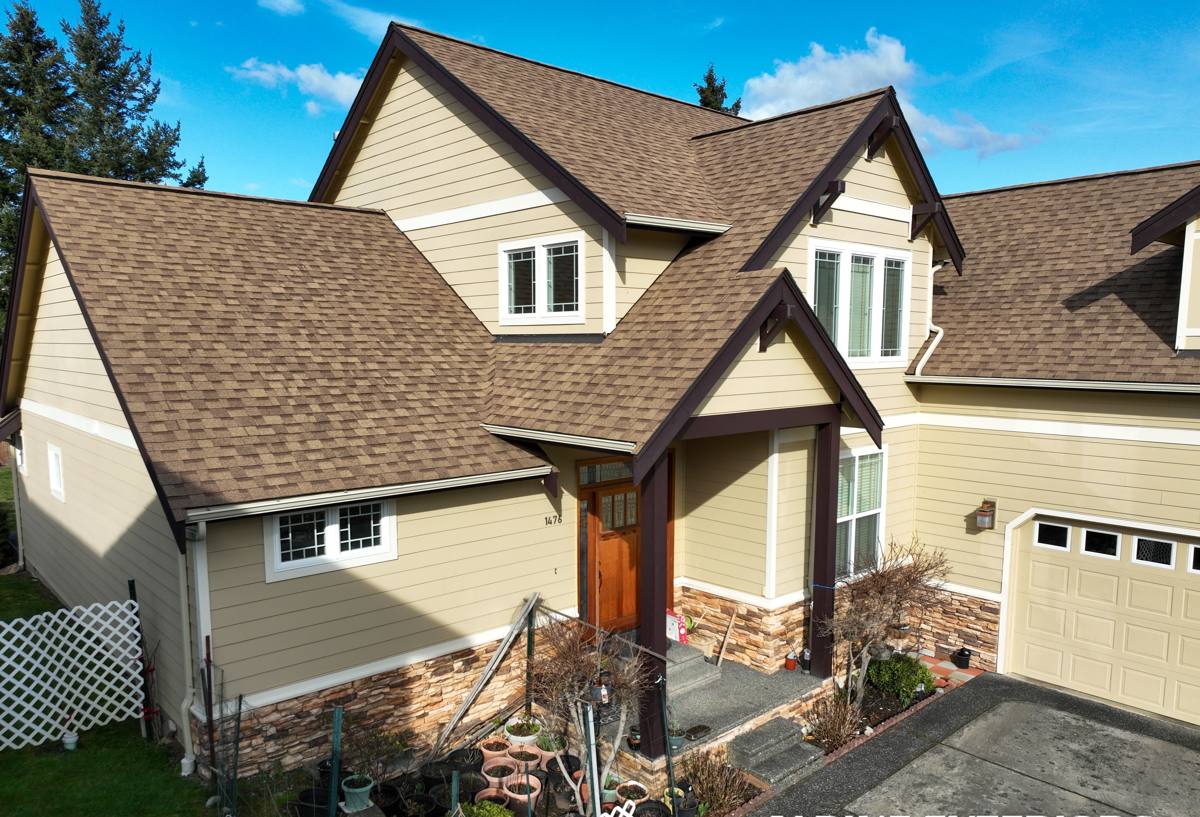
Why Blaine Roofs Take a Different Kind of Beating
Three conditions show up over and over on Blaine roof inspections:
- Salt air corrosion: Homes near the water are exposed to airborne salt that accelerates rust on metal flashing, fasteners, and gutter hardware. Unprotected or lower-grade metal components can start showing corrosion years before they would inland.
- Driving rain: Storms coming off the water push rain sideways and upward under roof edges, ridge caps, and flashing details that would stay dry in a straight-down rain. This is why repairs here have to pay close attention to lap direction and sealant placement, not just patching the visible gap.
- Long moss season: Cool, damp conditions for much of the year give moss and algae plenty of time to establish on north-facing slopes and shaded areas. Moss holds moisture against the roofing material and can lift shingle edges, which opens the door to leaks that have nothing to do with storm damage.
None of these conditions cause instant failure on their own. The problem is that they compound — a fastener that's slowly corroding, under a shingle edge that's slightly lifted by moss, in an area that gets more driving rain than the rest of the roof, is exactly where a leak eventually starts.
Signs Your Blaine Roof Needs Repair (Not Full Replacement)
Most roofs don't need to be torn off and replaced — they need targeted repair before a small problem becomes a big one. Signs worth having checked out include:
- Water stains on interior ceilings or upper walls, especially after a windy storm
- Visible moss buildup on shaded slopes, particularly where it's thick enough to see from the ground
- Granules collecting in gutters or at downspout outlets
- Shingles that look curled, lifted, or cracked at the edges
- Rust streaking below metal flashing or exposed fasteners
- Soft spots or sagging noticed when walking the roof or attic
- Daylight visible through the roof deck from inside the attic
Catching these early is the difference between a repair that costs a few hundred dollars and one that turns into deck replacement or interior water damage repair. If you're not sure whether what you're seeing is cosmetic or structural, that's exactly the kind of thing worth a second set of eyes before it sits through another wet winter.
When Replacement Makes More Sense
Repair isn't always the right call. If a roof has multiple failure points across different areas, if the underlying decking has widespread rot, or if the roofing material is near the end of its expected service life, patchwork repairs can end up costing more over time than one properly planned replacement. Part of an honest inspection is telling you which situation you're actually in.
What a Correct Roof Repair Actually Involves
A roof repair that holds up in Blaine's conditions is more than swapping a few shingles and running a bead of caulk. A repair done right typically includes:
- Diagnosing the actual entry point. Water often travels along the underlayment or decking before it shows up as a stain, so the visible damage inside isn't always directly above the real leak. Tracing it back matters more than patching where the stain appears.
- Removing moss and organic buildup properly. This means clearing growth without gouging or lifting shingles further, and checking what condition the material is in underneath before deciding what else needs attention.
- Inspecting and replacing underlayment where it's compromised. Saturated underlayment doesn't dry out and recover — if it's been wet long enough, it needs to come out, not just be covered back over.
- Re-flashing where corrosion or gaps are present, particularly around chimneys, vent stacks, valleys, and roof-to-wall transitions — the spots most exposed to wind-driven rain.
- Matching materials and fastening for the exposure. On a coastal property, that can mean using corrosion-resistant fasteners and flashing rather than whatever is cheapest, since standard-grade metal simply doesn't hold up as long this close to the water.
- Sealing and finishing correctly, with attention to proper shingle lap and sealant placement so the repair sheds sideways-driven rain instead of just straight-down rain.
Skipping any of these steps is usually how a "repaired" roof leaks again within a year — the visible symptom gets fixed, but the underlying cause doesn't.
Salt Air and Coastal Corrosion: What It Does to Roofing Materials
Salt air is corrosive to unprotected metal, and a roof has a lot of metal in it — flashing, fasteners, vent caps, gutter hardware. On a home this close to the water, we pay specific attention to:
- Fastener quality: Standard fasteners can corrode faster in salt air, which weakens their hold over time. Corrosion-resistant fasteners cost more but are one of the cheapest insurance policies against a repair failing early.
- Flashing material: Where flashing shows rust streaking or pitting, patching over it just delays the same failure. Corroded flashing gets replaced, not painted over.
- Gutter and edge metal: These sit at the roof's most exposed edge and often show corrosion first — a useful early warning sign when we're inspecting a property.
None of this means a Blaine roof is doomed to fail early. It means the materials and fastening choices used in a repair need to account for the environment, the same way you'd choose different hardware for a boat than for something that never sees salt air.
Moss, Moisture, and the Long Wet Season
Whatcom County's damp, mild climate is exactly what moss and algae need to thrive, and a roof with any shade — from trees, a chimney, or a neighboring structure — is going to see growth eventually. The issue isn't moss existing; it's moss being left long enough to do damage.
What Moss Actually Does to a Roof
Moss holds water against the roofing surface long after a normal roof would have dried out. On shingle roofs, growth at the butt edges lifts shingles slightly, which is enough for wind-driven rain to get underneath. Over a full wet season, that repeated cycle of trapped moisture is what leads to premature granule loss and, eventually, leaks.
Proper Moss Removal vs. Doing More Harm Than Good
Pressure washing or aggressive scraping can strip granules and shorten a roof's remaining life faster than the moss itself would have. Correct removal is done by hand, working with the shingle direction, followed by a check of the material underneath — and if zinc or copper control strips aren't already installed and make sense for the roof, that's worth discussing as a longer-term prevention measure rather than a one-time cleanup.
Our Roof Repair Process
When we're called out for a roof repair in the Blaine area, the process is straightforward:
- Inspection. We look at the full roof, not just the spot you're worried about — a leak in one place is sometimes a symptom of wear somewhere else.
- Honest diagnosis. We tell you what's actually causing the problem, what's cosmetic versus structural, and whether repair or replacement is the right call for your situation.
- Clear scope and estimate. You know what work is being done and why before anything starts.
- The repair itself, done with attention to the coastal exposure factors above — proper flashing, corrosion-resistant fasteners, and correct lap and sealant work.
- Cleanup and a final check, including a look at gutters and drainage near the repair area, since standing water and debris are often part of why a spot failed in the first place.
Repair vs. Replacement: Cost Factors to Understand
Every roof is different, so we don't quote exact numbers without seeing the property. But it helps to understand the general factors that separate a minor repair from a larger project:
| Factor | Typically Points Toward Repair | Typically Points Toward Replacement |
|---|---|---|
| Number of problem areas | One or two isolated spots | Multiple failure points across the roof |
| Decking condition | Solid, dry decking under the damaged area | Widespread soft spots or rot |
| Age of roofing material | Well within expected service life | At or beyond typical lifespan |
| Moss/moisture history | Recently noticed, limited spread | Long-term, widespread growth with granule loss |
| General cost range | Often a few hundred to a few thousand dollars, depending on scope | A larger project priced on total roof area and material |
The only way to know which side of that table your roof falls on is an actual inspection — we'll tell you honestly which it is rather than defaulting to the more expensive option.
Checklist: What to Ask Before Hiring a Roof Repair Crew in Blaine
Whoever you hire, these are worth confirming before work starts:
- Are they licensed and insured to work in Washington?
- Will they inspect the whole roof, or just patch the spot you pointed out?
- Do they explain what caused the damage, not just what they're fixing?
- Do they account for coastal exposure — corrosion-resistant fasteners and flashing, not standard-grade hardware?
- Is moss removal done by hand, with attention to not stripping granules?
- Is the estimate clear about scope, so there's no surprise mid-project upsell?
- Do they have familiarity with the specific conditions homes in this area face?
Why a Crew That Already Works in Blaine Matters
A roofer who mostly works drier, inland areas can still do competent work, but they're less likely to instinctively account for salt air corrosion or to recognize how far along moss damage really is before it becomes obvious. A crew that regularly works properties along the Whatcom County coastline already knows which fastener grades hold up, which flashing details actually stop wind-driven rain, and how aggressive moss can get in this specific climate before it's addressed. That familiarity shows up in fewer repeat callbacks and repairs that are built for the conditions your roof is actually facing, not generic conditions.
If you're seeing signs of a leak, moss buildup, or storm damage on a roof in Blaine, we're happy to take a look and give you an honest assessment. Reach out for a free, no-pressure estimate using the form below.