 Lynden Siding
 Board & Batten Siding for Sumas, Built by a Crew Based in Lynden
Board and batten shows up on a lot of wish lists for homes in and around Sumas — the vertical lines suit both the older farmhouses scattered across this part of Whatcom County and the newer builds going up on the outskirts of town. What doesn't always make it into the conversation early enough is that board and batten is a joint-heavy profile. Every seam where a batten covers the gap between two boards is a place water can try to work its way behind the siding, and in a climate that puts salt-tinged air, driving rain, and a long moss season on every wall in this corner of the county, how those seams are built matters as much as what they're built from.
We're based in Lynden, a few miles down the road from Sumas, and we install James Hardie fiber cement board and batten exclusively — no LP SmartSide, no vinyl, no Cemplank, no Allura, no primed spruce or cedar. That's not a brand preference we picked off a supplier list. It's a standard we settled on after years of working on exterior walls across this specific stretch of Whatcom County and seeing which materials and details actually hold up on a vertical, seam-heavy profile like this one.
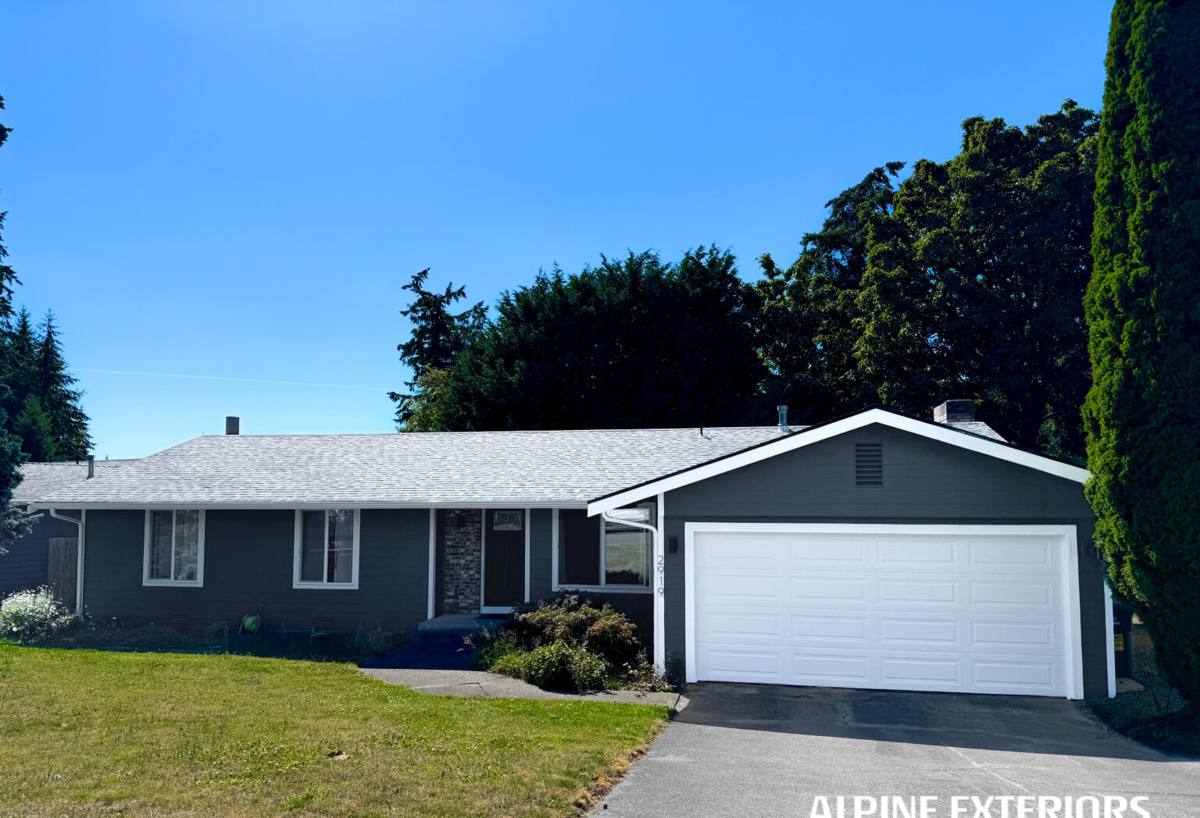
What Salt Air, Driving Rain, and Moss Do to a Board & Batten Wall in Sumas
Salt-Tinged Air Reaching This Corner of the County
Sumas sits inland from the open water, and it's a fair assumption that salt exposure isn't much of a factor out here. It's a smaller factor than it is right on the shoreline, but it's not absent. Marine air moves across this whole region, and over years it works on exposed fasteners, flashing, and trim hardware. Board and batten uses more fasteners per square foot than a standard lap profile, because both the boards and the battens need to be pinned down, so a corrosion-resistant fastener spec carries more weight here than it does on a lot of other siding jobs.
Driving Rain and the Vertical Seam Problem
Rain through the fall and winter in this part of Washington rarely falls straight down — wind pushes it sideways, and a vertical profile with battens running the full height of the wall gives that sideways-moving water a lot of joint length to test. A batten that's caulked tight instead of properly lapped and given clearance to move becomes less of a seam and more of a channel that draws moisture straight down toward the fasteners underneath it.
A Moss Season That Doesn't Take a Break
Mild temperatures and steady moisture add up to a moss and mildew season that runs most of the year on shaded, tree-covered walls, and Sumas has plenty of both. A batten nailed flush against a board with no ventilation gap traps whatever moisture gets past the surface right where it can't dry out. That's the slow path toward staining at the seam and softening in the substrate underneath — a problem that usually takes a couple of wet seasons to show itself, which is exactly why it's easy for a rushed install to get away with at first.
Why We Only Install James Hardie for This Profile
Board and batten magnifies whatever weaknesses a siding material already has, simply because there's more seam and more exposed edge per square foot than on a horizontal lap profile. That's the main reason we don't offer board and batten in anything other than James Hardie fiber cement. The products we won't install aren't bad products in every application — they're just products whose weak points line up too closely with what this profile and this climate are hardest on.
| Material | Seam Behavior Over Time | Moss & Moisture Resistance | What We See on Tear-Offs |
|---|---|---|---|
| James Hardie fiber cement | Stays dimensionally stable; doesn't swell or cup at the batten line | Factory finish sheds moisture and resists staining | Rarely pulled early — most failures we see trace back to install error, not the material |
| LP SmartSide (engineered wood) | More sensitive to swelling at cut edges and fastener holes | Needs consistent edge sealing to hold up in this climate | Edge and seam failures when maintenance has lapsed |
| Vinyl | Can gap or distort at battens with temperature swings | Sheds surface moisture but hides what's happening behind it | Hidden moisture damage found only once panels come off |
| Cedar | Absorbs moisture at every seam without regular sealing | Needs a recurring paint or seal cycle to resist moss | Soft, punky boards at seams on unmaintained walls |
Fiber cement's core doesn't expand and contract with moisture the way a wood-based product does, which is the exact property that matters most on a wall built entirely out of vertical seams. Hardie's factory-applied ColorPlus finish also means the only field-painted surfaces on the job are the cut edges we prime ourselves — not the whole wall, the way it works with a site-finished material.
What a Correct Board & Batten Install Actually Involves
The finished look is simple: vertical boards, battens over the seams. What's supposed to happen underneath that is more involved than it looks, and skipping any of it is what turns a good-looking new wall into a callback two or three winters later.
- Weather-resistive barrier installed and correctly lapped over the wall sheathing before any siding goes up
- A drainage gap or rainscreen behind the siding so moisture that gets past the surface has somewhere to go instead of sitting against the wall
- Corrosion-resistant fasteners at Hardie's specified spacing on both boards and battens, not just enough to hold the material in place
- Batten clearance set to the manufacturer's spec rather than caulked tight, so the seam can shed water instead of trapping it
- Flashed and lapped transitions at every window, door, corner, and the base of the wall, where a vertical run meets a horizontal surface
- Field-cut edges primed before installation to protect the one place the factory finish doesn't already cover
How We Run a Board & Batten Project for a Sumas Home
Walking the Property First
We start on-site, looking at which walls take the weather head-on and which stay shaded and slow to dry. If there's already moisture damage behind the existing siding, that gets addressed before new material goes up — board and batten over a compromised wall just buries the same problem under a better-looking surface.
Planning the Seams Before Cutting Anything
Batten spacing, corner treatment, and how the siding meets windows, trim, and the roofline all get worked out before crews start cutting boards. A profile with this many seams doesn't leave much room for figuring it out as you go, and field improvisation is usually where corners end up getting cut.
Installing to Hardie's Spec, Not a Shortcut Version
Fastener spacing, batten clearance, and flashing laps follow James Hardie's published installation requirements for this climate zone. That's what keeps the manufacturer's warranty valid, and it's the same set of details that determines whether the wall performs for decades instead of years.
Walkthrough and What Comes Next
We walk the finished job with you, cover what little maintenance board and batten actually needs, and make sure you know what a healthy seam looks like if you ever want to check it yourself down the road.
Cost Factors for Board & Batten Siding in This Area
Board and batten generally runs higher per square foot than standard lap siding, mostly because of the extra material (battens on top of boards) and the extra labor of fastening and detailing two layers instead of one. A few things move the number on a specific Sumas home:
| Factor | Why It Matters |
|---|---|
| Wall height and complexity | More corners, gables, and roof transitions mean more cuts and flashing details |
| Condition of the existing wall | Rot or moisture damage found at tear-off needs repair before new siding goes on |
| Batten spacing and reveal | Tighter spacing means more material and more fastening labor per wall |
| Window and trim detail | More openings mean more flashing and finish work around each one |
| Site access | Rural lots, outbuildings, and fencing can add setup and staging time |
We give real numbers after walking your specific property, not a square-footage estimate pulled off a generic price sheet — two homes with the same footprint can land in very different places once wall condition and detailing are factored in.
Why Hire a Crew That Already Works Sumas
Being based in Lynden means we're not driving in from out of the area to bid a job and disappear once it's done — Sumas is a short drive down the same roads we work most weeks. That matters on a profile like board and batten, where the failure points are subtle and slow to show up. A crew that's already installed this profile on homes around Sumas has seen which walls hold moisture longest through a wet season, how much batten clearance actually earns its keep in a climate with this much rain and moss, and where the extra ten minutes on a flashing detail saves a homeowner a callback two winters out. That's judgment built from repeated, local work, not something you get from a spec sheet alone.
Get a Free, No-Pressure Estimate
If you're weighing board and batten for a home in Sumas, we're glad to walk the property, talk through what your specific walls and exposure call for, and give you a straightforward estimate with no pressure attached. There's a form below — reach out and we'll set up a time to take a look.