 Lynden Siding
 Why Custer Windows Face a Different Set of Problems
Custer sits close enough to the water that homes here deal with a combination most inland Whatcom County properties never see: salt-laden air moving in off the Strait, wind-driven rain that hits window walls sideways instead of straight down, and a wet season that runs long enough to give moss, algae, and mildew months to work on anything with a weak seal. None of that is dramatic on its own, but stacked together over a few winters it finds every weak point in a window assembly — the corner welds, the weatherstripping, the flashing behind the trim — faster than it would in a drier climate.
Energy-efficient windows get marketed around utility bill savings, and that's real, but for homes in this area the bigger story is durability under constant moisture load. A window that's rated efficient on paper but installed or built without the coastal climate in mind will lose that efficiency in a few years as seals fail and frames absorb water. The goal on a Custer job isn't just picking a good window — it's matching the product and the installation to what this specific stretch of Whatcom County throws at a house.
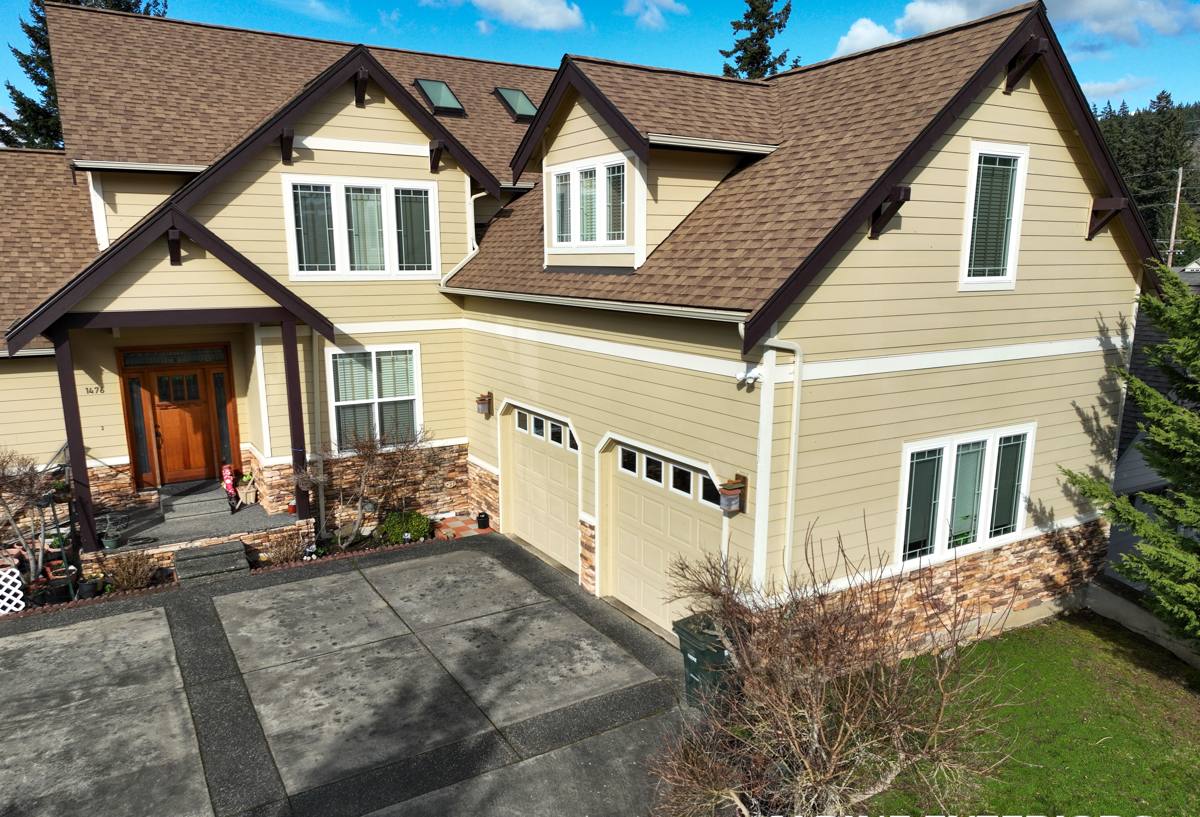
What "Energy Efficient" Actually Means in a Window
The term gets used loosely, so it's worth breaking down into the numbers and components that actually determine performance, because they're what separate a window that holds up here from one that doesn't.
U-Factor and Solar Heat Gain
U-factor measures how much heat the window lets escape — lower is better, and it's the number that matters most for our heating-season-heavy climate. Solar Heat Gain Coefficient (SHGC) measures how much solar heat passes through the glass. In this region, where winter heating load outweighs summer cooling load, a slightly higher SHGC paired with a low U-factor often performs better than a window optimized purely for hot-climate solar rejection. Both numbers should be on the NFRC label — if a quote doesn't reference them, ask for the label.
Glass and Gas Fill
Dual-pane is the baseline for this climate; triple-pane adds meaningful benefit mainly on north- and west-facing walls that take the worst of the wind and rain. Argon or krypton gas fill between panes improves the insulating value, but only if the seal holds — which brings us back to why installation quality and edge-seal construction matter as much as the glass spec itself.
Frame Material and Weatherstripping
The frame and its seals are where salt air and driving rain do the most damage over time. Multi-point weatherstripping, welded (not just mechanically fastened) corners, and a frame material that doesn't corrode or wick moisture are what keep the efficiency numbers accurate five and ten years out, not just on install day.
Signs a Custer Home's Windows Are Underperforming
Most window failure here doesn't show up as a cracked pane — it shows up as slow, easy-to-miss symptoms. Worth checking for:
- Condensation or fogging between the panes (a failed seal, not a cleaning issue)
- Visible moss, algae, or black staining building up on the sill or in the corners
- A noticeable draft or cold spot near the frame during a windstorm
- Trim or sill wood that feels soft or looks discolored where it meets the window
- Difficulty opening, closing, or latching — frames swelling or warping slightly with moisture
- Higher heating bills without a clear cause elsewhere in the house
- Paint or caulk around the exterior frame cracking or pulling away within a year or two of being redone
Any one of these on its own might be minor. Several showing up together, especially on the sides of the house that take the worst weather, usually means the window or its installation has reached the end of what it can handle.
Why the Installation Matters More Than the Window Itself
We say this on every job because it's the single most common thing people get wrong when shopping for windows: a high-efficiency window installed poorly will underperform a mid-grade window installed correctly. The window unit is only one part of the assembly. What happens around it determines whether that efficiency rating holds up in real Whatcom County weather.
Correct flashing sequencing — so water that gets behind the siding is directed out and down, never trapped against the frame — is the part that protects against the driving rain this area gets. A continuous bead of the right sealant at the right joints, proper shimming so the frame isn't racked or bowed, and insulation packed (not stuffed) around the rough opening all affect both the energy performance and how long the install lasts before it needs attention. Skipping or rushing any of these steps is how a good window ends up with a moisture problem inside the wall cavity within a few years — a much more expensive fix than the window itself.
How Our Process Works
- On-site assessment. We look at each window's exposure — which walls take direct wind and rain, which stay shaded and damp longer, where moss or staining already shows — and note the current frame and glazing condition.
- Accurate measurement and product selection. We measure the actual rough openings (older Custer homes are rarely perfectly square) and recommend frame material, glazing package, and gas fill based on that wall's exposure rather than a one-size answer for the whole house.
- Removal and opening prep. Old units come out carefully to check the sheathing and framing underneath for hidden water damage before anything new goes in — this is where problems from years of a bad seal usually surface.
- Flashing and air-sealing. We build the moisture management around the new window correctly the first time — flashing tape, drainage path, and sealant placement matched to how water actually moves down this style of wall assembly.
- Installation, shimming, and insulation. The window is set plumb, level, and square, shimmed at the manufacturer's specified points, and insulated around the perimeter without over-compressing the material.
- Interior and exterior finish work. Trim, caulk, and paint or stain are finished to match the home, and every window is tested for smooth operation and a tight seal before we call the job done.
- Walkthrough and cleanup. We go over each window with the homeowner, answer questions about operation and care, and leave the site clean.
Frame Materials: What Holds Up in This Climate
| Frame Material | Coastal/Moisture Performance | Maintenance | Where It Fits Best |
|---|---|---|---|
| Vinyl | Doesn't corrode or absorb moisture; good baseline for salt air exposure | Low — occasional cleaning | Most Custer homes, budget-conscious full replacements |
| Fiberglass | Excellent — very stable in temperature swings and wet cycles, resists warping | Low | Exposed walls taking the worst wind-driven rain |
| Wood-clad | Good if the cladding and seals are intact; interior wood needs protection from moisture | Moderate — periodic sealant and finish checks | Homes prioritizing a traditional wood interior look |
| Aluminum | Prone to condensation and thermal transfer unless thermally broken; can corrode near salt air over time | Moderate to high | Limited use here; we typically steer clients toward vinyl or fiberglass instead |
We don't push aluminum-framed replacement windows on Custer homes as a rule — not because the product is bad everywhere, but because the maintenance and corrosion trade-offs don't hold up well against this area's salt air and constant moisture cycling. That's a judgment based on what we've seen perform here, not a knock on the material in a drier inland climate.
What Affects the Cost of a Window Project
| Factor | Why It Moves the Price |
|---|---|
| Number and size of openings | More or larger windows means more material and labor |
| Frame material chosen | Fiberglass and premium wood-clad cost more than standard vinyl |
| Glazing package | Triple-pane and upgraded gas fill add cost but pay off most on exposed walls |
| Condition of the rough opening | Hidden rot or water damage found during removal adds repair work |
| Full-frame vs. insert replacement | Full-frame replaces flashing and sealing entirely; inserts are faster but rely more on the existing frame's condition |
| Trim and finish work | Matching existing exterior trim profiles or repainting takes extra time |
We give straight, itemized estimates rather than a single lump number, so you can see exactly what's driving the cost and where there's room to adjust the scope if needed.
Why It Matters to Hire a Crew That Already Works This Area
Custer isn't a large market on its own, and a lot of window crews treat it as an afterthought stop between bigger jobs elsewhere in Whatcom County. The problem with that is climate-specific knowledge doesn't transfer automatically — a crew used to drier, inland installs doesn't always think about flashing sequencing for wind-driven rain, or frame material trade-offs for salt air, because they haven't had to deal with the consequences of getting it wrong here. We work this area regularly, so we've seen which installs hold up through a real Custer winter and which ones come back with problems in year three.
There's also a practical side: knowing typical wall assemblies and older construction habits common to homes in and around Lynden and Custer means fewer surprises once an old window comes out, and a more accurate estimate up front instead of change orders mid-job.
Protecting the Investment After Installation
Even a well-installed, well-built window needs a small amount of upkeep to keep performing over the long moss season here. Rinsing salt residue and debris out of tracks and weep holes a couple of times a year keeps drainage paths clear. Checking exterior caulk lines annually — especially after a hard winter — catches small cracks before they let water behind the trim. And keeping gutters and downspouts clear nearby matters more than people expect, since overflow running down a wall is one of the more common causes of premature window and trim damage we see on service calls.
If you're dealing with drafts, fogged glass, visible moss or staining around your windows, or you're simply planning ahead for a home that can handle another decade of Custer winters, we're happy to take a look and give you a straightforward, no-pressure estimate — just fill out the form below.