 Lynden Siding
 Storm Damage Roof Repair Built for Custer's Weather
Custer sits in one of the more exposed pockets of Whatcom County. You're close enough to the water that salt-laden wind off the Strait of Georgia reaches your shingles, far enough inland that you still catch the full force of winter windstorms rolling through, and shaded enough by the region's tree cover that moss has all the time it needs to take hold. That combination — salt air, driving rain, and a long moss season — wears on a roof differently than it would in a drier, more sheltered part of the state. A repair that works fine on a roof in eastern Washington can fail here in a couple of seasons if it doesn't account for what this specific stretch of Whatcom County throws at it.
We work storm damage repairs in Custer and the surrounding Lynden area regularly, which means we're not guessing at how local weather behaves — we're repairing roofs that have already been through it.
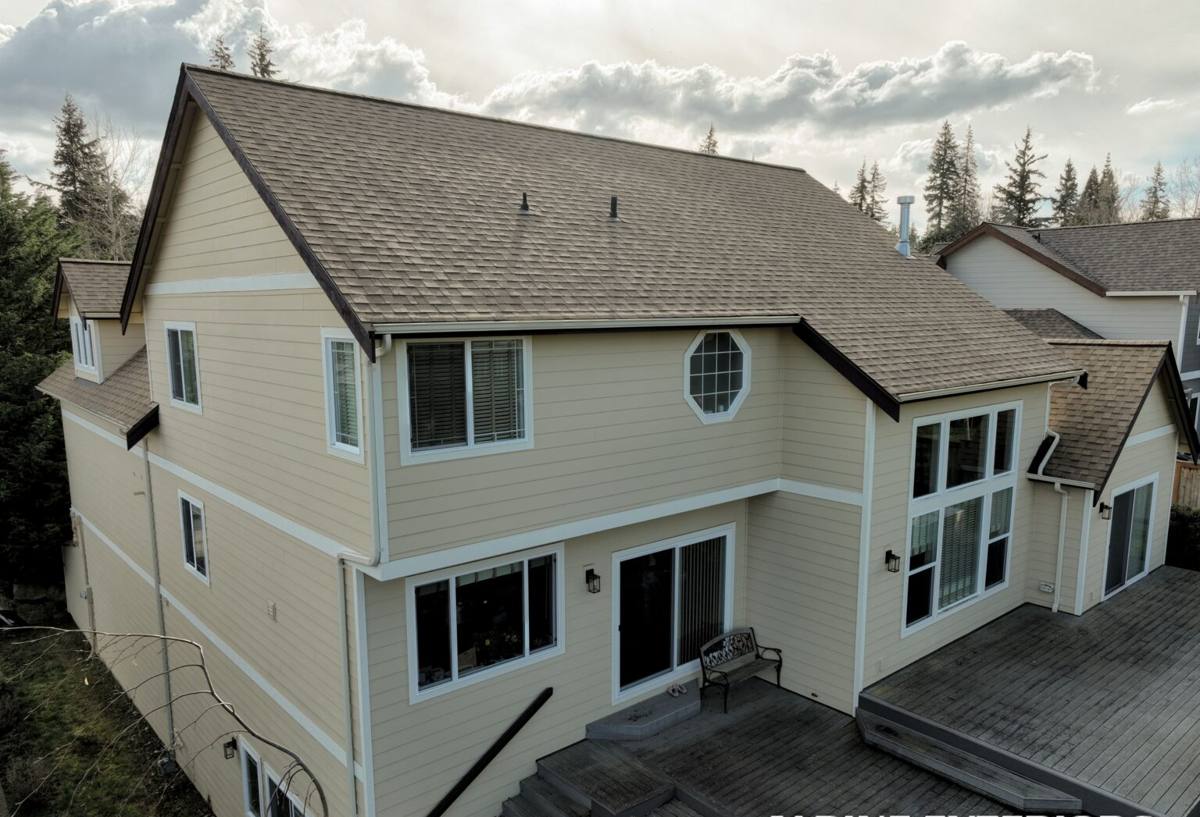
How Local Weather Actually Damages a Roof
Wind and Driving Rain
Whatcom County windstorms don't just blow — they blow rain sideways. When wind drives rain horizontally into a roof edge, it finds every weak point: lifted shingle tabs, aging flashing, nail heads that have backed out slightly over the years. Water doesn't need a hole to get in during a real storm; it just needs a gap small enough that gravity alone wouldn't have been a problem.
Salt Air
Custer's proximity to the water means metal roof components — flashing, fasteners, vent stacks, gutter hardware — are exposed to salt-carrying air more than roofs further inland. Salt accelerates corrosion on unprotected or lower-grade metal, which is why the flashing and fastener choices we make on a Custer roof lean toward materials built to hold up in a coastal-influenced environment rather than whatever is cheapest to source.
Moss
Long, wet winters and shaded lots mean moss has a real growing season here, not just a stray patch or two. Moss holds moisture against the roof surface long after the rain has stopped, and it works its way under shingle edges as it grows. A roof that already had moss buildup before a storm is more vulnerable to wind and water damage during that storm, because the moss has been quietly lifting and loosening shingles for months.
Signs Your Roof Took Storm Damage
Most storm damage isn't dramatic. It rarely looks like a hole in the roof. It looks like small, easy-to-miss changes that add up to a real problem if they're ignored.
- Shingles that look curled, cracked, or creased, especially near roof edges and around penetrations
- Granules collecting in gutters or at the base of downspouts
- Flashing around chimneys, skylights, or vents that looks bent, lifted, or separated from the surface
- New or worsening moss growth in a concentrated area, which can signal a spot holding water longer than it should
- Water stains on interior ceilings or in the attic, even faint ones
- Debris — branches, needles, torn shingle pieces — collected in valleys or against the chimney
- Sagging or soft-feeling spots when viewed from the attic, which can mean decking underneath has taken on moisture
Any one of these on its own might not mean much. Two or three together, especially right after a windstorm, are worth having looked at before the next round of rain finds the gap.
What a Correct Storm Damage Repair Actually Involves
A quick patch and a proper repair can look similar from the ground and behave very differently two winters later. Doing it right means addressing not just the visible damage but what's underneath it.
Inspection Before Anything Gets Touched
We check the full roof, not just the area the homeowner points out. Wind damage is often worse a few feet away from where it's most visible, and a storm strong enough to lift shingles in one spot has usually stressed fasteners and flashing nearby too.
Decking Condition
If water has been getting under shingles for any length of time, the plywood or OSB decking underneath can be soft, delaminated, or rotted. Replacing shingles over damaged decking is a short-term fix — the new roofing has nothing solid to hold onto. Any soft decking gets cut out and replaced before new material goes down.
Flashing and Underlayment
Given the salt exposure Custer roofs deal with, we don't reuse corroded or marginal flashing just to save a step. Underlayment gets checked and replaced where it's torn or no longer sealing properly, since it's the layer doing the real work if wind ever lifts a shingle again.
Material Matching
When the repair is localized rather than a full replacement, matching the existing shingle color, profile, and weight matters — both for appearance and so the repaired section weathers at the same rate as the rest of the roof instead of standing out or failing early.
Our Repair Process
- On-site inspection — We walk the roof (or use appropriate access equipment on steeper pitches) and document what we find with photos, not just a verbal summary.
- Written scope and estimate — You get a clear breakdown of what needs repair, what materials are involved, and an honest cost range before any work starts.
- Insurance documentation, if needed — If you're filing a storm damage claim, we provide the documentation your adjuster will want to see: dated photos, a description of the damage mechanism, and a scope that matches what's actually wrong.
- Repair work — Damaged shingles, decking, flashing, and underlayment are replaced to match the existing roof system, not just patched over.
- Cleanup and final check — Job site debris, old materials, and stray fasteners are cleared, and we walk the repair with you before calling it done.
Repair or Replace? How to Think About It
Not every storm-damaged roof needs a full replacement, and not every roof is a good candidate for another round of patching. The right call usually comes down to a few factors working together.
| Factor | Favors Repair | Favors Replacement |
|---|---|---|
| Extent of damage | Localized to one section or slope | Spread across multiple areas of the roof |
| Age of existing roof | Roof is within its expected service life | Roof is near or past its expected lifespan already |
| Decking condition | Decking is solid beneath the damaged area | Widespread soft or rotted decking found |
| Moss and granule loss | Minor, addressed as part of the repair | Heavy, long-term granule loss across the roof |
| Material availability | Existing shingle is still available to match | Existing shingle is discontinued or badly weathered by comparison |
We'll give you our honest read on where your roof falls, including telling you plainly if a repair is the smarter move even though a replacement would be a bigger job for us. A roof that only needs a repair doesn't need to be sold a replacement.
Working With Your Insurance Company
Storm damage is one of the more common reasons Whatcom County homeowners file a roof claim, and adjusters see a lot of them. What helps your claim move smoothly is documentation that clearly ties the damage to a specific storm event and a scope of work that's neither inflated nor missing items the adjuster would expect to see. We provide photo documentation and a written scope you or your adjuster can reference directly. We're not a public adjuster and won't represent you in a dispute, but we'll make sure the roofing side of your claim is documented accurately from the start.
A Post-Storm Checklist for Custer Homeowners
After a windstorm passes through, here's what's worth checking from the ground before deciding whether a professional look is needed:
- Walk the perimeter of the house and look up at roof edges and valleys for anything obviously lifted or missing
- Check gutters and the ground below downspouts for shingle granules or shingle fragments
- Look at your attic (if accessible) for daylight coming through, damp insulation, or new water stains
- Note any large debris that came down near or onto the roof during the storm
- Check chimney and vent flashing from the ground with binoculars rather than climbing up yourself
- Write down the date and general conditions of the storm — this matters if you end up filing an insurance claim
Skip the ladder. Roof damage assessment after a storm is exactly the kind of job worth having a professional handle, both for safety and because it's easy to miss damage that isn't visible from a casual look.
Why a Crew That Already Works Custer Matters
A roofer who mainly works drier, more sheltered parts of the state can still do competent work, but they're less likely to default to flashing and fastener choices built for salt exposure, or to recognize how far moss has already undermined a roof before a storm even hits. Working Custer and the greater Lynden area regularly means we're used to what this specific mix of coastal wind, sustained rain, and moss pressure does to a roof over time — and we build repairs that are meant to hold up under the same conditions again, not just look right on the day we leave.
If a recent storm has you wondering whether your roof came through it clean, we're happy to take a look. Reach out for a free, no-pressure estimate using the form below — we'll tell you honestly what we find, whether that's a small repair, a bigger fix, or nothing more than keeping an eye on it.