 Lynden Siding
 Custom Windows for Kendall Homes
Out toward Kendall, homes deal with a different set of pressures than a house sitting in a subdivision closer to town. Properties here tend to be more exposed — bigger lots, more tree cover, longer stretches of siding and window trim facing whatever weather rolls through. When we go out to look at a window job in Kendall, we're not just measuring rough openings. We're looking at how the house sits relative to prevailing wind and rain, how much shade and moisture the north and west sides hold onto, and how much wear the existing windows have already taken.
Custom windows means the units are built to the actual openings in your house — not sized to a standard chart and squeezed in with extra trim to make up the difference. For older Kendall homes especially, that matters. Openings settle, framing shifts a little over decades, and a true custom or true-to-size replacement window seals tighter than something forced to fit.
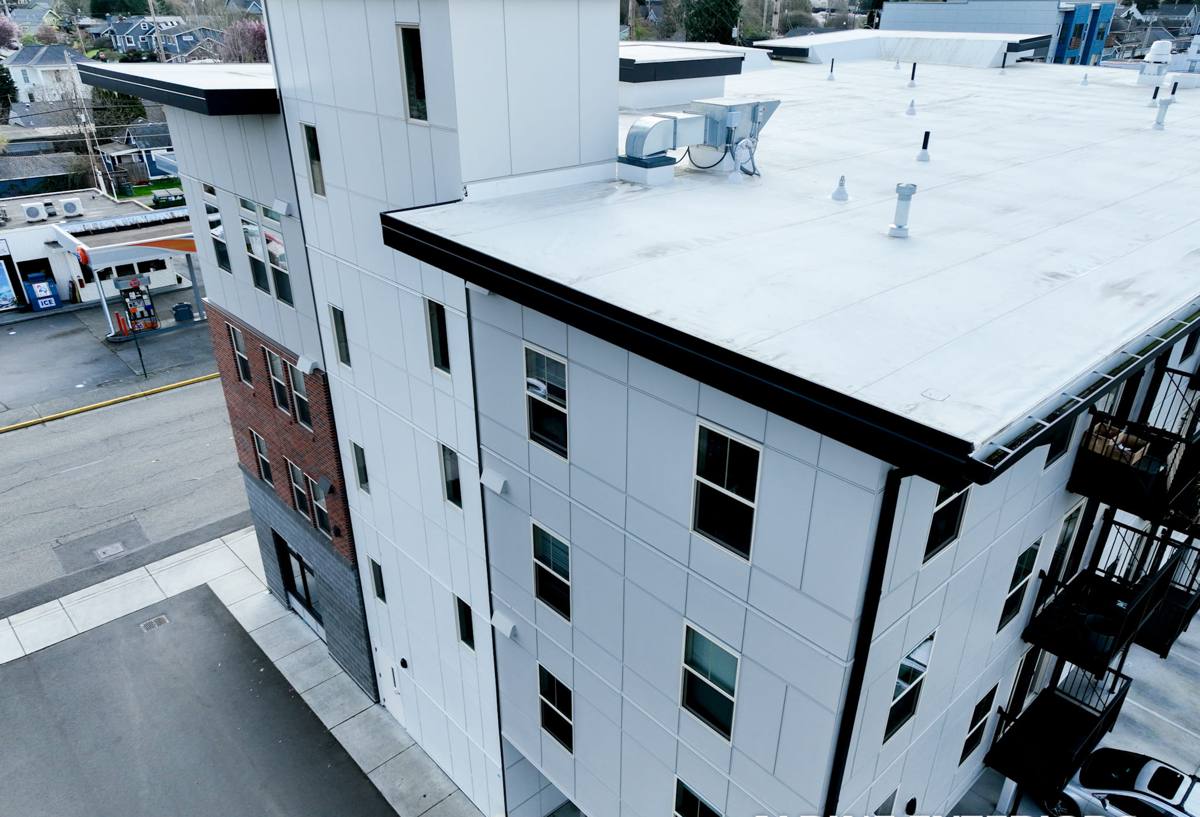
What Whatcom County Weather Does to Windows
Whatcom County's climate is hard on exterior building products in ways that aren't always obvious until you're the one dealing with the damage. Salt-laden air moving in off the Salish Sea corrodes hardware and fasteners faster than a dry inland climate would. Driving rain — the sideways kind, not just straight-down rain — gets pushed into any gap around a window frame that isn't properly flashed and sealed. And the long, gray, damp stretch of fall through spring gives moss and algae months to establish themselves on anything that stays wet: window sills, trim boards, the tops of frames where water sheets down and lingers.
None of that is unique to Kendall, but rural and semi-rural properties out this way often have more tree cover and less direct sun exposure than in-town lots, which means surfaces dry out slower after a storm. Slower drying means more time for moisture to work into seams, more time for moss to take hold on window sills and trim, and more corrosion on hardware that isn't rated for it.
What This Means for Window Selection
It means we don't treat every window opening the same way just because the house is one style. A window on the exposed west or north side of a Kendall property is doing a different job than one tucked under an eave on the south side. Frame material, glass package, and flashing detail all get adjusted based on exposure — not just picked once for the whole house.
Signs Your Current Windows Are Losing the Fight
Most homeowners don't replace windows because they woke up wanting new windows — they replace them because something started bothering them. Here's what we hear most often from Kendall-area homeowners before they call:
- Condensation building up between the panes (a sign the seal has failed and the insulating gas is gone)
- Windows that are hard to open, close, or lock — often from swollen or warped frames
- Visible moss, algae, or black staining on the sill or bottom of the frame
- A draft you can feel near the window even when it's fully latched
- Wood trim that's gone soft, spongy, or is starting to separate at the corners
- Noticeably higher heating bills in winter with no other explanation
- Corroded or stiff hardware — locks, cranks, or hinges that used to move freely
Any one of these on its own isn't necessarily an emergency. But when a window is showing two or three of these signs at once, it's usually past the point where caulk and weatherstripping will fix it, and it's worth having someone look at the whole opening — not just the glass.
What "Custom" Actually Involves
Sizing and Fit
We measure every opening on-site rather than assuming it matches a catalog dimension. On older homes, that's rarely the case — settling and past repairs mean openings are frequently a half-inch or more off from "standard." A properly custom-sized window means less shimming, less trim manipulation, and a tighter seal against wind-driven rain.
Frame Material
We install vinyl, fiberglass, and wood-clad windows depending on the home's style, budget, and exposure. Each has real trade-offs — we'll walk through those below rather than pushing one option as universally "best," because for this climate, the right call genuinely depends on where the window sits and what look the house is going for.
Glass Package
Double-pane with low-E coating and argon gas fill is our standard recommendation for this climate — it manages heat loss and condensation risk well without pushing cost into triple-pane territory, which usually isn't necessary here unless you're right up against a busy road or dealing with an unusually cold-facing exposure.
Frame Material Comparison for This Climate
| Material | Moisture Resistance | Maintenance | Typical Lifespan | Notes for Kendall Exposure |
|---|---|---|---|---|
| Vinyl | Very good — won't rot or corrode | Low — occasional cleaning | 20–30 years | Handles driving rain and salt air well; no repainting needed |
| Fiberglass | Excellent — dimensionally stable in temperature swings | Low | 30–40 years | Strong choice for exposed sides of the house; higher upfront cost |
| Wood-clad | Good on the exterior clad face, but interior wood needs protection from any leak | Higher — clad exterior is low-maintenance, but any seal failure exposes wood to moisture | 20–30 years with upkeep | Best on protected, less-exposed elevations; we're cautious recommending it for fully exposed west/north sides |
Our default professional standard: on the sides of a Kendall home that take the worst of the wind-driven rain, vinyl or fiberglass. On protected elevations where the homeowner wants a specific traditional look, wood-clad is a reasonable choice as long as everyone understands the maintenance commitment that comes with it.
Our Installation Process
A window replacement is only as good as the flashing and sealing work around it — the window itself is usually not the point of failure on a well-installed job. Here's how we approach it:
- On-site assessment: we inspect every opening, check for existing water damage or rot in the framing, and measure precisely.
- Material and glass selection: we walk through frame material and glass package options based on that specific opening's exposure, not a blanket recommendation for the whole house.
- Removal: old windows come out carefully, and we inspect the sill and framing underneath for hidden moisture damage before anything new goes in.
- Repair as needed: any soft framing, rot, or prior water intrusion gets addressed before the new window is set — installing a new window over a compromised opening just hides the problem.
- Flashing and sealing: proper flashing tape and sealant sequencing so water sheds outward and never gets trapped behind the frame.
- Setting and shimming: the window is leveled, plumbed, and shimmed to the actual opening — not forced square if the opening itself has settled slightly.
- Interior and exterior trim: finish work sealed and caulked to shed water, with attention to the sill detail where moss and standing moisture tend to start.
- Final walkthrough: we check operation, locks, and seals with you before we call the job done.
Cost Factors to Expect
Every Kendall property is different, so we won't quote a number without seeing the openings. But broadly, here's what moves the price on a custom window job:
| Factor | Why It Matters |
|---|---|
| Number of windows | Per-unit cost drops somewhat on larger jobs, but each opening still needs individual attention |
| Frame material | Vinyl is generally the most budget-friendly; fiberglass and wood-clad cost more upfront |
| Window size and configuration | Large picture windows, bays, or custom shapes cost more than standard double-hung units |
| Condition of existing framing | Rot or water damage found during removal adds repair time before the new window can go in |
| Glass package | Upgrades like triple-pane or specialty coatings add cost but aren't always necessary for this climate |
| Access and site conditions | Second-story or hard-to-reach openings take more time and equipment |
Homeowners are usually better served by getting an honest per-window number after an on-site look than by a rough per-house estimate — a job that's half standard double-hungs and half oversized picture windows doesn't average out cleanly.
Why It Helps to Hire a Crew That Already Works Kendall
Kendall isn't a dense in-town neighborhood — it's a spread-out rural and semi-rural area, and that changes a few practical things about the job. Properties often have longer driveways, more tree cover close to the house, and septic or well infrastructure to work around when staging equipment. A crew that's already worked in the area knows to ask about those things up front instead of discovering them on job day.
More importantly, a crew that regularly handles Whatcom County exteriors has already seen what happens to windows and trim that were installed without accounting for driving rain and salt air. That's not a marketing point — it's the difference between someone who installs windows to a spec sheet and someone who adjusts flashing and material choice based on which side of the house is going to take the weather.
After Installation: Keeping Moss and Moisture Off Your Windows
New windows still need a little seasonal attention in this climate, especially on shaded or north-facing walls where moss growth is most persistent:
- Rinse sills and trim periodically during the wet months to keep moss spores from establishing
- Keep gutters clear so overflow doesn't run down onto window heads and sills
- Trim back branches or shrubs that keep a window's exterior shaded and damp
- Check exterior caulking once a year — even good sealant has a service life
- Wipe down interior sills if condensation appears, so it doesn't sit and encourage mold
None of this is heavy maintenance — it's the kind of thing that takes a few minutes a season and meaningfully extends the life of both the windows and the trim around them.
Get a Free, No-Pressure Estimate
If your windows in Kendall are showing their age — drafts, fogging, sticking, moss on the sills — we're glad to come take a look and give you a straight assessment of what's going on and what it would take to fix it. There's no obligation and no pressure; just an honest read on your options and pricing. The estimate form below is the easiest way to get started.