 Lynden Siding
 Deck Replacement in Aldergrove, BC
Aldergrove sits close enough to the water and to the Fraser Valley's wet weather patterns that decks here take a beating most inland homeowners never have to think about. Salt-laden air drifts in off the coast, driving rain hits horizontal surfaces at an angle that pools rather than sheds, and a long moss season keeps everything damp for months at a stretch. A deck that would last fifteen years in a dry climate can start failing structurally in half that time here if it was built without those conditions in mind. We work this area regularly out of Lynden, just across the line in Whatcom County, and we've seen what this specific combination of weather does to decking, framing, and fasteners over time.
This page covers deck replacement specifically — not routine repair, not a quick board swap, but a full replacement when the structure, ledger connection, or majority of the decking has reached the end of its service life. If you're not sure which category your deck falls into, the next section should help.
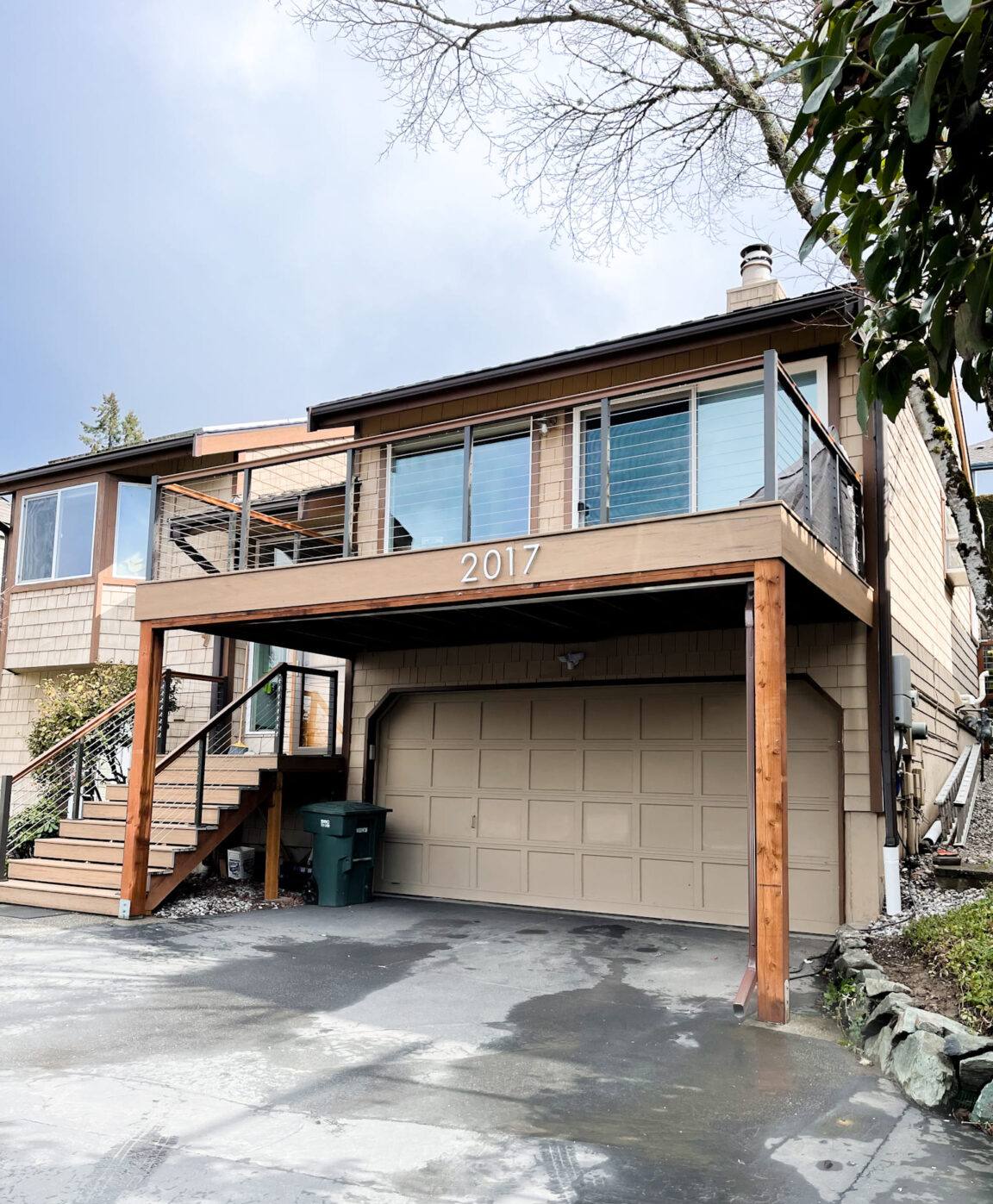
Signs Your Deck Needs Replacement, Not Repair
Not every tired-looking deck needs to come out. A lot of what looks bad on the surface — graying wood, surface mold, a few loose boards — is cosmetic and fixable. Replacement becomes the right call when the problems are structural or systemic rather than isolated.
Structural red flags
- Soft or spongy decking across multiple boards, not just one or two
- Visible rot or dark staining at the ledger board where the deck meets the house
- Posts or footings that have shifted, settled, or show rot at ground contact
- Railings that flex or wobble under normal pressure
- Persistent moss or algae growth that returns within weeks of cleaning
- A deck built before current ledger-flashing and joist-hanger standards were common practice
When repair still makes sense
If the framing underneath is sound and the problems are limited to a handful of boards, fastener pops, or surface weathering, targeted repair is the more honest recommendation — and we'll tell you that instead of pushing a full replacement you don't need. Replacement earns its cost when the substructure itself is compromised, because at that point patching individual boards just delays a bigger failure.
What Drives Deck Failure in This Climate
Aldergrove and the surrounding Fraser Valley/Whatcom border area get a specific mix of conditions that accelerates deck deterioration compared to drier parts of the continent.
Salt air and metal fasteners
Proximity to coastal air means airborne salt reaches even properties that aren't waterfront. Salt accelerates corrosion in standard fasteners, joist hangers, and post bases. Once a fastener starts corroding, it loses holding strength long before it looks visibly bad, which is part of why structural failures can catch homeowners off guard.
Driving rain and horizontal exposure
Rain here often comes in at an angle rather than falling straight down, which means it drives up under railings, into board gaps, and against the house-side ledger connection more aggressively than a typical vertical downpour would. Any gap in flashing or any board that doesn't shed water cleanly becomes a moisture entry point.
Moss and prolonged dampness
The region's long wet season means decks stay damp for extended stretches, and shaded or low-airflow areas develop moss that holds moisture directly against the wood surface. Moss isn't just cosmetic — it keeps decking wet well after a dry day elsewhere on the property, which speeds up rot in exactly the spots you'd least expect it.
What a Correct Deck Replacement Involves
A deck replacement done right isn't just tearing off old boards and screwing down new ones. The parts you don't see matter more for longevity than the decking material itself.
Ledger connection and flashing
The ledger board — where the deck attaches to the house — is the single most common failure point on decks in wet climates. A correct replacement includes proper flashing that directs water away from the house structure, not just caulk or paint covering a gap. This is also where a lot of older decks were built wrong the first time.
Framing and footings
Joists, beams, and posts need to be sized correctly for the span and load, connected with corrosion-resistant hardware, and footings need to sit below frost depth and bear on stable soil. In a salt-air environment, we lean toward hardware rated for coastal or treated-lumber exposure rather than standard interior-grade fasteners.
Decking surface and drainage
Board spacing, direction, and airflow underneath the deck all affect how quickly water sheds and how fast the structure dries out after rain. A deck built tight against the ground with no ventilation underneath will hold moisture far longer than one with proper clearance.
Railings and code compliance
Railing height, baluster spacing, and attachment strength matter both for safety and because inspectors will check them. We build to current code requirements rather than matching whatever the old railing happened to be.
Choosing Decking Material for This Climate
Material choice matters more here than in a dry climate, because the wrong choice means fighting moss, rot, or fastener corrosion for the life of the deck. There's no single "best" material — it's a tradeoff between upfront cost, maintenance commitment, and appearance.
| Material | How it handles this climate | Maintenance burden |
|---|---|---|
| Pressure-treated wood | Affordable, but needs regular sealing to resist moisture and moss; softer woods show weathering fastest | High — annual cleaning and periodic re-sealing |
| Cedar | Naturally more rot- and insect-resistant, ages to a gray patina, still needs cleaning to prevent moss buildup | Moderate to high |
| Composite decking | Resists moisture absorption and moss takes longer to establish; performance varies by product quality | Low — periodic washing, no sealing |
| PVC/capped decking | Fully moisture-resistant surface, least hospitable to moss and algae of the common options | Lowest — washing only |
We install a range of these depending on budget and homeowner preference. Our general standard is to steer away from low-grade composite blends that use exposed wood fiber in the core, since those tend to absorb moisture at cut edges and fastener holes over time — not because the composite category is bad, but because product quality varies a lot within it, and moisture behavior at the edges is where cheaper products show their weakness first in a climate this wet.
Our Deck Replacement Process
- On-site assessment: We inspect the existing deck's framing, ledger connection, footings, and decking condition to confirm replacement is the right call rather than repair.
- Scope and material selection: We walk through material options and cost tradeoffs based on your budget, sun/shade exposure, and how much maintenance you want to take on long-term.
- Removal: Full teardown of the old deck, including inspection of the house-side ledger area for hidden rot once boards are off.
- Framing and structural work: New or reinforced footings, framing, and ledger flashing built to current code and sized for the deck's actual load.
- Decking, railings, and finish work: Installation of the chosen decking material, code-compliant railings, and any stairs or fascia trim.
- Final walkthrough: We go over the finished deck with you, including basic maintenance guidance specific to the material installed.
Permitting and Cross-Border Considerations
Aldergrove is in British Columbia, just north of the Whatcom County line where we're based in Lynden. Building permit requirements, code standards, and inspection processes differ between Canadian and U.S. jurisdictions, and they can also vary by local municipality within BC. We don't guess on this — before work starts, we confirm what permitting applies to your specific property and make sure the completed deck meets the standards that apply where you live. If you're unsure whether your project needs a permit, that's a conversation worth having before demolition starts, not after.
Living With Moss, Salt Air, and Long-Term Maintenance
Even a well-built deck in this region needs some ongoing attention to get its full expected lifespan. The goal of a correct replacement is to reduce that burden, not eliminate it entirely.
- Sweep debris off the deck regularly — trapped leaves and needles hold moisture and feed moss growth
- Clean moss and algae off the surface at least once a year, ideally before the wet season sets in
- Check railings and stair connections annually for looseness, especially after a hard winter
- Keep gutters and downspouts near the deck clear so runoff isn't draining directly onto or under it
- Inspect the ledger flashing area periodically for staining or gaps, since this is the highest-risk point for hidden water intrusion
- Reseal wood decking on the manufacturer's recommended schedule rather than waiting until it visibly needs it
Why Hire a Crew That Already Works in Aldergrove
Deck problems in this area follow patterns — the same ledger flashing mistakes, the same moss buildup in shaded corners, the same fastener corrosion — because the climate is consistent even when individual houses aren't. A crew that already works Aldergrove and the broader Whatcom-to-Fraser-Valley border area has seen those patterns enough times to catch them before they turn into a bigger repair. We're not guessing at what coastal moisture and moss season do to a deck over ten years; we've replaced decks that show exactly that wear and know what to build differently the second time around.
If your deck is showing structural wear, or you just want an honest opinion on whether it needs replacing or can be repaired, we're happy to take a look. Reach out for a free, no-pressure estimate using the form below.