 Lynden Siding
 Siding Repair in Deming: What the Climate Demands
Deming sits in the Nooksack River valley, tucked against forested foothills that lead up toward Mt. Baker. That setting means more tree cover, more shade, and more standing moisture in the air than you'll find in open areas closer to town. Combined with the driving rain and long, damp stretches that define weather across Whatcom County, siding here works harder than siding in drier parts of the state. Add in the salt-tinged marine air that moves inland off the Sound on windier days, and you have a combination that slowly wears down anything not built or installed to handle it.
Siding repair in Deming isn't just about patching a hole or replacing a cracked board. It's about understanding why that damage happened in the first place — usually moisture, sometimes UV and freeze-thaw cycling, and almost always a combination of a few factors working together over years. A repair that doesn't account for the underlying cause tends to fail again within a season or two.
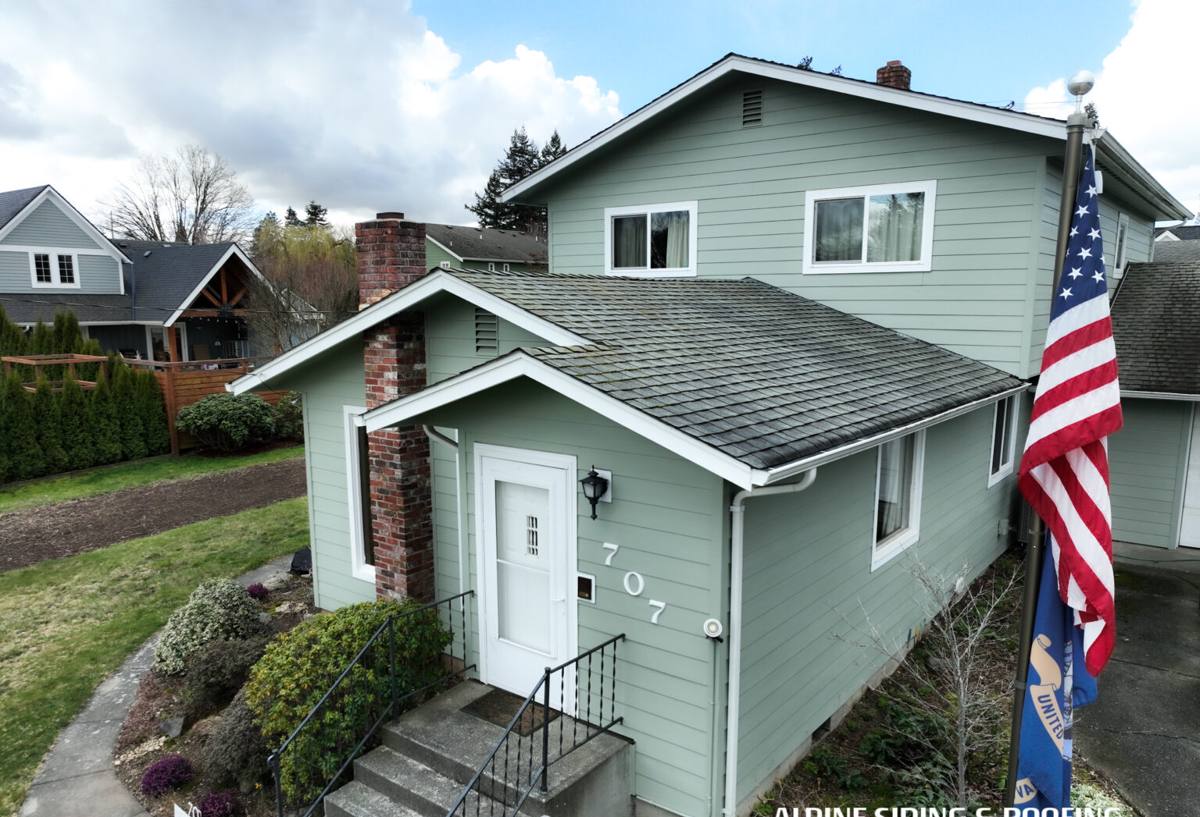
Why Deming Homes See Different Wear Than In-Town Properties
Heavier moss and mildew load
Shaded lots near tree lines hold moisture longer after rain. Siding in these spots stays damp for extended periods, which accelerates moss and mildew growth — especially on north-facing walls and anywhere gutters or downspouts dump water close to the foundation. Moss isn't just cosmetic; trapped moisture underneath it can work into seams, fastener holes, and butt joints.
Driving rain and wind-driven moisture
Storms moving through the valley often come with sideways rain, which pushes water into places vertical siding wasn't necessarily designed to shed easily — corner trim, window and door flashing, and any spot where caulking has aged or pulled away. This is where a lot of hidden rot starts, well before it's visible from the ground.
Freeze-thaw stress
Deming sees colder overnight temperatures than lower-elevation, more coastal parts of the county, particularly in winter. Water that gets into a crack or seam and then freezes expands that damage. Over a few winters, small cracks become bigger ones.
Common Signs You Need Siding Repair
- Soft or spongy spots when you press on the siding, especially near the bottom courses or around window trim
- Visible moss or dark streaking that keeps coming back after cleaning
- Cracked, bubbled, or peeling paint that exposes bare material underneath
- Gaps opening up at seams, corners, or where siding meets trim, doors, or windows
- Warping or bowing boards, particularly on shaded or north-facing walls
- A musty smell or visible staining on interior walls that share an exterior wall with damaged siding
- Fastener heads popping out or rust streaks running down from nail or screw locations
Any one of these on its own might be minor. Several showing up in the same area of the house usually means moisture has been getting behind the siding for a while, not just sitting on the surface.
What a Correct Repair Actually Involves
A lot of "repairs" in this climate are really just patches — caulk over a crack, a quick paint touch-up, a board swapped without checking what's behind it. Those buy a little time but don't address the reason the damage happened. A repair done right starts with finding out how far the moisture problem actually goes.
Step one: pull back, don't just patch over
Damaged siding needs to come off far enough to see the condition of the water-resistive barrier, flashing, and sheathing behind it. If that layer has failed or the sheathing has soft spots, patching the visible siding without fixing what's underneath just hides the problem for another season.
Step two: match the repair to the existing system
Fiber cement, vinyl, wood, and engineered wood siding all repair differently — different fastening patterns, different clearances, different ways they handle moisture. A repair that mixes incompatible materials or installation methods often creates a new weak point right at the seam between old and new.
Step three: address the water source, not just the symptom
If gutters are dumping water against a wall, if grading pushes moisture toward the foundation, or if trim flashing was never installed correctly to begin with, replacing the siding alone won't stop the problem from coming back. A proper repair job flags these issues even when they're technically outside the scope of "just fixing the siding."
Our Repair Process
| Step | What Happens |
|---|---|
| Inspection | We look at the damaged area and the surrounding siding, checking for moisture behind the surface, not just what's visible |
| Diagnosis | We identify the cause — flashing failure, clogged gutters, failed caulking, aging material — before recommending work |
| Scope and estimate | You get a clear picture of what needs to be repaired versus what's still sound, with an honest cost range |
| Repair work | Damaged material is removed back to sound substrate, underlying issues are corrected, and matching material is installed properly |
| Finish and check | Seams, caulking, and paint or factory finish are brought back to a clean, weather-tight condition |
We don't upsell a full re-side when a targeted repair will genuinely hold up. But we'll also tell you plainly when a repair is just delaying a bigger job — that's a judgment call we'd rather make honestly than let you find out the hard way in two years.
Repair or Replace? How We Help You Decide
| Factor | Leans Toward Repair | Leans Toward Replacement |
|---|---|---|
| Extent of damage | Isolated to one wall or a few boards | Spread across multiple walls or elevations |
| Age of siding | Under 10-15 years, otherwise in good shape | Near or past expected service life |
| Underlying structure | Sheathing and framing are sound | Rot has reached framing or is widespread |
| Material availability | Matching material or color is available | Discontinued product, poor color match |
| Recurrence | First time seeing this type of damage | Same problem keeps coming back in different spots |
Deming's mix of shade, moisture, and older housing stock means we see both situations regularly. Neither answer is automatically right — it depends on what we actually find once we open things up.
Why We Only Install James Hardie Fiber Cement
When a repair does call for new material — or when repeated repairs point toward a full re-side — we install James Hardie fiber cement exclusively. We don't install vinyl, LP SmartSide, Cemplank, Allura, primed spruce, or cedar, and that's a deliberate standard, not an oversight.
In a climate like this one — sustained moisture, moss pressure, freeze-thaw cycling, and driving rain — the material matters. Fiber cement is non-combustible and dimensionally stable in a way wood and wood-composite products aren't; it doesn't swell, cup, or absorb water the way engineered wood siding can when a seam or joint fails. Hardie's ColorPlus factory finish also holds up to UV and moisture far longer than field-applied paint, which matters on a house that stays shaded and damp for long stretches of the year. And Hardie's HZ5 product line is engineered specifically for this kind of climate — freeze-thaw cycling, sustained moisture exposure, and coastal-influenced weather.
Vinyl and engineered wood products have their place and their advantages — cost, weight, ease of installation. But we've made a professional call that for the moisture and temperature swings this region sees, fiber cement's durability and long-term performance are worth the difference in upfront cost. When we repair a Hardie-sided home, we're also working with a product designed to be repaired cleanly — cut and fastened to spec, it patches in without the mismatch issues you can run into with some other systems.
Why Hiring a Crew That Already Works Deming Matters
Repair work is diagnostic work as much as it's carpentry. A crew that regularly works in Deming and the surrounding Whatcom County foothills has already seen how moisture moves through homes at this elevation, in this kind of tree cover, with this kind of rain pattern. That familiarity shows up in faster, more accurate diagnosis — knowing where to look first, which symptoms usually point to which causes, and what a "normal" amount of moss versus a moisture-problem amount of moss actually looks like here.
It also matters for accountability. A local crew is easy to reach if a repair needs a follow-up look, and has a reputation in the area worth protecting. That's a different relationship than a company that shows up once from out of the area and is gone.
What Affects the Cost of a Siding Repair
| Cost Factor | Why It Matters |
|---|---|
| Extent of hidden damage | Repairs that reach sheathing or framing cost more than surface-level fixes |
| Wall accessibility | Height, landscaping, and obstructions affect labor time |
| Material matching | Matching an existing color or profile can add cost versus a full section replacement |
| Root-cause fixes | Correcting flashing, gutters, or grading adds scope but prevents repeat damage |
| Number of damage sites | Multiple separate repair areas cost more than one consolidated section |
We give straightforward, itemized pricing so you know what you're paying for and why — no vague lump sums that hide whether you're getting a real fix or a temporary patch.
Get an Honest Look at Your Siding
If you're seeing soft spots, recurring moss, cracked paint, or gaps opening up on your Deming home, it's worth having someone look before the damage spreads further into the structure. We'll give you a straight answer on what's actually wrong, what it'll take to fix it correctly, and whether repair or replacement makes more sense for your situation. Reach out for a free, no-pressure estimate using the form below.